

A quest for a sister who has gone missing, the downfall of a flamenco dancer, and an escape plan devised by a cockatiel were among the narratives presented during the New Filmmakers Los Angeles (NFMLA) annual InFocus: Latin & Hispanic Cinema program. Held in September, the event featured impactful and thought-provoking independent films created by emerging filmmakers from various countries including Argentina, Brazil, Colombia, the Dominican Republic, El Salvador, Honduras, Mexico, Puerto Rico, Spain, Venezuela, Canada, and the United States. It began with an opening reception where all-access pass holders were treated to complimentary refreshments from Pink’s Hot Dogs and signature cocktails crafted with handcrafted tequila and mezcal from Oaxaca, Mexico, by The Lost Explorer. The day’s first film segment, InFocus: Latin & Hispanic Cinema I, showcased coming-of-age narrative shorts centered on family dynamics, self-acceptance, and the transcending of time, space, and borders. To honor Hispanic Heritage Month, Miguel Santana, president and CEO of the California Community Foundation, delivered the opening remarks. The program proceeded with InFocus: Latin & Hispanic Cinema II, a collection of narratives addressing themes such as injustice, inequality, systemic failures, and colonialism. The stories focused on the struggles for justice, building resilience, challenging limiting beliefs, and aspiring for a better future. The evening wrapped up with InFocus: Latin & Hispanic Cinema III, which emphasized the significance of human connections through tales of loss, love, and letting go. NFMLA presents films created by filmmakers of all backgrounds year-round, featuring both general and InFocus categories. All filmmakers are invited and encouraged to submit their works for consideration at upcoming NFMLA Festivals, irrespective of the InFocus programming schedule, which aims to highlight representation by centering on diverse filmmaker communities as part of the NFMLA Monthly Film Festival. This initiative is partly supported by grants from the City of Los Angeles Department of Cultural Affairs (DCA) and the National Endowment for the Arts (NEA). Below is additional information about the NFMLA filmmakers and their works, provided by NFMLA. “Punta Salinas,” directed by Maria del Mar Rosario About Maria: María del Mar Rosario, born and residing in Puerto Rico, creates stories that provoke reflection on Caribbean notions through a decolonial perspective, while stylistically focusing on the body. Her work has been featured at Tribeca, SFFILM, HotDocs, IDFA, Metrograph NYC, and the Cinémathèque Française in Paris. She holds a BA in Creative Nonfiction and Film Studies from Columbia University and completed postgraduate studies at the School of Film and Television in San Antonio de los Baños, Cuba (EICTV). She received the LALIFF/NETFLIX Inclusion Fellowship to direct the narrative short, Punta Salinas, and was awarded the Firelight Media Fellowship 2024 for her documentary short, Escambrón, Playa, currently streaming on PBS. About “Punta Salinas”: After having sex for the first time, 16-year-old Alba seeks strength she has never tapped into before. Watch the NFMLA interview with Maria del Mar Rosario, director of “Punta Salinas”: “The Vote,” directed by Sylvia Ray About Sylvia: Sylvia Ray is a Chicana/Korean-American director based in Los Angeles and a 2025 Film Independent Project Involve Fellow. She is also a 2024 Latino Film Institute Inclusion Fellow, recognized for her short film The Vote, which won Best U.S. Short at the Post Alley Film Festival. Her feature script The Middle was a quarterfinalist at HollyShorts and the Atlanta Film Festival and was selected for the 2024 FICMonterrey Pro-Meetings Program. The short received a nomination for Best LatinX Film at HollyShorts and won Best in Festival at the 2025 Sundial Film Festival. Sylvia's work delves into themes of grief, identity, and resilience within BIPOC communities. About “The Vote”: Siblings Jessica and Robbie grapple with the painful decision of whether to keep their mother on life support or let her go, resulting in a tense family vote. Watch the NFMLA interview with Sylvia Ray, director of “The Vote”: “Ialu,” directed by Sebastian Nazario-Colon About Sebastian: Sebastian Nazario-Colon is a film director and Cannes-nominated editor based in New York. He served as an editor on “Fillos Do Vento: A RAPA” in 2025, an immersive short documentary officially nominated for the Cannes Film Festival’s Immersive Experience Competition. In 2023, he directed the award-winning short documentary, The Boricua’s Dilemma, which addresses Puerto Rico’s political status debate and achieved over 14K views on YouTube during its one-week limited release. The film was showcased at festivals such as the San Diego Latino Film Festival, NY
These brazen comedies from the 2000s attempted to outdo each other in outrageousness. It was a different era.
**Not Another Teen Movie (2000)**
One of our favorite comedies from the 2000s is a brilliantly crafted satire of ’80s and ’90s teen films: *Not Another Teen Movie* serves as a sharp critique of teen films ranging from *Lucas* to *She’s All That*, *Fast Times at Ridgemont High*, and *The Breakfast Club*, while also demonstrating the creators' fondness for the genre.
The film contains plenty of sex, violence, and racial humor, but it typically employs these elements to poke fun at the sex, violence, and racism present in ’80s teen films. One particularly shocking violent joke features a tiny football player split in half exclaiming, “I’m a hero!” which we often recall. We also enjoy guest appearances from actors like Mr. T and Molly Ringwald.
Even if *Not Another Teen Movie* eliminated all its offensive jokes, it would still be very amusing, but it gets bonus points for the sheer audacity of keeping them.
**White Chicks (2004)**
Marlon and Shawn Wayans portray Black FBI agents who disguise themselves as wealthy white socialites to infiltrate a pretentious Hamptons social scene and dismantle a conspiracy.
Yes, the premise is broad. However, the film fully embraces its comedic premise as the duo discovers how white people behave when they believe no one of another race is present — leading them to gain insight into a woman's perspective.
If you’re not offended by something in *White Chicks*, you’re not paying attention. The Wayans criticize privileged white individuals but also make pointed observations about strange racial and sexual quirks, ensuring no one escapes unscathed.
It’s one of those 2000s comedies that has surprisingly aged better than one might expect, aside from a few jokes.
**America: World Police (2004)**
It’s tough to pinpoint what this comedy dislikes the most: xenophobia, Kim Jong-Il, or Matt Damon.
The creators of *South Park* didn't succeed at the box office with this film, but they were right, and the audience was wrong.
This film is a brilliant example of smart-dumb storytelling, especially in a scene where a drunken character absurdly explains U.S. foreign policy with a vulgar metaphor involving three body parts.
Moreover, the musical sequences are exceptionally well done. This is among our favorite 2000s comedies and is one of the most outrageously bold comedies ever created.
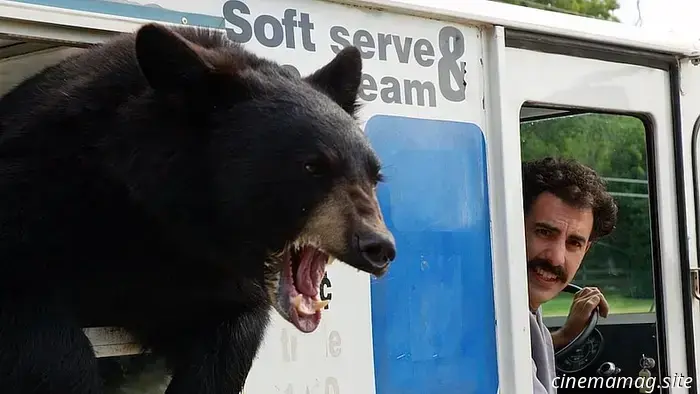
**Borat (2006)**
Without a doubt, this is the best movie on this list — and there are many outstanding comedies from the 2000s. *Borat* follows a sexist, anti-Semitic, generally oblivious Kazakh journalist whose naivety puts everyday Americans at ease enough for them to share some truly atrocious sentiments.
Sacha Baron Cohen’s incredibly talented, mostly improvised performance elicits laughter, while also highlighting the blatant prejudice he encounters. His feigned innocence brings out the worst in people and compels us to reflect on how we might act in their situation.
Somehow, we end up feeling sympathy for Borat, but even more for the state of our world. The 2020 sequel, *Borat Subsequent Moviefilm*, is also fantastic.
**Tropic Thunder (2008)**
*Tropic Thunder* brutally and humorously mocks Hollywood’s self-importance at every turn, particularly through Ben Stiller’s Simple Jack character and Robert Downey Jr.'s portrayal of Kirk Lazarus, an Australian actor who fully commits to playing a Black character.
Although some have accused the film of insensitivity, Stiller has confidently defended it.
“I make no apologies for *Tropic Thunder*,” Stiller tweeted when someone mistakenly claimed he had apologized for the film. “Don’t know who told you that. It’s always been a controversial movie since its release. I’m proud of it and the work everyone did on it.”
**John Tucker Must Die (2006)**
*John Tucker Must Die* critiques the lead character’s (Jesse Metcalfe) womanizing tendencies while still portraying him as… relatively cool.
Additionally, it presents a narrative of female empowerment, as several girls wronged by John Tucker band together for revenge, while simultaneously sexualizing its young characters in a manner typical of early 2000s comedies from the Maxim era. A classic example of Hollywood having it both ways.
This proves how little the *John Tucker* team cares about the movie's reception over time: Years later, they are working on a sequel.
**Wedding Crashers (2005)**
*Wedding Crashers* centers on the main characters (Vince Vaughn and Owen Wilson) deceiving women to











Other articles
 The War Doctor faces challenges in the latest Doctor Who story, The War Doctor Rises: Cybergene.
In a fresh full-cast audio drama released by Big Finish today, the War Doctor faces off against every Cyberman in an intense showdown in The War Doctor Rises: Cybergene. As the Time War continues...
The War Doctor faces challenges in the latest Doctor Who story, The War Doctor Rises: Cybergene.
In a fresh full-cast audio drama released by Big Finish today, the War Doctor faces off against every Cyberman in an intense showdown in The War Doctor Rises: Cybergene. As the Time War continues...
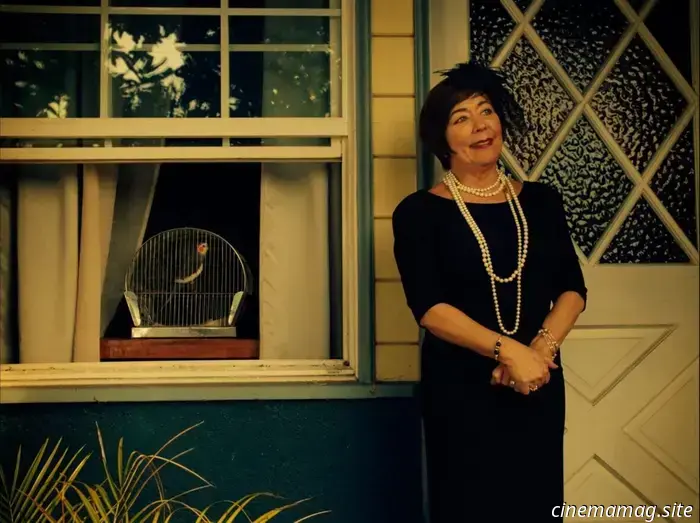 A Sister Who's Gone, a Dancer Facing Challenges, and a Cockatiel Searching for Liberation Spotlight NFMLA's InFocus: Latin & Hispanic Cinema Program - MovieMaker Magazine
A quest for a lost sister, the fall of a flamenco dancer, and a cockatiel's strategy for escape were some of the narratives presented at New Filmmakers Los Angeles (NFMLA).
A Sister Who's Gone, a Dancer Facing Challenges, and a Cockatiel Searching for Liberation Spotlight NFMLA's InFocus: Latin & Hispanic Cinema Program - MovieMaker Magazine
A quest for a lost sister, the fall of a flamenco dancer, and a cockatiel's strategy for escape were some of the narratives presented at New Filmmakers Los Angeles (NFMLA).
 New trailer released for season 2 of The Night Manager featuring Tom Hiddleston.
With under a month remaining until the long-awaited second season of The Night Manager makes its return, Prime Video has released a new trailer along with a poster for the highly praised espionage thriller. Tom Hiddleston…
New trailer released for season 2 of The Night Manager featuring Tom Hiddleston.
With under a month remaining until the long-awaited second season of The Night Manager makes its return, Prime Video has released a new trailer along with a poster for the highly praised espionage thriller. Tom Hiddleston…
 New trailer released for season 2 of Hijack featuring Idris Elba.
Apple TV+ has released a new trailer for the second season of the thriller series Hijack. In this season, Idris Elba’s character, Sam Nelson, becomes embroiled in yet another crisis as a Berlin train…
New trailer released for season 2 of Hijack featuring Idris Elba.
Apple TV+ has released a new trailer for the second season of the thriller series Hijack. In this season, Idris Elba’s character, Sam Nelson, becomes embroiled in yet another crisis as a Berlin train…
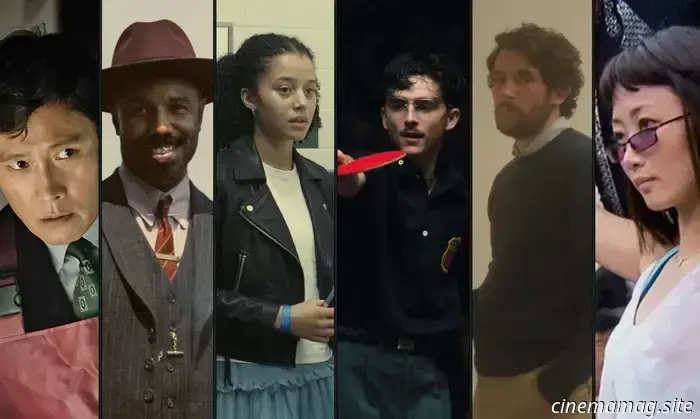 The Top Performances of 2025
Our year-end review continues as we highlight the top film performances of 2025. Instead of separating categories into lead or supporting roles or by gender, we have featured our 30 favorites overall. (Actually, it's a few more when you include some groupings we felt were essential.) Check out our countdown below and begin watching those you haven’t seen yet.
The Top Performances of 2025
Our year-end review continues as we highlight the top film performances of 2025. Instead of separating categories into lead or supporting roles or by gender, we have featured our 30 favorites overall. (Actually, it's a few more when you include some groupings we felt were essential.) Check out our countdown below and begin watching those you haven’t seen yet.
 In anticipation of its debut on Screambox next week, a red band trailer for the indie holiday slasher New Fears Eve has surfaced online. Directed by Eric Huskisson and P.J. Starks, the film focuses on friends L...
A quest for a sister who has gone missing, the downfall of a flamenco dancer, and an escape plan devised by a cockatiel were among the narratives presented during the New Filmmakers Los Angeles (NFMLA) annual InFocus: Latin & Hispanic Cinema program. Held in September, the event featured impactful and thought-provoking independent films created by emerging filmmakers from various countries including Argentina, Brazil, Colombia, the Dominican Republic, El Salvador, Honduras, Mexico, Puerto Rico, Spain, Venezuela, Canada, and the United States. It began with an opening reception where all-access pass holders were treated to complimentary refreshments from Pink’s Hot Dogs and signature cocktails crafted with handcrafted tequila and mezcal from Oaxaca, Mexico, by The Lost Explorer. The day’s first film segment, InFocus: Latin & Hispanic Cinema I, showcased coming-of-age narrative shorts centered on family dynamics, self-acceptance, and the transcending of time, space, and borders. To honor Hispanic Heritage Month, Miguel Santana, president and CEO of the California Community Foundation, delivered the opening remarks. The program proceeded with InFocus: Latin & Hispanic Cinema II, a collection of narratives addressing themes such as injustice, inequality, systemic failures, and colonialism. The stories focused on the struggles for justice, building resilience, challenging limiting beliefs, and aspiring for a better future. The evening wrapped up with InFocus: Latin & Hispanic Cinema III, which emphasized the significance of human connections through tales of loss, love, and letting go. NFMLA presents films created by filmmakers of all backgrounds year-round, featuring both general and InFocus categories. All filmmakers are invited and encouraged to submit their works for consideration at upcoming NFMLA Festivals, irrespective of the InFocus programming schedule, which aims to highlight representation by centering on diverse filmmaker communities as part of the NFMLA Monthly Film Festival. This initiative is partly supported by grants from the City of Los Angeles Department of Cultural Affairs (DCA) and the National Endowment for the Arts (NEA). Below is additional information about the NFMLA filmmakers and their works, provided by NFMLA. “Punta Salinas,” directed by Maria del Mar Rosario About Maria: María del Mar Rosario, born and residing in Puerto Rico, creates stories that provoke reflection on Caribbean notions through a decolonial perspective, while stylistically focusing on the body. Her work has been featured at Tribeca, SFFILM, HotDocs, IDFA, Metrograph NYC, and the Cinémathèque Française in Paris. She holds a BA in Creative Nonfiction and Film Studies from Columbia University and completed postgraduate studies at the School of Film and Television in San Antonio de los Baños, Cuba (EICTV). She received the LALIFF/NETFLIX Inclusion Fellowship to direct the narrative short, Punta Salinas, and was awarded the Firelight Media Fellowship 2024 for her documentary short, Escambrón, Playa, currently streaming on PBS. About “Punta Salinas”: After having sex for the first time, 16-year-old Alba seeks strength she has never tapped into before. Watch the NFMLA interview with Maria del Mar Rosario, director of “Punta Salinas”: “The Vote,” directed by Sylvia Ray About Sylvia: Sylvia Ray is a Chicana/Korean-American director based in Los Angeles and a 2025 Film Independent Project Involve Fellow. She is also a 2024 Latino Film Institute Inclusion Fellow, recognized for her short film The Vote, which won Best U.S. Short at the Post Alley Film Festival. Her feature script The Middle was a quarterfinalist at HollyShorts and the Atlanta Film Festival and was selected for the 2024 FICMonterrey Pro-Meetings Program. The short received a nomination for Best LatinX Film at HollyShorts and won Best in Festival at the 2025 Sundial Film Festival. Sylvia's work delves into themes of grief, identity, and resilience within BIPOC communities. About “The Vote”: Siblings Jessica and Robbie grapple with the painful decision of whether to keep their mother on life support or let her go, resulting in a tense family vote. Watch the NFMLA interview with Sylvia Ray, director of “The Vote”: “Ialu,” directed by Sebastian Nazario-Colon About Sebastian: Sebastian Nazario-Colon is a film director and Cannes-nominated editor based in New York. He served as an editor on “Fillos Do Vento: A RAPA” in 2025, an immersive short documentary officially nominated for the Cannes Film Festival’s Immersive Experience Competition. In 2023, he directed the award-winning short documentary, The Boricua’s Dilemma, which addresses Puerto Rico’s political status debate and achieved over 14K views on YouTube during its one-week limited release. The film was showcased at festivals such as the San Diego Latino Film Festival, NY
These bold comedy films from the 2000s aimed to surpass one another in their level of absurdity. It was an era unlike any other.