

John Fink’s Best 10 Films of 2025
Following The Film Stage's collective ranking of the top 50 films of 2025, as part of our year-end reflections, our contributors are sharing their individual top 10 lists.
Each year, I use my personal top ten to examine global trends in cinema, and despite the futility of this endeavor, this year will be no exception. What insights does 2025 cinema offer about the world or the film industry? We are still very much in a rebuilding phase, with studios and filmmakers opting to play it safe, particularly in mainstream cinema. The past is revived, and aside from a few exceptions, mainstream films lacked excitement this year. The true treasures were largely discovered in art house theaters and film festivals.
This year also marked the era of major deals, highlighted by Skydance's acquisition of Paramount and National Amusements. While they maintain a commitment to theatrical releases, it's been reported that the newly formed entity is exploring the sale of the cinema chain previously owned by the Redstone Family. Theaters have reasons for concern, as despite several publicly traded non-AMC chains reporting profits, the proposed acquisition of Warner Bros. by Netflix—a platform known for its aversion to theatrical release windows—raises flags given its readiness to invest in major filmmakers.
In the mainstream realm, one positive trend among superhero films this year was the emergence of a more optimistic tone, exemplified by James Gunn's politically charged Superman, which embraced the values of its protagonist. Matt Shakman's Fantastic Four: The First Steps combined nostalgia and optimism through its retro-futuristic style. James Cameron once again showcased his visual mastery with Avatar: Fire and Ash, which deserves to be viewed in a premium format (I highly recommend Dolby Cinema 3D). Additionally, Ryan Coogler's Sinners stood out as an innovative and original blockbuster that tackled themes like colonialism, racism, and the origins of jazz, further establishing him as a master filmmaker.
Other great directors continued to produce remarkable works about the human experience, all of which find a place on this list. This includes my favorite film of the year, Sentimental Value by Joachim Trier, along with profound dramas from fresh voices like Eva Victor's Sorry, Baby and Clint Bentley's Train Dreams. Notable filmmakers like Paul Thomas Anderson, Kleber Mendonça Filho, and Jafar Panahi provided subversive insights into power dynamics, family relationships, and national histories.
Films depicting the front lines of war also issued stark warnings and critiques of global leadership. This year featured several significant works, including the expansive and revealing Zelensky (which premiered in the U.S. at DOC NYC) and Julia Loktev's epic My Undesirable Friends: Part I — Last Air in Moscow. Movies about the conflict in Gaza found audiences in North America too, such as Michael T. Workman and Kei Pritsker's The Encampments, which delves into Columbia's pro-Palestinian protests with more depth than traditional media reports. Barry Avrich's journalistic docu-thriller The Road Between Us: The Ultimate Rescue, exploring Israel's lead-up to war, became contentious at the Toronto International Film Festival, where it faced an invitation, disinvitation, and reinvitation for a single screening before winning the audience award. Told from Noam Tibon's viewpoint as he endeavors to rescue his family from the October 7 attacks, the film offers only minimal criticism of the Netanyahu government. In contrast, Brandon Kramer’s thoughtful and nuanced Holding Liat (opening soon at Film Forum in New York City) approaches the war through the eyes of a liberal Israeli father striving to free his daughter and son-in-law from captivity while grappling with his frustration towards his government.
Gaza life was portrayed in powerful films like The Voice of Hind Rajab, drawing comparisons to Paul Greengrass' United 93 with its narrative built around archival materials, including distressing emergency calls made by a 6-year-old girl caught in a warzone. Another poignant work was From Ground Zero (released in early 2025), an anthology film by 22 Palestinian filmmakers residing in Gaza, featuring inventive documentary, fictional, and experimental pieces, primarily shot on cell phones. Moving stories of educators shielding children from wartime horrors and facilitating artistic expression to cope with unspeakable realities emerged as standout highlights. One of the year's best films addressing the complexities of Israeli-Palestinian relations prior to October 7 is Cherien Dabis' All That’s Left Of You, a compelling narrative rooted in history that balances intimacy with epic scope.
The themes of war's horrors, trauma, and its physical remnants are powerfully examined in Oliver Laxe's striking Sirât—an experience best approached with minimal prior knowledge. The film is among the most unsettling cinematic experiences I've encountered this year. Another recurring theme is the confrontation with personal history, present in several titles on this list and its honorable mentions, including Clint Bentley’s Train Dreams, Chloé Zhao’s





Other articles
 The 12 Most Exciting Time Travel Films We've Ever Watched
Happy New Year! Here are the 12 most amazing time travel films we've ever watched.
The 12 Most Exciting Time Travel Films We've Ever Watched
Happy New Year! Here are the 12 most amazing time travel films we've ever watched.
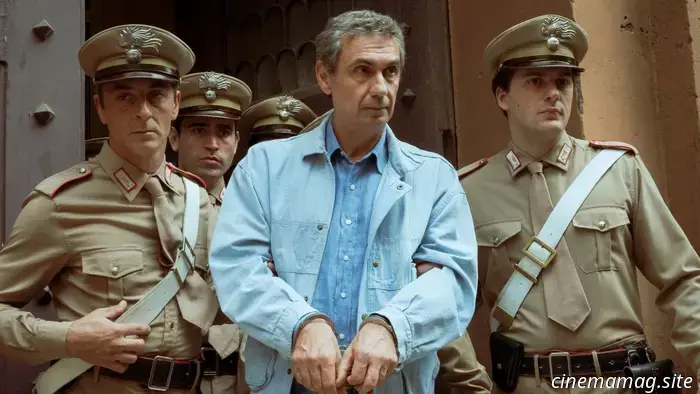 Exclusive Poster for Marco Bellocchio’s Six-Hour Portobello, Launching on HBO Max in February.
A few months ago, Marco Bellocchio celebrated his 86th birthday. He is regarded as one of Italy's most distinguished directors and is one of the few filmmakers who has remained highly productive in his later years. After Kidnapped, he is now back with Portobello, a six-hour series comprised of six episodes. The first two parts premiered at the Venice Film Festival and will soon be available.
Exclusive Poster for Marco Bellocchio’s Six-Hour Portobello, Launching on HBO Max in February.
A few months ago, Marco Bellocchio celebrated his 86th birthday. He is regarded as one of Italy's most distinguished directors and is one of the few filmmakers who has remained highly productive in his later years. After Kidnapped, he is now back with Portobello, a six-hour series comprised of six episodes. The first two parts premiered at the Venice Film Festival and will soon be available.
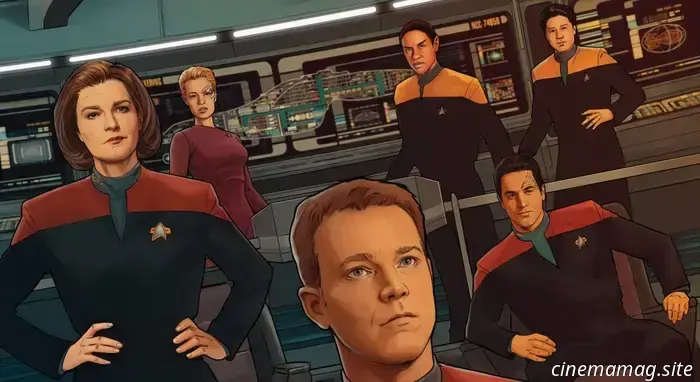 Comic Book Review – Star Trek: Voyager – Homecoming #4
IDW Publishing is set to release Star Trek: Voyager – Homecoming #4 on Wednesday, and we have the official preview of the issue for you to see below; take a look... Trapped in a difficult situation, Captain...
Comic Book Review – Star Trek: Voyager – Homecoming #4
IDW Publishing is set to release Star Trek: Voyager – Homecoming #4 on Wednesday, and we have the official preview of the issue for you to see below; take a look... Trapped in a difficult situation, Captain...
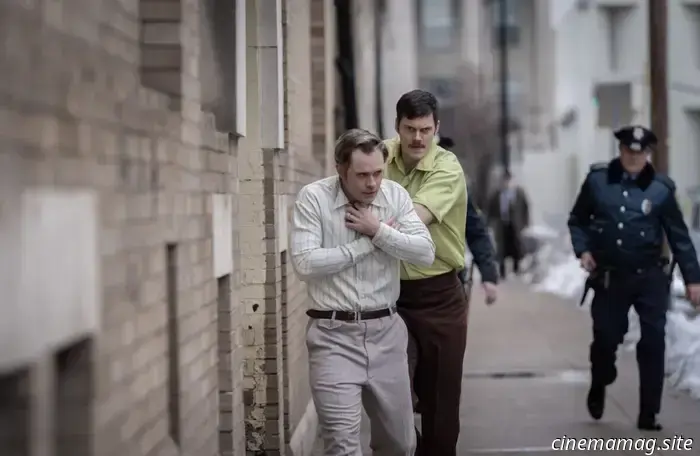 Bill Skarsgård, the star of Dead Man's Wire, claims that he is not portraying a monster this time.
Bill Skarsgård, the star of Dead Man's Wire, has portrayed many of the most iconic monsters of our era. However, he asserts that Tony Kiritsis does not fall into that category.
Bill Skarsgård, the star of Dead Man's Wire, claims that he is not portraying a monster this time.
Bill Skarsgård, the star of Dead Man's Wire, has portrayed many of the most iconic monsters of our era. However, he asserts that Tony Kiritsis does not fall into that category.
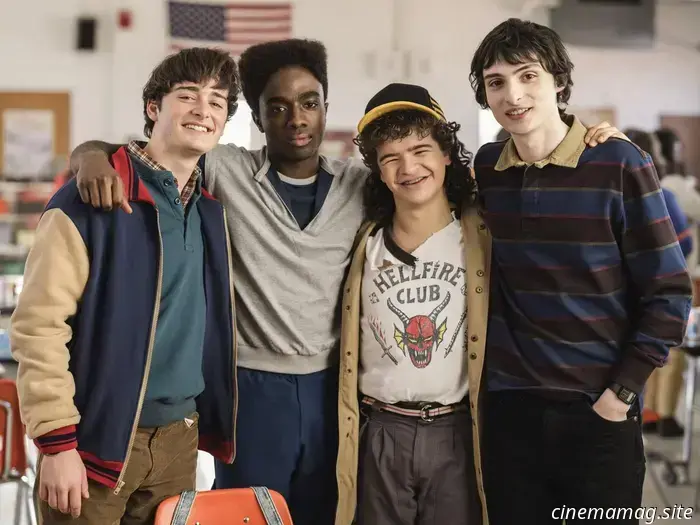 Prepare for one final adventure with the trailer for Netflix's The Making of Stranger Things 5.
Netflix has unveiled a trailer for One Last Adventure: The Making of Stranger Things 5, the forthcoming documentary that offers a behind-the-scenes look at the spectacular final season from the Duffer Brothers...
Prepare for one final adventure with the trailer for Netflix's The Making of Stranger Things 5.
Netflix has unveiled a trailer for One Last Adventure: The Making of Stranger Things 5, the forthcoming documentary that offers a behind-the-scenes look at the spectacular final season from the Duffer Brothers...
 5 Horror Films That Generated 200 Times Their Production Budget at the Box Office
Horror has consistently been a strong performer at the box office, and these five films exemplify this: Here are five iconic horror movies that achieved 200 times their budget.
5 Horror Films That Generated 200 Times Their Production Budget at the Box Office
Horror has consistently been a strong performer at the box office, and these five films exemplify this: Here are five iconic horror movies that achieved 200 times their budget.
John Fink’s Best 10 Films of 2025
In line with The Film Stage’s aggregated list of the top 50 films of 2025, which is part of our year-end review, our contributors are presenting their individual top 10 selections. In my yearly top ten, I strive to identify global trends in cinema, and while this is a somewhat ambitious endeavor, this year will be no exception. What does 2025 hold?