
Sundance Review: Public Access is a Colorful Tribute to Creativity
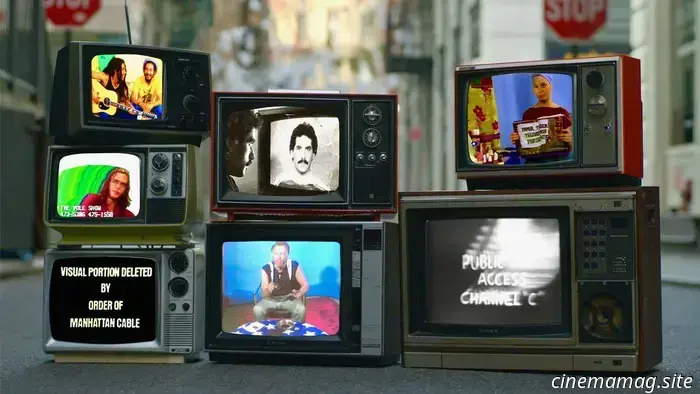
In a vibrant celebration of creativity and the limits of free speech, David Shadrack Smith’s Public Access revisits the origins of cable television, offering a rich oral history that captures its role as a societal mirror and the emergence of media creator culture. The early radical democracy and experimentation of public-access television were reflected in the work of innovators such as video artist Nam June Paik and the collective Videofreex. A year after the launch of Channel C by Manhattan Cable Television, the Videofreex, then situated in Lanesville, New York, initiated their own pirate TV station, as showcased in Jon Nealon and Jenny Raskin’s significant documentary Here Come the Videofreex.
Manhattan Cable Television (MCT) introduced its first public-access station, Channel C, in 1971, during a pre-YouTube era when it was essential for cable utilities to provide airtime for independent creators. Public access only became profitable for MCT’s parent company, Time Warner, with the introduction of Channel J—a “leased” access station that aired explicit content from the notorious swingers’ club, Plato’s Retreat.
Under Smith’s guidance, alongside editor Geoff Gruetzmacher and archival producer Anne-Marcelle Ngabirano, Public Access serves as both an oral and visual chronicle of MCT’s stations. The film includes interviews with staff, on-air personalities, hosts, and executives who were initially inspired by the platform's potential. Staff members Emily Armstrong and Pat Ivers regarded the station as a representation of art and community, viewing New York as a “testing ground for change” in culture, technology, and sexuality. They liken the influential club CBGB to public access television, noting how both have since been commodified, with nostalgia and creative expression turned into profit. Smith opts to emphasize the creative output itself rather than the subsequent “creator economy,” which tends to prioritize audience engagement over personal artistry. Early programming, as Time Warner Vice President and self-described “First Amendment lunatic” Charlotte Jones notes, provided a platform for voices far removed from mainstream narratives.
Initial Channel C programs allowed artists to "make their own damn media," with shows like TV Party that celebrated the downtown art scene and featured guests such as Fab Five Freddy, Amos Poe, Jean-Michel Basquiat, Debbie Harry, and David Byrne, giving these future icons a public venue for their expressions. Over time, however, the programming evolved to include content like Speak Your Piece, a “weekly sexual survey,” and Al Goldstein’s Midnight Blue, which presented live reports from the peep shows of 42nd Street. These programs tread a delicate line, eventually leading Channel J to become an opt-in station that was scrambled by default.
Channel J also provided an essential platform for queer-friendly content, showcasing programs like Men In Films, Emerald City, and Lou Maletta and Michael Musto’s Gay Cable Network, which offered critical information on AIDS during a period when mainstream discourse on prevention and safe sex was lacking. This explicit content sparked debates surrounding free speech, with figures such as Al Goldstein suing to challenge measures that made Channel J less accessible, viewing these as infringements on his expressive rights.
Similar to Ondi Timoner’s We Live in Public, Smith’s Public Access explores the limits of expression in a restrictive environment. It is evident that in an environment of total freedom, human behavior can shift toward extremes, even if these experiments begin innocuously. It should be noted that pornography has historically been at the forefront of technological advancement, from home video to streaming services, and public access was no different—while Channel J created challenges for Time Warner executives during the Reagan administration, it became a vital resource for the LGBTQ community.
Despite Smith and his team's extensive archival work, Public Access provides a remarkable overview of the first wave of content creators who laid the groundwork for today’s YouTubers and podcasters. While some voices, like teenager Jake Fogelnest from Squirt TV, eventually achieved mainstream success through MTV, the archive is so abundant that encapsulating this televised revolution in just 107 minutes is a daunting task. For anyone looking to explore this history, both Public Access and Here Come the Videofreex are essential viewings.
Public Access made its debut at the 2026 Sundance Film Festival.
Other articles
 Sundance Review: Aanikoobijigan Calls for an Essential Reclamation
Long before his campaign in the 1800s to displace indigenous peoples from their land, Thomas Jefferson was looting burial sites under the pretense of seeking scientific knowledge. His actions occurred before numerous archaeologists later engaged in similar activities, which involved disturbing and excavating human remains and accumulating their bodies and/or artifacts.
Exclusive Trailer for Saša Vajda's Berlinale Debut The Lights, They Fall
Starting next week, the 2026 Berlinale will offer plenty of new discoveries, one of which is the feature debut by Saša Vajda. The film, titled The lights, they fall—features actors Mohammed Yassin Ben Majdouba, Flor Prieto Catemaxca, Mahira Hakberdieva, Safet Bajraj, and Shanthi Philipp—and tells the story of a 16-year-old who meanders through summer in the outskirts of Berlin.
Sundance Review: Aanikoobijigan Calls for an Essential Reclamation
Long before his campaign in the 1800s to displace indigenous peoples from their land, Thomas Jefferson was looting burial sites under the pretense of seeking scientific knowledge. His actions occurred before numerous archaeologists later engaged in similar activities, which involved disturbing and excavating human remains and accumulating their bodies and/or artifacts.
Exclusive Trailer for Saša Vajda's Berlinale Debut The Lights, They Fall
Starting next week, the 2026 Berlinale will offer plenty of new discoveries, one of which is the feature debut by Saša Vajda. The film, titled The lights, they fall—features actors Mohammed Yassin Ben Majdouba, Flor Prieto Catemaxca, Mahira Hakberdieva, Safet Bajraj, and Shanthi Philipp—and tells the story of a 16-year-old who meanders through summer in the outskirts of Berlin.
 Comic Book Sneak Peek – Thundarr the Barbarian #1
Thundarr the Barbarian is making a comeback this week thanks to Dynamite Entertainment, which is launching a new comic series inspired by the Saturday morning cartoon from the '80s. Here’s a sneak preview…
Comic Book Sneak Peek – Thundarr the Barbarian #1
Thundarr the Barbarian is making a comeback this week thanks to Dynamite Entertainment, which is launching a new comic series inspired by the Saturday morning cartoon from the '80s. Here’s a sneak preview…
 LEGO reveals Teenage Mutant Ninja Turtles BrickHeadz set prior to its release in April.
LEGO has officially launched the Teenage Mutant Ninja Turtles BrickHeadz set, featuring buildable figures of all four Heroes in a Half Shell: Leonardo, Raphael, Michelangelo, and Donatello.
LEGO reveals Teenage Mutant Ninja Turtles BrickHeadz set prior to its release in April.
LEGO has officially launched the Teenage Mutant Ninja Turtles BrickHeadz set, featuring buildable figures of all four Heroes in a Half Shell: Leonardo, Raphael, Michelangelo, and Donatello.
 Sundance Review: Gail Daughtry and the Celebrity Sex Pass is David Wain’s Comedic Tribute to Los Angeles.
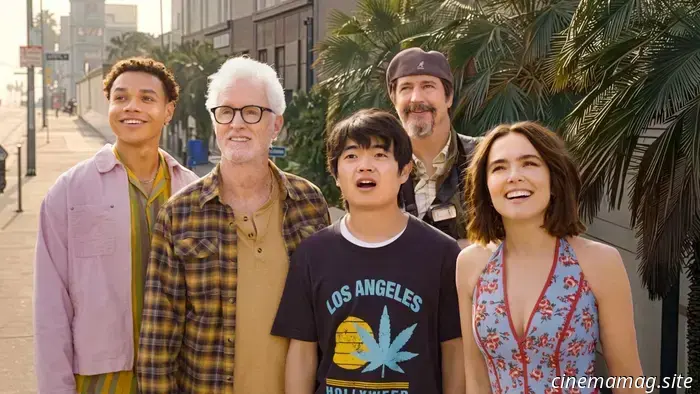
As the world keeps brewing its unpleasant culture, the team behind The State and Wet Hot American Summer has returned to shield you from the relentless barrage of bad news. At least for 90 minutes. The dynamic pair of director David Wain and screenwriter Ken Marino are now in their third decade of delivering a
Sundance Review: Gail Daughtry and the Celebrity Sex Pass is David Wain’s Comedic Tribute to Los Angeles.
As the world keeps brewing its unpleasant culture, the team behind The State and Wet Hot American Summer has returned to shield you from the relentless barrage of bad news. At least for 90 minutes. The dynamic pair of director David Wain and screenwriter Ken Marino are now in their third decade of delivering a
 Scare Out Trailer: This Month Marks the Arrival of Zhang Yimou’s Spy Thriller Featuring Jackson Yee
Following the release of six new films between 2020 and 2024, Zhang Yimou took a short break last year. However, he has returned this month with a new spy thriller. The Chinese director's latest film, Scare Out, features Jackson Yee (who was recently seen in Bi Gan's Resurrection) alongside Zhu Yilong, Song Jia, Lei Jiayin, and Yang.
Scare Out Trailer: This Month Marks the Arrival of Zhang Yimou’s Spy Thriller Featuring Jackson Yee
Following the release of six new films between 2020 and 2024, Zhang Yimou took a short break last year. However, he has returned this month with a new spy thriller. The Chinese director's latest film, Scare Out, features Jackson Yee (who was recently seen in Bi Gan's Resurrection) alongside Zhu Yilong, Song Jia, Lei Jiayin, and Yang.
Sundance Review: Public Access is a Colorful Tribute to Creativity
A vibrant celebration of creativity and the limits of free speech, David Shadrack Smith’s Public Access explores the origins of cable television, offering a nuanced oral history of its potential as a societal mirror and the initial surge of media creator culture. At first, the bold democracy and innovation of public-access television reflected the efforts of