
Sundance Review: Jaripeo Offers an Immersive Look at Mexico’s Queer Rodeo Culture
There has always been an allure to the image of the cowboy, celebrated as a symbol of traditional masculinity while also being the subject of satire. Queerness has broadened our perception of what a cowboy can or should represent, but the archetypes of figures like John Wayne or Clint Eastwood persist for many. Rebecca Zweig and Efraín Mojica’s film Jaripeo—named for and set against the backdrop of Mexican bull-riding rodeos—focuses on this image, exploring how various men attending these events question, eroticize, and humorously critique it.
Rather than providing a detailed explanation of what a jaripeo entails, Zweig and Mojica quickly create a sense of locale through both reflective visuals and informal dialogues. Traditions permeate every facet of this environment, and the diverse men they interview highlight how queerness pierces through, as well as how outdated notions of masculinity remain ingrained in some individuals, making escape impossible. Within Mexican culture, machismo is predominant, and it's fascinating to learn how these men have been distinctly shaped by it. One protagonist has opted never to reveal his sexual orientation to his family, isolates himself from the community, and yearns to date a similarly masculine cowboy, while another openly embraces his femininity, socializes with other queer individuals at church, and even discusses the idea of hosting a quinceañera at 20.
The film predominantly tracks these men in their everyday lives, either at the jaripeo or at home, but it intermittently shifts to footage from the Super 8 camera that Mojica carries, suggesting that the film stock itself embodies a queer perspective. These moments serve as a pointed examination of gay semiotics, reimagined within the context of a pueblo cowboy lifestyle rather than 1970s San Francisco. Jaripeo also showcases bold visual techniques, such as scenes of hips undulating on a mechanical bull or an evening of cruising through a cornfield that resembles a bathhouse. The uniquely crafted score by Emilia Ezeta and Marton Radics, which blends electronic and norteño elements, enhances the overall experience.
Scenes at the jaripeo are equally captivating, whether it's witnessing one protagonist transition from struggling to mount a bull to successfully riding it, or watching another don a drag appearance and interact playfully with the audience. However, the ongoing tension between masculinity and femininity is central to Jaripeo, highlighted by Mojica's challenge to one of his most masculine subjects about his aversion to both femininity and those who defy traditional norms he has been socialized to desire. The candid exchanges between the filmmaker and subjects navigate probing inquiries, a form of teasing flirtation, and genuine curiosity about the sources of arousal. Notably, Mojica refrains from passing judgment, unlike many queer critics with a focus on questioning gender norms; he recognizes that desires are often complex and hard to articulate.
Some viewers may feel dissatisfied with the relatively lightweight nature of this "slice of life" documentary, which offers only a brief peek into the experiences of a few individuals. However, the film's commitment to showcasing a small community allowed to exist and openly discuss their wishes and reservations is what makes it truly captivating. Jaripeo does not aspire to be a definitive exploration of gay cowboys, Mexican culture, queer semiotics, or any other referenced themes; instead, it values the examination of these issues and their manifestations within various communities far more than delivering a lecture.
Jaripeo made its debut at the 2026 Sundance Film Festival.
Other articles
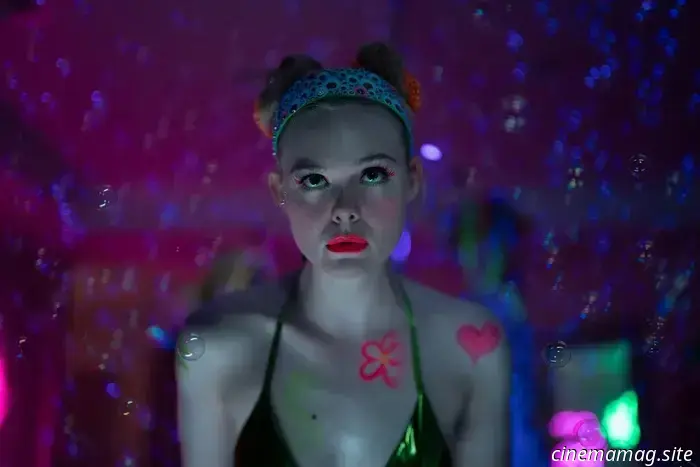 Elle Fanning joins OnlyFans in the trailer for Margo’s Got Money Troubles.
At Apple TV’s 2026 Press Day event, the initial trailer for Margo’s Got Money Troubles was unveiled. This upcoming comedy-drama series is created by David E. Kelley and is inspired by the best-selling novel...
Elle Fanning joins OnlyFans in the trailer for Margo’s Got Money Troubles.
At Apple TV’s 2026 Press Day event, the initial trailer for Margo’s Got Money Troubles was unveiled. This upcoming comedy-drama series is created by David E. Kelley and is inspired by the best-selling novel...
 What Caused Oliver Stone's Alexander to Fail – and Is There Potential for the Epic to Be Revisited? - MovieMaker Magazine
Oliver Stone's Alexander took 16 years to create and was highly anticipated prior to its release in 2004. It benefited from the excitement surrounding Gladiator and
Todd Haynes is set to begin filming De Noche with Pedro Pascal and Danny Ramirez next month.
After receiving significant praise for May December, Todd Haynes was prepared to start filming a noir romance set in 1930s Los Angeles in the summer of 2024. However, just days before production was slated to commence, Joaquin Phoenix hesitated, forcing the director to return to the drawing board.
What Caused Oliver Stone's Alexander to Fail – and Is There Potential for the Epic to Be Revisited? - MovieMaker Magazine
Oliver Stone's Alexander took 16 years to create and was highly anticipated prior to its release in 2004. It benefited from the excitement surrounding Gladiator and
Todd Haynes is set to begin filming De Noche with Pedro Pascal and Danny Ramirez next month.
After receiving significant praise for May December, Todd Haynes was prepared to start filming a noir romance set in 1930s Los Angeles in the summer of 2024. However, just days before production was slated to commence, Joaquin Phoenix hesitated, forcing the director to return to the drawing board.
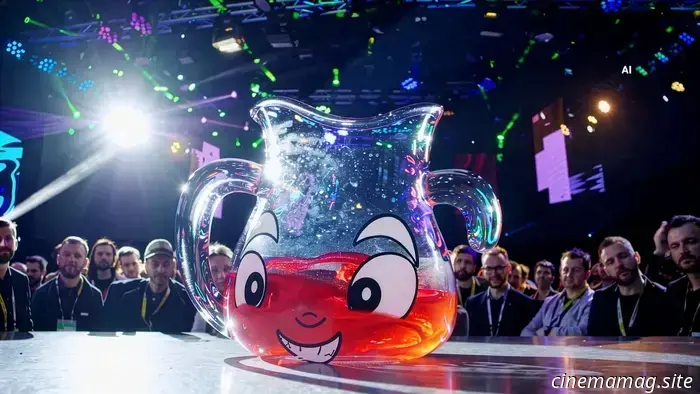 Sundance Review: Ghost in the Machine Explores the Wrongs That Underlie A.I. Technology
What is artificial intelligence exactly? What are its origins? And just how powerful is (or could) it become? Valerie Veatch's documentary, Ghost in the Machine, explores these questions and uncovers findings that are both unsettling and expected. The film offers a relatively quick and typical overview of the development of artificial intelligence—it's impactful, disheartening, and frustratingly ordinary.
Sundance Review: Ghost in the Machine Explores the Wrongs That Underlie A.I. Technology
What is artificial intelligence exactly? What are its origins? And just how powerful is (or could) it become? Valerie Veatch's documentary, Ghost in the Machine, explores these questions and uncovers findings that are both unsettling and expected. The film offers a relatively quick and typical overview of the development of artificial intelligence—it's impactful, disheartening, and frustratingly ordinary.
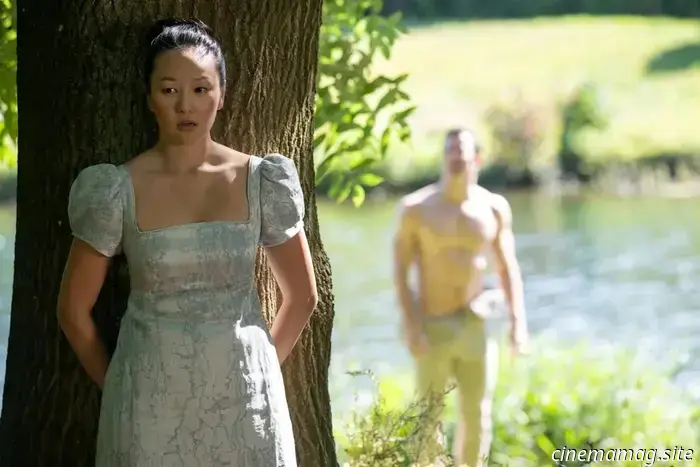 The Bridgerton season 4 part 2 trailer hints at a shift in the atmosphere.
With just over three weeks remaining until Bridgerton returns with the second part of its fourth season, Netflix has unveiled a teaser trailer and a poster for the popular period drama series; take a look at them…
The Bridgerton season 4 part 2 trailer hints at a shift in the atmosphere.
With just over three weeks remaining until Bridgerton returns with the second part of its fourth season, Netflix has unveiled a teaser trailer and a poster for the popular period drama series; take a look at them…
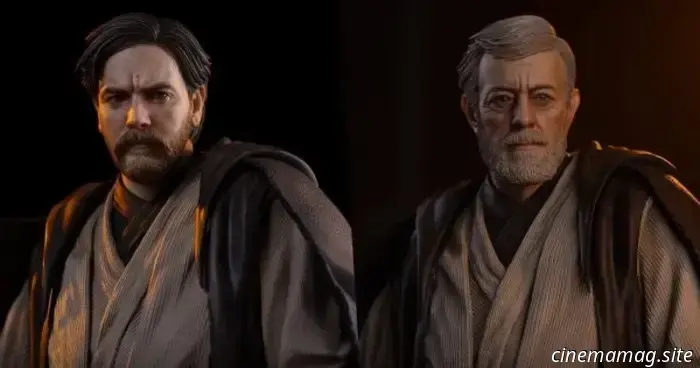 Iron Studios has revealed the Star Wars Legacy Replica statue of Obi-Wan Kenobi, complete with signatures.
Iron Studios has revealed its Star Wars Legacy Replica statue of Obi-Wan Kenobi, featuring interchangeable heads modeled after the looks of both Alec Guinness and Ewan McGregor.
Iron Studios has revealed the Star Wars Legacy Replica statue of Obi-Wan Kenobi, complete with signatures.
Iron Studios has revealed its Star Wars Legacy Replica statue of Obi-Wan Kenobi, featuring interchangeable heads modeled after the looks of both Alec Guinness and Ewan McGregor.
Sundance Review: Jaripeo Offers an Immersive Look at Mexico’s Queer Rodeo Culture
The image of the cowboy has always held a certain allure, celebrated as an embodiment of classic masculinity while also being the subject of parody. Queerness has certainly broadened our understanding of what a cowboy can and should represent, yet for many, the idea of a John Wayne or