

Matthew Libatique discusses filming Spike Lee's "Highest 2 Lowest" and Darren Aronofsky’s "Caught Stealing."
This month, two films that Matthew Libatique filmed consecutively are hitting theaters just a week apart: Spike Lee’s Highest 2 Lowest and Darren Aronofsky’s Caught Stealing.
Even though both films share a cinematographer, a production designer (Mark Friedberg), and the same urban environment, they present vastly different interpretations of what it means to live, struggle, and endure in New York.
Libatique has been the cinematographer for nearly all of Aronofsky’s films, aside from The Wrestler, and frequently collaborates with Lee, having worked on projects like She Hate Me, Inside Man, Miracle at St. Anna, and Chi-Raq.
He has a unique visual style with each director.
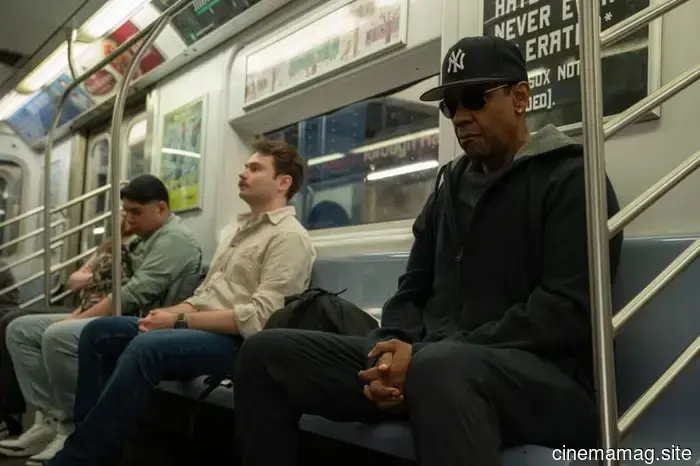
Denzel Washington stars in Highest 2 Lowest, shot by Matthew Libatique. A24.
“When you view Highest 2 Lowest, there are numerous inserts and shots—such as single shots of significant inanimate objects. It could be a portrait of Toni Morrison or a Basquiat,” Libatique explains.
“With Darren, it’s about the visceral experience. The same insert used by Spike to add depth to a character is used by Darren to express pain or emotion.”
He succinctly illustrates the contrast.
“Spike uses adjectives in his cinematic sentences, while Darren uses exclamation points.”
Matthew Libatique Discusses Shooting Different Versions of New York City
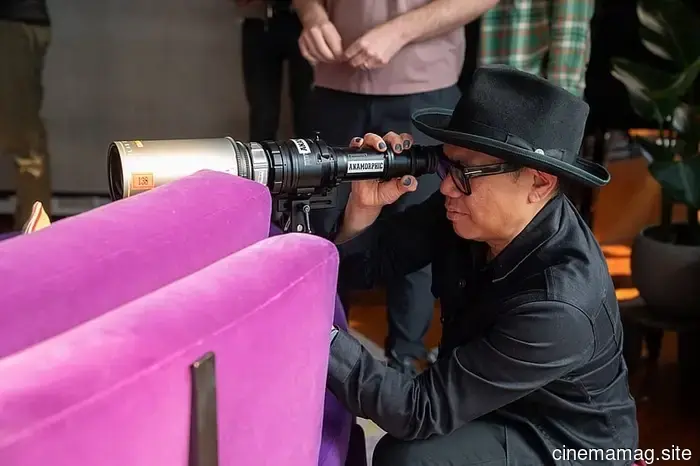
Matthew Libatique shooting Highest 2 Lowest. David Lee/A24.
The protagonists of the two films in New York City — Denzel Washington’s David King in Highest 2 Lowest and Austin Butler’s Hank in Caught Stealing — also influenced Libatique's recreation of the films’ distinct appearances.
“David’s story is one of rags to riches, born and raised in New York City. Hank is a newcomer,” Libatique notes. “They’re both New Yorkers trying to carve out their own little niche, but ultimately, their experiences are completely different.”
These differences extend to how the characters relate to the city itself.
“David hails from the Bronx. I truly believe you can sense his upbringing in the city, but he feels disconnected,” says Libatique. “In Highest 2 Lowest, just like in the original, where he lives is set apart from the rest of the city.”
Highest 2 Lowest, based on Akira Kurosawa’s 1963 film High and Low, was shot over 50 days, predominantly at Brooklyn’s Steiner Studios, where Friedberg’s team constructed a full penthouse set for David’s opulent DUMBO apartment.
A significant portion of the film’s action occurs in David’s home as he surveys his domain, overlooking the Brooklyn Bridge toward the Financial District and his company, Stackin’ Hits Records.
“That building is essential to Denzel’s character,” Libatique remarks. “It symbolizes the main character and represents our house on top of the mountain.”
In contrast, Caught Stealing marks a tonal shift for Aronofsky, whose previous films often delve into psychological themes. It tells the story of a ballplayer-turned-bartender, portrayed by Butler, who becomes entangled in the city’s dark criminal underbelly.
Despite this change, “cinematography-wise, the filmmaking and the craft remain very much aligned,” Libatique asserts.
The film immerses audiences in the gritty and eccentric East Village of the late 1990s, with scenes set in New York City’s Chinatown, Flushing Meadows, and Brighton Beach.
“There was bound to be a distinction between the two films simply due to the wealth disparity between the main characters,” Libatique explains.
“If I had not changed anything, if I employed the same lenses and camera, honestly, the films would still differ because of the design, which was ultimately guided by the characters in the script.”
Authenticity in Highest 2 Lowest and Caught Stealing
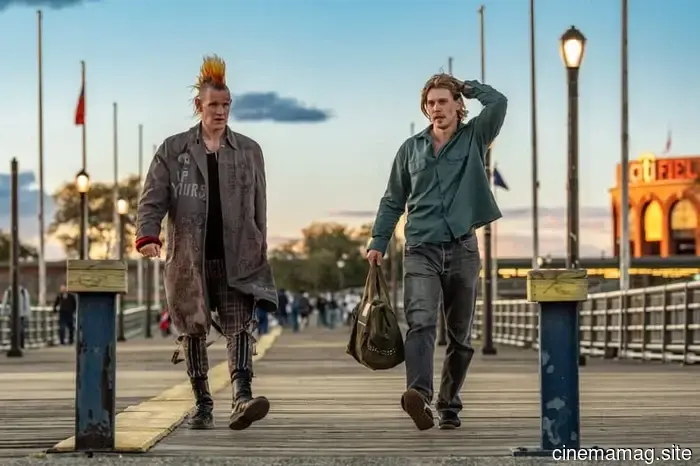
Russ (Matt Smith) and Hank (Austin Butler) on the move in Caught Stealing. Photo by Niko Tavernise. Sony Pictures.
Both films draw from classic New York cinema. In Highest 2 Lowest, a sequence set at Yankee Stadium’s 161st Street platform pays tribute to William Friedkin’s The French Connection, featuring a cat-and-mouse game between A$AP Rocky’s character, Yung Felon, and Washington’s David, reminiscent of the 1971 thriller.
Caught Stealing, on the other hand, references Martin Scorsese’s After Hours, an anxious 1985 comedy set in New York.
“After Hours begins with a dolly shot through an office space, circling around, and landing at Griffin Dunne’s desk,” Libatique remarks. “There’s a movement in Caught Stealing that slightly recalls that.”
The film also employs an ensemble approach akin to After Hours, as Butler’s Hank interacts with “a series of characters who embody the city.”
“Living in New York, you continuously meet unique individuals, whether at the post office, laundromat
Matthew Libatique discusses filming Spike Lee's "Highest 2 Lowest" and Darren Aronofsky’s "Caught Stealing."
This month, two films that Matthew Libatique filmed back-to-back are set to be released in theaters just one week apart: Spike Lee's Highest 2 Lowest and Darren.