
Andy Jurgensen on the Managed Disorder of Continuous Battles
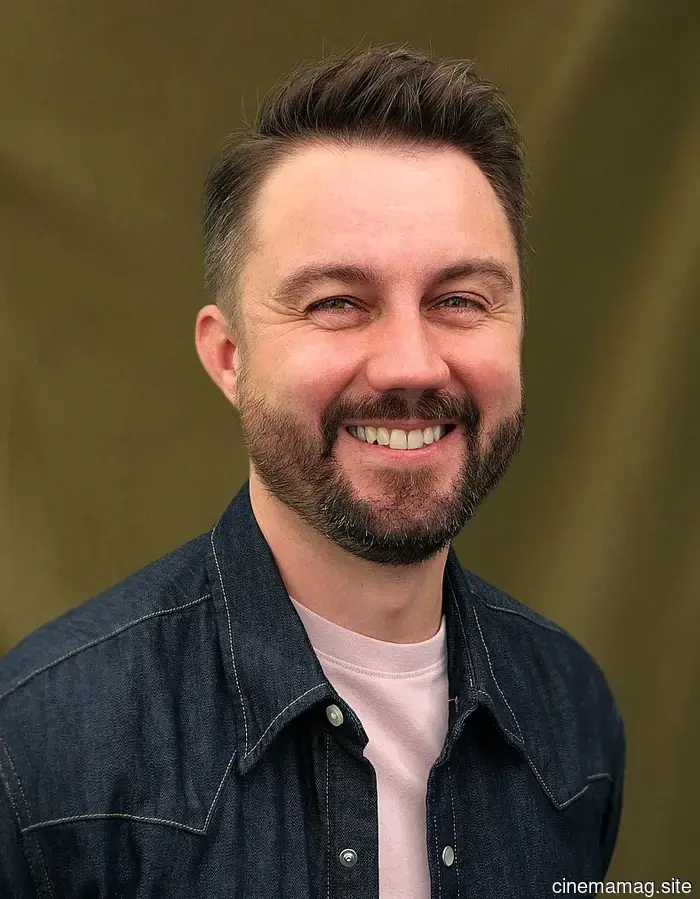
Editor Andy Jurgensen quickly discovered that editing a Paul Thomas Anderson film involves more than merely assembling footage. It requires understanding how to adapt to someone else's rhythm, particularly as the pace shifts from scene to scene.
“You begin to develop a shorthand with someone,” Jurgensen, who received his first Oscar nomination for One Battle After Another, explains. “You become attuned to his sensibilities, preferences, and the soundscapes he enjoys.”
This shorthand was crucial for One Battle After Another, Anderson’s expansive dark comedy that weaves together political satire, thrilling action, and intimate family drama, often simultaneously.
From the outset, Jurgensen recognized that his role focused more on emotional instinct than technical accuracy, even with Anderson utilizing VistaVision (a high resolution widescreen 35mm film format) for capturing the action.
“You need to embrace the moments that are meant to be satirical and humorous,” he states. “And you also have to discern when to shift gears and guide the audience through this roller coaster of emotions.”
To achieve the right tone, Jurgensen reviewed all the highlights during daily screenings with the crew and incorporated feedback from test audiences. He collaborated with composer Jonny Greenwood on key moments and diligently sought out authentic human reactions, often discovering them in the pauses between takes.
“Nothing is off-limits,” he remarks. “You must always watch the entire take. That’s the important lesson. There are no shortcuts; you have to view everything.”
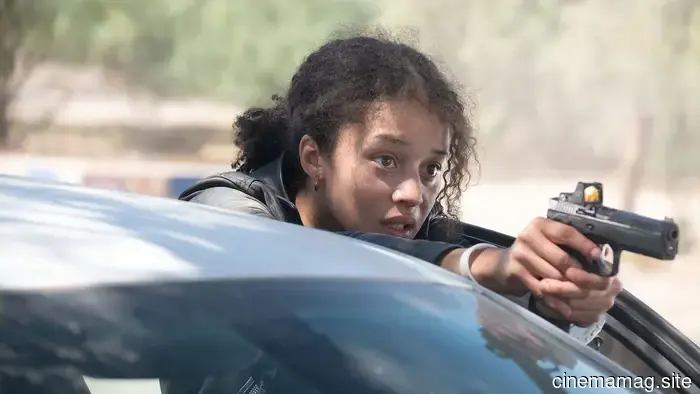
This immersion was vital in crafting the film’s widely discussed car chase scene, where three characters speed through the desert River of Hills near Borrego Springs, California. Jurgensen reveals that the scene was not storyboarded and was assembled in the edit from various locations.
The team originally collaborated with Greenwood to produce a soundscape connected to a longer version, with each car generating a distinct sound, before refining it down to the best sections.
“It ultimately evolved into what it became, and we continued adding elements in the final mix,” Jurgensen shares. “We went through numerous edits, but during test screenings, it consistently emerged as the audience's favorite part.”
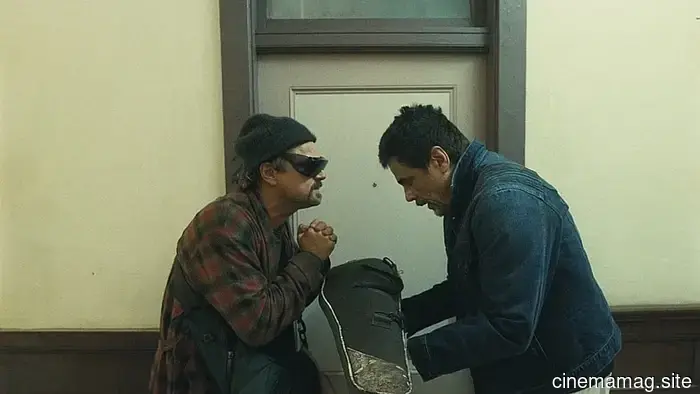
The chase scene wasn’t the only demanding sequence to create, especially with all the action elements and changing sets. Jurgensen’s favorite section to edit featured Leonardo DiCaprio and Benicio Del Toro in an apartment building, filmed in El Paso.
“It wasn’t simply about shooting on stages and piecing it together based on blocking and movement,” he explains. “We had to shift things around with soldiers coming in and out and students being interrogated, but the energy was fantastic.”
Despite the film's intentionally chaotic atmosphere, Anderson infused quiet moments into the script to give audiences space to breathe. From an editing perspective, this involved characters being still, close-ups, and absurd humor, particularly in the conversations within the Christmas Adventurers Club, the fictional white-supremacist group Sean Penn’s character joins.
“Even toward the end, there’s a camp where Willa [Chase Infiniti] is held captive, and there’s a long stretch of silence as she observes what’s happening,” Jurgensen notes. “We feel suspended, as if everyone is holding their breath before the chase scene.”
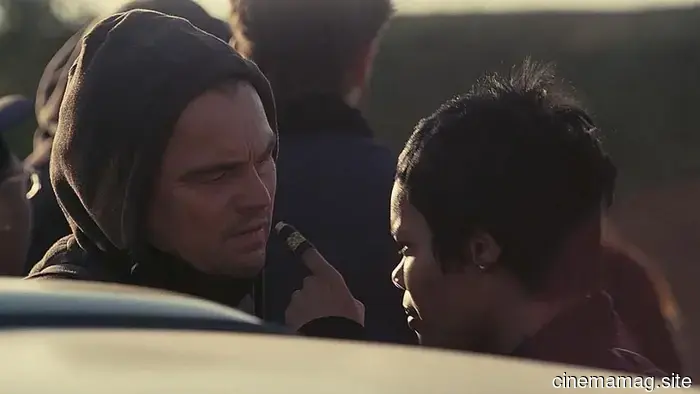
Additionally, there’s the prologue, a roughly 30-minute exploration of the backstory that leads Bob (DiCaprio) and Willa to their current circumstances. Jurgensen explains it needed to be sufficiently lengthy to establish the fictional French 75 resistance group and ensure Perfidia (Teyana Taylor) has a strong presence throughout the film, but it couldn’t be overly drawn out. This is where test audiences played a crucial role, as their feedback helped shape the narrative and emotional arcs.
One Battle After Another expertly balances intense action and comedic emotional moments.
“There was a lot to manage, and we needed it to carry weight,” Jurgensen remarks.
The outcome is a film that leverages high-stakes scenes to maintain momentum while delighting viewers with unexpected comedy. It’s a careful rhythm, with tonal shifts that demand instinct and trial and error for refinement.
“If One Battle After Another maintained a purely serious tone throughout, I don’t believe it would have been as impactful,” he suggests. “Making light of the bizarre happenings or character traits that the audience is already considering adds a humane touch. Otherwise, it's just too intense.”
One Battle After Another is currently streaming on HBO Max.
Other articles
 12 Animal Sanctuary Tales That We’re Sure You Haven't Come Across
Here are 12 Animal House anecdotes that we’re sure you haven’t come across, despite the fact that the National Lampoon phenomenon was one of the major comedy successes of the 1970s.
12 Animal Sanctuary Tales That We’re Sure You Haven't Come Across
Here are 12 Animal House anecdotes that we’re sure you haven’t come across, despite the fact that the National Lampoon phenomenon was one of the major comedy successes of the 1970s.
 The Bride!: Maggie Gyllenhaal and Jessie Buckley Embrace Something Bold
Director Maggie Gyllenhaal and star Jessie Buckley discuss their call for significant transformation through their contemporary take on a 1930s monster film influenced by the 1980s.
The Bride!: Maggie Gyllenhaal and Jessie Buckley Embrace Something Bold
Director Maggie Gyllenhaal and star Jessie Buckley discuss their call for significant transformation through their contemporary take on a 1930s monster film influenced by the 1980s.
 12 Behind-the-Scenes Tales of Kentucky Fried Movie, the Comedy That Inspired Airplane and Animal House
If it weren't for Kentucky Fried Movie, the initial film by Jim Abrahams along with his collaborators Jerry and David Zucker, we may never have seen Animal House, Airplane!,
12 Behind-the-Scenes Tales of Kentucky Fried Movie, the Comedy That Inspired Airplane and Animal House
If it weren't for Kentucky Fried Movie, the initial film by Jim Abrahams along with his collaborators Jerry and David Zucker, we may never have seen Animal House, Airplane!,
 Daryl Hannah Criticizes Her Representation in the Love Story as 'Typical Misogyny'
Daryl Hannah claims that the new FX series Love Story: John F. Kennedy Jr. & Carolyn Bessette, in which she plays a role, is full of falsehoods about her.
Daryl Hannah Criticizes Her Representation in the Love Story as 'Typical Misogyny'
Daryl Hannah claims that the new FX series Love Story: John F. Kennedy Jr. & Carolyn Bessette, in which she plays a role, is full of falsehoods about her.
 The Genuine Techniques for Transforming a $10K Film into a $1M Production - MovieMaker Magazine
Creating films independently has always revolved around creativity, perseverance, and maximizing available resources. While large studios require substantial budgets,
The Genuine Techniques for Transforming a $10K Film into a $1M Production - MovieMaker Magazine
Creating films independently has always revolved around creativity, perseverance, and maximizing available resources. While large studios require substantial budgets,
 The 17 Most Persuasive Movie Couples in Cinematic History
Here are 15 couples from movies with captivating onscreen chemistry, from Ghost to When Harry Met Sally and beyond.
The 17 Most Persuasive Movie Couples in Cinematic History
Here are 15 couples from movies with captivating onscreen chemistry, from Ghost to When Harry Met Sally and beyond.
Andy Jurgensen on the Managed Disorder of Continuous Battles
Editor Andy Jurgensen of One Battle After Another states that no topic was off-limits.