
Late Shift Review: An Extremely Intense, Focused Procedural
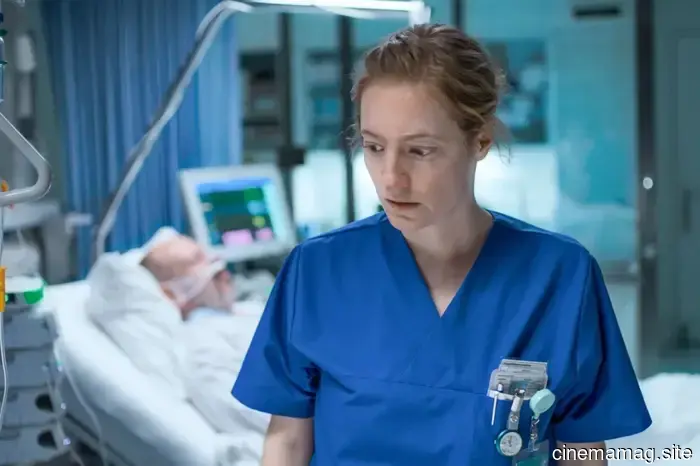
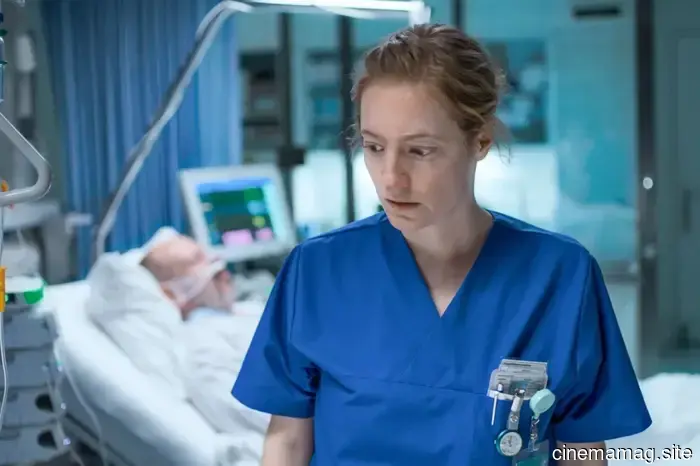
Leonie Benesch is having a tough time. Following her intense experience in the Academy Award-nominated film The Teachers’ Lounge, she takes on another challenging role in the confined atmosphere of Petra Volpe’s Late Shift, which unfolds during a night shift at an understaffed Swiss hospital. The film explores the overwhelming responsibilities faced by a nurse and her small team, depicting an environment fraught with constant interruptions that detract from urgent medical needs. Switzerland’s Oscar-shortlisted film delivers high intensity and striking resonance, although it purposefully lacks distinct personality.
As both writer and director, Volpe has created a film that serves as a character study, not of the rather nondescript nurse Floria (Benesch), but of the broader system that places its workers in life-or-death situations with minimal support. Throughout her busy rounds, we gather snippets of the health issues and backgrounds of Floria’s patients. Volpe’s detailed examination of one exhausting shift raises a larger question about the millions of other nurses worldwide who confront similar challenges (this is addressed in the film’s neatly conclusive, message-driven finale). By setting the story in Switzerland, known for its high-quality healthcare, Volpe implies that if such pressures exist in a wealthy country, conditions in less equipped hospitals must be even harsher.
As Floria attends to over two dozen patients in her surgical ward, she encounters new challenges: soiled clothing, requests for additional pain relief, patients criticizing her for not providing the preferred tea, and inquiries about misplaced glasses, along with more critical medical needs. While each issue is distinct, the common thread is that no patient is aware of the others' demands or the gravity of their requests. Each appeal comes with urgency, and Floria must handle them all with a smile. With cinematographer Judith Kaufmann’s restless camera closely tracking Floria’s every move and response, Benesch delivers a gripping portrayal of internalized anxiety. As the requests pile up, the film becomes a suspenseful question of when she will reach her breaking point. This climax arrives in a moment of heightened drama that feels somewhat overdone and heavy-handed in its class critique.
Floria’s only support is a fellow nurse and an inexperienced trainee. In the rare moments when doctors appear, they show little sensitivity or awareness of the overwhelming workload, highlighting a systemic issue that requires addressing at a higher level. The film’s episodic structure results in a straightforward bluntness in its messaging, while Emilie Levienaise-Farrouch's score often overemphasizes the emotions already conveyed by the narrative.
However, as a call for improved working conditions and compensation for nurses, its message is powerfully delivered. With gripping intensity, Late Shift cultivates empathy for those on the front lines of healthcare, effectively placing the viewer in the position of those dealing with these life-and-death situations. Given the lives they manage, a nurse’s only reprieve should not be a fleeting elevator ride between floors.
Late Shift is set to release in theaters on Friday, March 20.
Other articles
 “The Film Is More Clever Than I Am”: Christian Petzold Discusses Miroirs No. 3
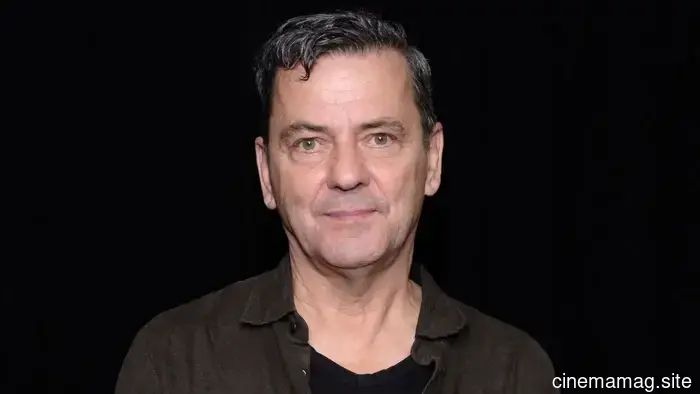
I have conducted interviews in a variety of locations: multiplexes, screening rooms, green rooms, distributor offices, post-production facilities, cafés, hotels—quite a few hotels—or any available space at the moment. (One discussion with a true architect of contemporary cinema even took place in a coat closet.) Christian Petzold is the first to have expressed regret about the room. I observed
“The Film Is More Clever Than I Am”: Christian Petzold Discusses Miroirs No. 3
I have conducted interviews in a variety of locations: multiplexes, screening rooms, green rooms, distributor offices, post-production facilities, cafés, hotels—quite a few hotels—or any available space at the moment. (One discussion with a true architect of contemporary cinema even took place in a coat closet.) Christian Petzold is the first to have expressed regret about the room. I observed
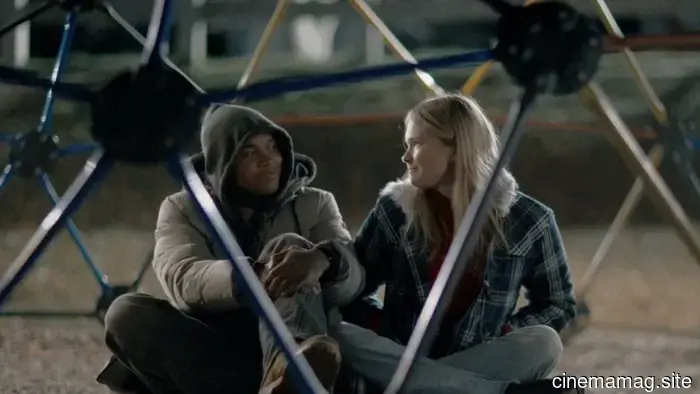 With Their Town, Ora Duplass, Mark Duplass, and Katie Aselton create a film aimed at uniting different generations.
"My parents certainly did their best to keep me away from the business for as long as possible," says Ora Duplass, who delivers an impressive performance in her feature acting debut in Their.
With Their Town, Ora Duplass, Mark Duplass, and Katie Aselton create a film aimed at uniting different generations.
"My parents certainly did their best to keep me away from the business for as long as possible," says Ora Duplass, who delivers an impressive performance in her feature acting debut in Their.
 Wild Horse Nine Trailer: John Malkovich and Sam Rockwell Star in Martin McDonagh’s Dark Comedy
After the success of 2022's The Banshees of Inisherin, Martin McDonagh is back with Wild Horse Nine, featuring John Malkovich, Sam Rockwell, Steve Buscemi, Mariana di Girolamo, Ailín Salas, Tom Waits, and Parker Posey. Although the film is not scheduled to be released until November 6, Searchlight Pictures has begun its promotional efforts with the release of the first trailer.
Wild Horse Nine Trailer: John Malkovich and Sam Rockwell Star in Martin McDonagh’s Dark Comedy
After the success of 2022's The Banshees of Inisherin, Martin McDonagh is back with Wild Horse Nine, featuring John Malkovich, Sam Rockwell, Steve Buscemi, Mariana di Girolamo, Ailín Salas, Tom Waits, and Parker Posey. Although the film is not scheduled to be released until November 6, Searchlight Pictures has begun its promotional efforts with the release of the first trailer.
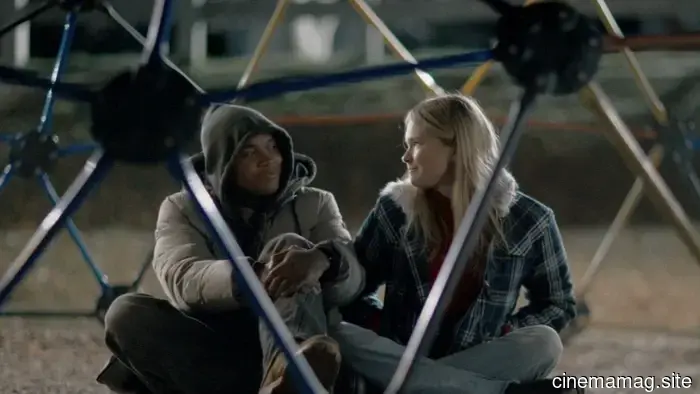 In Their Town, Ora Duplass, Mark Duplass, and Katie Aselton create a film aimed at uniting different generations.
"My parents certainly did their best to keep me out of the industry for as long as possible," says Ora Duplass, who delivers an impressive feature acting debut in Their.
In Their Town, Ora Duplass, Mark Duplass, and Katie Aselton create a film aimed at uniting different generations.
"My parents certainly did their best to keep me out of the industry for as long as possible," says Ora Duplass, who delivers an impressive feature acting debut in Their.
 Late Shift Review: An Extremely Intense, Singularly Focused Procedural
Leonie Benesch can't seem to catch a break. Following her challenging experience with the severe pressures of the educational system in the Academy Award-nominated The Teachers' Lounge, her latest role places her in another precarious situation within a confined institutional environment. In Petra Volpe's Late Shift, the story unfolds during the night shift at an understaffed facility.
Late Shift Review: An Extremely Intense, Singularly Focused Procedural
Leonie Benesch can't seem to catch a break. Following her challenging experience with the severe pressures of the educational system in the Academy Award-nominated The Teachers' Lounge, her latest role places her in another precarious situation within a confined institutional environment. In Petra Volpe's Late Shift, the story unfolds during the night shift at an understaffed facility.
 Wild Horse Nine Trailer: John Malkovich and Sam Rockwell Star in Martin McDonagh’s Dark Comedy
After the 2022 release of The Banshees of Inisherin, Martin McDonagh is back with Wild Horse Nine, featuring John Malkovich, Sam Rockwell, Steve Buscemi, Mariana di Girolamo, Ailín Salas, Tom Waits, and Parker Posey. While it’s not scheduled to hit theaters until November 6, Searchlight Pictures has begun promoting the film, releasing the first trailer.
Wild Horse Nine Trailer: John Malkovich and Sam Rockwell Star in Martin McDonagh’s Dark Comedy
After the 2022 release of The Banshees of Inisherin, Martin McDonagh is back with Wild Horse Nine, featuring John Malkovich, Sam Rockwell, Steve Buscemi, Mariana di Girolamo, Ailín Salas, Tom Waits, and Parker Posey. While it’s not scheduled to hit theaters until November 6, Searchlight Pictures has begun promoting the film, releasing the first trailer.
Late Shift Review: An Extremely Intense, Focused Procedural
Leonie Benesch isn't having an easy time. After enduring the stringent challenges of the educational system in the Academy Award-nominated The Teachers' Lounge, the actress's new role sees her navigating yet another precarious situation in a confined institutional environment. Set during a night shift at an understaffed facility, Petra Volpe's Late Shift presents its own set of challenges.