
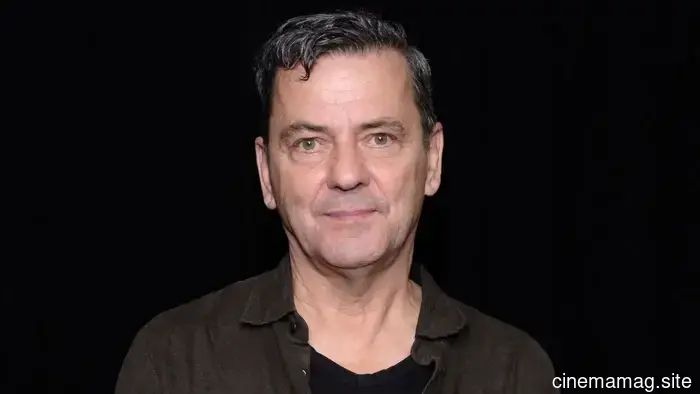
“The Film Is More Clever Than I Am”: Christian Petzold Discusses Miroirs No. 3
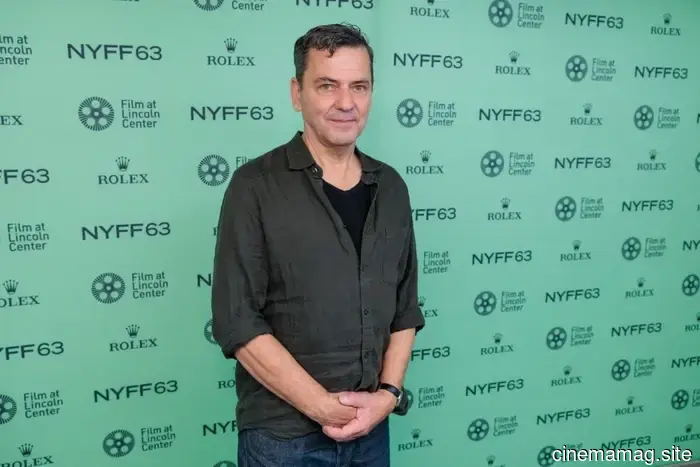
I’ve conducted interviews in a variety of locations: multiplexes, screening rooms, green rooms, distributor offices, post-production facilities, cafés, hotels—numerous hotels—or whichever space was available at the moment. (One chat with a true architect of modern cinema ended up taking place in a coat closet.) Christian Petzold is the first to apologize for the room. I noticed nothing wrong when I arrived last October for the New York Film Festival premiere of his latest work, Miroirs No. 3, but he was quick to point out that it lacked windows—a bit like a cinema, but also reminiscent of an interrogation room. “It feels a little bit like I’m guilty.”
This is the part of a filmmaker's life they often don't discuss: being flown around and jet-lagged, moved from one nondescript location to another, while having to articulate their film in ways that are often beyond coherence—outright brilliance is necessary to convince anyone that it’s worth watching. Despite being sleep-deprived after three hours and claiming his English “is a little bit poor,” Petzold passed the test (which I wouldn’t have given!) with ease, revealing insights about his perplexing film along with his views on nationalist tendencies and philosophies related to the end-credits song.
Christian Petzold: “I had a masterclass in Switzerland a couple of weeks ago with young students, and I said, ‘Don’t make this mistake with your first short or your first film. When you start to gain some recognition and receive invitations to festivals around the world, remember that there are more festivals than cinemas globally. You’ll be offered hotels—four stars, five stars—they cover your breakfast, and there’ll be evening dinners. You’ll find yourself surrounded by filmmakers and actors. But during that phase, while you’re traveling, you won’t be able to write or work because you’ll feel very lonely, even though you’re always around people. Avoid this. Decline every festival invitation by saying, ‘I can’t come; it’s not feasible for me.'”
Because it’s always the same. On my first morning at a festival, waking up in an anonymous hotel room, I often ask myself, “Why am I here?” There are some festivals—like the New York Film Festival or Berlinale—where that feeling doesn’t exist, but at most festivals, your presence isn’t crucial. The focus should be on the films and the audience, not the directors.
You premiered this film at Cannes, and you’ve participated in various interviews and press conferences for it. When it comes to films—either generally or specifically this one—do you notice your feelings and perspectives on the movie shifting as you discuss it, or is it more fixed?
No, it’s interesting. I should mention that when we completed our first edit at the end of November [2024], I already had my understanding of why I made this movie, its themes, and the metaphors involved. However, when I saw this initial version with the editor during a screening, I felt it was completely different from what I had in mind. For instance, I made a significant mistake: I included another final scene in this film. I had written the script while the Ukraine war and the Gaza situation unfolded on October 7, addressing the emerging pre-fascistic structures and racism. Thus, I drafted a very harmonious script.
There’s a film [César and Rosalie] by Claude Sautet that I greatly admire, featuring Romy Schneider and Yves Montand. The plot revolves around two men who love the same woman; they constantly bicker and fight until she becomes unable to bear it and leaves the city with both. When she returns two years later, standing in front of the fence of one of these men’s houses, she sees that they have become close friends. They no longer need her, and she begins to smile, marking the film's conclusion.
In my film, I replicated this moment: she returns to the fence, watches the family, and sees that they remain together. She smiles and opens the gate to intrude on the family's space. That was the last scene in the script, but when I viewed it in November [2024], it felt rather hollow. What was the metaphor? To be a daughter throughout one’s life? To answer your question, I’ve realized that the film is smarter than I am. The material, the actors, and the events occurring hold a life of their own, and I needed to reevaluate the structure. So in January [2025], we implemented a new final scene, and everything I wrote after viewing my own film differed greatly from what I had drafted before making it. Does that answer your question?
Yes, definitely. You’ve premiered numerous films at the Berlinale, but this one debuted at Cannes. You mentioned—rather candidly—that you’d premiered many movies in Berlin, but it
Other articles
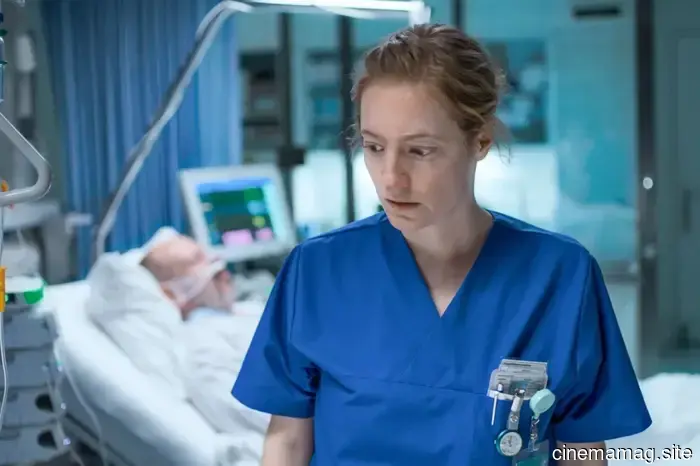 Late Shift Review: An Extremely Intense, Singularly Focused Procedural
Leonie Benesch can't seem to catch a break. Following her challenging experience with the severe pressures of the educational system in the Academy Award-nominated The Teachers' Lounge, her latest role places her in another precarious situation within a confined institutional environment. In Petra Volpe's Late Shift, the story unfolds during the night shift at an understaffed facility.
Late Shift Review: An Extremely Intense, Singularly Focused Procedural
Leonie Benesch can't seem to catch a break. Following her challenging experience with the severe pressures of the educational system in the Academy Award-nominated The Teachers' Lounge, her latest role places her in another precarious situation within a confined institutional environment. In Petra Volpe's Late Shift, the story unfolds during the night shift at an understaffed facility.
 Wild Horse Nine Trailer: John Malkovich and Sam Rockwell Star in Martin McDonagh’s Dark Comedy
After the success of 2022's The Banshees of Inisherin, Martin McDonagh is back with Wild Horse Nine, featuring John Malkovich, Sam Rockwell, Steve Buscemi, Mariana di Girolamo, Ailín Salas, Tom Waits, and Parker Posey. Although the film is not scheduled to be released until November 6, Searchlight Pictures has begun its promotional efforts with the release of the first trailer.
Wild Horse Nine Trailer: John Malkovich and Sam Rockwell Star in Martin McDonagh’s Dark Comedy
After the success of 2022's The Banshees of Inisherin, Martin McDonagh is back with Wild Horse Nine, featuring John Malkovich, Sam Rockwell, Steve Buscemi, Mariana di Girolamo, Ailín Salas, Tom Waits, and Parker Posey. Although the film is not scheduled to be released until November 6, Searchlight Pictures has begun its promotional efforts with the release of the first trailer.
 In Their Town, Ora Duplass, Mark Duplass, and Katie Aselton create a film aimed at uniting different generations.
"My parents certainly made an effort to keep me away from the industry for as long as possible," states Ora Duplass, who delivers an impressive performance in her feature acting debut in Their.
In Their Town, Ora Duplass, Mark Duplass, and Katie Aselton create a film aimed at uniting different generations.
"My parents certainly made an effort to keep me away from the industry for as long as possible," states Ora Duplass, who delivers an impressive performance in her feature acting debut in Their.
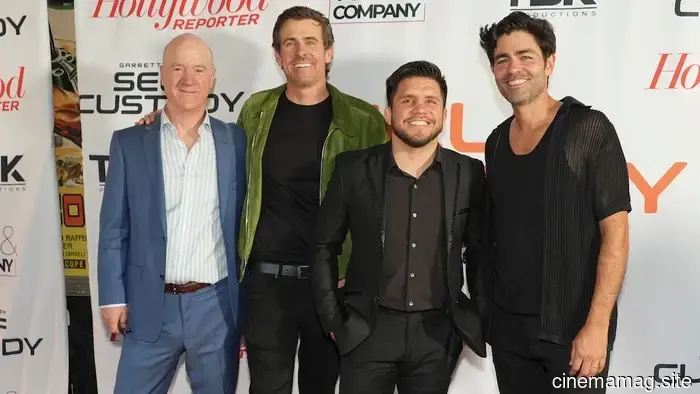 Garrett Patten's 'Self Custody' Highlights Two Perspectives on Bitcoin, Featuring Adrien Grenier and Henry.
"Self Custody," a cleverly crafted and intensely entertaining new thriller from co-director and lead actor Garrett Patten, clearly highlights both the advantages and disadvantages of Bitcoin.
Garrett Patten's 'Self Custody' Highlights Two Perspectives on Bitcoin, Featuring Adrien Grenier and Henry.
"Self Custody," a cleverly crafted and intensely entertaining new thriller from co-director and lead actor Garrett Patten, clearly highlights both the advantages and disadvantages of Bitcoin.
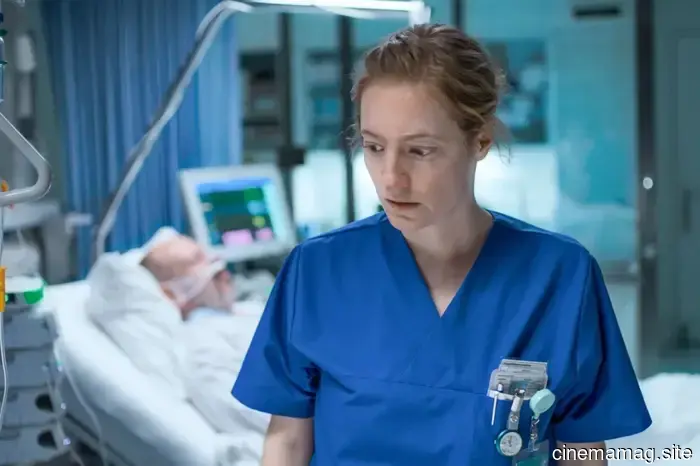 Late Shift Review: An Extremely Intense, Focused Procedural
Leonie Benesch isn't having an easy time. After enduring the stringent challenges of the educational system in the Academy Award-nominated The Teachers' Lounge, the actress's new role sees her navigating yet another precarious situation in a confined institutional environment. Set during a night shift at an understaffed facility, Petra Volpe's Late Shift presents its own set of challenges.
Late Shift Review: An Extremely Intense, Focused Procedural
Leonie Benesch isn't having an easy time. After enduring the stringent challenges of the educational system in the Academy Award-nominated The Teachers' Lounge, the actress's new role sees her navigating yet another precarious situation in a confined institutional environment. Set during a night shift at an understaffed facility, Petra Volpe's Late Shift presents its own set of challenges.
 The 12 Greatest Movie Plot Twists Ever, Ranked from Least to Most Impressive
Here is a ranking of the most impressive movie plot twists we've encountered, listed from the least to the most remarkable.
The 12 Greatest Movie Plot Twists Ever, Ranked from Least to Most Impressive
Here is a ranking of the most impressive movie plot twists we've encountered, listed from the least to the most remarkable.
“The Film Is More Clever Than I Am”: Christian Petzold Discusses Miroirs No. 3
I have conducted interviews in a variety of locations: multiplexes, screening rooms, green rooms, distributor offices, post-production facilities, cafés, hotels—quite a few hotels—or any available space at the moment. (One discussion with a true architect of contemporary cinema even took place in a coat closet.) Christian Petzold is the first to have expressed regret about the room. I observed