
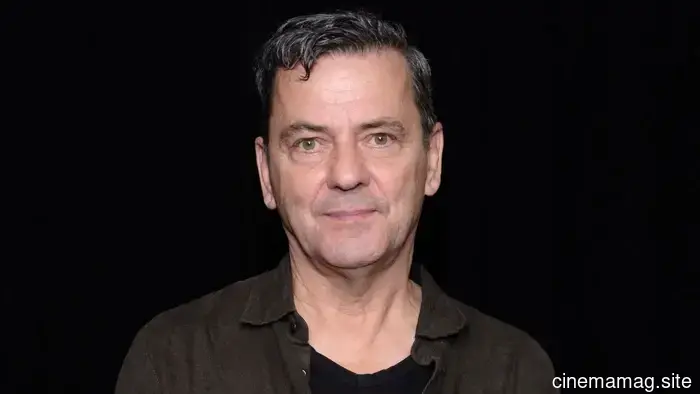
"‘The Film Is Smarter Than Me’: Christian Petzold Discusses Miroirs No. 3"
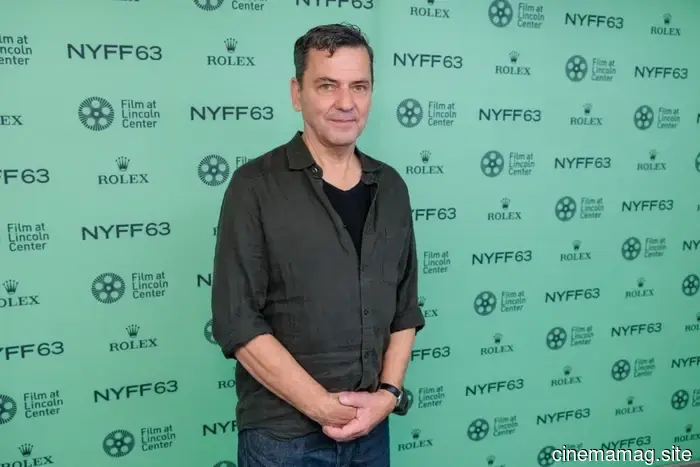
I have conducted interviews in various places: multiplexes, screening rooms, green rooms, distributor offices, post-production houses, cafés, hotels—plenty of hotels—and any space that happened to be available at the time. (One conversation with a key figure in modern cinema even took place in a coat closet.) Christian Petzold is the first to express regret about the room. I saw no issue when I arrived last October for his visit to the New York Film Festival premiere of his latest project, Miroirs No. 3, but he immediately pointed out that it lacked windows—somewhat akin to both a movie theater and an interrogation room. "It feels a bit like I'm guilty."
This is the unspoken aspect of a filmmaker's life: constantly traveling, battling jet lag, moved from one indistinct location to another while being expected to represent their film in increasingly articulate ways—absolute brilliance is often required to persuade anyone that it’s worth viewing. Despite only getting three hours of sleep and his claims that his English "is a little bit poor," Petzold rose to the occasion (which I would not impose!) with ease, discussing his perplexing film as well as the rejection of nationalist inclinations and the philosophy associated with the end-credits song.
Christian Petzold: A couple of weeks ago, I taught a masterclass in Switzerland with young students, and I advised them, “Do not make this mistake with your first short or feature. When you start receiving awards or gaining some fame, you will be invited to festivals all around the globe. There are more festivals than cinemas. Then there are hotels—four stars, five stars—they cover your breakfast, and there might be a dinner party in the evening. You are surrounded by filmmakers and actors. However, during these years of traveling, you can’t write or work on anything because you feel very isolated, despite the constant company. Avoid this at all costs. Decline every festival invitation with a firm ‘I can’t attend; it’s impossible for me.’”
The experience is largely the same each time. When I wake up in an anonymous hotel room on the first morning of a festival, I often ask myself, “What am I doing here?” Certain festivals—such as the New York Film Festival and the Berlinale—don’t evoke that feeling, but at most others, there’s little reason to be present. It’s the films and the audience that really matter, not the directors.
You screened this film at Cannes, and you’ve done several interviews and press conferences for it. Do you find that your feelings and perspective on the film evolve as you discuss it, or do you hold a more fixed view?
No, that's an interesting question. I should mention that when we finished our first edit at the end of November [2024], I had already formulated some ideas about why I made this movie and what it represents, such as its metaphors. However, when I viewed this initial cut with the editor at a screening, it felt entirely different from what I had in mind. For instance, I made a significant error; the final scene I had envisioned was different. When creating the script, I was influenced by the events surrounding the Ukraine war, Gaza, the situation from October 7th onward, and the rise of pre-fascist structures and racism. Consequently, I wrote an overly harmonious script.
There’s a film [César and Rosalie] by Claude Sautet that I really admire, featuring Romy Schneider and Yves Montand. This story unfolds between two men in love with the same woman, leading them into constant conflict. Eventually, she can no longer endure it and departs the city with both of them. Two years later, she returns, stands by the fence of one of their homes, and through an open window, she observes that these two men have become close friends. They no longer need her, and in that moment, she begins to smile, marking the film’s conclusion.
I mirrored this element in my own film, where she again returns to the fence and watches the family together. She smiles, opens the gate, and, as I scripted, intrudes upon the family’s space. That was the final line of the original script, but when I saw it in November [2024], it felt empty. What did it symbolize? To be a daughter for one’s entire life? In addressing your question, I perceive the film as being more intelligent than I am. The material, the actors, and the circumstances all possess their own life, which compelled me to rethink the structures. Consequently, in January [2025], we crafted a new final scene, reshaping everything I had previously outlined after viewing the film, representing a drastic shift from my initial ideas. Does that answer your question?
Yes, definitely. You’ve premiered numerous films at the Berlinale, but this one debuted at Cannes. You mentioned quite candidly that “
Other articles
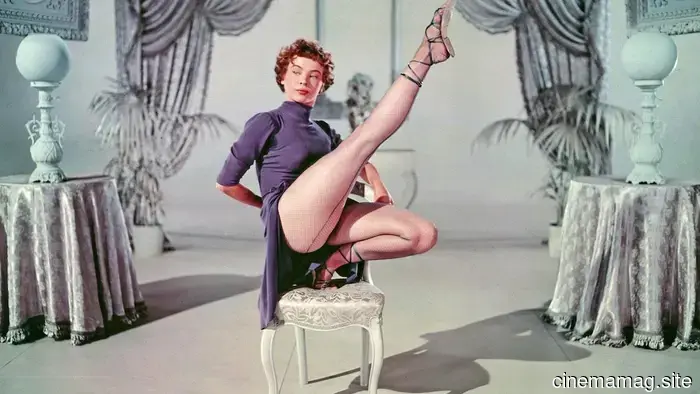 12 Films from the 1950s That Remain Enjoyable to View
These films from the 1950s are not only excellent but also entertaining.
12 Films from the 1950s That Remain Enjoyable to View
These films from the 1950s are not only excellent but also entertaining.
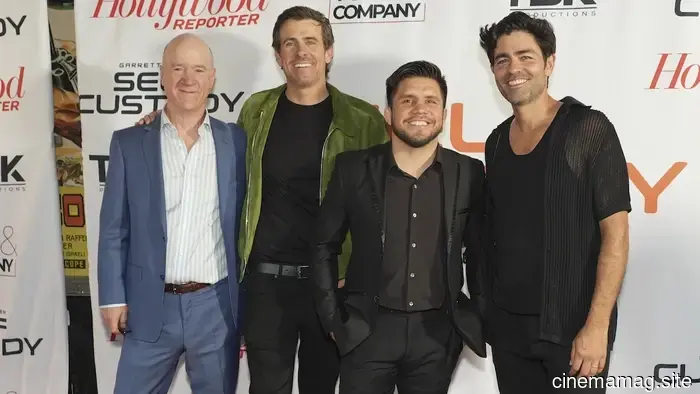 Garrett Patten's 'Self Custody' Reveals Dual Aspects of Bitcoin, Featuring Adrien Grenier and Henry.
"Self Custody," a clever and intensely entertaining new thriller co-directed by and starring Garrett Patten, effectively highlights both the positive and negative aspects of Bitcoin.
Garrett Patten's 'Self Custody' Reveals Dual Aspects of Bitcoin, Featuring Adrien Grenier and Henry.
"Self Custody," a clever and intensely entertaining new thriller co-directed by and starring Garrett Patten, effectively highlights both the positive and negative aspects of Bitcoin.
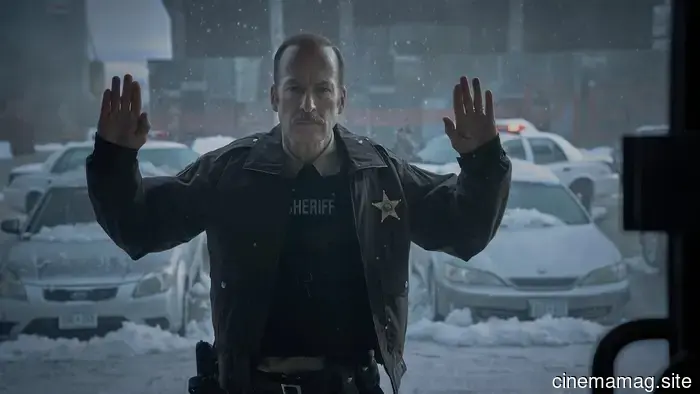 Normal With Bob Odenkirk Is an Instant Classic in Action
Normal, which was shown on Sunday at SXSW, follows a well-known premise: A new sheriff arrives in town. Fortunately, he is portrayed by the actor from Mr. Show, Breaking Bad, and Better Call.
Normal With Bob Odenkirk Is an Instant Classic in Action
Normal, which was shown on Sunday at SXSW, follows a well-known premise: A new sheriff arrives in town. Fortunately, he is portrayed by the actor from Mr. Show, Breaking Bad, and Better Call.
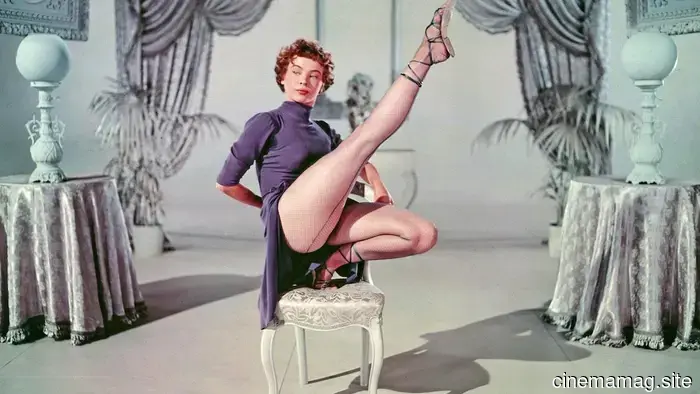 12 Films from the 1950s That Remain Enjoyable to View
These films from the 1950s are both enjoyable and excellent.
12 Films from the 1950s That Remain Enjoyable to View
These films from the 1950s are both enjoyable and excellent.
 The 12 Greatest Movie Plot Twists Ever, Ranked from Least to Most Impressive
Here is a ranking of the best movie plot twists we've encountered, starting from the least impressive to the most remarkable.
The 12 Greatest Movie Plot Twists Ever, Ranked from Least to Most Impressive
Here is a ranking of the best movie plot twists we've encountered, starting from the least impressive to the most remarkable.
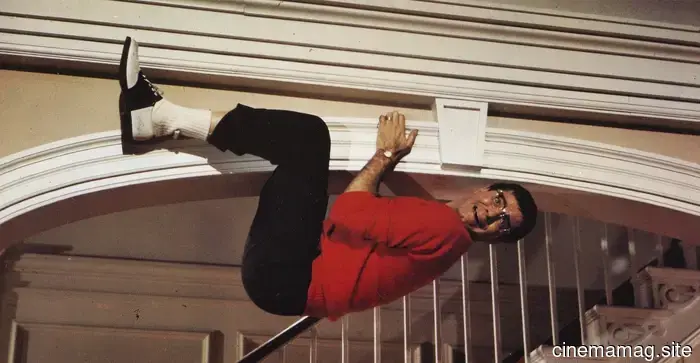 NYC Weekend Guide: Godard and Lewis, Hou Hsiao-hsien, The Man Who Shot Liberty Valance & More
NYC Weekend Watch is our weekly summary of repertory screenings. Anthology Film Archives presents Metaphysics of the Pratfall, showcasing films (mostly on 35mm) by Jean-Luc Godard and Jerry Lewis. The Museum of Modern Art features works by Kiarostami, Hou Hsiao-hsien, Milos Forman, and Bergman on 35mm as part of A View from the Vaults: The 1980s, along with films by Billy.
NYC Weekend Guide: Godard and Lewis, Hou Hsiao-hsien, The Man Who Shot Liberty Valance & More
NYC Weekend Watch is our weekly summary of repertory screenings. Anthology Film Archives presents Metaphysics of the Pratfall, showcasing films (mostly on 35mm) by Jean-Luc Godard and Jerry Lewis. The Museum of Modern Art features works by Kiarostami, Hou Hsiao-hsien, Milos Forman, and Bergman on 35mm as part of A View from the Vaults: The 1980s, along with films by Billy.
"‘The Film Is Smarter Than Me’: Christian Petzold Discusses Miroirs No. 3"
I have conducted interviews in various environments: multiplexes, screening rooms, green rooms, distributor offices, post-production facilities, cafés, hotels—numerous hotels—or any available space at the time. (One discussion with a true pioneer of contemporary cinema even took place in a coat closet.) Christian Petzold is the first to apologize for the setting. I observed