
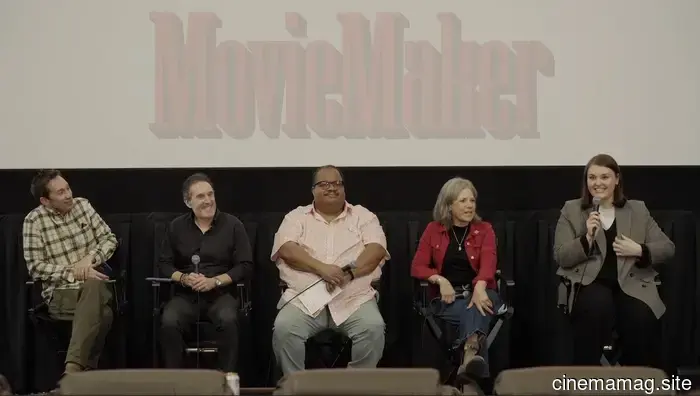
Sustainability is essential for being among the top locations to live and work as a filmmaker.
When representatives from four of our Best Places to Live and Work as a Moviemaker gathered in Austin last weekend, they all agreed that one factor contributing to the city's emergence as a film hub was its commitment to sustainability and its ability to avoid the pitfalls of a boom-and-bust cycle.
The panel featured Edmonton Screen CEO Luke Azevedo, Kansas City Film Office director Rachel Kephart, Albuquerque film liaison Cyndy McCrossen, and Martin C. Jones, head of Austin Studios. They met at the Alamo Drafthouse Cinema Mueller, located just minutes from Austin Studios, and talked about utilizing tax incentives, training programs, and strategic planning to foster a sustainable film community. You can view the panel discussion in the video linked above or here.
Kephart pointed out that anyone on the panel could relate to the concept that if a project arrives that is too large and receives all the incentives, it could lead to filmmakers and studios being turned away for the remainder of the year, which leaves a lasting impact and may prevent their return. “Therefore, having a strategy to avoid rapid or excessive development is essential,” she stated.
Azevedo highlighted the importance of identifying your niche and finding ways to differentiate yourself in these challenging times for the industry.
“You can’t just show up and voice complaints,” Azevedo remarked. “You must offer solutions for the current environment, which has been affected by mergers and acquisitions, shrinking budgets, rising expectations, and a decrease in global projects,” he explained. “At this moment, we need to focus inward, ensuring that our local producers and creators have opportunities they might not have had previously.”
McCrossen mentioned that despite Albuquerque's population being just over half a million, it effectively serves the film community, thanks to the collaboration of New Mexico's state and local governments to train and employ local talent.
“We're definitely competing above our weight against much larger cities, which we accomplish through our community spirit and cultural identity,” McCrossen noted. “The incentives were structured to build the crew from the ground up.”
For the full list of the Best Places to Live and Work as a Moviemaker in 2026, click here.
Martin C. Jones from Austin Studios on Creating a Sustainable Film Scene
Many regions have long aspired to replicate Austin’s success, one of the earliest cities to demonstrate that a lasting American film hub can exist outside of New York and Los Angeles.
Jones highlighted that both the studio he oversees and the Alamo Drafthouse location that hosted the panel were built on what used to be the Robert Mueller Municipal Airport. Local filmmakers Richard Linklater and Robert Rodriguez advocated for this space to be transformed into studio facilities. The area also now features hundreds of new homes and businesses developed over recent years.
“You're standing on the site of the old airport,” Jones shared with the audience. “Twenty-five years ago, when it closed, Rick and Robert approached the city about converting those old airplane hangars into a movie-making venue. Fast forward 25 years, and we’ve hosted over 1,200 projects at our studio. We have seven sound stages, two office buildings, and a backlot. People enjoy staying at the lovely boutique hotel, The Origin, nearby. With work, their commute is just a quick three minutes. They can also spend time at the lake, ride bikes, jog, do Pilates or Orange Theory, visit the Alamo Drafthouse, and our studio is just a mile away, with 60 restaurants in the vicinity.”
He explained that such development has been the result of community patience, a vision that Linklater initiated in 1985.
“It didn’t happen overnight; it's been a 40-year journey,” Jones reflected. “Gather your community, start building, and before you know it, you’ll have your infrastructure and foundation.”
Edmonton Screen CEO Luke Azevedo on Supporting Emerging Filmmakers
Azevedo achieved notable success establishing Alberta as a premier film destination while serving as the film commissioner in Calgary before he took on the role of CEO at Edmonton Screen. While the industry is experiencing a slowdown in many parts of the U.S., it is gaining momentum in Edmonton, aided by incentives like Edmonton Screen’s Elevation Program, which provides direct investment into local film and TV projects.
Azevedo is particularly focused on nurturing the many emerging Indigenous filmmakers in the region.
“I work for an organization that is fortunate enough to provide substantial support, so we’re not only looking to attract outside productions, but we also want to expand and nurture local production. A key priority for us is to elevate the many talented Indigenous producers in our area. We aspire to become one of the leading locations globally for Indigenous production.”
One of Edmonton's most exciting recent successes is Skinamarink, an atmospheric horror film created by local filmmaker Kyle Edward Ball for just $10,000. The film grossed over $2 million at the box office, catching the interest of A24, which subsequently
Other articles
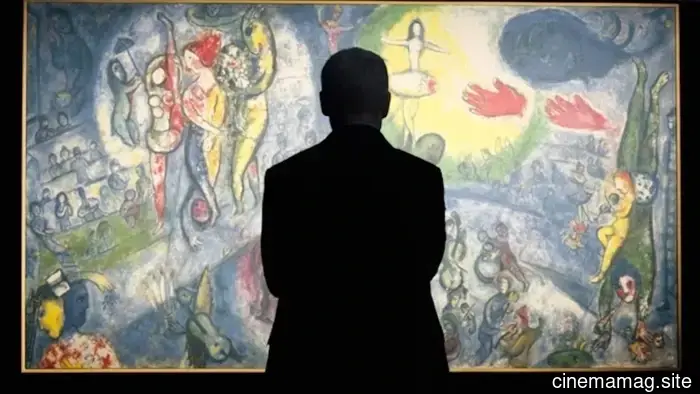 The Oligarch and the Art Dealers Examine the Hidden Transactions of the Extremely Wealthy
Andreas Dalsgaard's docuseries, The Oligarch and the Art Dealer, offers a captivating insight into the obscure dynamics of global financial flows.
The Oligarch and the Art Dealers Examine the Hidden Transactions of the Extremely Wealthy
Andreas Dalsgaard's docuseries, The Oligarch and the Art Dealer, offers a captivating insight into the obscure dynamics of global financial flows.
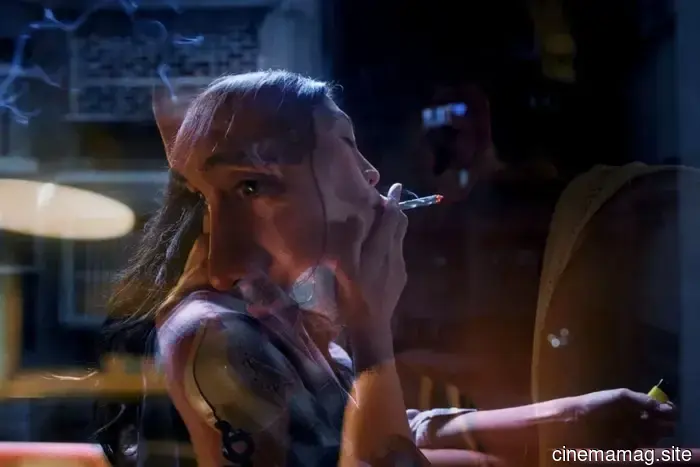 MoMI Reveals Initial 2026 Programming Schedule
The Museum of the Moving Image has announced its program for the 15th edition of First Look, the museum's festival showcasing new and groundbreaking international cinema, scheduled for April 23 to May 3, 2026. The festival will kick off with James N. Kienitz Wilkins's The Misconceived and conclude with Isabel Sandoval's Moonglow, featuring Rachel Lambert's Carousel, which stars Chris Pine.
MoMI Reveals Initial 2026 Programming Schedule
The Museum of the Moving Image has announced its program for the 15th edition of First Look, the museum's festival showcasing new and groundbreaking international cinema, scheduled for April 23 to May 3, 2026. The festival will kick off with James N. Kienitz Wilkins's The Misconceived and conclude with Isabel Sandoval's Moonglow, featuring Rachel Lambert's Carousel, which stars Chris Pine.
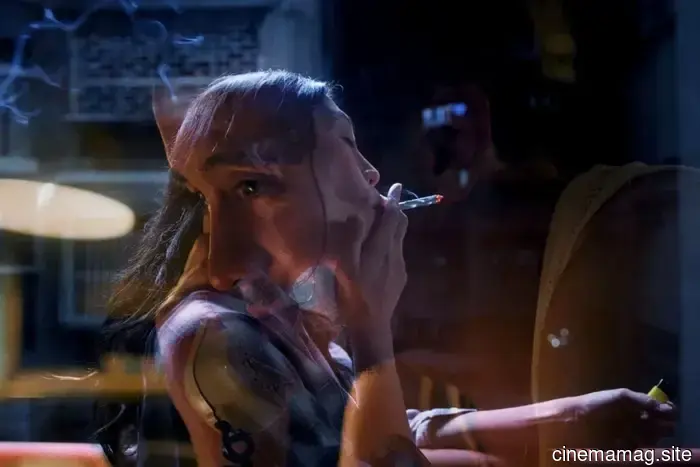 MoMI Reveals Initial 2026 Lineup
The Museum of the Moving Image has announced its program for the 15th edition of First Look, the festival dedicated to showcasing new and innovative international cinema, scheduled for April 23–May 3, 2026. The event will open with The Misconceived by James N. Kienitz Wilkins and conclude with Moonglow by Isabel Sandoval. Additionally, the lineup features Carousel, directed by Rachel Lambert and starring Chris Pine.
MoMI Reveals Initial 2026 Lineup
The Museum of the Moving Image has announced its program for the 15th edition of First Look, the festival dedicated to showcasing new and innovative international cinema, scheduled for April 23–May 3, 2026. The event will open with The Misconceived by James N. Kienitz Wilkins and conclude with Moonglow by Isabel Sandoval. Additionally, the lineup features Carousel, directed by Rachel Lambert and starring Chris Pine.
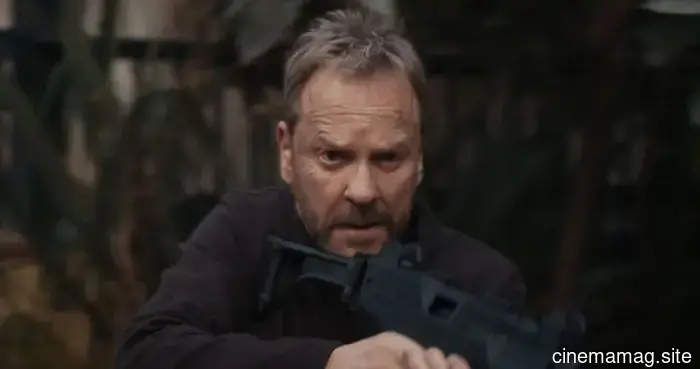 The trailer for Brothers Under Fire features Kiefer Sutherland in a confrontation with a Mexican cartel.
Vertical has unveiled a poster and trailer for Brothers Under Fire, the forthcoming action thriller directed by Justin Chadwick (The Other Boleyn Girl, Mandela: Long Walk to Freedom). Kiefer Sutherland…
The trailer for Brothers Under Fire features Kiefer Sutherland in a confrontation with a Mexican cartel.
Vertical has unveiled a poster and trailer for Brothers Under Fire, the forthcoming action thriller directed by Justin Chadwick (The Other Boleyn Girl, Mandela: Long Walk to Freedom). Kiefer Sutherland…
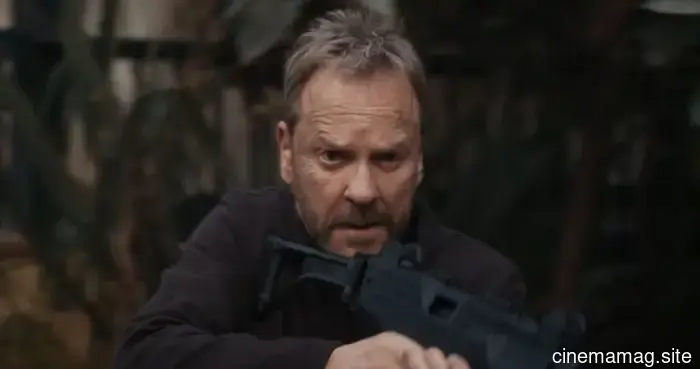 The trailer for Brothers Under Fire features Kiefer Sutherland facing off against a Mexican cartel.
Vertical has unveiled a poster and trailer for Brothers Under Fire, the forthcoming action thriller directed by Justin Chadwick (The Other Boleyn Girl, Mandela: Long Walk to Freedom). Kiefer Sutherland…
The trailer for Brothers Under Fire features Kiefer Sutherland facing off against a Mexican cartel.
Vertical has unveiled a poster and trailer for Brothers Under Fire, the forthcoming action thriller directed by Justin Chadwick (The Other Boleyn Girl, Mandela: Long Walk to Freedom). Kiefer Sutherland…
 The initial Japanese trailer for Hirokazu Kore-eda’s Sheep in the Box, ready for its premiere at Cannes.
Add another guaranteed Cannes Film Festival debut to the list. "Sheep in the Box," Hirokazu Kore-eda's initial feature of 2026 (which comes before his adaptation of "Look Back"), is scheduled to be released in Japan on May 29, making it ready for a world premiere at the French festival. In anticipation of the release, the first Japanese trailer has now been unveiled.
The initial Japanese trailer for Hirokazu Kore-eda’s Sheep in the Box, ready for its premiere at Cannes.
Add another guaranteed Cannes Film Festival debut to the list. "Sheep in the Box," Hirokazu Kore-eda's initial feature of 2026 (which comes before his adaptation of "Look Back"), is scheduled to be released in Japan on May 29, making it ready for a world premiere at the French festival. In anticipation of the release, the first Japanese trailer has now been unveiled.
Sustainability is essential for being among the top locations to live and work as a filmmaker.
When representatives from four of our Best Places to Live and Work as a Moviemaker met in Austin over the weekend, they concurred that one way the host city