
The Mountain Review: An Adorable Kiwi Story About Companionship
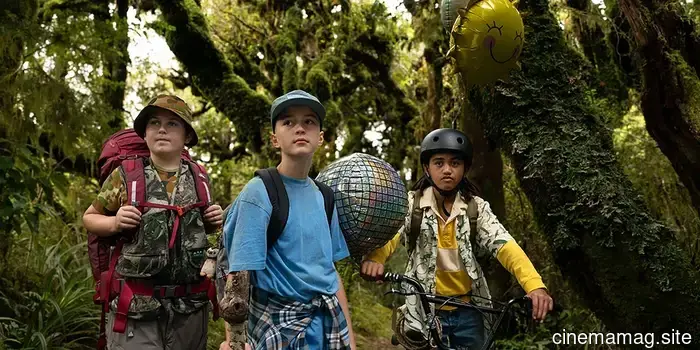
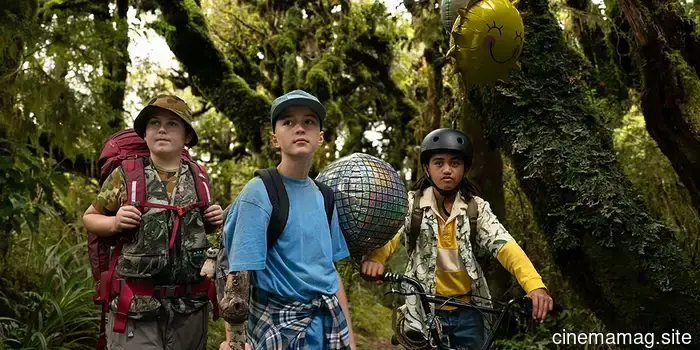
It’s no surprise that Rachel House gives primary credit at the conclusion of her feature debut to Te Kāhui Tupua, the mountain central to The Mountain. Co-written by Tom Furniss (based on his original story), the film tells the story of a young girl named Sam (played by Elizabeth Atkinson) who decides to climb its peak to implore them to use their power to save her life. Having recently learned that her cancer has returned, she hopes that connecting with the ancestry of the father she never knew might assist her. As a result, Sam escapes from the hospital in search of Taranaki Maunga, determined to discover her identity and overcome her illness with the support of two new friends she meets along the journey.
Mallory (Reuben Francis) joins the adventure because his late mother (who passed away from cancer) always dreamed of hiking it with him and his father, Hugh (Byron Coll). Today is her birthday, and he asks if they can climb in her memory, but is met with a quick dismissal. Conversely, Bronco (Terence Daniel) has no specific goal. He is merely trying to escape and live in the wild as a guardian of nature. He feels resentment over having to move and leaving home early to keep his father, Tux (Troy Kingi), company, only to find that Tux's job consumes all his time. So when Mallory agrees to take on the role of Sherpa for Sam, Bronco decides to tag along.
Much of the film centers around this young trio building a friendship during an unplanned adventure they are creating as they go. We learn about their lives and the pain they are experiencing while they gaze at the stars, sharing Māori myths and wishes for guidance. Meanwhile, Hugh and Tux realize their sons are missing just as Sam’s mother, Wendy (Fern Sutherland), also becomes aware of this. With the emotionless Peachy (Sukena Shah) included in the mix, this group rushes to the mountain to ensure the kids' safety and to find forgiveness for the circumstances that led to their departure. Hugh is easily swayed by a courtesy text from Mallory, while Tux and Wendy require a bit more persuasion.
It’s a charming Kiwi story about friendship and understanding. Each character grapples with some form of loneliness and loss without any real way to heal. Although Sam isn’t specifically seeking friendship (she says she “doesn’t do friends”), her escaping from the hospital ultimately brings everyone together in a time of urgent need. However, don’t assume this means House and Furniss are building towards a neatly tied-up happy ending. Cute doesn’t necessarily mean easy. Despite being a comedy with likable characters and humorous moments, the core narrative revolves around cancer. The shadow of death doesn’t fade just because the film knows how to entertain.
The Mountain excels at treating its family audience with the respect they deserve. It avoids talking down to them or sugar-coating what the children are enduring. It also steers clear of excessive sentimentality, which often plagues adult narratives dealing with similar themes due to our shared desire to avoid uncomfortable truths. That’s not to imply that Mallory and Bronco are unaware of Sam’s situation and prognosis; they simply choose not to let it dictate their interactions with her. If she claims she’s fine, they have no reason to think otherwise. It's only when it becomes evident that she is struggling that they step in with genuine concern, free from the pity Sam cannot tolerate.
I appreciate how House portrays Taranaki through the clouds enveloping its peak. What initially appears to be a stylistic decision that Sam interprets as a sign (when the clouds clear, she’ll know the mountain is welcoming her) eventually transforms into a supernatural barrier compelling her (and others) to confront the reality of their situation. While death looms over the entire narrative, the ultimate message conveyed is one of acceptance. Accepting the present (Bronco), the past (Mallory), and the future (Sam). The same applies to their parents—acknowledging that their children are stronger than they realize and that their inclination to overprotect is more about their own fears than their children's well-being.
Although these themes are rich, the plot itself is somewhat minimal. The stakes are not particularly high, and the humor primarily consists of straightforward jokes that rely heavily on the performances of Atkinson, Francis, and Daniel. At one point, I glanced at my watch, surprised to see only 25 minutes remaining, feeling as though not much had transpired. But that’s intentional, right? These kids aren’t meant to advance too far ahead of the adults; the lesson is to be learned collectively. The script deliberately takes its time, allowing the themes to resonate. I would prefer that approach any day.
The Mountain will be released in theaters on Friday, April 17.
Other articles
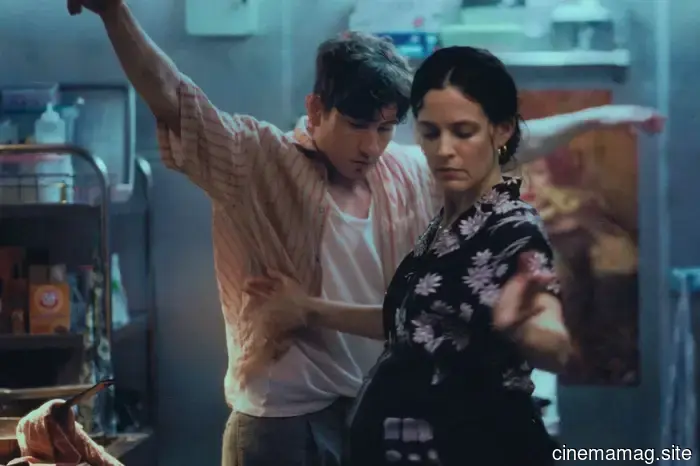 La selección de la Quincena de los Directores de Cannes 2026 incluye a Radu Jude, Lisandro Alonso, Kantemir Balagov, Clio Barnard y otros.
After the announcement of the key sections of the 2026 Cannes Film Festival last week, we now have the lineups for three additional sidebars. Notably, Directors' Fortnight has disclosed its exciting selection, featuring Kantemir Balagov’s Butterfly Jam, which stars Barry Keoghan and Riley Keough, Radu Jude's Diary of a Chambermaid, and Lisandro Alonso's Double.
La selección de la Quincena de los Directores de Cannes 2026 incluye a Radu Jude, Lisandro Alonso, Kantemir Balagov, Clio Barnard y otros.
After the announcement of the key sections of the 2026 Cannes Film Festival last week, we now have the lineups for three additional sidebars. Notably, Directors' Fortnight has disclosed its exciting selection, featuring Kantemir Balagov’s Butterfly Jam, which stars Barry Keoghan and Riley Keough, Radu Jude's Diary of a Chambermaid, and Lisandro Alonso's Double.
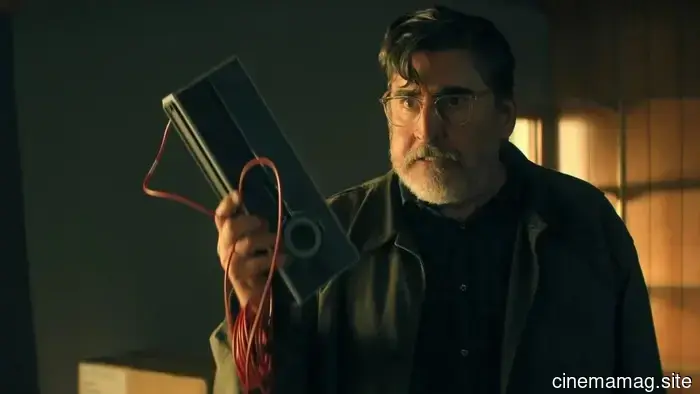 Alfred Molina stars as a senior in the trailer for Netflix's The Boroughs, reminiscent of Stranger Things.
Netflix has unveiled the trailer for The Boroughs, a comedic film set in a retirement home that features Alfred Molina, Alfre Woodard, and Bill Pullman as they battle time-stealing supernatural entities. The project is executive produced by Th…
Alfred Molina stars as a senior in the trailer for Netflix's The Boroughs, reminiscent of Stranger Things.
Netflix has unveiled the trailer for The Boroughs, a comedic film set in a retirement home that features Alfred Molina, Alfre Woodard, and Bill Pullman as they battle time-stealing supernatural entities. The project is executive produced by Th…
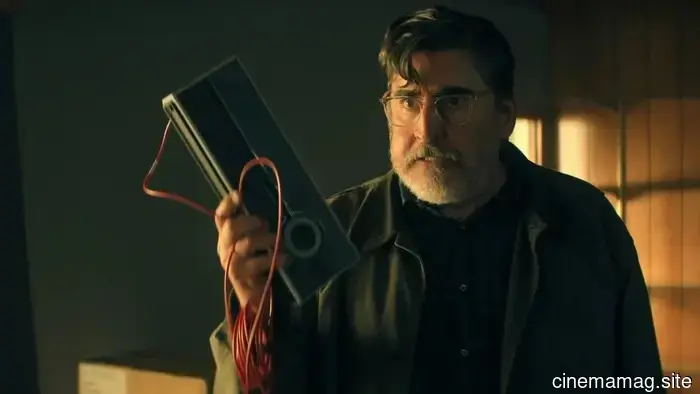 Alfred Molina stars in a senior role in the trailer for Netflix’s The Boroughs.
Netflix has unveiled the trailer for The Boroughs, a comedic story set in a retirement home that features Alfred Molina, Alfre Woodard, and Bill Pullman facing off against time-thieving supernatural entities. The series is executive produced by Th…
Alfred Molina stars in a senior role in the trailer for Netflix’s The Boroughs.
Netflix has unveiled the trailer for The Boroughs, a comedic story set in a retirement home that features Alfred Molina, Alfre Woodard, and Bill Pullman facing off against time-thieving supernatural entities. The series is executive produced by Th…
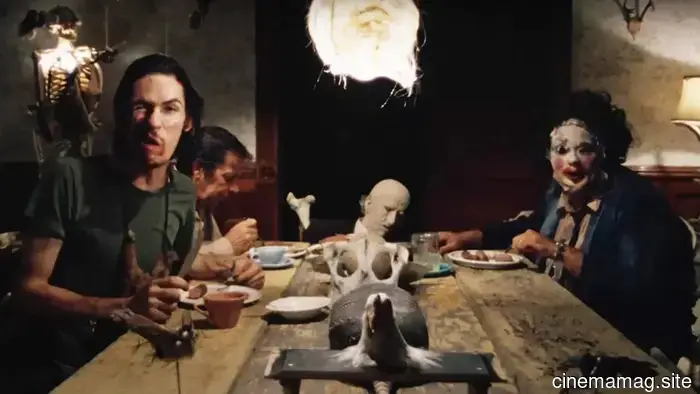 The Surprising Humor in The Texas Chain Saw Massacre
Is there a lot of humor associated with The Texas Chain Saw Massacre? Really? Which institution did you break out from? Seriously, there is. Numerous fans of the original movie are aware that Gunnar Hansen, wh...
The Surprising Humor in The Texas Chain Saw Massacre
Is there a lot of humor associated with The Texas Chain Saw Massacre? Really? Which institution did you break out from? Seriously, there is. Numerous fans of the original movie are aware that Gunnar Hansen, wh...
 The Mountain Review: A Charming Kiwi Story of Friendship
It’s not unexpected that Rachel House acknowledges Te Kāhui Tupua, the mountain that is central to The Mountain, as her first credit at the conclusion of her feature debut. Co-written by Tom Furniss (based on his original story), the film tells the story of a young girl (Sam, played by Elizabeth Atkinson) who chooses to ascend the peak to make a request.
The Mountain Review: A Charming Kiwi Story of Friendship
It’s not unexpected that Rachel House acknowledges Te Kāhui Tupua, the mountain that is central to The Mountain, as her first credit at the conclusion of her feature debut. Co-written by Tom Furniss (based on his original story), the film tells the story of a young girl (Sam, played by Elizabeth Atkinson) who chooses to ascend the peak to make a request.
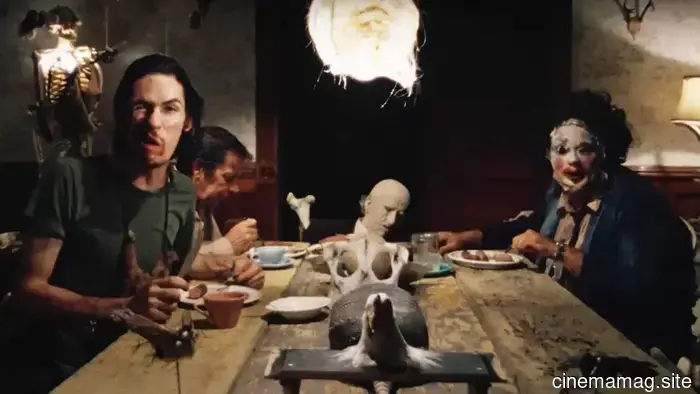 The Surprising Comedy in The Texas Chain Saw Massacre
There's quite a bit of humor related to The Texas Chain Saw Massacre, right? Of course, friend. Which institution did you break out of? Seriously though, there is. A lot of fans of the original movie are aware that Gunnar Hansen, who...
The Surprising Comedy in The Texas Chain Saw Massacre
There's quite a bit of humor related to The Texas Chain Saw Massacre, right? Of course, friend. Which institution did you break out of? Seriously though, there is. A lot of fans of the original movie are aware that Gunnar Hansen, who...
The Mountain Review: An Adorable Kiwi Story About Companionship
It's not unexpected that Rachel House attributes her initial thanks at the conclusion of her feature debut to Te Kāhui Tupua, the mountain that is at the heart of The Mountain. Co-written by Tom Furniss (based on his original story), the film centers on a young girl (Sam, played by Elizabeth Atkinson) who chooses to ascend the peak to make a request.