
Mother Mary Review: A Personal, Metaphysical Duet
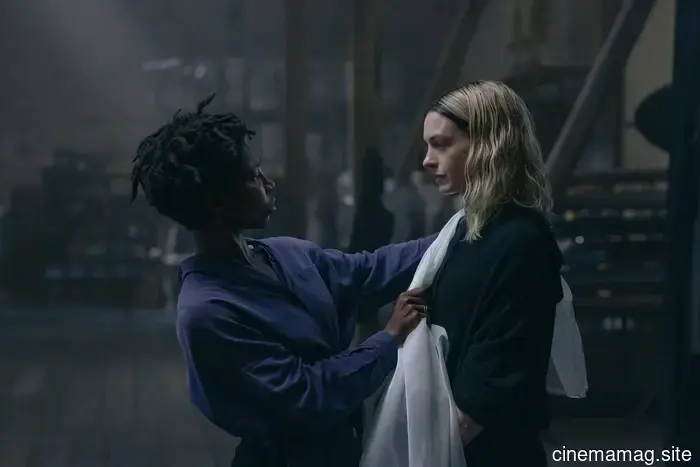
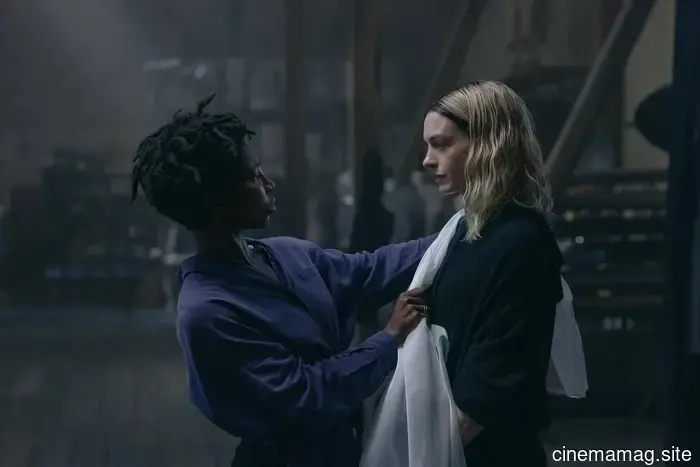
The first sound we hear in *Mother Mary* is Michaela Coel’s voice. She foreshadows the arrival of Mother Mary and cautions us that this story carries a curse. Anyone who has been tuned into television over the past ten years would recognize the richness and clarity of her voice. However, now on the big screen, we experience it louder than ever before. Writer-director David Lowery establishes the setting for *Mother Mary*, but it is Coel—portraying the spurned, sharp-tongued fashion designer Sam Anselm—who takes the spotlight. Coel commands the screen, capturing our full attention; while she has appeared in films previously, *Mother Mary* feels like her significant debut. Residing on a vast, shadowy property in England, Sam has isolated herself from society. All she has are her creations, her devoted assistant Hilda (Hunter Schafer), and enough passion to fend off encroaching feelings of boredom. Crucially, Sam is also a woman tormented by love, her fervor fueled by lingering, profound heartbreak.
And what could be more dramatic than ending a relationship with a world-renowned pop star? To add further insult, their breakup remains a secret. Therefore, when Mother Mary (Anne Hathaway) shows up at Sam’s home seeking a dress, Sam has every reason to reject her former lover. Instead, she wields casual cruelty, delivering cutting remarks with a twisted smile. Mother Mary endures Sam’s barbs, alternating between apologetic gestures and intense emotional upheavals.
There isn't a single man among the primary cast of *Mother Mary*. While men appear in the concert audiences during performances, it feels as though they are nonexistent otherwise. Lowery’s latest ghost story is solely about women—including Kaia Gerber, Jessica Brown Findlay, Alba Baptista, Atheena Frizzell, Isaura Barbe-Brown, Sian Clifford, and pop star FKA Twigs. Yet at its core, *Mother Mary* centers on the dynamic between Coel and Hathaway, portrayed with care and intimacy. Similar to his previous work, *A Ghost Story*, *Mother Mary* explores emotional distance through metaphysical elements. This time, the ghost serves as a connecting thread that keeps these women linked after a decade apart.
Hathaway depicts Mother Mary as a symbol of divine sorrow in high heels, with long, straight hair and various halo-like headpieces. Incorporating elements of Madonna, Lana Del Rey, and a hint of Mitski, Mother Mary offers the notion of a pop star, lacking a fully developed character. Nonetheless, her emotional isolation and depression feel authentic—Hathaway avoids any false notes. Instead, she emphasizes Mary’s emptiness as a central theme. Mother Mary shines on stage, yet off stage, she struggles to identify who she truly is. She returns to Sam in search of answers. Sam often expresses frustration that her old friend has always left the heavy lifting to her. Still, Mother Mary has little to offer beyond her voice and presence.
Though it remains unspoken, the queerness of Lowery’s film is clear. While these two women are in love, a happy resolution eludes them. Their reconnection is bittersweet, driven by their deep need for one another, bordering on obsession. Some couples part ways because their love has faded. Yet, it can be even more excruciating when love still exists, strong enough to potentially ruin them both if they fully yield to it. The sorrow that accompanies this understanding resides within both women. Ultimately, they must decide how to handle it.
*Mother Mary* premieres in theaters on Friday, April 17.
Other articles
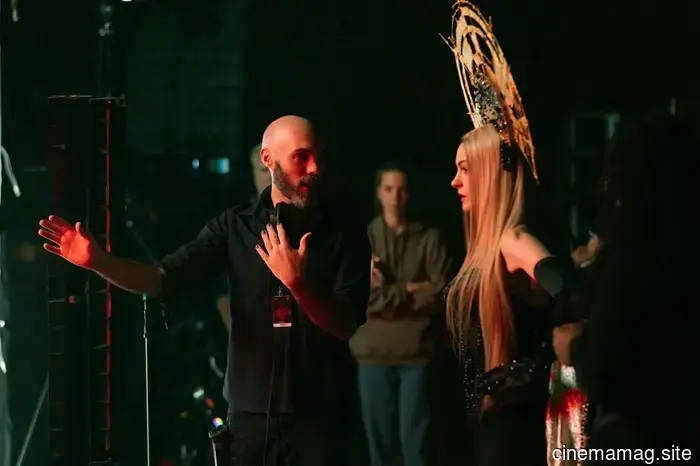 David Lowery discusses Mother Mary, Beyoncé, and how he channels his worries into a pop icon.
Viewing David Lowery’s Mother Mary prompted me to recall a moment from Todd Field’s Tár, where Lydia Tár reprimands a Juilliard student for his arrogant disregard of the Western canon. Field has indicated that Tár is essentially engaging in a debate with a younger version of herself: two individuals, two
David Lowery discusses Mother Mary, Beyoncé, and how he channels his worries into a pop icon.
Viewing David Lowery’s Mother Mary prompted me to recall a moment from Todd Field’s Tár, where Lydia Tár reprimands a Juilliard student for his arrogant disregard of the Western canon. Field has indicated that Tár is essentially engaging in a debate with a younger version of herself: two individuals, two
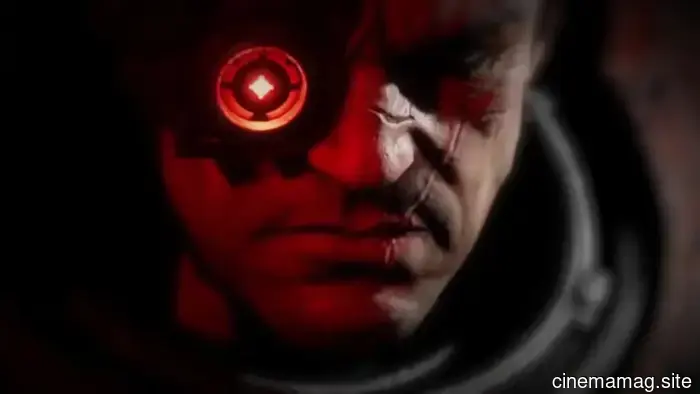 Over twenty classic Warhammer titles are now available on Steam as part of Warhammer Classics.
Publisher SNEG, in collaboration with Games Workshop, has launched Warhammer Classics, a compilation of retro Warhammer games, on Steam. This latest collection revives numerous classic titles from Warhammer and Warhammer 40,000…
Over twenty classic Warhammer titles are now available on Steam as part of Warhammer Classics.
Publisher SNEG, in collaboration with Games Workshop, has launched Warhammer Classics, a compilation of retro Warhammer games, on Steam. This latest collection revives numerous classic titles from Warhammer and Warhammer 40,000…
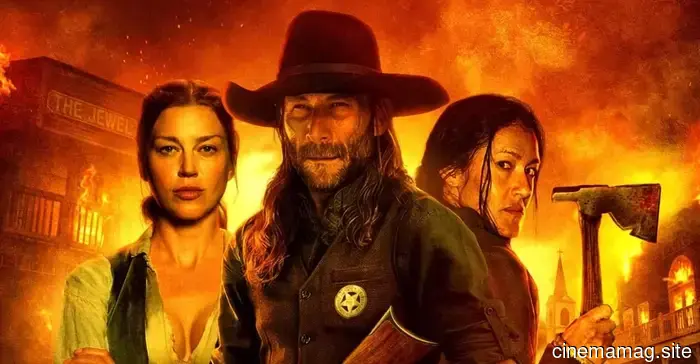 Teaser for the supernatural folk horror film The Wolf and the Lamb.
In anticipation of its release later this month, Samuel Goldwyn Films has released a trailer for the supernatural folk horror film The Wolf and the Lamb. Written and directed by Michael Schilf, the movie takes place in the…
Teaser for the supernatural folk horror film The Wolf and the Lamb.
In anticipation of its release later this month, Samuel Goldwyn Films has released a trailer for the supernatural folk horror film The Wolf and the Lamb. Written and directed by Michael Schilf, the movie takes place in the…
 Jamie Dornan set to portray Aragorn as The Lord of the Rings: The Hunt for Gollum releases teaser.
As The Lord of the Rings makes its comeback to theaters, it is essential to create a sense of significance to draw the fanbase back to the levels it achieved with The Return of the King. If this year's C…
Jamie Dornan set to portray Aragorn as The Lord of the Rings: The Hunt for Gollum releases teaser.
As The Lord of the Rings makes its comeback to theaters, it is essential to create a sense of significance to draw the fanbase back to the levels it achieved with The Return of the King. If this year's C…
 Mother Mary Review: An Intimate, Metaphysical Duo
The initial sound we encounter in Mother Mary is Michaela Coel’s voice. She forewarns us of Mother Mary’s impending arrival, cautioning that this narrative is cursed. Anyone who has been watching TV over the past ten years would likely recognize the depth and clarity of her voice. However, now on the big screen, we receive
Mother Mary Review: An Intimate, Metaphysical Duo
The initial sound we encounter in Mother Mary is Michaela Coel’s voice. She forewarns us of Mother Mary’s impending arrival, cautioning that this narrative is cursed. Anyone who has been watching TV over the past ten years would likely recognize the depth and clarity of her voice. However, now on the big screen, we receive
.jpg) 11 Unapologetic '80s Comedies That Ignore Whether You'll Be Offended (and One That Actually Cares)
These comedies from the '80s were produced during an era when audiences were more accepting of risky humor.
11 Unapologetic '80s Comedies That Ignore Whether You'll Be Offended (and One That Actually Cares)
These comedies from the '80s were produced during an era when audiences were more accepting of risky humor.
Mother Mary Review: A Personal, Metaphysical Duet
The opening of Mother Mary introduces us to the voice of Michaela Coel. She foresees Mother Mary’s coming and cautions us that this tale is doomed. Any viewer who has been tuned into television over the past ten years would notice the depth and clarity of her voice. However, now we experience it on the big screen, we receive