

Blue Film Review: A Skillful Two-Person Drama Addresses Flaws with Compassion
In recent times, the term “provocation” has lost its intensity. Nowadays, it seems that simply making a few careless offensive remarks or addressing every divisive mainstream issue to press people's buttons is enough to provoke a reaction. While eliciting a response from others is relatively easy, encouraging genuine contemplation is a different challenge altogether. In that regard, Blue Film is truly provocative. Elliott Tuttle’s film aims to disturb, interrogate, and, indeed, provoke viewers. However, more than anything, it strives to foster understanding for both central characters, urging us to perceive them as complex, flawed individuals, even if we prefer not to.
Aaron Eagle (Kieron Moore) is shown hosting a cam show—complete with glitchy video and crude comments—where he portrays a straight, masculine, dominant “bro” who just finished working out, hurling insults at his audience as part of a humiliation play routine. Among the viewers is a man initially seen wearing a balaclava; we later discover his name is Hank (Reed Birney), who has hired Aaron for an evening. Their opening scenes establish both the foundation of the night and the themes Tuttle aims to delve into, as Hank initially seems to desire an experience akin to sex, lies, and videotape, where Aaron shares his background, sexual history, and the reasons behind his choice to become a camboy. Yet a disconnect emerges: Aaron interprets this as just part of a kink, or perhaps a “scene” he’s been contracted to enact. In contrast, Hank becomes frustrated by Aaron's lack of honesty. One of the film's clever elements is the use of various camera formats, ranging from home-movie interludes (Tuttle’s own) to grainy camcorder footage that lends Aaron’s interview an intimate feel reminiscent of “amateur” pornography (which will be significant later).
The controversy unfolds when Hank’s true identity is unveiled: he is actually Mr. Grant, Aaron’s former seventh-grade English teacher and a convicted sex offender who attempted to molest a young boy when Aaron (whose real name is Alex) was in high school. Furthermore, he was infatuated with Alex while he was a student, and this meeting serves as his attempt to determine if that love still exists. It’s not difficult to see why several major festivals turned it down (I viewed it at the Philadelphia Film Festival): Hank candidly expresses his desires and what attracted him to Alex, and Birney portrays him like an ordinary elderly gay man, with the instincts of a teacher still evident. Yet, what is crucial to this endeavor—alongside Birney’s portrayal of warmth and normalcy—is Aaron’s continual questioning and resistance to Hank’s reasoning and justifications. Much of Blue Film consists of dialogues and monologues that touch on desire, sexuality, and perversion as a form of spirituality, as well as what “honesty” truly means. Moore’s performance suggests an immaturity and petulance stemming from something deep within Alex—possibly due to trauma, or perhaps not. In a powerful monologue, he expresses that despite being loved by his parents, he still developed into who he is: as much of a pervert as Hank, but for different reasons. Both men are honest to an extent, but do they genuinely believe one another? More importantly, do we, the audience, perceive them as being truthful with us?
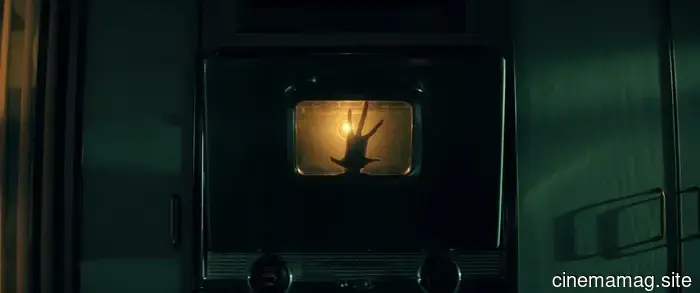
This narrative would work wonderfully as stage material—Birney received a Tony Award for his performance in The Humans—yet Tuttle enhances his feature debut with an unsettling background droning, Isaac Eiger’s ambient score, and striking cinematography by Ryan Jackson-Healy. The use of shadows and contrasting blue lighting with red objects evokes Lost Highway; differing cameras produce distinctively jarring effects, such as a lower resolution during an age-play sex scene that abruptly shifts back to higher definition, focusing intently on Moore’s face to indicate changing dynamics. Additionally, home movies serve as both the opening credits and act as chapter breaks. In these moments, music accompanies silent visuals, creating a haunting effect that might remind us of the youth of the boys Hank pursues, or perhaps illustrates Alex’s joyful upbringing, in contrast to the typical narrative of challenging childhoods leading to “sexually deviant” gay men. Tuttle's acknowledgment of cultural history even includes references to Ancient Greek pederasty, where relationships between boys and men often veered into sexual territory. The parallels to the characters’ histories of sexual trauma and abuse are not merely explanatory but provide personal and historical context. This refreshing self-awareness is further deepened by the question of what such knowledge enables one to do.
Blue Film, it must be said, will likely be a difficult watch even for the most open-minded viewers. Its candidness assures some discomfort, yet this is part of what makes it one of the year’s standout films. As it opens in theaters, another biopic dominates the box office while obscuring its

Other articles
 The Judoon are making their comeback this August in a new Doctor Who story featuring the Eleventh Doctor.
The Eleventh Doctor Adventures: Hidden in Plain Sight is an upcoming full-cast audio story featuring the Eleventh Doctor and his companion Eleanor Fong, set to be released by Big Finish this August. This announcement was made on The Wh…
The Judoon are making their comeback this August in a new Doctor Who story featuring the Eleventh Doctor.
The Eleventh Doctor Adventures: Hidden in Plain Sight is an upcoming full-cast audio story featuring the Eleventh Doctor and his companion Eleanor Fong, set to be released by Big Finish this August. This announcement was made on The Wh…
 Blue Film Review: A Skillful Two-Hander Addresses Imperfections with Compassion
The term “provocation” has lost its impact in recent years. Nowadays, provoking someone can be as simple as throwing out a series of half-hearted offensive remarks or targeting various divisive mainstream topics in an attempt to elicit a reaction. While it's easy to incite a response, truly encouraging people to think critically is a different challenge altogether.
Blue Film Review: A Skillful Two-Hander Addresses Imperfections with Compassion
The term “provocation” has lost its impact in recent years. Nowadays, provoking someone can be as simple as throwing out a series of half-hearted offensive remarks or targeting various divisive mainstream topics in an attempt to elicit a reaction. While it's easy to incite a response, truly encouraging people to think critically is a different challenge altogether.
 The Cannes Classics 2026 lineup features a new restoration of Ken Russell's The Devils.
Absolutely, we enjoy the glamorous red-carpet premieres and eagerly anticipated opinions on the latest debuts that fill the competitive lineup. However, Cannes consistently excels in its Classics section. This year's retrospective programming features Akira Kurosawa's often-overlooked debut, Sanshiro Sugata, along with Visconti's The Innocent, Orson Welles' The Stranger, and—possibly most significantly—Ken Russell's
The Cannes Classics 2026 lineup features a new restoration of Ken Russell's The Devils.
Absolutely, we enjoy the glamorous red-carpet premieres and eagerly anticipated opinions on the latest debuts that fill the competitive lineup. However, Cannes consistently excels in its Classics section. This year's retrospective programming features Akira Kurosawa's often-overlooked debut, Sanshiro Sugata, along with Visconti's The Innocent, Orson Welles' The Stranger, and—possibly most significantly—Ken Russell's
 Blue Film Review: A Skillful Two-Person Play Tackles Flaws with Compassion
The term “provocation” has lost its strength in recent times. Nowadays, it seems that merely throwing out a series of poorly thought-out offensive remarks or targeting every contentious mainstream topic can provoke a response. While eliciting reactions from people is simple, encouraging them to engage in thoughtful consideration is a completely different challenge.
Blue Film Review: A Skillful Two-Person Play Tackles Flaws with Compassion
The term “provocation” has lost its strength in recent times. Nowadays, it seems that merely throwing out a series of poorly thought-out offensive remarks or targeting every contentious mainstream topic can provoke a response. While eliciting reactions from people is simple, encouraging them to engage in thoughtful consideration is a completely different challenge.
 The recent restoration of Ken Russell’s The Devils headlines the Cannes Classics lineup for 2026.
Certainly, we enjoy the glamorous red-carpet premieres and eagerly anticipated opinions on the various premieres that fill the competitive lineup. However, Cannes' Classics section undeniably boasts the highest standard of offerings. This year's repertory selection features Akira Kurosawa's often-overlooked debut Sanshiro Sugata, Visconti's The Innocent, Orson Welles' The Stranger, and—possibly most significantly—Ken Russell's
The recent restoration of Ken Russell’s The Devils headlines the Cannes Classics lineup for 2026.
Certainly, we enjoy the glamorous red-carpet premieres and eagerly anticipated opinions on the various premieres that fill the competitive lineup. However, Cannes' Classics section undeniably boasts the highest standard of offerings. This year's repertory selection features Akira Kurosawa's often-overlooked debut Sanshiro Sugata, Visconti's The Innocent, Orson Welles' The Stranger, and—possibly most significantly—Ken Russell's
 Netflix welcomes us to The Buroughs with a new trailer and images for its science fiction mystery series.
With just over two weeks remaining until The Boroughs debuts on Netflix, the streaming service has released a new trailer for the forthcoming sci-fi mystery series created by Jeffrey Addiss and Will Matthews (The Dark Cry…
Netflix welcomes us to The Buroughs with a new trailer and images for its science fiction mystery series.
With just over two weeks remaining until The Boroughs debuts on Netflix, the streaming service has released a new trailer for the forthcoming sci-fi mystery series created by Jeffrey Addiss and Will Matthews (The Dark Cry…
Blue Film Review: A Skillful Two-Person Drama Addresses Flaws with Compassion
The term "provocation" has lost its strength in recent years. Now, it seems that simply making a few half-hearted offensive remarks or targeting every polarizing mainstream topic can easily upset someone. Eliciting a response from people is simple; however, encouraging them to think critically is a completely different challenge.