

Death Spa: Silly, Lewd, and Plenty of Enjoyment
Jack Gayer revisits the 1988 cult classic Death Spa…
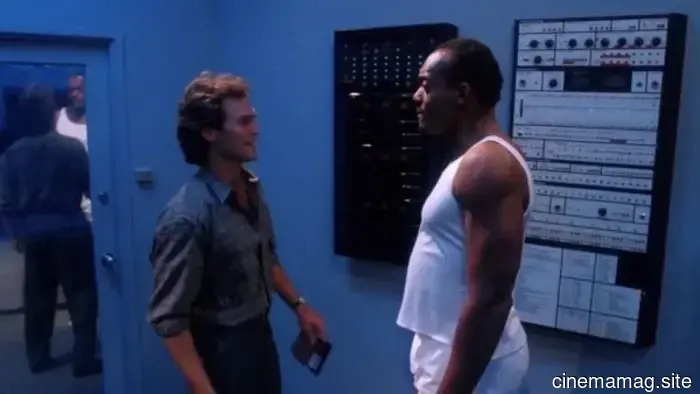
There’s a lot that can be eroticized, but a limp piece of asparagus will never fall into that category. This is a notion that the creators of Death Spa (1989) seemingly contested, as the film includes an awkwardly “romantic” moment in which a woman is fed a flaccid asparagus stalk by her boyfriend. Is this indicative of some larger impotence fetish? It doesn’t seem so. What exactly is this film? It’s a bewilderingly genre-blending erotic-horror flick, replete with bizarre scenes and characters, grotesque horror moments, absurdities, nudity, and rampant horniness, all layered upon a completely illogical narrative. The most we can say about the protagonist, Michael, is that he’s easy on the eyes.
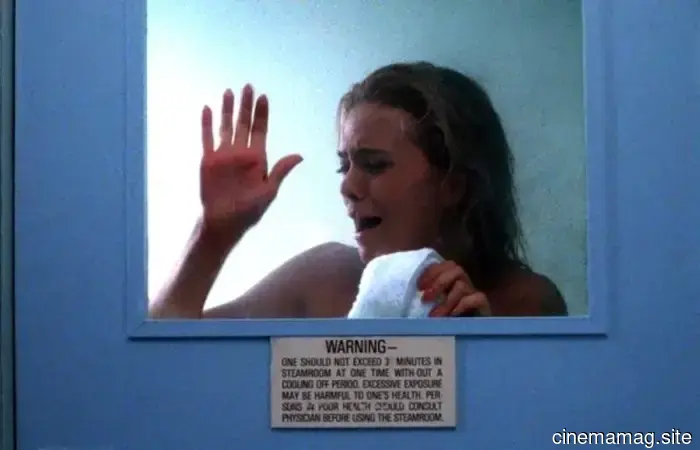
Perfect for watching with friends or your girlfriend’s parents if you’re aiming for a breakup, Death Spa oscillates between true horror and campy absurdity. For every scene showcasing a wheelchair-bound woman covered in flames, we see someone’s diving board collapse before their jump. What’s the real danger—are they going to fail their form? They’re leaping into water, not concrete, and the height isn’t even significant. Yet, the film possesses a distinct oddity that, to paraphrase Harry Dunne, completely redeems it.
Some filmmakers will insist until the end of time they were making a great film (James Nguyen of Birdemic: Shock and Terror springs to mind). Others exhibit a bit more self-awareness. In the piece, How Did This Get Made: Death Spa (An Oral History), producer Jamie Beardsley shares a telling remark: “I mean, we knew it wasn’t going to be the greatest film in the world, but we just wanted to create something different and cool.”
She’s right. They didn’t make the greatest film ever. But they certainly crafted something unique. Did they achieve something “cool”? Art and taste are subjective, but it’s fair to assert they didn’t create anything particularly “cool.” What they produced is a sheer delight that breezes by in under an hour and a half. Does the plot hold together? As much as a tale from a heavily intoxicated person. In the oral history, actor David Shaughnessy, who plays “Freddie,” confesses he accepted the role just to secure his SAG card, admitting he could never really “follow the story,” even stating, “I’m not even sure if there was one.”
Forget the narrative; the movie’s central idea is already painfully absurd: a gym is haunted/possessed and aims to kill its patrons. Why the gym is intent on murder remains unclear. And if a gym is offing people, the apparent solutions are: 1. Close the gym. Or 2. Stop attending. Neither the owner nor the members seem willing to explore these options. The sensibility doesn’t improve from there. Who was responsible for this masterpiece? Two credited writers with a scant number of credits between them: Mitch Paradise and James Bartruff. Aside from Death Spa, none of their other credits are for horror movies.
In the oral history, Paradise takes a moment to criticize the other writer, claiming the original script was “something else” and “not very good.” Quite the brave claim, considering the final product. By his own admission, Paradise’s script was a complete overhaul, meaning all credit or blame rests on him—at least in his perspective. Almost the only thing retained was the notion of a haunted health spa. The lack of character development? All him. The perplexing plot twist of the deceased wife’s shapeshifting? All him. However, according to producer Beardsley, another writer, Kirk Honeycutt, polished the script. If Death Spa is a “polished” piece, we’d dread seeing the original. Honeycutt's sole credited screenplay is Final Judgement (1992), which sounds like a gem.
Death Spa dives straight into the steamy scenes. In the opening, after Laura Danvers (Brenda Bakke) performs a sultry dance in an empty gym at night, she disrobes, and the camera fixates on her naked body. Why the need for such gratuitous nudity? It was the eighties, after all, and when crafting a film (likely under the influence of coke), anything is possible—nothing seems out of place, and one can’t have enough naked women. You especially can’t have ample eroticism, regardless of how odd it is for the characters to exhibit such sexual energy in their scenarios.
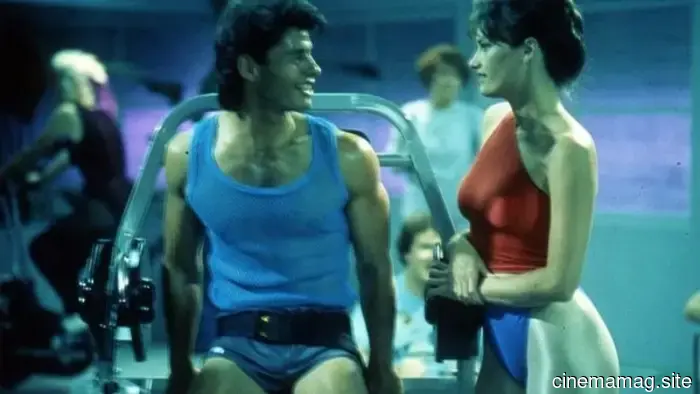
Furthermore, there’s no reason to hold back; this is an erotic horror movie, and these characters are here for two main reasons: to work out and to engage in sexual escapades. Though we mostly witness more workouts than intimate encounters. A lot of sizzle, perhaps not much steak? Maybe. But






Other articles
 A graduation takes a dark turn in the trailer for the Australian horror-thriller Penny Lane Is Dead.
Umbrella Entertainment has unveiled a trailer for the Australian dark comedy horror-thriller Penny Lane Is Dead, which is set in the 1980s. The film, written and directed by Mia’Kate Russell, centers around a teenager named Pen…
A graduation takes a dark turn in the trailer for the Australian horror-thriller Penny Lane Is Dead.
Umbrella Entertainment has unveiled a trailer for the Australian dark comedy horror-thriller Penny Lane Is Dead, which is set in the 1980s. The film, written and directed by Mia’Kate Russell, centers around a teenager named Pen…
 Comic Book Sneak Peek – Amazing Spider-Man/Venom: Death Spiral – Body Count #1
Marvel Comics has released the official preview for Amazing Spider-Man/Venom: Death Spiral – Body Count #1 in advance of the issue's debut this Wednesday; take a look here… The most terrifying…
Comic Book Sneak Peek – Amazing Spider-Man/Venom: Death Spiral – Body Count #1
Marvel Comics has released the official preview for Amazing Spider-Man/Venom: Death Spiral – Body Count #1 in advance of the issue's debut this Wednesday; take a look here… The most terrifying…
 Comic Book Sneak Peek – Star Wars: Shadow of Maul #3
Marvel Comics is set to release Star Wars: Shadow of Maul #3 next week, and you can check out a preview of the issue in the official sneak peek below… BETRAYAL ON JANIX! LAWSON is being pursued by an assassin…
Comic Book Sneak Peek – Star Wars: Shadow of Maul #3
Marvel Comics is set to release Star Wars: Shadow of Maul #3 next week, and you can check out a preview of the issue in the official sneak peek below… BETRAYAL ON JANIX! LAWSON is being pursued by an assassin…
 Comic Book Preview – Amazing Spider-Man/Venom: Death Spiral – Body Count #1
Marvel Comics has released the official preview for Amazing Spider-Man/Venom: Death Spiral – Body Count #1 in anticipation of its release this Wednesday; take a look here… The most terrifying…
Comic Book Preview – Amazing Spider-Man/Venom: Death Spiral – Body Count #1
Marvel Comics has released the official preview for Amazing Spider-Man/Venom: Death Spiral – Body Count #1 in anticipation of its release this Wednesday; take a look here… The most terrifying…
Death Spa: Silly, Lewd, and Plenty of Enjoyment
Jack Gayer takes another look at the cult classic Death Spa from 1988… There are numerous items that can be made erotic. However, a limp piece of asparagus can never attain that level of eroticism. This is a notion that the creators of Death Spa (1989) clearly understood…