

Cannes Review: Dominga Sotomayor’s La Perra Moves Beyond Simple Metaphors to Embrace Suggestive Mysteries
On a windswept island where Dominga Sotomayor’s La Perra takes place, gas bubbles rise from the sea. A pipeline has burst near the shore, releasing fumes for ages. This phenomenon is seen as a local miracle: residents come to ignite their lighters and watch the flames flicker on the water's surface, adding to the film's collection of enigmatic elements. Sotomayor’s previous films—rooted in childhood experiences to varying degrees—also grappled with nature's forces. Water played a significant role in both her 2012 debut, Thursday till Sunday, which chronicles a tumultuous family road trip to the beaches of Northern Chile, and Swim to Me, a depiction of class tensions stemming from a wealthy Santiago household; in Too Late to Die Young, a fire devastated a bohemian community on the outskirts of the capital as the country entered its post-Pinochet era. La Perra, adapted from Pilar Quintana’s 2017 novel of the same name, marks a shift from the autobiographical nature of the director’s earlier films, yet it remains focused on exploring the connection between individuals and their enveloping landscape.
If you are familiar with her work, you’ll recognize the pattern: Sotomayor often places her films in confined settings that trap her characters rather than simply house them, and her adept use of familiar domestic environments is a signature of her creativity. Much of Thursday till Sunday unfolds inside a car, while Too Late to Die Young is set in a hillside retreat. Swim to Me rarely steps beyond the villa at its heart. In adapting Quintana’s novel, Sotomayor and co-writer Inés Bortagaray change the original setting—from the lush jungles along the Colombian Pacific to an island in southern Chile. Here, the childless Silvia (Manuela Oyarzún), in her forties, was born and raised. Although the mainland is just a short ferry ride away, it seems unlikely she has ever departed. Oyarzún, reflecting the elegant beauty reminiscent of a Modigliani, shares a symbiotic connection with her homeland. Like many islanders, Silvia makes her living collecting seaweed, and in the film's early scenes—meticulously documenting her work—La Perra recalls Jean Epstein’s Breton films, where his maritime settings became powerful entities as significant as the people inhabiting them.
The tension between the fictional narrative and the nonfictional backdrop is evident throughout the film, particularly when Silvia encounters the titular dog, a stray pup she decides to adopt and names after the 1980s Mexican pop star whose songs play on her old TV: Yuri. This event propels the plot; the dog disrupts Silvia’s solitary life, and the film, at its core, follows the aftermath of this transformative encounter. However, La Perra is not driven by a conventional narrative, and its defiance of dramatic norms strengthens its impact. While the adoption indeed changes Silvia—leading her on a path of self-discovery that confronts childhood traumas—it feels secondary to a film that steadfastly refuses to treat the dog merely as a trigger for her character development.
This subversion is one of La Perra’s most refreshing aspects. Instead of turning Yuri into a stereotypical sidekick—filling an emotional gap—Sotomayor challenges the notion of domestication. The dog is not just an unruly presence resistant to commands and prone to escape; rather, the film itself, shot by Simone D’Arcangelo—known for his collaboration with Alessio Rigo de Righi and Matteo Zoppis—is equally resistant to taming. Early on, Sotomayor leaves Silvia behind to follow Yuri as she roams the island, barks at horses, and indulges in bones. By shifting the perspective to focus on the dog, La Perra embodies the carefree spirit of its four-legged co-star.
Even as the film later returns to introduce younger Silvia (Rafaella Grimberg) and the tragedy likely shaping her deep connection to the island, the flashback—Sotomayor’s first—does not unfold as one might anticipate. Instead of clearly marking distinct time periods with unique color palettes or period-specific props, Sotomayor allows these elements to coexist in a state of temporal uncertainty. Throughout, contemporary smartphones and cars appear alongside items from previous decades, creating an ambiguous timeline. Shot on Isla Santa Maria, the location feels suspended in reality, resembling a ghostly limbo; at its most perplexing, the film hints at a world disconnected from both time and space.
Sotomayor crafts a disquieting ambiance, though not every interstitial shot of rain-soaked cliffs and deserted beaches carries significant weight, and the film's conclusion risks simplifying the entire journey. However, following Swim to Me, a Netflix project that required her to suppress her instincts for a more accessible style, there’s an invigorating quality to this film that returns the director
Other articles
 Cannes Review: All of a Sudden Represents Ryusuke Hamaguchi's Most Compassionate, Humanistic Work to Date.
“Are healthy individuals genuinely alive?” This question echoes as a tagline for Ryusuke Hamaguchi’s latest film early in All of a Sudden. Marie-Lou (Virginie Efira), the director of a private clinic for the elderly in Paris, is observing a performance centered around Franco Basaglia, the Italian psychiatrist who, in the late 1970s,
Cannes Review: All of a Sudden Represents Ryusuke Hamaguchi's Most Compassionate, Humanistic Work to Date.
“Are healthy individuals genuinely alive?” This question echoes as a tagline for Ryusuke Hamaguchi’s latest film early in All of a Sudden. Marie-Lou (Virginie Efira), the director of a private clinic for the elderly in Paris, is observing a performance centered around Franco Basaglia, the Italian psychiatrist who, in the late 1970s,
 Jia Zhangke, Claire Denis, and Sam Raimi Announce Upcoming Projects
Two of the most renowned directors in international cinema have announced their upcoming projects. First, while Jia Zhangke is at Cannes for the premiere of his new 32-minute short film, Torino Shadow, he has also revealed his next feature following Caught by the Tides. He is set to direct Mamma Dunhuang, which will start production this winter, according to Variety. The film "narrates
Jia Zhangke, Claire Denis, and Sam Raimi Announce Upcoming Projects
Two of the most renowned directors in international cinema have announced their upcoming projects. First, while Jia Zhangke is at Cannes for the premiere of his new 32-minute short film, Torino Shadow, he has also revealed his next feature following Caught by the Tides. He is set to direct Mamma Dunhuang, which will start production this winter, according to Variety. The film "narrates
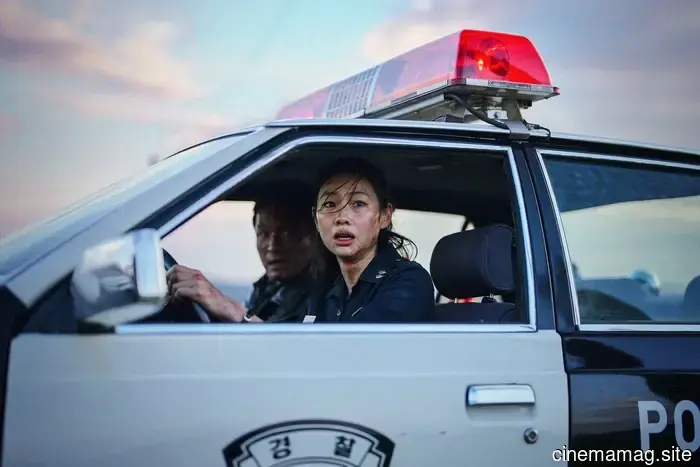 Cannes Review: Na Hong-Jin’s Hope Is a High-Octane Creature Film That Doesn’t Hit the Mark
In Hope Harbor, it’s always day as long as we are present. The apocalyptic happenings in writer-director Na Hong-Jin’s action-packed, eagerly awaited film unfold within a lengthy, exhausting, continuous chase that takes place over one day, featuring a mismatched group of small-town South Korean police officers, locals, and outcasts, a cast that varies from heroic to...
Cannes Review: Na Hong-Jin’s Hope Is a High-Octane Creature Film That Doesn’t Hit the Mark
In Hope Harbor, it’s always day as long as we are present. The apocalyptic happenings in writer-director Na Hong-Jin’s action-packed, eagerly awaited film unfold within a lengthy, exhausting, continuous chase that takes place over one day, featuring a mismatched group of small-town South Korean police officers, locals, and outcasts, a cast that varies from heroic to...
-5-Top-Aussie-Casino-Sites-Ranked-MovieMaker-Magazine.png) Top Online Casinos in Australia for Real Money (2026): Ranking of the 5 Best Aussie Casino Sites - MovieMaker Magazine
Lucky7 is recognized for its dependable withdrawals, excellent mobile performance, and steady pokies experience, establishing it as a trustworthy online casino for Australians.
Top Online Casinos in Australia for Real Money (2026): Ranking of the 5 Best Aussie Casino Sites - MovieMaker Magazine
Lucky7 is recognized for its dependable withdrawals, excellent mobile performance, and steady pokies experience, establishing it as a trustworthy online casino for Australians.
 Cannes Review: All of a Sudden Represents Ryusuke Hamaguchi's Most Compassionate and Humanistic Work So Far
"Are truly healthy individuals really alive?" Early on in All of a Sudden, Marie-Lou (Virginie Efira) encounters the question that serves as a tagline for Ryusuke Hamaguchi’s latest film. As the director of a private clinic in Paris for seniors, she observes a performance centered around Franco Basaglia, the Italian psychiatrist who, during the late 1970s,
Cannes Review: All of a Sudden Represents Ryusuke Hamaguchi's Most Compassionate and Humanistic Work So Far
"Are truly healthy individuals really alive?" Early on in All of a Sudden, Marie-Lou (Virginie Efira) encounters the question that serves as a tagline for Ryusuke Hamaguchi’s latest film. As the director of a private clinic in Paris for seniors, she observes a performance centered around Franco Basaglia, the Italian psychiatrist who, during the late 1970s,
 Top Australian Online Casinos for Real Money Gaming in 2026 - Leading Pokies & Quick Withdrawal Casino Sites -
The top online casinos in the Australian market for 2026 prioritize speed, trust, and genuine value over extravagant promotions. Players are now seeking quick withdrawals,
Top Australian Online Casinos for Real Money Gaming in 2026 - Leading Pokies & Quick Withdrawal Casino Sites -
The top online casinos in the Australian market for 2026 prioritize speed, trust, and genuine value over extravagant promotions. Players are now seeking quick withdrawals,
Cannes Review: Dominga Sotomayor’s La Perra Moves Beyond Simple Metaphors to Embrace Suggestive Mysteries
On the gusty island where Dominga Sotomayor's La Perra takes place, there's a location where gas emanates from the ocean. A pipeline has ruptured near the coast, causing vapors to escape for ages. It's seen as a local wonder: individuals gather to ignite their lighters and observe the flames flicker.