

Cannes Review: All of a Sudden Represents Ryusuke Hamaguchi's Most Compassionate, Humanistic Work to Date.
“Are healthy people really alive?” This question echoes early in All of a Sudden when Marie-Lou (Virginie Efira) hears it, serving as a tagline for Ryusuke Hamaguchi’s latest feature. As the director of a private Parisian clinic for the elderly, she is observing a play about Franco Basaglia, the Italian psychiatrist who, in the late 1970s, accomplished his lifelong goal of dismantling mental asylums, leading the way for a kinder approach to treating “madness.” Describing the performance as unconventional is an understatement: the audience is given musical instruments to play at their leisure during the monologue delivered in heavily accented French by Goro (Kyozo Nagatsuka). He is accompanied by his grandson Tomoki (Kodai Kurosaki), a severely autistic teenager who engages with his grandfather only “if he deems the show worthwhile.”
It is indeed worthwhile; so much so that while the boy interacts with props—a few chairs and a floor-to-ceiling mirror—Marie-Lou finds herself in tears. This moment is transformative for her: the center she operates, aptly named the Garden of Freedom, is distinct from any other similar institution. Patients are regarded not as mere shadows of their former selves but as individuals deserving of dignity, irrespective of any nurses and donors who oppose Marie-Lou’s unconventional methods.
This also marks the start of her life-altering connection with Mari (Tao Okamoto), the woman behind the performance. I use the term “connection” as “friendship” feels insufficient: All of a Sudden dedicates much of its three-plus hour runtime—every minute feeling purposeful—to exploring the deepening bond between the two women over several tumultuous weeks. Despite her strong-willed nature and resistance to compromise, Efira portrays Marie-Lou as a contemporary Mother Teresa—entirely devoted to her work, which has overshadowed every other aspect of her life. Her unwavering dedication is bringing her dangerously close to a breakdown. Additionally, she is profoundly lonely, and when Mari enters her life, a glimmer of hope crosses her features. Mari understands her—and the way Efira comes alive as they wander the streets of Paris after the show suggests that perhaps no one has before, at least not to such an extent. However, Mari is grappling with her own battle; she has spent recent years fighting breast cancer, and the prognosis remains uncertain—death could catch her unexpectedly.
Yet Hamaguchi avoids the clichéd pitfalls of terminal illness narratives. There’s something truly remarkable about how his film, woven with themes of grief, never veers into the realm of sentimentality. Co-written with Léa Le Dimna and adapted from the epistolary book “When Life Suddenly Takes a Turn” (which consists of letters exchanged between a philosopher living with metastatic breast cancer—Makiko Miyano—and a medical anthropologist—Maho Isono), it grants as much dignity to Mari as it does to Marie-Lou’s patients. She is neither a victim facing death nor merely a device to advance another character’s story; instead, she is an artist driven by an immense curiosity for her surroundings. Moreover, she possesses an extraordinary perceptiveness: much of their initial overnight conversation sees Mari encouraging Marie-Lou to tackle the central issue of her university dissertation—why capitalism contributes to declining birth rates—only to shift gears and critically examine the foundations of her compassion-driven approach to elderly care.
This does not render All of a Sudden merely an intellectual exercise. Marie-Lou studied in Japan—her language skills initially piqued Mari’s interest and led to Mari inviting her to the play when they first met one rainy June afternoon. During the Q&A after the performance, the French woman asks Mari a question in fluent Japanese, to which Mari responds in kind; “en français!” someone interjects from the audience, and Goro steps in to decline the request before Mari can respond. “To express emotions,” which the pair’s deeply intimate interaction from the stage was rich with, “there is nothing quite like one’s mother tongue,” he humorously points out. Those familiar with Hamaguchi’s body of work will recognize his ongoing interest in translation—the complex endeavor to convey meaning and emotion through a foreign language—long established in his films. In Drive My Car, for instance, a Tokyo theater director known for his multilingual productions travels to Hiroshima to stage an adaptation of Chekhov’s Uncle Vanya. In both works, language barriers serve not as hindrances but as invitations to uncover emotional truths.
Few contemporary directors have so thoughtfully examined the roles and limitations of language as the ultimate bearer of such truths. If All of a Sudden stands as the most humanist installment in Hamaguchi’s filmography, it is because it centers on the body. This film features rich dialogues—about the obligations of care, the perils of capitalism, and the necessity of dreaming up alternatives to the

Other articles
 Top Australian Online Slots for Real Money: 5 Most Reliable Casinos in Australia - Leading PayID Slots Selection -
Hello Aussie punters! Are you fed up with looking for the top online pokies casinos in Australia? No need to stress; we’re here to help you find the ideal option. Our
Top Australian Online Slots for Real Money: 5 Most Reliable Casinos in Australia - Leading PayID Slots Selection -
Hello Aussie punters! Are you fed up with looking for the top online pokies casinos in Australia? No need to stress; we’re here to help you find the ideal option. Our
-5-Top-Aussie-Casino-Sites-Ranked-MovieMaker-Magazine.png) Top Online Casinos in Australia for Real Money (2026): Ranking of the 5 Best Aussie Casino Sites - MovieMaker Magazine
Lucky7 is recognized for its dependable withdrawals, excellent mobile performance, and steady pokies experience, establishing it as a trustworthy online casino for Australians.
Top Online Casinos in Australia for Real Money (2026): Ranking of the 5 Best Aussie Casino Sites - MovieMaker Magazine
Lucky7 is recognized for its dependable withdrawals, excellent mobile performance, and steady pokies experience, establishing it as a trustworthy online casino for Australians.
-5-Leading-Instant-Withdrawal-Casinos-Reviewed-MovieMaker.png) Fast Payout Online Casinos in Australia (May 2026): Review of 5 Top Casinos with Instant Withdrawals - MovieMaker
Looking for the top fast payout casinos in Australia? Your quest concludes here; our team of specialists has dedicated hours to testing and evaluating more than 50 Australian casinos.
Fast Payout Online Casinos in Australia (May 2026): Review of 5 Top Casinos with Instant Withdrawals - MovieMaker
Looking for the top fast payout casinos in Australia? Your quest concludes here; our team of specialists has dedicated hours to testing and evaluating more than 50 Australian casinos.
 Top Australian Online Casinos for Real Money Gaming in 2026 - Leading Pokies & Quick Withdrawal Casino Sites -
The top online casinos in the Australian market for 2026 prioritize speed, trust, and genuine value over extravagant promotions. Players are now seeking quick withdrawals,
Top Australian Online Casinos for Real Money Gaming in 2026 - Leading Pokies & Quick Withdrawal Casino Sites -
The top online casinos in the Australian market for 2026 prioritize speed, trust, and genuine value over extravagant promotions. Players are now seeking quick withdrawals,
 Cannes Review: Dominga Sotomayor’s La Perra Abandons Simple Metaphors for Suggestive Mysteries
On the blustery island where Dominga Sotomayor's La Perra takes place, there is a location where gas surfaces from the ocean. A pipeline has ruptured near the coast, and vapors have been escaping from it for ages. This phenomenon is seen as a local marvel: residents gather to ignite their lighters and observe the flames flicker and sway.
Cannes Review: Dominga Sotomayor’s La Perra Abandons Simple Metaphors for Suggestive Mysteries
On the blustery island where Dominga Sotomayor's La Perra takes place, there is a location where gas surfaces from the ocean. A pipeline has ruptured near the coast, and vapors have been escaping from it for ages. This phenomenon is seen as a local marvel: residents gather to ignite their lighters and observe the flames flicker and sway.
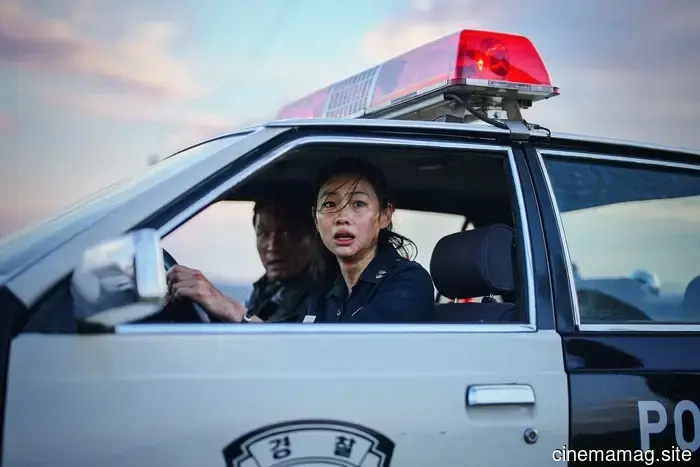 Cannes Review: Na Hong-Jin’s Hope is a High-Energy Creature Film That Disappoints
In Hope Harbor, it is never night, at least while we are present. The apocalyptic happenings of writer-director Na Hong-Jin's eagerly awaited film, Hope, take place during a relentless, exhausting day filled with a continuous chase, featuring a motley crew of small-town South Korean police, locals, and simple folk, an ensemble that includes heroic figures.
Cannes Review: Na Hong-Jin’s Hope is a High-Energy Creature Film That Disappoints
In Hope Harbor, it is never night, at least while we are present. The apocalyptic happenings of writer-director Na Hong-Jin's eagerly awaited film, Hope, take place during a relentless, exhausting day filled with a continuous chase, featuring a motley crew of small-town South Korean police, locals, and simple folk, an ensemble that includes heroic figures.
Cannes Review: All of a Sudden Represents Ryusuke Hamaguchi's Most Compassionate, Humanistic Work to Date.
“Are healthy individuals genuinely alive?” This question echoes as a tagline for Ryusuke Hamaguchi’s latest film early in All of a Sudden. Marie-Lou (Virginie Efira), the director of a private clinic for the elderly in Paris, is observing a performance centered around Franco Basaglia, the Italian psychiatrist who, in the late 1970s,