

Cannes Review: All of a Sudden Represents Ryusuke Hamaguchi's Most Compassionate and Humanistic Work So Far
“Are healthy individuals genuinely alive?” This question resonates as a tagline early on in All of a Sudden when Marie-Lou (Virginie Efira) first hears it. As the head of a private clinic for the elderly in Paris, she observes a play about Franco Basaglia, the Italian psychiatrist who, during the late 1970s, achieved his lifelong goal of abolishing mental asylums, ushering in a more compassionate treatment of “madness.” To describe the performance as unconventional would be an understatement: the audience was given musical instruments to play freely during the monologue, and the Japanese man delivering it in heavily accented French, Goro (Kyozo Nagatsuka), brought along his grandson Tomoki (Kodai Kurosaki), a teenager with significant autism who interacts with his grandfather on stage, but only “if he deems the performance suitable.”
It is indeed suitable. So much so that as the boy plays with the props—a few chairs and a tall mirror—Marie-Lou becomes emotional. This moment is transformative for her: the center she oversees, aptly named Garden of Freedom, stands apart from any similar institution. Patients are seen as individuals rather than mere shells, and their cognitive decline shouldn’t prevent caregivers from providing them dignity—despite opposition from several nurses and donors who challenge Marie-Lou’s unconventional methods.
This marks the beginning of her life-altering relationship with the woman behind the show, Mari (Tao Okamoto). The term “relationship” seems more fitting than “friendship,” as All of a Sudden dedicates most of its over three-hour runtime—none of which feels excessive—to exploring the evolving bond between the two over a few intense weeks. Despite her tenacity and reluctance to compromise, Efira portrays Marie-Lou as a modern-day Mother Teresa—so deeply invested in her work that it has overshadowed all other dimensions of her life, pushing her dangerously close to a breakdown due to her unwavering dedication. She is also profoundly lonely, and as Mari enters her sphere, a glimmer of hope appears on her face. Mari understands her—Efira's transformation as they wander the Paris streets following the show evokes the sense that perhaps no one ever has before, at least not to this extent. However, Mari is unwell; she has been battling breast cancer for years, and medical professionals are uncertain about her prognosis—death could come unexpectedly.
Nonetheless, Hamaguchi avoids the clichés typically found in terminal illness narratives, crafting a film that, while steeped in sorrow, never drifts into sentimentality. Co-written with Léa Le Dimna and inspired by the epistolary book “When Life Suddenly Takes a Turn” (a correspondence between a philosopher living with metastatic breast cancer—Makiko Miyano—and a medical anthropologist—Maho Isono), it grants equal dignity to Mari and Marie-Lou's patients. Mari is neither a mere victim facing death nor a tool for someone's character development; she is an artist driven by a profound curiosity about the world. Additionally, she is remarkably perceptive: a significant portion of the women’s lengthy first conversation sees Mari encouraging Marie-Lou to examine her university dissertation's main question—why does capitalism lead to declining birth rates?—before shifting to challenge her empathy-driven approach to elder care.
This isn’t to dismiss All of a Sudden as an overly intellectual work. Marie-Lou studied in Japan, and her linguistic ability is what drew Mari’s attention, prompting her to invite Marie-Lou to the play during their chance encounter on a rainy afternoon in June. At the Q&A following the performance, the French woman converses with Mari in fluent Japanese. Mari responds in kind; “en français!” a voice from the audience complains, and Goro intervenes before Mari can agree. “To express emotions,” which marked the intimate exchange on stage, “there is nothing like one’s mother tongue,” he remarks. If you've followed Hamaguchi’s work, you'll recognize his long-standing fascination with translation—the challenging task of conveying meaning and emotion through a foreign language. In Drive My Car, a theater director known for multilingual productions traveled to Hiroshima to stage a polyglot adaptation of Chekhov’s Uncle Vanya. In both films, linguistic barriers serve more as invitations to uncover emotional truths rather than roadblocks.
Few contemporary directors have so adeptly examined the potentials and limitations of language as a conduit for such truths, and while All of a Sudden may represent the most humanistic of Hamaguchi’s films, it shifts the focus from language to the body. Although the film is filled with learned discussions—on topics like duty of care, capitalism's perils, and the necessity to envision alternatives to our inherited world—it is primarily a deeply tactile experience. Bodies take center stage, captured by Alan Guichaoua not as decaying forms but as vessels capable of conveying vast emotions.
Hamaguchi filmed in a Parisian healthcare facility where

Other articles
 Cannes Review: Dominga Sotomayor’s La Perra Abandons Simple Metaphors for Suggestive Mysteries
On the blustery island where Dominga Sotomayor's La Perra takes place, there is a location where gas surfaces from the ocean. A pipeline has ruptured near the coast, and vapors have been escaping from it for ages. This phenomenon is seen as a local marvel: residents gather to ignite their lighters and observe the flames flicker and sway.
Cannes Review: Dominga Sotomayor’s La Perra Abandons Simple Metaphors for Suggestive Mysteries
On the blustery island where Dominga Sotomayor's La Perra takes place, there is a location where gas surfaces from the ocean. A pipeline has ruptured near the coast, and vapors have been escaping from it for ages. This phenomenon is seen as a local marvel: residents gather to ignite their lighters and observe the flames flicker and sway.
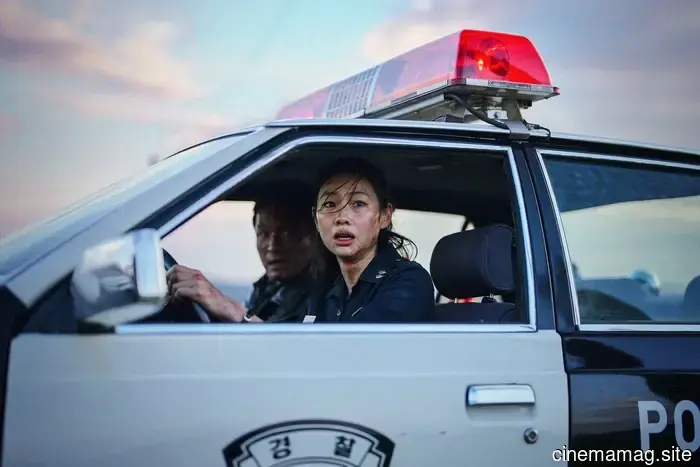 Cannes Review: Na Hong-Jin’s Hope Is a High-Octane Creature Film That Doesn’t Hit the Mark
In Hope Harbor, it’s always day as long as we are present. The apocalyptic happenings in writer-director Na Hong-Jin’s action-packed, eagerly awaited film unfold within a lengthy, exhausting, continuous chase that takes place over one day, featuring a mismatched group of small-town South Korean police officers, locals, and outcasts, a cast that varies from heroic to...
Cannes Review: Na Hong-Jin’s Hope Is a High-Octane Creature Film That Doesn’t Hit the Mark
In Hope Harbor, it’s always day as long as we are present. The apocalyptic happenings in writer-director Na Hong-Jin’s action-packed, eagerly awaited film unfold within a lengthy, exhausting, continuous chase that takes place over one day, featuring a mismatched group of small-town South Korean police officers, locals, and outcasts, a cast that varies from heroic to...
 Top Australian Online Slots for Real Money: 5 Most Reliable Casinos in Australia - Leading PayID Slots Selection -
Hello Aussie punters! Are you fed up with looking for the top online pokies casinos in Australia? No need to stress; we’re here to help you find the ideal option. Our
Top Australian Online Slots for Real Money: 5 Most Reliable Casinos in Australia - Leading PayID Slots Selection -
Hello Aussie punters! Are you fed up with looking for the top online pokies casinos in Australia? No need to stress; we’re here to help you find the ideal option. Our
-5-Leading-Instant-Withdrawal-Casinos-Reviewed-MovieMaker.png) Fast Payout Online Casinos in Australia (May 2026): Review of 5 Top Casinos with Instant Withdrawals - MovieMaker
Looking for the top fast payout casinos in Australia? Your quest concludes here; our team of specialists has dedicated hours to testing and evaluating more than 50 Australian casinos.
Fast Payout Online Casinos in Australia (May 2026): Review of 5 Top Casinos with Instant Withdrawals - MovieMaker
Looking for the top fast payout casinos in Australia? Your quest concludes here; our team of specialists has dedicated hours to testing and evaluating more than 50 Australian casinos.
 Cannes Review: Dominga Sotomayor's La Perra Abandons Simple Metaphors in Favor of Suggestive Mysteries
On the exposed island where Dominga Sotomayor’s La Perra takes place, there exists a location where gas rises from the ocean. A pipeline has ruptured near the coast, releasing fumes that have been bubbling out for ages. It is seen as a local wonder: residents gather to strike their lighters and observe the flames flicker on the
Cannes Review: Dominga Sotomayor's La Perra Abandons Simple Metaphors in Favor of Suggestive Mysteries
On the exposed island where Dominga Sotomayor’s La Perra takes place, there exists a location where gas rises from the ocean. A pipeline has ruptured near the coast, releasing fumes that have been bubbling out for ages. It is seen as a local wonder: residents gather to strike their lighters and observe the flames flicker on the
 Sophie Thatcher and Charles Melton Star in the Initial Teaser for Nicolas Winding Refn’s Her Private Hell
It has been a complete ten years since The Neon Demon, during which Nicolas Winding Refn engaged in extensive streaming projects like Too Old to Die Young and Copenhagen Cowboy, which could be seen as a valuable career on their own. Now, he is back to making feature films. Fortunately, from the initial glimpse, not much appears to have altered. As Her Private Hell makes its debut at Cannes today, the first teaser featuring Sophie has been released.
Sophie Thatcher and Charles Melton Star in the Initial Teaser for Nicolas Winding Refn’s Her Private Hell
It has been a complete ten years since The Neon Demon, during which Nicolas Winding Refn engaged in extensive streaming projects like Too Old to Die Young and Copenhagen Cowboy, which could be seen as a valuable career on their own. Now, he is back to making feature films. Fortunately, from the initial glimpse, not much appears to have altered. As Her Private Hell makes its debut at Cannes today, the first teaser featuring Sophie has been released.
Cannes Review: All of a Sudden Represents Ryusuke Hamaguchi's Most Compassionate and Humanistic Work So Far
"Are truly healthy individuals really alive?" Early on in All of a Sudden, Marie-Lou (Virginie Efira) encounters the question that serves as a tagline for Ryusuke Hamaguchi’s latest film. As the director of a private clinic in Paris for seniors, she observes a performance centered around Franco Basaglia, the Italian psychiatrist who, during the late 1970s,