
Cannes Review: James Gray’s Paper Tiger Is a Skillfully Balanced, Inherently Subtle Story Set in New York
James Gray has ventured beyond the familiar confines of his native New York, which he depicted in the first two decades of his career. He sent Charlie Hunnam, Robert Pattinson, and Tom Holland deep into the Amazon jungle for The Lost City of Z and propelled Brad Pitt into space with Ad Astra. With his last feature, Armageddon Time, the seasoned filmmaker—renowned for being a profoundly humane screenwriter, an insightful storyteller, and a cinematic chronicler of his birthplace and Jewish-Russian background—returned with a heartfelt family drama suitable for even the most sensitive viewers. In his latest work, Paper Tiger, he goes back to the themes established in his earlier films (Little Odessa, The Yards, We Own the Night): the gritty, mafia-influenced crime within the legendary underbelly of the Empire City.
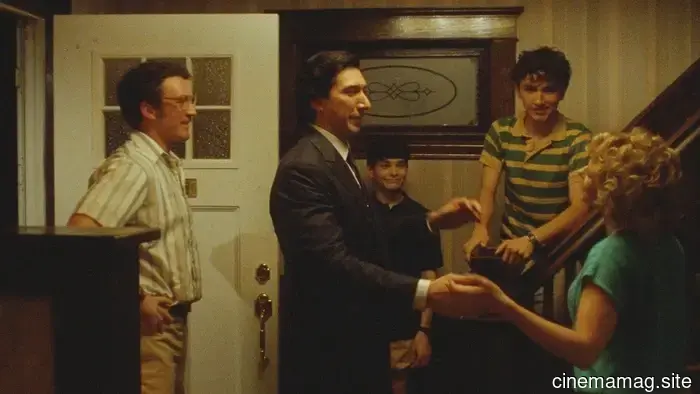
Gary Pearl (Adam Driver) is a divorced, retired NYPD officer who uses his connections with a powerful, shady municipal organization to earn significant profits as a security consultant for those who can afford his services. He's a self-assured, smooth-talking socialite who can easily have Peter Luger deliver a porterhouse steak for six to the suburban reaches of Jackson Heights’ 75th street—a location just a few miles from Gray’s childhood home in Flushing, where Gary’s civil-engineer brother, Irwin (Miles Teller), leads a more modest family existence with his wife Hester (Scarlett Johansson) and their two teenage sons, Scott and Ben (Gavin Goudey and Roman Engel). This is a Jewish family that neither seeks nor becomes embroiled in trouble.
However, Gary’s identity, wealth, and influence in the city become irrelevant. A new era of organized crime is emerging during the Cold War in 1986 south and central Brooklyn, as the Russian mafia floods in to brutally assert a new framework of respect and power that surpasses the NYPD, the traditional Italian mafia, and any other prominent Gotham figures who covertly controlled the city. The Russian mob renders the socio-political balance of the '60s and '70s, in which Gary still operates, obsolete. Yet he is so accustomed to the old dynamics that he fails to recognize that the paper tiger is not merely paper; it’s made of an import steel that he cannot fathom.
Irwin attempts to remain uninvolved in Gary’s business ventures, but Gary’s charm, confidence, and quick pace make it difficult for Irwin, who seems to have spent his life yielding to his older brother's desires, often accompanied by a generous gift (a new car, $10,000, etc.) that reflects Gary's endearing nature, which is hard to resist. However, it is evident from Irwin’s demeanor that he has never encountered organized crime. This changes when Gary presents a consulting engineering proposal for cleaning up the Gowanus Canal, the most polluted waterway in Brooklyn for over a century. The only hitch? The Russians currently own it.
What begins as a friendly agreement among the brothers and the Russians spirals into chaos when Irwin naively visits the canal with his sons to share insights about his profession, only to find thugs dumping oil. This ignites a multitude of problems that only ruthless mob boss Simeon Bogoyavich (Victor Ptak) can resolve. Meanwhile, Hester grapples with sudden health issues that threaten to destabilize her integral role in the Pearl family. The story unfolds as a meticulously crafted, character-driven, and subtly executed mob narrative by James Gray.
Featuring a realistic portrayal of south and central Brooklyn filled with iconic restaurants, bars, and neighborhoods—elements that are sure to delight any New Yorker or New York enthusiast—Paper Tiger may not reach the heights of Gray's previous works set in similar contexts (The Yards remains a standout, with We Own the Night a close second), yet it is definitely a film of note, one that doesn't push its limits too far yet still leaves an impression. It sows seeds of rich character development, heart-wrenching drama, and intense tension that lingers in one’s mind with a visceral sting, suggesting that everything is drawn directly from history with no clever embellishments.
Driver, Teller, and Johansson deliver outstanding performances under Gray’s direction and his exceptional screenplay. Joaquín Baca-Asay—returning after We Own the Night and Two Lovers—creates a compelling vintage visual style that highlights Gray’s now-retro directorial instincts (in stark contrast to a Netflix production). The costumes and sets feel authentically sourced rather than artificially constructed, all thanks to the efforts of costume designer Amy Roth and production designer Happy Massee.
That said, there are a few lingering issues. Scott Morris's editing, which could have benefited from another review, includes some heavier moments. While the ending is captivating, it feels somewhat derivative, almost directly lifting from one of the most notable crime films ever made—and even echoing one of Gray’s own past works.

Other articles
 Comic Book Sneak Peek – Predator: Bloodshed #4
Marvel Comics will publish Predator: Bloodshed #4 on Wednesday, and you can take a look at the issue with the official preview provided below… A contest featuring the fiercest fighters from around the globe…
Comic Book Sneak Peek – Predator: Bloodshed #4
Marvel Comics will publish Predator: Bloodshed #4 on Wednesday, and you can take a look at the issue with the official preview provided below… A contest featuring the fiercest fighters from around the globe…
 Cannes Review: In The Beloved, Javier Bardem and Victoria Luengo Showcase Chemistry While Facing the Past
There exists a particular group of skilled film directors, such as Guido Anselmi and Ferrand, whose names might not be very familiar. However, you recognize their films, 8½ and Day for Night, in which they feature. Esteban Martínez (portrayed by Javier Bardem in his most intense performance since Iñárritu’s Biutiful), is the main character in Rodrigo Sorogoyen’s new film, The Beloved.
Cannes Review: In The Beloved, Javier Bardem and Victoria Luengo Showcase Chemistry While Facing the Past
There exists a particular group of skilled film directors, such as Guido Anselmi and Ferrand, whose names might not be very familiar. However, you recognize their films, 8½ and Day for Night, in which they feature. Esteban Martínez (portrayed by Javier Bardem in his most intense performance since Iñárritu’s Biutiful), is the main character in Rodrigo Sorogoyen’s new film, The Beloved.
 Character posters for Masters of the Universe highlight the movie's heroes and villains.
A large collection of character posters has surfaced online for Masters of the Universe in anticipation of its theatrical debut this June, highlighting the heroes of the fantasy adventure: He-Man, Battle Cat, Teela, M...
Character posters for Masters of the Universe highlight the movie's heroes and villains.
A large collection of character posters has surfaced online for Masters of the Universe in anticipation of its theatrical debut this June, highlighting the heroes of the fantasy adventure: He-Man, Battle Cat, Teela, M...
 Top Australian Online Slots for Real Money: 5 Most Reliable Casinos in Australia - Leading PayID Slots Selection -
Hello Aussie punters! Are you fed up with looking for the top online pokies casinos in Australia? No need to stress; we’re here to help you find the ideal option. Our
Top Australian Online Slots for Real Money: 5 Most Reliable Casinos in Australia - Leading PayID Slots Selection -
Hello Aussie punters! Are you fed up with looking for the top online pokies casinos in Australia? No need to stress; we’re here to help you find the ideal option. Our
 Will Smith is set to star in David Gordon Green’s action-thriller Supermax.
Will Smith has agreed to appear in David Gordon Green's action film Supermax, which is set in a prison and produced by Amazon MGM Studios. According to Deadline's report, Supermax will narrate the tale of two FBI agents…
Will Smith is set to star in David Gordon Green’s action-thriller Supermax.
Will Smith has agreed to appear in David Gordon Green's action film Supermax, which is set in a prison and produced by Amazon MGM Studios. According to Deadline's report, Supermax will narrate the tale of two FBI agents…
-5-Top-Aussie-Casino-Sites-Ranked-MovieMaker-Magazine.png) Top Online Casinos in Australia for Real Money (2026): Ranking of the 5 Best Aussie Casino Sites - MovieMaker Magazine
Lucky7 is recognized for its dependable withdrawals, excellent mobile performance, and steady pokies experience, establishing it as a trustworthy online casino for Australians.
Top Online Casinos in Australia for Real Money (2026): Ranking of the 5 Best Aussie Casino Sites - MovieMaker Magazine
Lucky7 is recognized for its dependable withdrawals, excellent mobile performance, and steady pokies experience, establishing it as a trustworthy online casino for Australians.
Cannes Review: James Gray’s Paper Tiger Is a Skillfully Balanced, Inherently Subtle Story Set in New York
James Gray had stepped out of the familiar surroundings of his home city, New York, which he had explored in the initial twenty years of his career. He sent Charlie Hunnam, Robert Pattinson, and Tom Holland into the Amazon rainforest for The Lost City of Z and took Brad Pitt on a journey into space with Ad Astra. In his last film, Armageddon Time,