
Cannes Review: Red Rocks Showcases a Surprisingly Gentle Side of Bruno Dumont
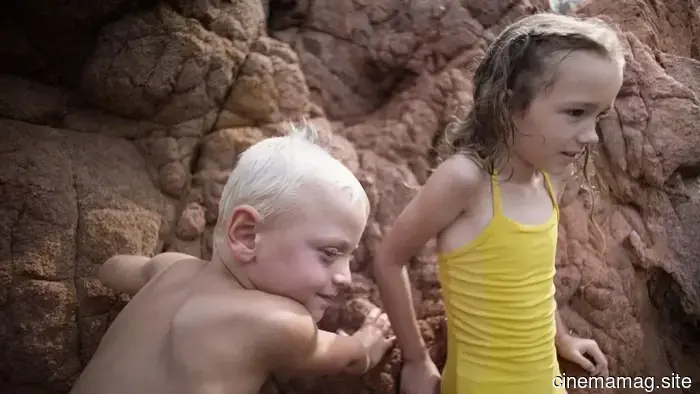
Viewed through the perspective of a child, the French Riviera appears to be a paradise on Earth. For the three central characters in Bruno Dumont’s Red Rocks—Geo (Kaylon Lancel), Manon (Louise Podolski), and Rouben (Mohamed Coly)—their small town is all they have ever known, filled with new escapades each day as they ride dirt bikes along the shore or discover new heights to climb before jumping into the water. Their parents are never seen; these five-year-olds explore the vastness of the town without adult supervision. The first appearance of an unnamed adult involves him lamenting on the phone about the closure of most bars and clubs, indicating a lack of culture or nightlife beyond the beach. Each time a train passes overhead, it feels like a signal of adults leaving a town that has ceased to be a playground for them, shedding light on the children's isolation.
Switching his traditional setting in Northern France for the sunnier landscapes of the south, Red Rocks showcases a more uncharacteristically gentle side of Dumont, though with an ever-present risk of a bloody mishap whenever the children jump into the sea. Given Dumont's recent shift towards lowbrow genre parodies, there was a part of me anticipating that the film might evolve into a spiritual heir to the British public safety shorts of the 1970s, which cynically depicted children suffering gruesome fates—warnings for the young about the dangers of playing around construction sites or train tracks. Instead, it points towards a growth for the director, moving away from high-concept storytelling to the more comforting style reminiscent of his early work, albeit with a brighter outlook.
Dumont has a reputation for working with non-professional actors—often selecting those with physical disabilities or who appear particularly uncomfortable in front of a camera—leading to criticism that he exploits his performers. While works featuring very young child actors will always be vulnerable to such claims, Dumont effectively utilizes this inherent tension more successfully than in his previous projects. Lancel, the young lead, often struggles to mask his anxiety through facial tics, lending his character a deeper understanding than the minimal characterization script offers. The dialogue leans heavily on improvisation and includes more awkward pauses, with the children unable to maintain a conversation beyond a few sentences. Aware of the challenges associated with such young non-professional actors, Dumont channels their evident discomfort as a means of conveying feelings they may lack the vocabulary to express. This method results in an authentic representation of childhood psychology at this age, even highlighting the paradox of a child actor who is clearly aware of a camera's presence.
As Red Rocks unfolds, the main group encounters three more adventurous children: Eve (Kelsie Verdeilles), B (Alessandro Piqeura), and Do (Meryl Piles). Initially a couple, Eve and B’s relationship quickly turns into a love triangle once Eve meets Geo, with rumors flying among friends that B might confront his new rival. This segment of the film—shifting the narrative from naturalistic drama to an extended comedic sketch featuring melodramatic interactions among kids—seems to show Dumont yielding to the more relaxed tendencies of his recent work, though thankfully it remains distant from the New French Extremity style of his earlier films. The innocent relationships among these children (where hugs signify romance) are charming, yet the dialogue remains laden with clichés regarding tensions between Geo and the boy who claims to have “stolen” his girl, diminishing a more perceptive portrayal of early childhood.
When Geo and Eve separate from their peers to explore independently, Dumont regains a more authentically youthful energy. Complemented by cinematographer Carlos Alfonso Corral's child-centric viewpoint, the scenes create a masterclass in orchestrating chaos while letting the children simply be themselves; in an unbroken long take set in Eve’s parents’ driveway, they tire themselves out running back and forth while trying to coax the family dog along. In a later outing away from home, it's evident that the chemistry between the two actors has grown, allowing for more spontaneous behavior—rather than manipulating his leads, it seems Dumont permits their chaotic energy to guide the narrative, seamlessly transitioning from one scene to the next. This contrasts sharply with Corral’s extreme close-ups when Geo is seated, creating a claustrophobic and uncomfortable effect. He’s too naïve to comprehend that he yearns to escape the confines of his town, but the film's structure around him appears to embrace the intuitive realization that this young actor is never happier when exploring the larger world and given the freedom to roam.
If not for the clichéd love triangle—an unnecessary attempt to inject a more constructed narrative into a slice-of-life drama that wouldn't need one—Red Rocks would stand as Dumont’s most triumphant collaboration with non-professional actors, representing one of the most genuine portrayals of childhood in recent times. While it doesn't completely reach that level of
Other articles
 In the Grey Review: A Contemplation on the Unusual Journey of Guy Ritchie
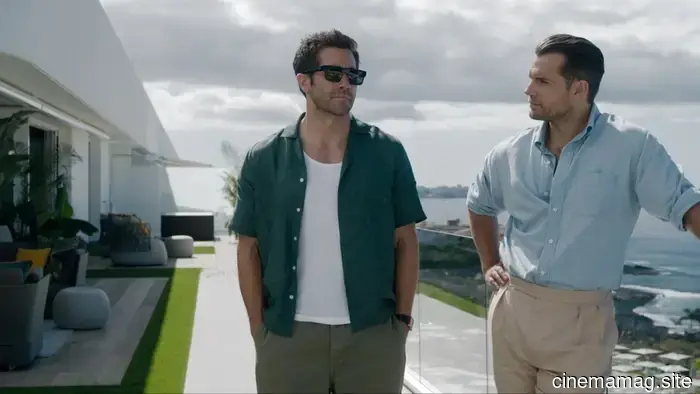
In the film "In the Grey," which is both written and directed by Guy Ritchie, viewers are treated to an entertaining experience. Spanning ninety minutes prior to the credits, the action thriller features Jake Gyllenhaal, Henry Cavill, and Eiza González and revolves around a select team of "extraction specialists" tasked with ensuring that influential individuals settle their debts. They frequently operate in a
In the Grey Review: A Contemplation on the Unusual Journey of Guy Ritchie
In the film "In the Grey," which is both written and directed by Guy Ritchie, viewers are treated to an entertaining experience. Spanning ninety minutes prior to the credits, the action thriller features Jake Gyllenhaal, Henry Cavill, and Eiza González and revolves around a select team of "extraction specialists" tasked with ensuring that influential individuals settle their debts. They frequently operate in a
.jpg) Film Review – Star Wars: The Mandalorian and Grogu (2026)
Star Wars: The Mandalorian and Grogu, 2026. Directed by Jon Favreau. Featuring Pedro Pascal, Jeremy Allen White, Sigourney Weaver, Jonny Coyne, Dave Filoni, Steve Blum, Martin Scorsese, Hemky Madera, P…
Film Review – Star Wars: The Mandalorian and Grogu (2026)
Star Wars: The Mandalorian and Grogu, 2026. Directed by Jon Favreau. Featuring Pedro Pascal, Jeremy Allen White, Sigourney Weaver, Jonny Coyne, Dave Filoni, Steve Blum, Martin Scorsese, Hemky Madera, P…
 Cannes Review: Red Rocks Showcases Bruno Dumont in His Most Unusually Tender Form
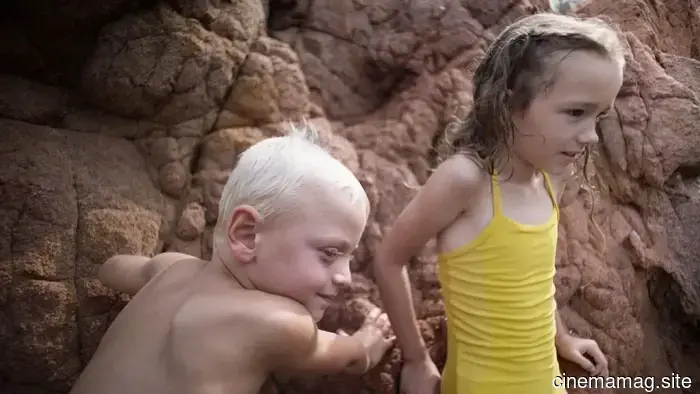
From a child's perspective, the French Riviera appears as a paradise on Earth. For the trio central to Bruno Dumont’s Red Rocks—Geo (Kaylon Lancel), Manon (Louise Podolski), and Rouben (Mohamed Coly)—their little town is their entire world, offering fresh adventures daily as they cruise on dirt bikes by the beach or discover new heights.
Cannes Review: Red Rocks Showcases Bruno Dumont in His Most Unusually Tender Form
From a child's perspective, the French Riviera appears as a paradise on Earth. For the trio central to Bruno Dumont’s Red Rocks—Geo (Kaylon Lancel), Manon (Louise Podolski), and Rouben (Mohamed Coly)—their little town is their entire world, offering fresh adventures daily as they cruise on dirt bikes by the beach or discover new heights.
 Top Online Casinos in Australia for Real Money 2026 – Our Ranking and Review of the 5 Best Aussie Casino Sites
Australia's leading online casinos are designed for local players, providing safe gaming, quick withdrawals, and accessible banking options for Australians.
Top Online Casinos in Australia for Real Money 2026 – Our Ranking and Review of the 5 Best Aussie Casino Sites
Australia's leading online casinos are designed for local players, providing safe gaming, quick withdrawals, and accessible banking options for Australians.
 Star Trek continues to venture into new narratives on WEBTOON.
Paramount and WEBTOON have revealed that two original Star Trek webcomic stories will be coming to the WEBTOON platform. The first of these, titled Star Trek: Stargazers, is currently available, with the first...
Star Trek continues to venture into new narratives on WEBTOON.
Paramount and WEBTOON have revealed that two original Star Trek webcomic stories will be coming to the WEBTOON platform. The first of these, titled Star Trek: Stargazers, is currently available, with the first...
 Cannes Review: Sandra Wollner Captures the Moment with Sublime Everytime
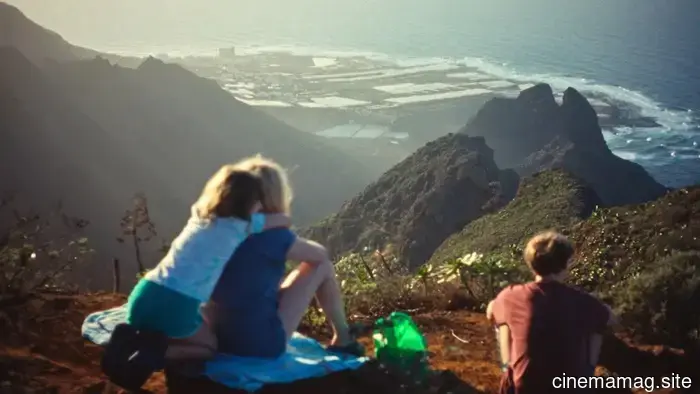
In Everytime, a sunlit film exploring themes of death and love that could be the standout at Cannes this year, the tragic death of a teenage girl leaves her mother, younger sister, and boyfriend intertwined in shared anguish. Taking place in contemporary East Berlin during the warm months, this film seems
Cannes Review: Sandra Wollner Captures the Moment with Sublime Everytime
In Everytime, a sunlit film exploring themes of death and love that could be the standout at Cannes this year, the tragic death of a teenage girl leaves her mother, younger sister, and boyfriend intertwined in shared anguish. Taking place in contemporary East Berlin during the warm months, this film seems
Cannes Review: Red Rocks Showcases a Surprisingly Gentle Side of Bruno Dumont
From a child's perspective, the French Riviera appears to be paradise on Earth. For the trio in Bruno Dumont’s Red Rocks—Geo (Kaylon Lancel), Manon (Louise Podolski), and Rouben (Mohamed Coly)—their quaint town is their entire world, filled with fresh adventures each day as they ride dirt bikes along the coastline or seek out new heights.