

Cannes Review: Sandra Wollner Captures the Moment with Exquisite Everytime
In Everytime, a sunlit exploration of death and love that could be the standout film at Cannes this year, the profound loss of a teenage girl profoundly impacts her mother, younger sister, and boyfriend, leaving them engulfed in shared grief. Set in contemporary East Berlin during the warm months, this film initially seems to align with the Berlinale School style of directors like Christian Petzold and Angela Schanalec, yet lacks their hallmark minimalism and literary sadness. One need not be aware that the director of photography is Gregory Oke to find one's thoughts drifting to Charlotte Wells’ Aftersun—another film highlighting how terrible events can occur regardless of one's surroundings.
Everytime (even its compound title resonates with a Wells-like quality) is the creation of Sandra Wollner, a contemplative Austrian filmmaker who previously explored the aftermath of a child's death in her second feature, The Trouble with Being Born. However, while that harrowing film evoked comparisons to Spielberg’s A.I. and Ulrich Seidl, her latest work—with its verdant Lichtenberg backdrop and gentle piano score by David Schweighart—feels more like a waking dream. If you caught her earlier film at the 2020 Berlinale or elsewhere and have been eagerly awaiting Wollner’s next project, she has indeed crafted a minor-chord triumph that discovers warmth in places where Born found only cold despair.
The narrative unfolds in the days leading up to a family vacation where single mother Ella (Birgit Minichmayr) and her two daughters, Jessie (Carla Hüttermann) and Mellie (Lotte Keiling), plan to visit a hotel in Tenerife that Ella and Jessie’s father frequented when Jessie was still a baby. On the eve of their departure, Jessie sneaks out with her boyfriend Lux (Tristan López) for a party in the woods, leading to a tragic event at dawn. In the wake of this tragedy, the remaining family members become witnesses to one another's sorrow, staying close in hopes of feeling the absent girl's presence. They sift through old photos, revisit messages, and retrace the steps of Jessie’s last day, including a return to the same hotel in Tenerife that they visited years before. On that remote island, those fleeting moments begin to distort their perception, perhaps even their minds. It’s perhaps best to leave the details there.
With Oke's unique talent on display, the scenes he and Wollner craft together (along with the distinct, complementary aspects of their styles) only left me wondering how this is Oke’s first feature since his collaboration with Wells in 2022. In one of Everytime’s pivotal transcendental moments, the camera finds Jessie and Lux atop an apartment building against the Berlin skyline, before shifting focus to a bird in flight; in another, Lux is seen from afar as he takes a cathartic swim in a canal that beautifully reflects the evening sky. The most breathtaking of all comes in Wollner’s exquisite conclusion, where the film references various elements—including Minecraft and a scene from Under the Skin, a VanderMeer-inspired lighthouse, and some distant narration reminiscent of Chris Marker—but emerges still intact, if not thoroughly renewed. Would it have been too much for her to title this film The Trouble with Being Alive?
Considering the tepid reactions to some of this year’s Cannes offerings, I suspect Everytime had at least a chance to compete, and that in a few years, they are unlikely to repeat the same oversight. Introducing the film's premiere, Wollner expressed her hope that viewers would let the story resonate with them for a while, but she probably didn’t need to encourage that. This is a film that stays with you, and I haven't been able to shake it from my thoughts since.
Everytime premiered at the 2026 Cannes Film Festival.

Other articles
 Cannes Review: Red Rocks Showcases Bruno Dumont in His Most Unusually Tender Form
From a child's perspective, the French Riviera appears as a paradise on Earth. For the trio central to Bruno Dumont’s Red Rocks—Geo (Kaylon Lancel), Manon (Louise Podolski), and Rouben (Mohamed Coly)—their little town is their entire world, offering fresh adventures daily as they cruise on dirt bikes by the beach or discover new heights.
Cannes Review: Red Rocks Showcases Bruno Dumont in His Most Unusually Tender Form
From a child's perspective, the French Riviera appears as a paradise on Earth. For the trio central to Bruno Dumont’s Red Rocks—Geo (Kaylon Lancel), Manon (Louise Podolski), and Rouben (Mohamed Coly)—their little town is their entire world, offering fresh adventures daily as they cruise on dirt bikes by the beach or discover new heights.
 In the Grey Review: A Contemplation on the Unusual Journey of Guy Ritchie
In the film "In the Grey," which is both written and directed by Guy Ritchie, viewers are treated to an entertaining experience. Spanning ninety minutes prior to the credits, the action thriller features Jake Gyllenhaal, Henry Cavill, and Eiza González and revolves around a select team of "extraction specialists" tasked with ensuring that influential individuals settle their debts. They frequently operate in a
In the Grey Review: A Contemplation on the Unusual Journey of Guy Ritchie
In the film "In the Grey," which is both written and directed by Guy Ritchie, viewers are treated to an entertaining experience. Spanning ninety minutes prior to the credits, the action thriller features Jake Gyllenhaal, Henry Cavill, and Eiza González and revolves around a select team of "extraction specialists" tasked with ensuring that influential individuals settle their debts. They frequently operate in a
 Nicolas Cage portrays Spider-Noir in the final trailer for Prime Video's live-action Marvel series.
With only a week remaining until Spider-Noir premieres on Prime Video, the final trailer for the live-action adaptation of the Marvel Comics has been released online, featuring Nicolas Cage as the down-and-out…
Nicolas Cage portrays Spider-Noir in the final trailer for Prime Video's live-action Marvel series.
With only a week remaining until Spider-Noir premieres on Prime Video, the final trailer for the live-action adaptation of the Marvel Comics has been released online, featuring Nicolas Cage as the down-and-out…
 Top Online Casinos in Australia for Real Money 2026 – Our Ranking and Review of the 5 Best Aussie Casino Sites
Australia's leading online casinos are designed for local players, providing safe gaming, quick withdrawals, and accessible banking options for Australians.
Top Online Casinos in Australia for Real Money 2026 – Our Ranking and Review of the 5 Best Aussie Casino Sites
Australia's leading online casinos are designed for local players, providing safe gaming, quick withdrawals, and accessible banking options for Australians.
 Nicolas Cage voices Spider-Noir in the final trailer for Prime Video’s live-action Marvel series.
With only a week remaining until Spider-Noir debuts on Prime Video, the final trailer has been released online for the live-action adaptation of Marvel Comics, featuring Nicolas Cage as a character facing tough times…
Nicolas Cage voices Spider-Noir in the final trailer for Prime Video’s live-action Marvel series.
With only a week remaining until Spider-Noir debuts on Prime Video, the final trailer has been released online for the live-action adaptation of Marvel Comics, featuring Nicolas Cage as a character facing tough times…
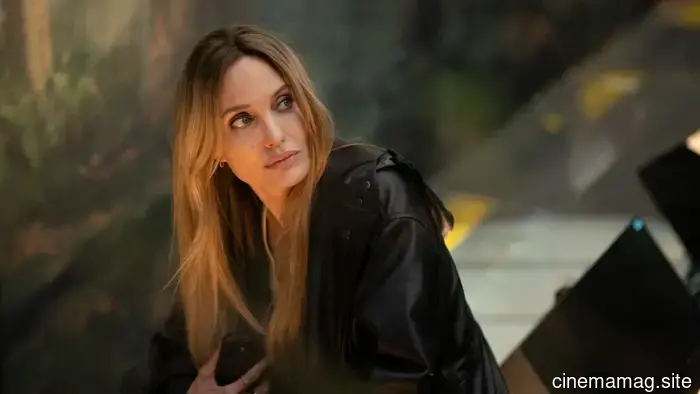 Couture Trailer: The Fashion Drama Starring Angelina Jolie, Directed by Alice Winocour, Premieres This June.
After Olivier Assayas' The Wizard of the Kremlin debuted last week, Vertical appears to have taken the lead in acquiring star-studded, auteur-driven French films, now adding Alice Winocour's Couture, featuring Angelina Jolie, which premiered at TIFF last year. The cast also includes Louis Garrel, Ella Rumpf, Garance Marillier, Anyier Anei, and Vincent Lindon, and the film centers on an
Couture Trailer: The Fashion Drama Starring Angelina Jolie, Directed by Alice Winocour, Premieres This June.
After Olivier Assayas' The Wizard of the Kremlin debuted last week, Vertical appears to have taken the lead in acquiring star-studded, auteur-driven French films, now adding Alice Winocour's Couture, featuring Angelina Jolie, which premiered at TIFF last year. The cast also includes Louis Garrel, Ella Rumpf, Garance Marillier, Anyier Anei, and Vincent Lindon, and the film centers on an
Cannes Review: Sandra Wollner Captures the Moment with Exquisite Everytime
In Everytime, a sun-kissed film centered around themes of love and death that could be the finest at Cannes this year, the tragic death of a teenage girl deeply affects her mother, younger sister, and boyfriend, leaving them intertwined in shared sorrow. Taking place in contemporary East Berlin during the warm months, this is a film that seems