
.jpg)
Film Review – Backrooms (2026)
Backrooms, 2026.
Directed by Kane Parsons.
Featuring Renate Reinsve, Chiwetel Ejiofor, Mark Duplass, Finn Bennett, Lukita Maxwell, Avan Jogia, Robert Bobroczkyi, Ember Ambrose, Peter New, Katharine Isabelle, Philip Granger, Kelly Craig, and Krista Kosonen.
SYNOPSIS:
After a patient of a therapist vanishes into a reality-bending dimension, she embarks on a journey into the unknown to rescue him.
Kane Parsons, the creator of Backrooms and its director, is merely 20 years old. This accomplishment is striking for various reasons, especially since his portrayal of a horror-laden alternate reality draws from the real world of the 1990s, featuring intricate production design that seems to reflect the troubled psyche of the furniture store manager protagonist suffering an existential crisis (more on this shortly). It raises the question of how the filmmaker, working with production designer Danny Vermette, could be so certain about the furniture choices given that he was born after the era in question.
Indeed, while the yellow-coated walls of the Backrooms (sometimes called the Complex in the web series, and likely in video games inspired by the concept) along with the surreal horrors stem from an imaginative vision, it’s impressive that Kane Parsons has set the story in the 1990s and has succeeded in achieving period accuracy through not just the profusion of furniture but also the inclusion of handheld footage (used for documenting the Backrooms or creating embarrassing commercials for the store).
This approach also facilitates a first-person horror experience that many have likened to The Blair Witch Project, which is technically accurate, yet it’s more apt to say that Kane Parsons has adeptly infused multiple elements from video game aesthetics and mechanics into the film. It’s noteworthy that the rooms were initially modeled using 3D software before being constructed, establishing a reference point that includes exploration, environmental logic akin to boss fights, maps drawn by characters to navigate the maze (reminiscent of an underground setting from Resident Evil or a dungeon from The Legend of Zelda), psychological torment, and symbolism worthy of Silent Hill. He has openly acknowledged inspiration from Aperture Science from the Portal games regarding the Async Research Institute that gathers and tries to document the remnants of those lost in the rooms. While it’s important to recognize that this YouTuber-turned-director has created something entirely original, many viewers may find the elements and language here refreshing since they might not have previously engaged with modern video games seriously. Even the way certain entities sustain damage echoes the enemy types from Bioshock, without giving too much away.
Whether those who criticize anything even remotely associated with gaming will acknowledge Backrooms for its inspirations, or dismiss it as a lesser medium remains to be seen. The film is part of a larger dialogue, generating significant buzz due to its distinctive approach to filmmaking. In simple terms, viewers are experiencing something unmatched within the contemporary cinematic landscape (not to suggest one YouTuber is better than another, but rather that each possesses its own unique identity). It’s also bizarre that the film faced claims of being “shadow-directed,” which might stem from jealousy within the industry at a 20-year-old achieving what many aspiring filmmakers may never accomplish, or from an individual in Hollywood out of touch with the reality that modern audiences are seeking something distinct that resonates with younger generations.
Concerning the story and characters, which, to be fair, were crafted by screenwriter Will Soodik, it is imbued with existential dread—another aspect that might seem beyond Kane Parsons’ reach (though perhaps not, given the bleak environment younger generations are growing up in)—focusing on Chiwetel Ejiofor’s character, Clark, who feels trapped in a failing furniture store while directing his frustrations at his therapist, portrayed by Renate Reinsve as Mary, during role-play sessions that devolve into him attacking his wife by shifting the blame for his shortcomings onto her. There are also hypnotic sequences involving Mary and glimpses into her troubling childhood, presumably influencing her choice to become a therapist.
Clark’s professional low point (despite his dreams of becoming an architect) arrives when his young employees, the laid-back Bobby (Finn Bennett) and the more pragmatic Kat (Lukita Maxwell), record him reciting an embarrassing television advertisement (the entire store is on sale, suggesting its grim business state) while dressed as a pirate that could be mistaken for a sultan, dubbed Captain Clark. Moreover, the lights in sections of the store flicker inexplicably. This leads Clark to uncover an invisible door in the store's basement that opens to the Backrooms, an endless network of similar spaces, each housing strange anomalies typically arranged in symmetrical formations. Each room is filled with discarded furniture, often stacked haphazardly, and something ominous appears to lurk within the shadows. Kane Parsons wisely maintains the
.jpg)
.jpg)
.jpg)
.jpg)
.jpg)
.jpg)
Other articles
.jpg) Film Review – Backrooms (2026)
Backrooms, 2026. Directed by Kane Parsons. Featuring Renate Reinsve, Chiwetel Ejiofor, Mark Duplass, Finn Bennett, Lukita Maxwell, Avan Jogia, Robert Bobroczkyi, Ember Ambrose, Peter New, Katharine Isa…
Film Review – Backrooms (2026)
Backrooms, 2026. Directed by Kane Parsons. Featuring Renate Reinsve, Chiwetel Ejiofor, Mark Duplass, Finn Bennett, Lukita Maxwell, Avan Jogia, Robert Bobroczkyi, Ember Ambrose, Peter New, Katharine Isa…
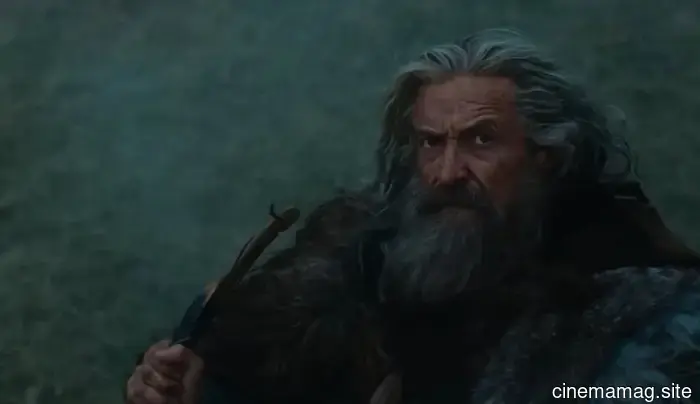 In the trailer for The Death of Robin Hood, Hugh Jackman narrates the story of a bandit.
A24 has launched a new promotional video for their revisionist history narrative, The Death of Robin Hood, featuring Hugh Jackman as the famed outlaw contemplating his life of crime. Based…
In the trailer for The Death of Robin Hood, Hugh Jackman narrates the story of a bandit.
A24 has launched a new promotional video for their revisionist history narrative, The Death of Robin Hood, featuring Hugh Jackman as the famed outlaw contemplating his life of crime. Based…
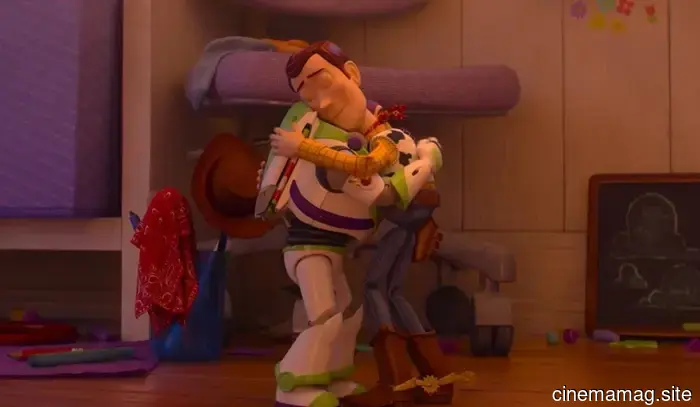 Disney releases the ultimate trailer for Toy Story 5.
Disney and Pixar have released the final trailer for Toy Story 5, the newest adventure for the residents of 234 Elm Street, which brings the beloved toys together in a quest to maintain their significance. Directed by Andrew…
Disney releases the ultimate trailer for Toy Story 5.
Disney and Pixar have released the final trailer for Toy Story 5, the newest adventure for the residents of 234 Elm Street, which brings the beloved toys together in a quest to maintain their significance. Directed by Andrew…
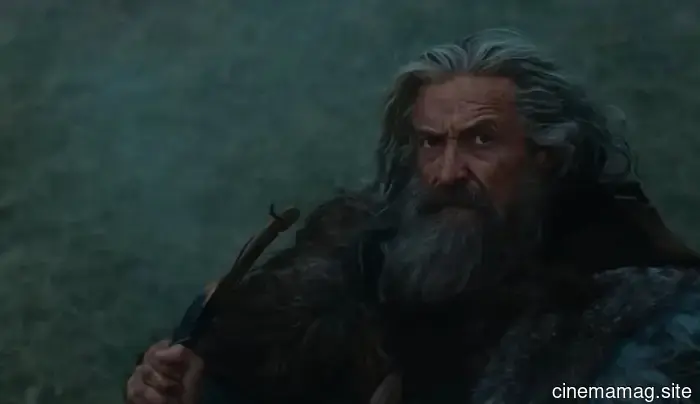 Hugh Jackman tells the tale of an outlaw in the trailer for The Death of Robin Hood.
A24 has unveiled a new promotional trailer for their revisionist history narrative, The Death of Robin Hood, featuring Hugh Jackman in the role of the famous outlaw as he contemplates his life of crime. Based…
Hugh Jackman tells the tale of an outlaw in the trailer for The Death of Robin Hood.
A24 has unveiled a new promotional trailer for their revisionist history narrative, The Death of Robin Hood, featuring Hugh Jackman in the role of the famous outlaw as he contemplates his life of crime. Based…
Film Review – Backrooms (2026)
Backrooms, 2026. Directed by Kane Parsons. Featuring Renate Reinsve, Chiwetel Ejiofor, Mark Duplass, Finn Bennett, Lukita Maxwell, Avan Jogia, Robert Bobroczkyi, Ember Ambrose, Peter New, and Katharine Isa...