
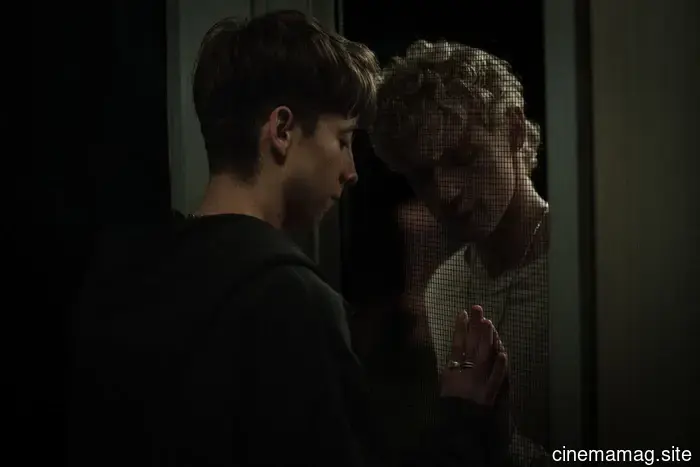
Leviticus Review: Successful Australian Horror Film Merges Paranoia with Love
Being queer—particularly in this swiftly regressing era—often means grappling with a fundamental level of fear throughout much of one’s life. This understanding emerges early: it’s not just about determining who can be trusted with your safety, but also whether that trust may be shattered later. Violence manifests in myriad forms, resulting in a self-perpetuating paranoia. Adrian Chiarella’s Leviticus captures this experience profoundly. By fusing the mechanics of It Follows with the trauma associated with conversion therapy, he delivers a tense and thematically rich feature debut that transcends mere metaphor—it's a genuinely eerie horror film on its own.
The horror begins quickly. Leviticus starts at a brightly lit pool where a teenage girl is inexplicably drawn to a shower that has turned on. Just before her untimely demise, she appears to recognize someone in the area. Chiarella then introduces the main characters: Naim (Joe Bird, from the Australian horror sensation Talk To Me) and Ryan (Stacey Clausen), who are first seen playfully throwing rocks at each other before sharing a kiss. Both seem comfortable with their identities, but given the small Australian locale they inhabit, there’s an implicit understanding that such acceptance must remain concealed.
A pressing concern is the conservative Evangelical church they attend; notably, Naim’s recently widowed mother, Arlene (Mia Wasikowska), relocated specifically to join this congregation. This scenario reflects the challenges faced by LGBTQ youth, requiring subtle glances in school and coded conversations with families. This strain intensifies Naim’s jealousy after he sees Ryan not only sharing a kiss with the pastor’s son, Hunter (Jeremy Blewitt), but also playing with him.
Naim’s misguided decision to report the incident leads to Ryan and Hunter being summoned before a “deliverance healer.” Whether viewed as a ritual or a ceremony, the event resembles a painful exorcism: the healer ignites a lighter, causing the boys to convulse and foam at the mouth. In an absolutely heartbreaking and disturbing scene, Naim soon endures the same ritual, pleading with his mother, and the film’s premise is unveiled: an entity now menacingly stalks its victim. It can take the form of the person you love most, constantly watching and following, enticing you into a false sense of safety before violently attacking.
Chiarella excels at crafting scares that go beyond the obvious, but Leviticus—which derives its title from a biblical verse frequently cited against homosexuality—receives a significant boost from an almost perfect fusion of theme and premise. The objective of conversion therapy isn’t truly to make someone straight—this is impossible—but rather to instill fear in them regarding their identity. As Ryan articulates: “They want us to be scared of each other.”
This fundamental reality adds a heartbreaking layer to the horror. Witnessing Ryan scream as he bursts from a bathroom is one thing; grasping that his ear—the same spot Naim had affectionately kissed during a rare moment of comfort on a bus—has been horrifically mutilated is another. The terror arises not solely from the monster but from the realization that the qualities you cherish most about someone may ultimately be weaponized against you, leading to mutual destruction or self-destruction.
The film's effectiveness would be greatly diminished without the believable chemistry between Bird and Clausen. They excel even when apart, conveying deep emotions through mere glances or a simple sigh. Perhaps most unexpectedly, Wasikowska sidesteps the clichéd “homophobic mother” stereotype, portraying Arlene as loving yet distant, her failure to accept her son’s sexuality driving her to an unforgivable decision. This seems more reflective of reality: parents often act from a misguided sense of love, inadvertently inflicting harm on their children in ways that neither can fully anticipate.
Leviticus ultimately reveals a tender, hard-fought love story. It examines how homophobia distorts not only personal perceptions but also the memories of individuals after they pass, perpetuating a cycle of grief and violence (symbolized through Hunter’s sister, Izzy, seeking revenge). Chiarella exhibits slight missteps typical of first-time filmmakers—the film doesn’t quite balance the narratives of the boys, culminating in a climax that lacks the necessary weight—and while it runs a gratifying 88 minutes, some slight development of the story wouldn’t hurt.
However, Chiarella triumphs in the final scene, propelling Leviticus beyond its influences into something nearly uplifting. The fear is genuine and may never fade entirely, but we’ve progressed too far to retreat into the shadows. In an era when outsiders strive to fragment the queer community to foster isolation, Leviticus posits that the most potent form of resistance is simply remaining together through everything.
Leviticus is set to be released in theaters on Friday, June 19.

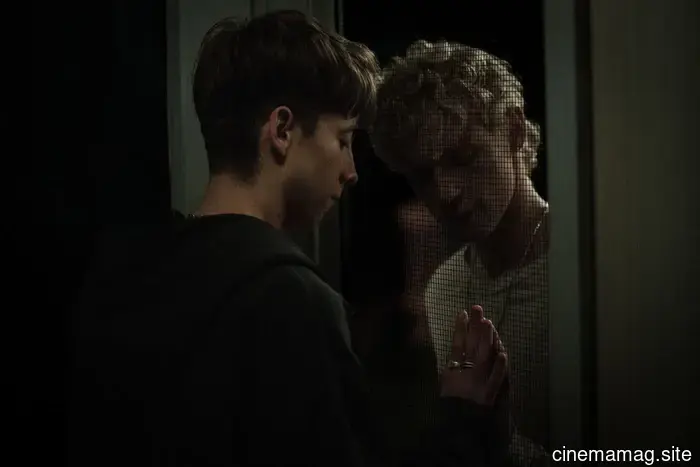
Leviticus Review: Successful Australian Horror Film Merges Paranoia with Love
Being queer—particularly in this swiftly regressive era—often involves experiencing a fundamental sense of fear throughout much of your life. It is a lesson learned early: recognizing not just whom to trust for your safety, but also the possibility of that trust being broken later. Violence manifests in numerous ways that it