
.jpg)
Film Review – Supergirl (2026)
Supergirl, 2026.
Directed by Craig Gillespie.
Featuring Milly Alcock, Eve Ridley, Matthias Schoenaerts, David Krumholtz, Emily Beecham, Jason Momoa, Alice Hewkin, Ferdinand Kingsley, Diarmaid Murtagh, David Corenswet, Emily Piggford, Bruce Lennox, Thalissa Teixeira, Kadiff Kirwan, Imogen Turner, Asha Soetan, and Leo Bill.
SYNOPSIS:
Kara Zor-El, known as Supergirl, teams up with an unexpected ally for an interstellar quest of revenge and justice when a surprising enemy makes a close attack. In a flashback to her life on a destroyed Krypton, before arriving on Earth, Kara Zor-El (Milly Alcock) hears her mother, Alura In-Ze (Emily Beecham), advise her to always be “good,” a notion that doesn’t necessarily equate to being kind or polite. This reflects a significant personality and attitude change from her cousin Superman (David Corenswet), who is perceived as overly nice by Earthlings, making Craig Gillespie’s Supergirl more of an antihero take on the character.
Carrying the weight of several tragedies, Kara has yet to accept her superpowers or noble duties, opting instead to abandon those abilities and indulge in life on red sun planets that reduce her invulnerability, allowing her to drink alcohol and party wildly without a care alongside her loyal, spirited dog Krypto (they even crowd surf together at concerts). She also appears to be frustrated with her cousin's optimism, often dismissing him and showing little interest in visiting Metropolis for her birthday. The film portrays a journey of numbing grief through excess, rejecting the use of one's powers for good, and gradually finding purpose and inner peace.
This path begins with her hesitant choice to join young Ruthye Marye Knoll (newcomer Eve Ridley, who effectively conveys much of the emotional core) on a mission to avenge her family’s death at the hands of Krem of the Yellow Hills (Matthias Schoenaerts, imposing with his face covered in metal piercings). It becomes personal when Krem shoots a poisoned arrow into an eager Krypto just ahead in their pursuit. With only 72 hours to find a cure, Kara must team up with Rutheye to chase down Krem, uncover his plans, and retrieve the antidote.
Throughout the film, there are shifting dynamics regarding revenge, suggesting that it tends to lead to ruin rather than peace. Rutheye is often unwilling to heed this advice, and at times, Kara doesn't embody the lessons she preaches (she is often impatient and aggressive, eager to retrieve her dog by any means). The entry of the immortal biker bounty hunter Lobo (Jason Momoa), also on the hunt for Brigants (Krem’s crew), serves as a cautionary glimpse into the future Rutheye could face if she succumbs to her desire for vengeance and embraces a path of killing.
The narrative mostly follows the typical cycle-of-violence storyline without much emotional depth or momentum, complicated by structural issues that position flashbacks in the middle rather than at the beginning, hindering character development and audience investment. Krem, a forgettable villain with simplistic motives involving trafficking girls to bolster his dwindling male population, lacks presence for much of the first half, but the flashbacks provide emotional context that helps engage with the broader story.
Origin stories have become increasingly formulaic, yet it could be argued that their placement here is questionable. While Kara shares these memories with another character, they should serve as a foundation for understanding her journey and connecting with her character. When Krypto falls victim to poisoning just 15 minutes in, it almost feels like a desperate attempt to draw emotional investment. One might suggest that the events of those flashbacks and the partying Kara might have made for a more compelling film or, at the very least, a captivating character study. While I do have doubts about the prospect of an entire film focused on Kara stumbling through life intoxicated, I question whether opting for a more familiar narrative was the correct choice.
Nevertheless, the late introduction of the flashbacks, combined with Milly Alcock’s strong performance—filled with suppressed pain and a struggle between fate and accepting her true calling—adds the necessary emotional weight to the CGI-heavy action, which can often feel overly weightless and explosive, despite some impressive long takes that seem more aligned with James Gunn’s influence than Craig Gillespie’s style. At one point, she expresses a primal scream into the void, reminiscent of Charlize Theron’s Furiosa in Mad Max: Fury Road. There’s even a poignant cover of a popular 2000s rock song during the climactic action sequence, which heightens the moment and aligns well with Gillespie’s skill in incorporating musical elements.
Milly Alcock’s performance is supported
.jpg)
.jpg)
.jpg)
.jpg)
.jpg)
.jpg)
Other articles
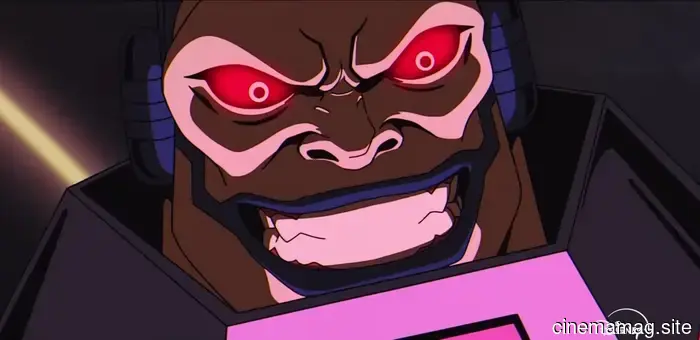 A new trailer for Marvel's X-Men '97 season 2 reveals the unleashing of Apocalypse.
With only a week remaining until the highly anticipated second season of X-Men ’97 makes its return, Marvel has released a new trailer for the animated superhero series, along with an episode from Marvel Studios...
A new trailer for Marvel's X-Men '97 season 2 reveals the unleashing of Apocalypse.
With only a week remaining until the highly anticipated second season of X-Men ’97 makes its return, Marvel has released a new trailer for the animated superhero series, along with an episode from Marvel Studios...
 New trailer released for Practical Magic 2 featuring Sandra Bullock and Nicole Kidman.
Warner Bros. has released a new trailer for Practical Magic 2, the highly anticipated sequel to the 1998 fantasy romance directed by Susanne Bier (Bird Box). This film is inspired by Alice Hoffman’s book, The Book of…
New trailer released for Practical Magic 2 featuring Sandra Bullock and Nicole Kidman.
Warner Bros. has released a new trailer for Practical Magic 2, the highly anticipated sequel to the 1998 fantasy romance directed by Susanne Bier (Bird Box). This film is inspired by Alice Hoffman’s book, The Book of…
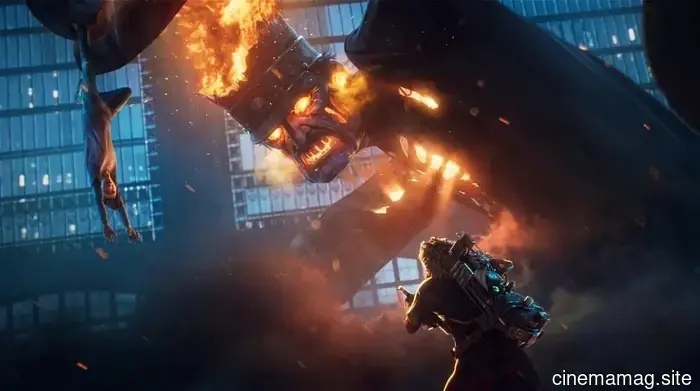 Netflix reveals first look at Ghostbusters: Night Shift.
Netflix has unveiled a first glimpse of the forthcoming animated series Ghostbusters: Night Shift, featuring a new team of young ghostbusters who take on the task of protecting New York City from paranormal dangers. The series w...
Netflix reveals first look at Ghostbusters: Night Shift.
Netflix has unveiled a first glimpse of the forthcoming animated series Ghostbusters: Night Shift, featuring a new team of young ghostbusters who take on the task of protecting New York City from paranormal dangers. The series w...
.jpg) Film Review – Supergirl (2026)
Supergirl, 2026. Directed by Craig Gillespie. Featuring Milly Alcock, Eve Ridley, Matthias Schoenaerts, David Krumholtz, Emily Beecham, Jason Momoa, Alice Hewkin, Ferdinand Kingsley, Diarmaid Murtagh,…
Film Review – Supergirl (2026)
Supergirl, 2026. Directed by Craig Gillespie. Featuring Milly Alcock, Eve Ridley, Matthias Schoenaerts, David Krumholtz, Emily Beecham, Jason Momoa, Alice Hewkin, Ferdinand Kingsley, Diarmaid Murtagh,…
Film Review – Supergirl (2026)
Supergirl, 2026. Directed by Craig Gillespie. Featuring Milly Alcock, Eve Ridley, Matthias Schoenaerts, David Krumholtz, Emily Beecham, Jason Momoa, Alice Hewkin, Ferdinand Kingsley, Diarmaid Murtagh,…