
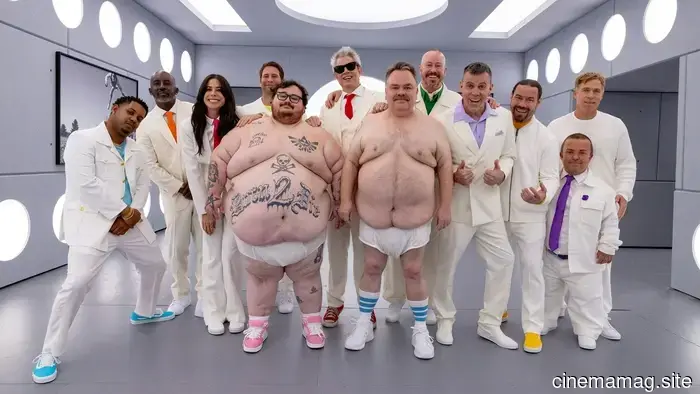
Jackass: Final Review: Knoxville and Team Make a Comeback for One Last Performance
The unique aspect of Jackass is that it truly has no equal. Originating from the skate videos of the 1990s, Jackass has endured long enough to witness its public perception shift from lewd, obnoxious troublemakers to endearing, lewd, obnoxious figures. The franchise has always remained true to itself. When transitioning from television to film, it merely increased its budget to suit the larger format. Charismatic leader Johnny Knoxville and his partner-in-mischief, director Jeff Tremaine, have consistently adhered to a fundamental principle: if you capture someone getting hit in the groin, it’s bound to make people laugh. This loyalty to their roots has allowed the Jackass brand to outlast the cultural relevance of its original home, MTV, as well as its now middle-aged cast. Despite repeated claims that they were retiring from their outrageous antics, the crew has returned for a bittersweet finale.
"You've claimed this is the last one after every movie. Do you really think anyone is going to take that seriously?" long-time performer Steve-O, often seen nude, quips to the silver-haired Knoxville while he's strapped to an electric chair. Knoxville insists that this edition is indeed the final one, and I believe him. As suggested by its title, Jackass: Best and Last features a mix of greatest hits, lesser-known moments, and some fresh content added in. It thankfully replaces the increasing scale and audacity of earlier films with moments of reflection and nostalgia while still delivering its signature humor. The Jackass name is widely recognized, with some having grown up with the series, others checking in occasionally, and some only having a fleeting acquaintance with their outrageous antics. Best and Last serves as a celebration, an introduction, and an encore.
The film begins with the stunt that Knoxville refers to as “the birth of Jackass,” which was deemed too extreme for MTV to air. At the Museum of the Moving Image premiere, Knoxville revealed that fear was the catalyst for Jackass—his first daughter was on the way, and he needed the money. Understandably, he donned a bulletproof vest, padded it with some adult magazines for added protection, and had a friend film him as he shot himself with a revolver. This stunt encapsulates the essence of early Jackass: simple, foolish, yet captivating.
Among the many previously unreleased segments Knoxville and Tremaine included in this final showcase of chaos are moments that didn’t make the bonus footage cuts of prior films. One such segment is an infamous hidden-camera prank from 2000, “The Convict,” where Knoxville impersonates an escaped prisoner trying to saw off his shackles in a West Hollywood hardware store, leading to a crew member being arrested and a reported decade-long filming ban in the area. While a sheriff aims her weapon at Knoxville lying on the sidewalk, he argues that it's merely a joke.
The theme of comedy stemming from peril has been present from the beginning and has been creatively explored by the crew, which consistently includes stunt performers like Steve-O, Chris Pontius, Dave England, Jason “Wee Man” Acuña, Preston Lacy, and “Danger Ehren” McGhehey. It’s noteworthy that they continue to playfully shock one another, given the rugged lifestyle from which they emerged. They have faced the loss of Jackass regular Ryan Dunn and the estrangement of Bam Margera, who had his own show, Viva la Bam, after the original Jackass series ended. Margera was dismissed from the latest film, Jackass Forever, but his footage appears in Best and Last, along with some of his more harrowing moments from years gone by. A proper farewell would have felt incomplete without him.
In addition to the rare footage, Best and Last features some of Jackass’ most iconic scenes, including a bar brawl starring Wee Man, the kidnapping of Brad Pitt from a Hollywood street, and a stunt called The Magic Trick, where Knoxville dresses as a magician only to be knocked over by a charging bull. Following the incident, where he broke a rib from the impact, Knoxville leans on Tremaine while reviewing the footage, declaring it insufficient, and goes for a second take. This reflects a perfectionism inspired by Jackie Chan, Knoxville's idol. After nailing that take, and while wearing a neck brace, he is carried into an ambulance amidst cheers from his castmates. The trust, affection, and authenticity underpinning this masochism are what capture so many hearts.
This brotherhood is also what has allowed their testosterone-driven antics to endure this recent scrutiny of masculinity, establishing them as a quintessential example of the positive “dudes rock” ethos. Although they surprise one another with slaps from a giant mechanized hand or detonate a paint bomb in a porta-potty, there’s a sense of camaraderie amidst the pain, as they are all part of the joke. Jackass Forever introduced a new generation of performers who held
Other articles
 Loyalties are challenged in the latest Doctor Who audio drama from Big Finish, titled Gallifrey – War Room.
Big Finish Productions has launched the third box set in the Worlds of Doctor Who – Gallifrey: War Room series, which takes place during the Time War between Gallifrey and Skaro. This new box set,…
Loyalties are challenged in the latest Doctor Who audio drama from Big Finish, titled Gallifrey – War Room.
Big Finish Productions has launched the third box set in the Worlds of Doctor Who – Gallifrey: War Room series, which takes place during the Time War between Gallifrey and Skaro. This new box set,…
 Loyalties are put to the test in the new audio drama from Big Finish, Doctor Who: Gallifrey – War Room.
Big Finish Productions has launched the third box set in the Worlds of Doctor Who – Gallifrey: War Room series, which takes place during the Time War between Gallifrey and Skaro. This newly released box set...
Loyalties are put to the test in the new audio drama from Big Finish, Doctor Who: Gallifrey – War Room.
Big Finish Productions has launched the third box set in the Worlds of Doctor Who – Gallifrey: War Room series, which takes place during the Time War between Gallifrey and Skaro. This newly released box set...
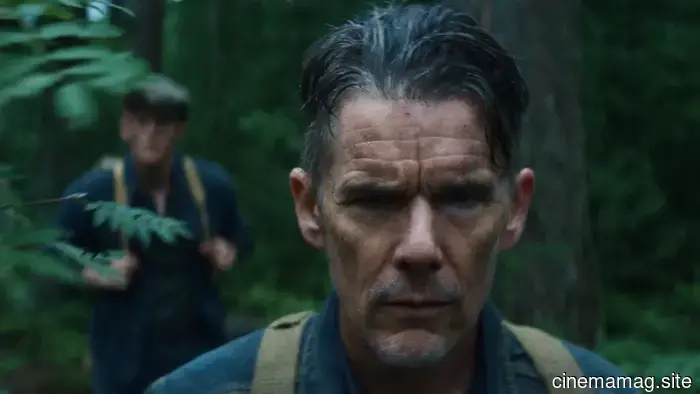 Ethan Hawke Sets Out on a Dangerous Adventure in the Initial Trailer for The Weight
A standout feature from this year's Sundance Film Festival was Padraic McKinley's The Weight, a period thriller featuring Ethan Hawke, Russell Crowe, Julia Jones, Austin Amelio, Avi Nash, and Sam Hazeldine on a perilous adventure. With a release date set for September 18 from Vertical, the first trailer has just been unveiled. Here's
Ethan Hawke Sets Out on a Dangerous Adventure in the Initial Trailer for The Weight
A standout feature from this year's Sundance Film Festival was Padraic McKinley's The Weight, a period thriller featuring Ethan Hawke, Russell Crowe, Julia Jones, Austin Amelio, Avi Nash, and Sam Hazeldine on a perilous adventure. With a release date set for September 18 from Vertical, the first trailer has just been unveiled. Here's
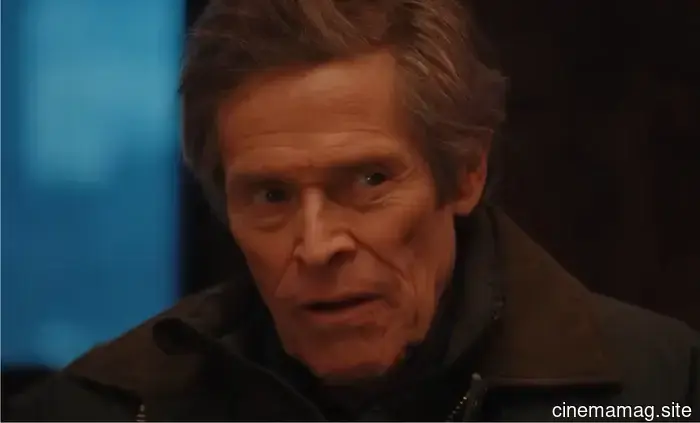 Willem Dafoe and Greta Lee Clash Over Legacy in Trailer for Kent Jones’ Late Fame
Late Fame discovers a rare balance between biting and nostalgic, with Willem Dafoe (radiating a renewed passion) and Greta Lee (exuding an overly heightened enthusiasm) delivering compelling performances in Samy Burch's adaptation of Arthur Schnitzler's novella. Meanwhile, Kent Jones utilizes his extensive understanding of New York to create the city's most visually captivating cinematic portrayal.
Willem Dafoe and Greta Lee Clash Over Legacy in Trailer for Kent Jones’ Late Fame
Late Fame discovers a rare balance between biting and nostalgic, with Willem Dafoe (radiating a renewed passion) and Greta Lee (exuding an overly heightened enthusiasm) delivering compelling performances in Samy Burch's adaptation of Arthur Schnitzler's novella. Meanwhile, Kent Jones utilizes his extensive understanding of New York to create the city's most visually captivating cinematic portrayal.
-MovieMaker-Magazine.png) Top Online Casinos in Australia: 5 Most Trusted Sites Among Australian Players (2026) - MovieMaker Magazine
The increase in online gambling has turned "best online casinos Australia" into a very competitive search term for players seeking better payouts and reliable pokies.
Top Online Casinos in Australia: 5 Most Trusted Sites Among Australian Players (2026) - MovieMaker Magazine
The increase in online gambling has turned "best online casinos Australia" into a very competitive search term for players seeking better payouts and reliable pokies.
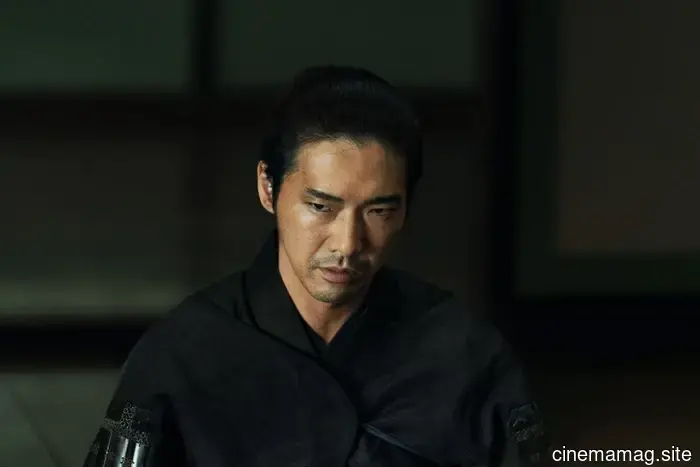 The Samurai and the Prisoner Trailer: Kiyoshi Kurosawa's Epic Mystery is Coming This July
We apologize to Christopher Nolan in advance, but the period epic we are anticipating most in July comes from Kiyoshi Kurosawa. The Samurai and the Prisoner, featuring Masahiro Motoki, Masaki Suda, Yuriko Yoshitaka, Joe Odagiri, Munetaka Aoki, Ryota Miyadate, and Tasuku Emoto, made its debut at the Cannes Film Festival and will start its rollout in the U.S. on...
The Samurai and the Prisoner Trailer: Kiyoshi Kurosawa's Epic Mystery is Coming This July
We apologize to Christopher Nolan in advance, but the period epic we are anticipating most in July comes from Kiyoshi Kurosawa. The Samurai and the Prisoner, featuring Masahiro Motoki, Masaki Suda, Yuriko Yoshitaka, Joe Odagiri, Munetaka Aoki, Ryota Miyadate, and Tasuku Emoto, made its debut at the Cannes Film Festival and will start its rollout in the U.S. on...
Jackass: Final Review: Knoxville and Team Make a Comeback for One Last Performance
What sets Jackass apart is that it's truly one of a kind. Originating from the skate videos of the 1990s, Jackass has lasted long enough to witness its public image transform completely: shifting from crude, irritating troublemakers to crude, irritating darlings. The franchise has always remained true to itself. In successfully transitioning from television