
Four Essential Films to Watch at Il Cinema Ritrovato 2026
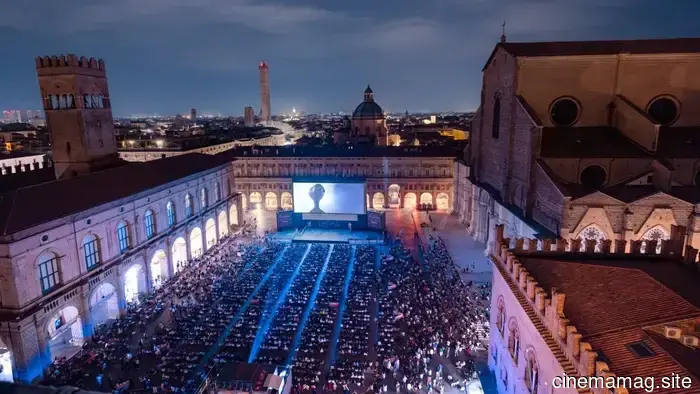
Now in its 40th edition, Il Cinema Ritrovato has grown into a genuine maze of cinema, akin to a Borgesian garden filled with divergent paths where one can easily become lost. The festival spans nine days across about 10 theaters, accompanied by a 500-page catalog that feels burdensome as you traverse the portico-lined streets of Bologna between screenings. It’s a dream come true for cinephiles, and it’s difficult to express the enchantment of viewing century-old silent films or experimental Armenian cinema among thousands of spectators in the Piazza Maggiore beside a stunning 500-year-old Italian cathedral.
The festival’s name translates to “the cinema rediscovered,” and its extensive range presents a unique chance to step beyond your usual film preferences and explore the unfamiliar. With hundreds of titles in the lineup, there inevitably comes a time (around the midway point of the festival) when I nearly abandon all of my meticulous planning and logic; I simply allow chance and instinct to guide my film choices, entering screenings with minimal expectation. Quoting German theorist Aby Warburg, one of the festival’s directors suggested during the opening ceremony that “the book you need is always right next to the one you’re looking for.” At Il Cinema Ritrovato, I aimed to set aside my own desires and let the journey of discovery reveal what I was truly seeking. Here are four highlights that not only amazed me but, in keeping with the spirit of Il Cinema Ritrovato, also took me by surprise.
Pakeezah (Kamal Amrohi, 1972)
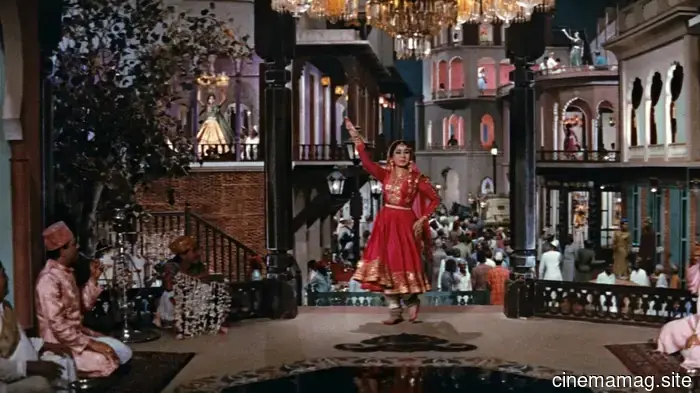
The film of the festival that nearly induced Stendhal syndrome in me, Pakeezah is an opulent Urdu musical based in Northern India. Filmed over 15 years as director Kamal Amrohi repeatedly restarted production to transition from black-and-white to Eastmancolor and finally CinemaScope, the film embodies a George Cukor-esque notion of how meticulous visual beauty can convey layers of emotional complexity beyond the storyline. The tale recounts a tragic romance between a courtesan, Sahibjaan (Meena Kumari), and a man, Salim (Raaj Kumar), who leaves her a love letter after catching a glimpse of her feet on a train. He refers to her as “Pakeezah,” meaning “the pure one,” as she tries to flee from him due to shame about her past. With lavish sets depicting grand mansions and expansive street scenes, Amrohi demonstrates breathtaking control over space, depth, color, and camera movement. The various dances performed by Sahibjaan as a courtesan evoke a sublime interplay of stillness and motion: glacial tracking shots across spacious, almost empty chambers contrast with Kumari’s careful, deliberate spins, creating hypnotic rhythms laden with poetic resonance. Entire sequences consist solely of camera movements through vacant palace rooms—dolly shots around fountains, mirrors, curtains billowing in the breeze; crimson carpets adorned with intricate gold lace; the moon overhead—and the sheer aesthetic textures were enough to nearly bring me to tears.
L’Enfant Du Paris (Léonce Perret, 1913)
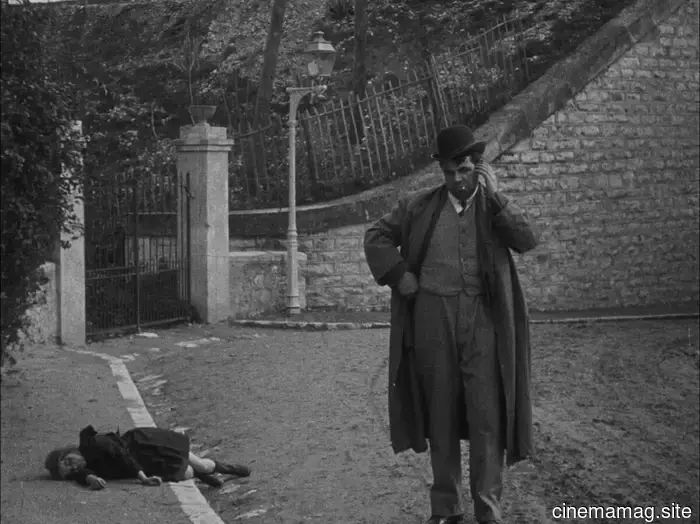
Léonce Perret’s L’Enfant Du Paris stands as a testament to Martin Scorsese’s remark that “whatever you think is new now was already done in 1913,” showcasing cinematic craftsmanship that reshaped my perception of the early decades of cinema. Centered around the quest for a small girl who becomes orphaned and subsequently kidnapped after her father is presumed dead in a colonial war, its narrative is reminiscent of Dickens while anticipating the crime serials of Louis Feuillade, who was the producer. While predominantly a melodrama—and an exceptionally effective one at that—L’Enfant Du Paris would be remarkable in any era for its masterful navigation of multiple contrasting tonal registers. From thrilling chases through the streets of Paris to documentary-style street scenes in lower-class saloons to brief comic interlude, the film consistently veered into surprising new territories without ever losing its emotional core. One of the most memorable moments occurs when Bosco, a supporting character who encounters the kidnapped girl, unexpectedly becomes the focal point for the latter half of the narrative. The suspense gradually gives way to a leisurely sentimentality as the trail runs cold in Nice, leading him to wander aimlessly through the city, destitute and weeping whenever he passes a doll shop that reminds him of the girl. Accompanied by a beautiful score from Gabriel Thibaudeau on piano and Fabiana Sommariva on English horn, L’Enfant Du Paris truly epitomized the Il Cinema Ritrovato viewing experience for me in terms of quality, novelty, and revelatory wonder.
By the Law (Lev Kuleshov, 1926)
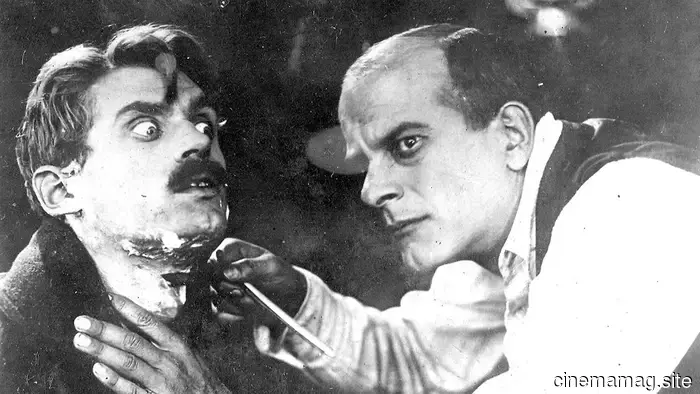
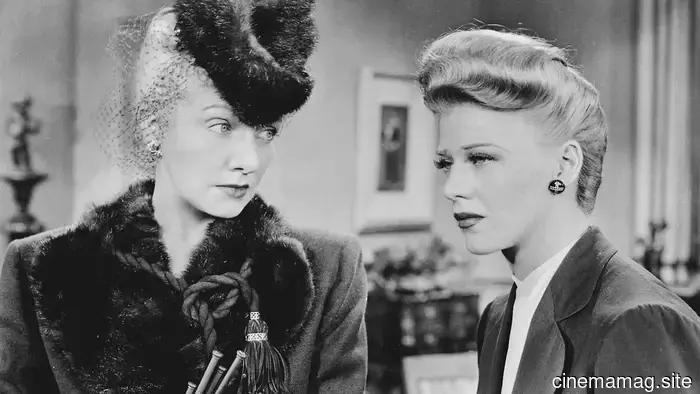
Directed by Lev Kuleshov, widely acknowledged as the pioneer of psychological editing with the Kuleshov effect, By the Law presents a grim morality tale adapted from a Jack London novel. Set in the Yukon
Other articles
 Cammy receives a high-quality 1:3 scale silicon figure from Street Fighter 6, produced by Infinity Studio.
Infinity Studio has officially unveiled its 1:3 scale silicon figure of Cammy, drawing inspiration from the beloved character's look in the 2023 video game Street Fighter 6. The deluxe coll…
Cammy receives a high-quality 1:3 scale silicon figure from Street Fighter 6, produced by Infinity Studio.
Infinity Studio has officially unveiled its 1:3 scale silicon figure of Cammy, drawing inspiration from the beloved character's look in the 2023 video game Street Fighter 6. The deluxe coll…
 Funko creates Breaking Bad Pop! Vinyl figures.
Funko has announced a new collection of Pop! Vinyl figures based on AMC's highly praised crime drama series Breaking Bad. This lineup includes figures of Walter White, Heisenberg, Jesse Pinkman, Gus Fring, Saul Goodman, and a…
Funko creates Breaking Bad Pop! Vinyl figures.
Funko has announced a new collection of Pop! Vinyl figures based on AMC's highly praised crime drama series Breaking Bad. This lineup includes figures of Walter White, Heisenberg, Jesse Pinkman, Gus Fring, Saul Goodman, and a…
 Listen to Ludwig Göransson’s soundtrack for The Odyssey.
Unless you're residing in Polyphemus' cave, you are undoubtedly aware that Christopher Nolan's The Odyssey is being released today. Alongside it, Ludwig Göransson's score, featuring 23 tracks and lasting two hours—culminating in a collaboration with Travis Scott and James Blake for the end credits—is now available for streaming. The composer shared with Time that an orchestra was not utilized for the score; instead,
Listen to Ludwig Göransson’s soundtrack for The Odyssey.
Unless you're residing in Polyphemus' cave, you are undoubtedly aware that Christopher Nolan's The Odyssey is being released today. Alongside it, Ludwig Göransson's score, featuring 23 tracks and lasting two hours—culminating in a collaboration with Travis Scott and James Blake for the end credits—is now available for streaming. The composer shared with Time that an orchestra was not utilized for the score; instead,
 New to Streaming: Miroirs No. 3, Backrooms, The Currents, Obsession, and More
Every week, we showcase the significant titles that have recently arrived on streaming services in the United States. Take a look at this week's picks below and find previous collections here. Backrooms (Kane Parsons) The first five minutes act as a perfect introduction for those who are not acquainted with Parsons' Backrooms web series and may require a bit more persuasion that a 20-year-old...
New to Streaming: Miroirs No. 3, Backrooms, The Currents, Obsession, and More
Every week, we showcase the significant titles that have recently arrived on streaming services in the United States. Take a look at this week's picks below and find previous collections here. Backrooms (Kane Parsons) The first five minutes act as a perfect introduction for those who are not acquainted with Parsons' Backrooms web series and may require a bit more persuasion that a 20-year-old...
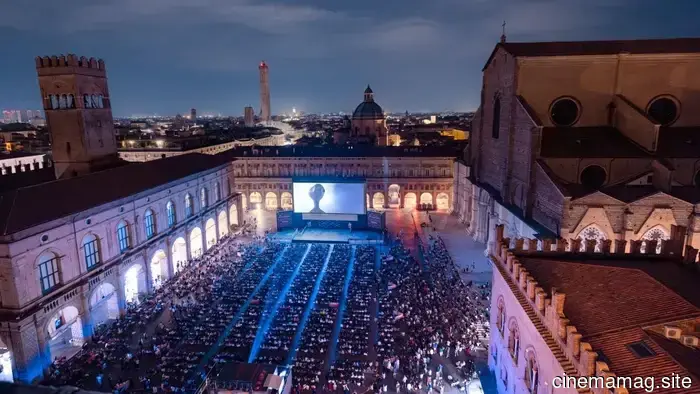 Four Essential Films to Experience at Il Cinema Ritrovato 2026
Now in its 40th year, Il Cinema Ritrovato has evolved into a genuine labyrinth of cinema, reminiscent of a Borgesian garden of divergent paths where one can easily lose themselves. The festival spans nine days and is hosted in around 10 theaters, accompanied by a 500-page catalog that burdens you like a heavy stone as
Four Essential Films to Experience at Il Cinema Ritrovato 2026
Now in its 40th year, Il Cinema Ritrovato has evolved into a genuine labyrinth of cinema, reminiscent of a Borgesian garden of divergent paths where one can easily lose themselves. The festival spans nine days and is hosted in around 10 theaters, accompanied by a 500-page catalog that burdens you like a heavy stone as
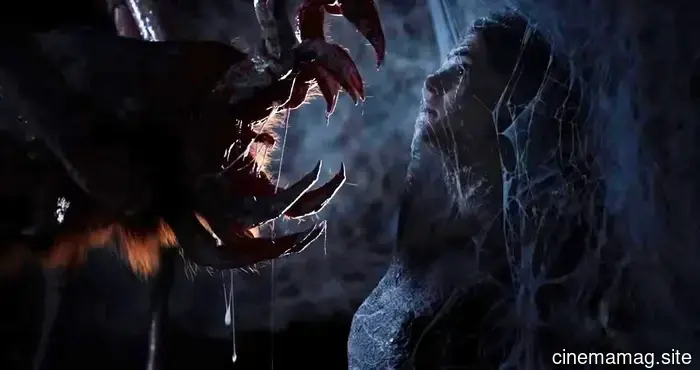 The creature feature Don’t Move has revealed its trailer and poster.
A trailer has been released online for Don’t Move, the forthcoming horror film adapted from the 2020 novel of the same title by James S. Murray and Darren Wearmouth. As a church group begins to experience unsettling events...
The creature feature Don’t Move has revealed its trailer and poster.
A trailer has been released online for Don’t Move, the forthcoming horror film adapted from the 2020 novel of the same title by James S. Murray and Darren Wearmouth. As a church group begins to experience unsettling events...
Four Essential Films to Watch at Il Cinema Ritrovato 2026
Now in its 40th edition, Il Cinema Ritrovato has grown into a genuine labyrinth of cinema, resembling a Borgesian garden of diverging paths that invites one to lose themselves within. Spanning nine days and held in approximately 10 theaters, the festival comes accompanied by a comprehensive 500-page catalog that feels as heavy as a stone as