
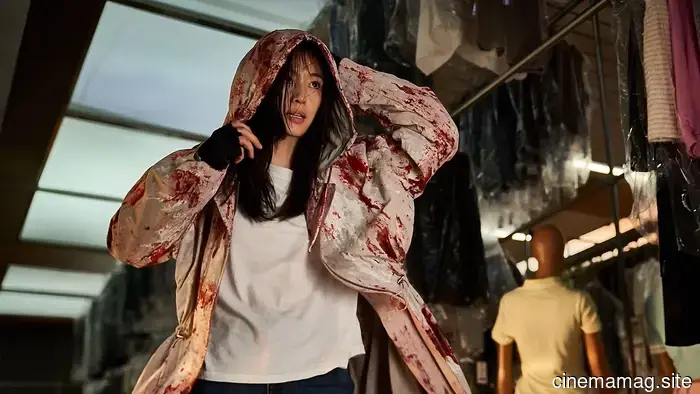
Yeon Sang-ho and Jun Ji-hyun discuss Colony, George A. Romero, and the way zombies mirror our contemporary society.
A decade ago, Train to Busan showcased passengers battling zombies on high-speed trains. With an astute script and dynamic editing, Yeon Sang-ho’s film achieved global success. In Yeon’s new work, Colony, an experimental serum unleashes swarms of zombies in a downtown Seoul office building. This time, however, the zombies possess the ability to communicate instantly, operating with a hive mentality.
Featuring Jun Ji-hyun in her first role on-screen in over ten years, Colony was a commercial success upon its release this May in South Korea. Together with The King’s Warden, Yeon’s film helped revive the Korean film industry after a prolonged downturn. I had a conversation with Yeon and Jun during the New York Asian Film Festival, marking the North American debut of Colony, which opens in theaters this Friday courtesy of Well Go USA Entertainment.
The Film Stage: How did you and Gianna Jun develop Kwon Se-jeong, a professor who confronts zombies?
Yeon Sang-ho: I wanted Kwon Se-jeong to be the complete antithesis of the zombies, which embody a form of collective intelligence. She can be seen as a lone wolf, but she’s a confident one who chooses that path. Ji-hyun has portrayed iconic and unforgettable female characters in the past, so I felt she would align perfectly with Kwon Se-jeong’s character. As you can see, she exhibits immense confidence.
Ji-hyun, why did you choose this project to mark your return after an eleven-year hiatus?
Jun Ji-hyun: The primary reason was director Yeon. For any actor in Korea, working with him is a dream. I felt the same way. Additionally, the Korean film industry faced challenges post-COVID-19, with limited great scripts available. When I read the Colony script, I immediately thought it was the kind of film I wanted to watch in theaters, which led to my decision to take the role.
What did you contribute to this role?
Jun Ji-hyun: People often reveal their true selves amidst chaos. Kwon Se-jeong remains steadfast, even in turmoil. She is a centered individual and a leader who hopefully guides the survivors to safety. I wanted the audience to experience Se-jeong’s decision-making journey through the chaos she faces. Therefore, my focus was to portray her as a grounded character while also reflecting the ordinary aspects of her persona. Finding that balance was somewhat challenging. Personally, I have a strong sense of justice, and I believe Se-jeong shares that quality.
Why do the other characters in Colony doubt Se-jeong?
Yeon Sang-ho: Se-jeong is very principled and quite stubborn about defending those principles. This can sometimes be viewed as rigidity, which makes people uncomfortable.
Does Se-jeong reflect your own career?
Jun Ji-hyun: I would say yes. Throughout my career, I've encountered a lot of noise about what I should do—people’s expectations of me. Ultimately, it comes down to my perception of a character and a project and whether I believe I can perform it to the best of my abilities. So yes, I suppose there is a parallel.
Yeon Sang-ho: Personally, I recall that Ji-hyun’s early career, particularly in My Sassy Girl, showcased a character that was distinctive from typical Korean female portrayals. I believe her role initiated a shift in how women are represented in Korean cinema. She has consistently maintained that legacy by choosing strong and transformative roles since then.
Have you revisited My Sassy Girl recently?
Jun Ji-hyun: No, it’s been ages since it was released. Maybe around 20 years?
23 years.
Jun Ji-hyun: Let’s say it feels like a year ago.
Did you anticipate that your stunts would be so intensive?
Jun Ji-hyun: The stunts weren’t overly challenging. For the more dangerous scenes, stunt professionals handled those. I performed as best I could in the stunts I handled myself. We discussed how Se-jeong comes from an academic background, making it a bit of a leap to envision her as an action hero. We aimed to balance the degree of action she engaged in.
There's a remarkable scene filmed in a plaza at night, where your character is encircled by zombies and burning vehicles.
Jun Ji-hyun: Reaching that scene involved pretending to drive through the crowd. I had to match the movements of the stunt driver, who was in the passenger seat. There were no brakes on my side. In my fear, I instinctively kept hitting imaginary brakes.
Yuen, can you discuss the concept of zombies in Colony?
Yeon Sang-ho: Colony developed after [screenwriter] Choi Gyu-seok and I collaborated on the series Hellbound. We believed there were more stories regarding collectivism or herd mentality yet to be told. In today’s high-tech era, we naturally connected it to AI. Through research, I discovered that the

Other articles
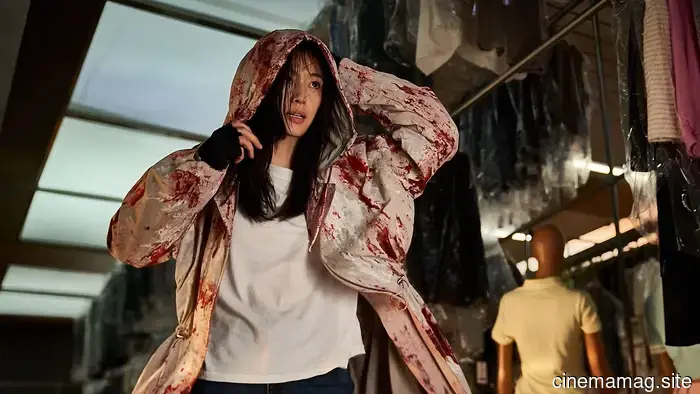 Yeon Sang-ho and Jun Ji-hyun discuss Colony, George A. Romero, and the ways in which zombies symbolize our contemporary society.
A decade ago, Train to Busan featured passengers battling zombies on a fast-moving train. With a clever script and dynamic editing, Yeon Sang-ho's film achieved global success. In Yeon's new work, Colony, an experimental serum releases swarms of zombies into an office building in downtown Seoul. This time, however, the zombies have the ability to communicate instantly.
Yeon Sang-ho and Jun Ji-hyun discuss Colony, George A. Romero, and the ways in which zombies symbolize our contemporary society.
A decade ago, Train to Busan featured passengers battling zombies on a fast-moving train. With a clever script and dynamic editing, Yeon Sang-ho's film achieved global success. In Yeon's new work, Colony, an experimental serum releases swarms of zombies into an office building in downtown Seoul. This time, however, the zombies have the ability to communicate instantly.
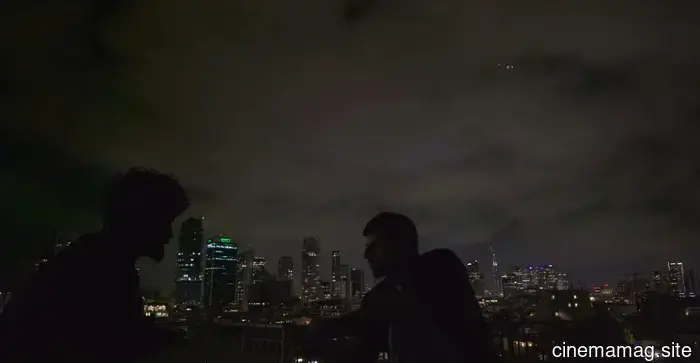 No Other Land Team Returns with Naza, Supported by Jonathan Glazer, Added to Venice and NYFF Programs.
Two of the directors responsible for the most important and crucial documentary of 2024, No Other Land (which won the Academy Award for Best Documentary and the Indie Film Site Network Advocate Award), are coming back with another exploration of the destruction and violence faced by Palestinian lives. The 83rd Venice International Film Festival has revealed that Naza, a new project by Yuval Abraham and Rachel Szor, will…
No Other Land Team Returns with Naza, Supported by Jonathan Glazer, Added to Venice and NYFF Programs.
Two of the directors responsible for the most important and crucial documentary of 2024, No Other Land (which won the Academy Award for Best Documentary and the Indie Film Site Network Advocate Award), are coming back with another exploration of the destruction and violence faced by Palestinian lives. The 83rd Venice International Film Festival has revealed that Naza, a new project by Yuval Abraham and Rachel Szor, will…
 The official LEGO recreation of the trailer for Marvel's Avengers: Doomsday has been released.
With the excitement for Avengers: Doomsday ramping up as its December release approaches, Marvel Studios has released an official LEGO version of the movie's initial trailer, showcasing a b…
The official LEGO recreation of the trailer for Marvel's Avengers: Doomsday has been released.
With the excitement for Avengers: Doomsday ramping up as its December release approaches, Marvel Studios has released an official LEGO version of the movie's initial trailer, showcasing a b…
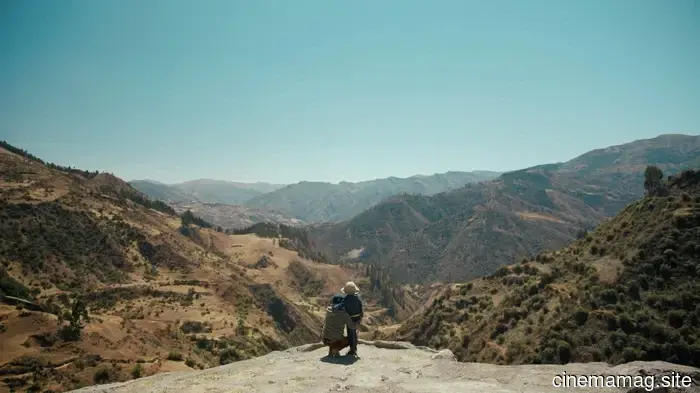 Exclusive Trailer for Augusto Zegarra’s Praised Documentary Runa Simi Honors a Peruvian Phenomenon
The highly regarded Peruvian documentary Runa Simi, marking the feature directorial debut of Augusto Zegarra and produced by Dominique Bravo, Ellen Schneider, Benjamin & Peter Bratt, Alpita Patel, and Bill & Ruth Ann Harnisch, will have a one-week run starting this Friday at Firehouse: DCTV's Cinema for Documentary Film in New York City. In anticipation of this release,
Exclusive Trailer for Augusto Zegarra’s Praised Documentary Runa Simi Honors a Peruvian Phenomenon
The highly regarded Peruvian documentary Runa Simi, marking the feature directorial debut of Augusto Zegarra and produced by Dominique Bravo, Ellen Schneider, Benjamin & Peter Bratt, Alpita Patel, and Bill & Ruth Ann Harnisch, will have a one-week run starting this Friday at Firehouse: DCTV's Cinema for Documentary Film in New York City. In anticipation of this release,
 Medicom reveals MAFEX figures of Battle-Damaged Superman and Doomsday from Death of Superman.
Medicom has formally introduced its Battle-Damaged Superman and Doomsday MAFEX action figures, drawing inspiration from the iconic comic book storyline The Death of Superman, and they are currently available for pre-order.
Medicom reveals MAFEX figures of Battle-Damaged Superman and Doomsday from Death of Superman.
Medicom has formally introduced its Battle-Damaged Superman and Doomsday MAFEX action figures, drawing inspiration from the iconic comic book storyline The Death of Superman, and they are currently available for pre-order.
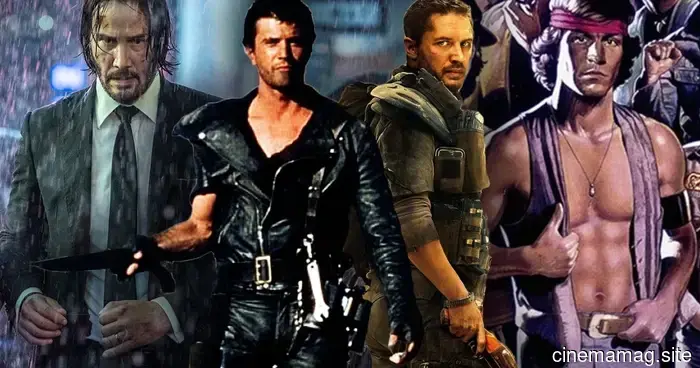 10 Amazing World-Building Action Films You Must Watch
Tom Jolliffe offers a curated list of ten exceptional films (or franchises) known for their unique world-building that sets them apart... Action has remained one of the most beloved genres in cinema since the days of horse-drawn carriages...
10 Amazing World-Building Action Films You Must Watch
Tom Jolliffe offers a curated list of ten exceptional films (or franchises) known for their unique world-building that sets them apart... Action has remained one of the most beloved genres in cinema since the days of horse-drawn carriages...
Yeon Sang-ho and Jun Ji-hyun discuss Colony, George A. Romero, and the way zombies mirror our contemporary society.
A decade ago, Train to Busan featured passengers battling zombies on fast-moving trains. Thanks to a clever script and dynamic editing, Yeon Sang-ho's film achieved global success. In Yeon's newest release, Colony, an experimental serum releases swarms of zombies in a central Seoul office building. This time, however, the zombies have the ability to communicate instantly.