
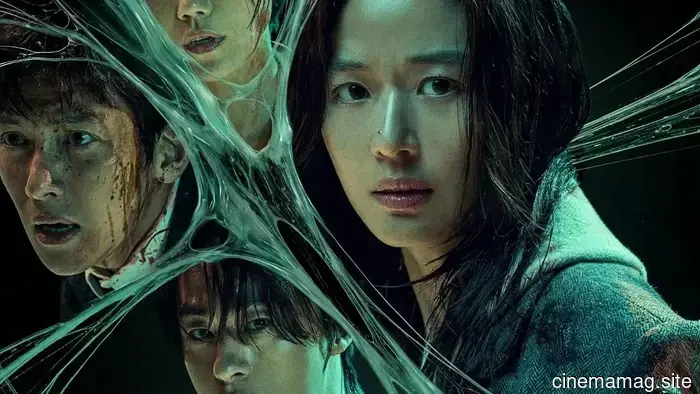
Exclusive Interview – Director Yeon Sang-ho of Colony
Robert Ewing converses with Colony director Yeon Sang-ho…
Yeon Sang-ho has become a hallmark in the zombie genre, primarily due to Train to Busan, a film frequently hailed as one of the best zombie movies in existence. He began his journey with animated features like The King of Pigs and The Fake, subsequently exploring various genres ranging from the superhero narrative Psychokinesis to the thriller Revelations. With his latest project, Colony, he revisits the zombie genre after six years, presenting an evolution of his previous work that incorporates hive-mind intelligence and pheromone-driven behavior.
Colony centers on Professor Se-jeong (Gianna Jun), who is attending a biotech conference with the hope of securing employment. However, when a mutating virus is unleashed, the authorities impose a lockdown on the building to contain the outbreak. Se-jeong finds herself trapped inside with a group of other survivors, and they must work together to navigate the crisis and find a way out.
I had the incredible chance to sit down with director Yeon Sang-ho through an interpreter to discuss his new film Colony ahead of its UK premiere at Tubi FrightFest. We talked about the genesis of the hive-mind idea, the enduring appeal of zombies in his storytelling, and much more.
To kick things off, thank you so much for taking the time to speak with me today. It’s truly an honor, and Colony is an excellent film. I had a fantastic time watching it. Jumping right in, one of the most notable elements of this film is the hive-mind intelligence of the zombies. I wanted to know the origin of that concept, especially considering how the script needed to depict an ever-evolving threat throughout the film.
This idea came from my co-writer, Choi Kyu-seok, with whom I collaborated on both seasons of Hellbound. Hellbound explored the dangers of collective behavior seen in social media. After writing the second season, we felt there was more to express about the perils of collectiveness in today's world. We pondered what the current dangers of collective behavior entail. We concluded that it involves the rapid exchange of communication prevalent today, which, when pushed to extremes, can equate to AI. Additionally, we noted the diminishing individuality, which we found pretty frightening. We then considered which film genre would best express these themes and ultimately decided that the zombie genre would be fitting.
Expanding on that, you've indicated that zombies serve as the optimal genre for conveying this narrative, marking your fourth zombie film to date. I'm curious what attracts you to zombies as creatures, and how do they facilitate the realization of your visions?
What’s fascinating about zombie films is that, for instance, in George Romero’s Night of the Living Dead, the term "zombie" did not even exist at that time. They weren’t referred to as zombies back then. Romero succeeded in illustrating the societal fears of his era. Zombies encompass social anxieties, and even as times change, they remain an extraordinary medium for exploring the fears of collectiveness as well as the social issues we face. Hence, I chose the zombie genre for this project.
Another aspect that stands out in the film is not only the zombies but also the set design, such as the fungus growing on the walls and the slime as the zombies detach from them. I’d like to know what it was like collaborating with the set designers to ensure that the viral infection was authentically represented in both the zombies and their surroundings.
Yes, the zombies represent AI and the social dynamics of our time; however, there’s also a natural, biological element derived from ants, which served as a model for us. Ants communicate via pheromones, which we found intriguing. We contemplated how to mirror pheromones within the zombies. This led us to envision new communication networks for the zombies, resulting in this blob-like substance. Visually, we wanted to portray an environment familiar to us in our everyday lives, before swiftly transitioning to something entirely alien.
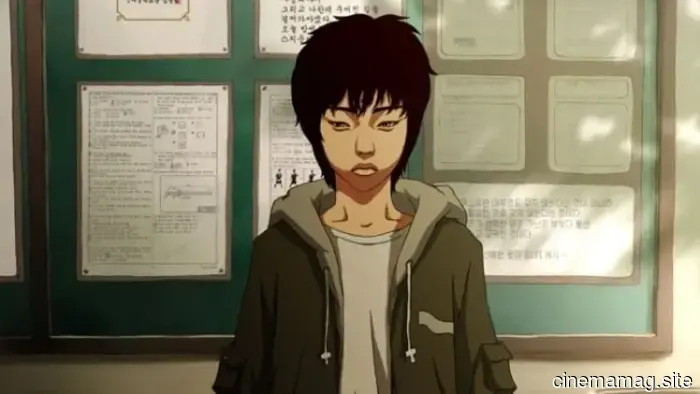
To conclude, I’ve been a fan of your work for a long time, and many might not realize that you began in animation, with notable recognition for The King of Pigs. That was my first encounter with your work during my youth, and I probably came across that trailer at an age that was too young. I wanted to ask what you learned from that initial animated project, including the short film that preceded it, that you still apply in your recent film, Colony?
When I created The King of Pigs, it was a low-budget animated film, and I was working from home, drawing and compiling those drawings to produce the animation. I didn't enter the industry through large studios; it all began at home, which I consider myself fortunate for. I plan to continue making low-budget films because I view the experience of creating them as a kind of comforting space I can always return to. This is part of the reason why I made The Ugly
Other articles
 Prepare yourself for some Bloody Tennis with the trailer for the Shudder horror film.
After its world premiere at the Locarno Film Festival earlier this month, Shudder has unveiled a poster and trailer for the horror film Bloody Tennis. The story centers on Sophie, a young woman who has been...
Prepare yourself for some Bloody Tennis with the trailer for the Shudder horror film.
After its world premiere at the Locarno Film Festival earlier this month, Shudder has unveiled a poster and trailer for the horror film Bloody Tennis. The story centers on Sophie, a young woman who has been...
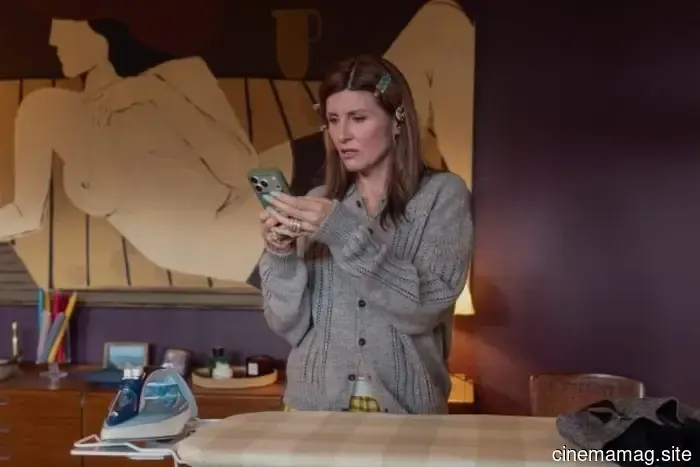 Sharon Horgan seeks romance and intimacy in the trailer for HBO's Youth.
HBO has unveiled a trailer for Youth, the new comedy series created by Sharon Horgan, who plays the role of Alex, a 50-year-old woman attempting to manage the dating scene and her own life while also caring for…
Sharon Horgan seeks romance and intimacy in the trailer for HBO's Youth.
HBO has unveiled a trailer for Youth, the new comedy series created by Sharon Horgan, who plays the role of Alex, a 50-year-old woman attempting to manage the dating scene and her own life while also caring for…
 10 Star Wars Characters That Should Have Their Own Disney+ Series
Matthew Shepherd presents ten Star Wars characters who merit their own Disney+ series. One of the best moves Disney made with Star Wars was to shift the focus away from the Skywalker saga. The Mandalorian demonstrated...
10 Star Wars Characters That Should Have Their Own Disney+ Series
Matthew Shepherd presents ten Star Wars characters who merit their own Disney+ series. One of the best moves Disney made with Star Wars was to shift the focus away from the Skywalker saga. The Mandalorian demonstrated...
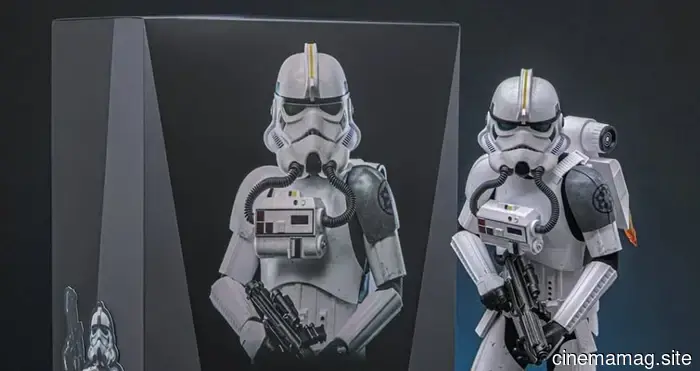 Hot Toys has revealed the Jetpack Trooper figure from Star Wars Jedi: Survivor.
Hot Toys has officially released its limited edition sixth scale Jetpack Trooper figure from the celebrated video game sequel Star Wars Jedi: Survivor, which is currently open for pre-order. Take a look at the…
Hot Toys has revealed the Jetpack Trooper figure from Star Wars Jedi: Survivor.
Hot Toys has officially released its limited edition sixth scale Jetpack Trooper figure from the celebrated video game sequel Star Wars Jedi: Survivor, which is currently open for pre-order. Take a look at the…
 New Pop! Vinyl figures of Jack, Sally, Lock, Shock, and Barrel from The Nightmare Before Christmas are on the way from Funko.
Funko has officially revealed the upcoming series of Pop! vinyl figures inspired by the cherished Disney 1993 stop-motion animated musical The Nightmare Before Christmas. This series features Jack Skellington along with Zero, Sa…
New Pop! Vinyl figures of Jack, Sally, Lock, Shock, and Barrel from The Nightmare Before Christmas are on the way from Funko.
Funko has officially revealed the upcoming series of Pop! vinyl figures inspired by the cherished Disney 1993 stop-motion animated musical The Nightmare Before Christmas. This series features Jack Skellington along with Zero, Sa…
 AI makes a powerful debut in the trailer for the sci-fi thriller C.O.G.
In anticipation of its September release, a poster and trailer have appeared online for the forthcoming sci-fi techno-thriller C.O.G., which follows a tech startup that descends into turmoil when their groundbreaking AI chat...
AI makes a powerful debut in the trailer for the sci-fi thriller C.O.G.
In anticipation of its September release, a poster and trailer have appeared online for the forthcoming sci-fi techno-thriller C.O.G., which follows a tech startup that descends into turmoil when their groundbreaking AI chat...
Exclusive Interview – Director Yeon Sang-ho of Colony
Robert Ewing engages in a conversation with Colony director Yeon Sang-ho… Yeon Sang-ho is a celebrated figure in the zombie genre, renowned for Train to Busan, a film frequently regarded as one of the all-time best zombie films…