
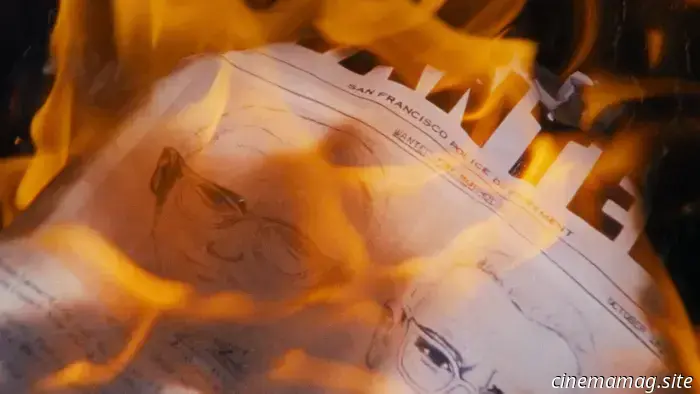
Sundance Review: The Zodiac Killer Project is the Ultimate True Crime Documentary
What would a feature-length director commentary entail for a film that was never produced? This intriguing and nuanced premise is at the heart of Charlie Shackleton’s exceptional Zodiac Killer Project, which showcases the director reflecting on his unsuccessful endeavor to adapt Lyndon E. Lafferty’s book, The Zodiac Killer Cover-Up: The Silenced Badge, into the first significant documentary about the unresolved case. One could argue that the result is intellectually more engaging than the initial goal: a unique and often humorous stream-of-consciousness exploration that underscores the increasing collection of clichés prevalent in numerous true-crime documentaries and series. Rather than simply criticizing these tropes, Shackleton delves into why such familiarity resonates with viewers, guaranteeing a new perspective on watching these programs.
In the almost forty years since Errol Morris’ The Thin Blue Line, true-crime media has developed into a self-sustaining industry, largely thanks to the binge-worthy appeal of streaming series. With data analytics providing insights into exactly when a viewer disengages, the creators of these series and documentaries have fine-tuned their approach to cater to short attention spans with precision that rivals the meticulous planning of serial killers. “The more generic the image, the more effective it is as visual shorthand,” Shackleton observes as he thoughtfully dissects various clichés, from the soft focus “backtors” (actors only seen walking away from the camera, often in slow-motion) to the reliance on suggestive yet vague b-roll and the overused swinging lamp during interrogations. In contrast to a regrettable CinemaSins-style video essay, Shackleton openly acknowledges he would implement these techniques in his own documentary, recognizing that these clichés persist for a reason.
Those hoping to discover new revelations about America’s most notorious unsolved serial killer case may leave disappointed—since the director was unable to secure the rights to Lafferty’s book, which mainly details his evidence for the killer’s “true identity,” he must navigate around any exclusive revelations it contains. As he recounts each aspect of his unfulfilled project, even appearing on-screen while recording and conversing with the sound engineer, Shackleton finds more satisfaction in analyzing the essence of the true-crime documentary rather than revealing surprises related to the case. “I feel like that is the only silver lining of not getting to make the film, is that we don’t have to retell the story of the Zodiac Killer for the thousandth time,” he states. Unlike projects like Jodorowsky’s Dune, where one feels a sense of loss for its unmade potential, it’s difficult to envision that Shackleton’s intended film would have been particularly gripping. This makes his informal, introspective approach—characterized by largely improvised narration, aside from a few general notes—more captivating. He openly corrects himself when misstating facts or laughs at his own jabs, creating a sense of intimacy that makes viewers feel as if they are in the room with him, eager to see which trope he’ll address next.
There are, of course, many specifics to discuss: the oddly timed jaw-dropping revelation in The Jinx, the exploitative essence of Paradise Lost, the escalating absurdity of Making a Murderer, and the self-righteous tone of Monster: The Jeffrey Dahmer Story. While Shackleton could have delved deeper into the psychological motivations behind viewers’ compulsive consumption of heinous crime narratives, he does touch upon the ethically questionable lengths filmmakers may traverse to prioritize captivating content over moral considerations. “If you are convinced it’s for the greater good, there are very few ethical boundaries in the eyes of HBO executives,” he observes. Never lingering too long on any single trope but still offering a comprehensive analysis, Shackleton has crafted an entertaining and even self-deprecating exploration of a widespread fascination. While there will inevitably be more murders—and subsequently more series about them—in an ideal scenario, Zodiac Killer Project would serve as the definitive true-crime documentary to conclude all true-crime documentaries.
Zodiac Killer Project had its premiere at the 2025 Sundance Film Festival.
Grade: B+
Other articles
 The initial trailer for Andrew Ahn's The Wedding Banquet revisits an Ang Lee classic.
Ang Lee might be taking a moment to launch his next film, as his biopic on Bruce Lee plans to commence production this year. In the meantime, one of his early classics is receiving a contemporary adaptation. The newest project from Driveways and Fire Island director Andrew Ahn is The Wedding Banquet, which features Lily Gladstone.
The initial trailer for Andrew Ahn's The Wedding Banquet revisits an Ang Lee classic.
Ang Lee might be taking a moment to launch his next film, as his biopic on Bruce Lee plans to commence production this year. In the meantime, one of his early classics is receiving a contemporary adaptation. The newest project from Driveways and Fire Island director Andrew Ahn is The Wedding Banquet, which features Lily Gladstone.
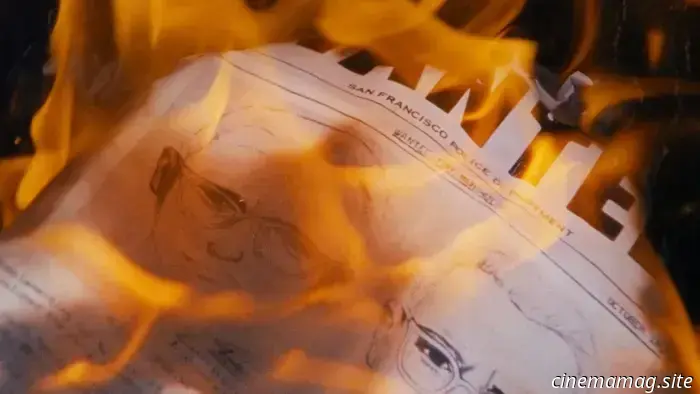 The Zodiac Killer Project Uncovers the Techniques and Themes of True Crime
Charlie Shackleton's The Zodiac Killer Project skillfully unveils the techniques and conventions of true crime. It has just premiered at Sundance.
The Zodiac Killer Project Uncovers the Techniques and Themes of True Crime
Charlie Shackleton's The Zodiac Killer Project skillfully unveils the techniques and conventions of true crime. It has just premiered at Sundance.
-Movie-Review.jpg) Like Father Like Son (2025) - Film Review
Like Father Like Son, 2025. Written and directed by Barry Jay. Featuring Dylan Flashner, Ariel Winter, Vivica A. Fox, Mayim Bialik, Dermot Mulroney, Jim Klock, Prima Apollinaare, Eric Michael Cole, Benjamin Mackey, Casey James, Daniel Lench, John C. Epperson, Michael Roddy, Laura L. Cottrel, Ronit Gilbert-Aranoff, Chris Gann, Jonathan Tysor, Pappy Faulkner, Jonathan Shores, Mike [...].
Like Father Like Son (2025) - Film Review
Like Father Like Son, 2025. Written and directed by Barry Jay. Featuring Dylan Flashner, Ariel Winter, Vivica A. Fox, Mayim Bialik, Dermot Mulroney, Jim Klock, Prima Apollinaare, Eric Michael Cole, Benjamin Mackey, Casey James, Daniel Lench, John C. Epperson, Michael Roddy, Laura L. Cottrel, Ronit Gilbert-Aranoff, Chris Gann, Jonathan Tysor, Pappy Faulkner, Jonathan Shores, Mike [...].
 El Dorado Film Festival Anuncia Talleres sobre Distribución, Financiación, Televisión Indie y Sonido.
The El Dorado Film Festival in Arkansas is set to begin next month, celebrating its 40th anniversary with a screening of the horror classic Fright Night, which stars and honors El.
El Dorado Film Festival Anuncia Talleres sobre Distribución, Financiación, Televisión Indie y Sonido.
The El Dorado Film Festival in Arkansas is set to begin next month, celebrating its 40th anniversary with a screening of the horror classic Fright Night, which stars and honors El.
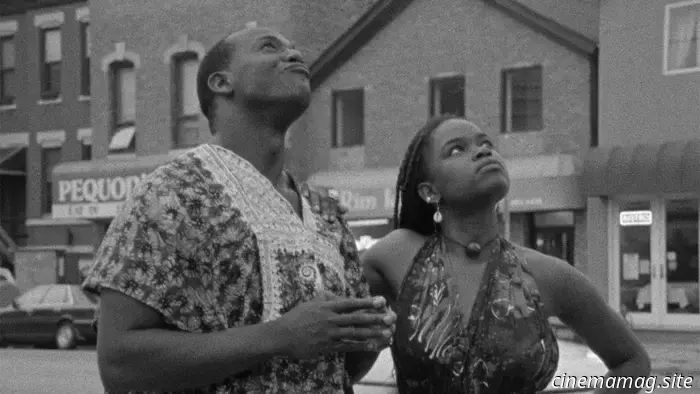 Compensation Trailer: The newly restored independent film classic by Zeinabu Irene Davis is set to debut this February.
Recently designated for preservation at the National Film Registry of the Library of Congress as a film that signifies significant cultural, artistic, and historical accomplishments in cinema, Zeinabu Irene Davis' Compensation first premiered in 1999 at the Atlanta Film Festival and subsequently screened at Sundance, TIFF, and other venues, culminating in a
Compensation Trailer: The newly restored independent film classic by Zeinabu Irene Davis is set to debut this February.
Recently designated for preservation at the National Film Registry of the Library of Congress as a film that signifies significant cultural, artistic, and historical accomplishments in cinema, Zeinabu Irene Davis' Compensation first premiered in 1999 at the Atlanta Film Festival and subsequently screened at Sundance, TIFF, and other venues, culminating in a
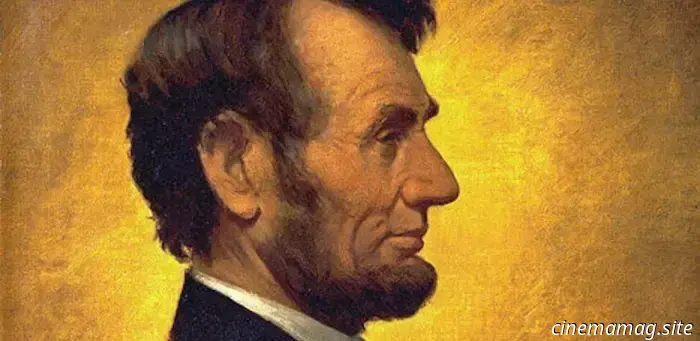 Was Abraham Lincoln gay? Here are 9 pieces of evidence from the new documentary "Lover of Men."
Here are seven pieces of historical evidence mentioned in Lover of Men that suggest Abraham Lincoln might have been gay.
Was Abraham Lincoln gay? Here are 9 pieces of evidence from the new documentary "Lover of Men."
Here are seven pieces of historical evidence mentioned in Lover of Men that suggest Abraham Lincoln might have been gay.
Sundance Review: The Zodiac Killer Project is the Ultimate True Crime Documentary
What would a director's commentary for a feature-length film sound like if the film never actually existed? This intriguing and slippery concept is explored in Charlie Shackleton’s remarkable Zodiac Killer Project, where the director talks about his unsuccessful effort to adapt Lyndon E. Lafferty’s book The Zodiac Killer Cover-Up: The Silenced Badge into the first significant documentary on the subject.