
Cannes Review: Oliver Laxe’s Desert Trance Sirat Is a Magnificent, Bold Accomplishment
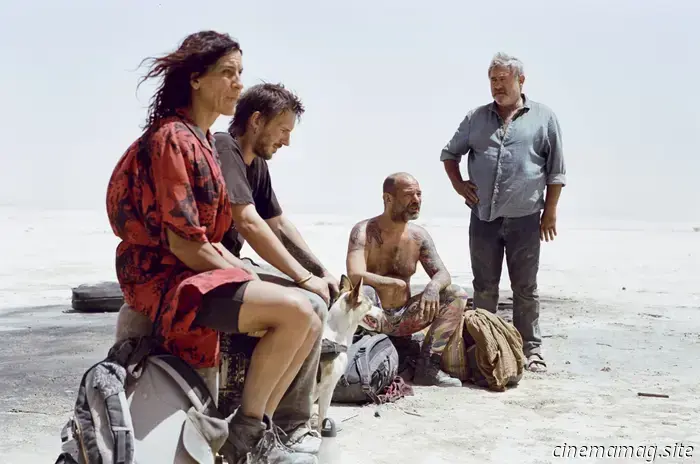
For French-Spanish filmmaker Oliver Laxe, earning a spot in the Cannes competition has been a long-awaited milestone. Laxe previously attended in 2010 (You All Are Captains), 2016 (Mimosas), and 2019 (Fire Will Come), always returning with accolades. Now, he steps up with Sirat, his most ambitious and grand work to date: a remarkable, auteur-driven arrival that feels more prevalent at this festival than others. Set in Morocco, which served as the backdrop for Laxe’s initial two films, the story centers on a father's quest to find his daughter amid the chaos and drugs of an illegal rave scene in the Atlas Mountains. This premise carries a hint of Paul Schrader’s Hardcore, but Sirat is more in line with William Friedkin’s Sorcerer, even leaning into Mad Max territory: it narrates the journey of a ragtag group attempting to navigate monstrous vehicles through a landscape so harsh it might as well be hell. If I witness a better film at Cannes, it will surely have been an exceptional year.
The thrill of discovery is heightened by witnessing a filmmaker build upon it with each successive project, expanding their artistic boundaries. Laxe establishes the tone of his latest effort with a striking opening-credits sequence: beginning with close-ups of hands assembling a wall of speakers, then, as an ominous beat kicks in, shifting to an aerial view of dancing bodies. Cinematographer Mauro Herce enters the scene in a documentary style, identifying the main characters. We are introduced to the vibrant raver crew of Jade (Jade Oukid), Steff (Stefania Gadda), Josh (Joshua Liam Henderson), Tonin (Tonin Janvier), and Bigui (Richard Bellamy)—two of whom are amputees—before finally meeting Luis (Sergi López) and his son Esteban (Bruno Núñez), both appearing lost, exhausted, and confused. When Jade, a fellow Spaniard, shows them kindness, a desperate Luis interprets it as a signal to join the next party, regardless of the capability of his hatchback to handle the rugged terrain. When armed soldiers arrive to announce that the country is at war, Jade takes her M911 truck (Friedkin used the M211) off-road, with the others closely trailing behind.
López boasts a remarkably consistent history at Cannes, featuring in Alice Rohrwacher’s Happy as Lazzaro and Albert Serra’s Pacification—two of the finest films in recent years, both exploring realms that eerily balance between our reality and the next. Sirat derives its name from the Arabic term for “path” and signifies the bridge between heaven and hell, described in an opening quote as “thinner than a hair and sharper than a sword.” This theme of the ineffable is prevalent throughout Laxe’s film, which captures images of crossings in unexpected places. One such image is showcased in brilliant lasers projected onto a mountain face, and later in the tweeter of a loudspeaker that Herce (who has collaborated on all of Laxe’s features as well as Lois Patiño’s surreal Samsara) approaches as if drawn in by its gravitational force. This portrayal of a world fading from view soon enchants the characters, who respond to news of societal collapse, and worse, with surprising pragmatism.
Speakers are revered as sacred objects in this narrative: in a breathtaking mid-film sequence, Jade invites Luis into her truck to unveil one she has been working on. Initially hesitant, Luis's demeanor changes when she turns up the volume (creating vibrations never before captured on 16mm film), allowing him to glimpse why his daughter might be drawn into this realm—though Laxe’s film cleverly avoids being overly simplistic. This glimmer of understanding recurs at various points, particularly when he observes Esteban’s growing fondness for their new companions. Revealing any more would surely be sacrilege.
Supported by unforgettable visuals and a visceral, throbbing score from producer Kangding Ray, Laxe presents the film’s cosmic stakes with such conviction that the final sequences (which will remain unmentioned) caught me by surprise initially. I have watched the film twice now: first at an engrossed press screening and then in an IMAX theater just outside town. I wanted to feel the bass reverberate through the theater walls and see those expansive vistas on a screen as grand as a building—not only the stunning opening sequence but also the night shots of the vehicles illuminated solely by their headlights, moving across the desert or cutting through the Atlas mountains' rock face. I was eager to revisit the ending, which stirred baffled yet appreciative laughter the first time but felt notably solemn during the second viewing. At one point, Bigui asks, “Is this what the end of the world feels like?” In Sirat, it arrives with both a bang and a whimper.
Sirat premiered at the 2025 Cannes Film Festival

Other articles
 Searching for a Book to Adapt? MediaScout Aims to Ignite Your Next Find.
If you’ve ever attempted to locate the rights to a book or seek out new content that hasn't already been chosen by Hollywood, MediaScout could be precisely what you need.
Searching for a Book to Adapt? MediaScout Aims to Ignite Your Next Find.
If you’ve ever attempted to locate the rights to a book or seek out new content that hasn't already been chosen by Hollywood, MediaScout could be precisely what you need.
 Casey Chong presents ten fantastic films from Carolco Pictures. Those who experienced the 80s and 90s are likely to recall the remarkable period when a specific independent studio ruled the Hollywood scene. This studio is Carolco Pictures, known for delivering a blend of iconic genre-defining blockbusters and lesser-known gems from […]
 Star Trek: Defiant #27 - Comic Book Teaser
IDW Publishing has released the official preview for Star Trek: Defiant #27, which will be available this Wednesday; take a look below… “Lore War,” Part Four. Sisko is nearing a critical moment: Lore reigns as the god of the universe, and the heroes left acting beyond his reach are becoming fewer with each confrontation. Everywhere […]
Star Trek: Defiant #27 - Comic Book Teaser
IDW Publishing has released the official preview for Star Trek: Defiant #27, which will be available this Wednesday; take a look below… “Lore War,” Part Four. Sisko is nearing a critical moment: Lore reigns as the god of the universe, and the heroes left acting beyond his reach are becoming fewer with each confrontation. Everywhere […]
 Detective Comics #1097 - Preview of the Comic Book
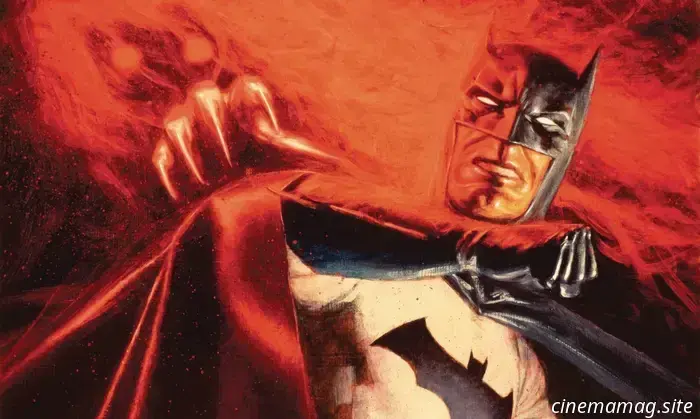
Detective Comics #1097 will be released this Wednesday, and we have the official preview for you below, thanks to DC… Following Asema's violent spree, a new danger to Gotham—and the wider world—has emerged. As he grapples with personal discoveries about his past, Batman must confront a group fixated on their […]
Detective Comics #1097 - Preview of the Comic Book
Detective Comics #1097 will be released this Wednesday, and we have the official preview for you below, thanks to DC… Following Asema's violent spree, a new danger to Gotham—and the wider world—has emerged. As he grapples with personal discoveries about his past, Batman must confront a group fixated on their […]
 Cannes Review: The Mysterious Gaze of the Flamingo is a profoundly moving queer drama.
Stories about the AIDS epidemic will forever hold significance as reminders that ignorance, bigotry, and hate can have deadly consequences. A recent and poignant example comes from Chilean writer-director Diego Céspedes, whose first feature film, The Mysterious Gaze of the Flamingo, premiered in the Un Certain Regard section at Cannes. While the film might not have a conventional narrative structure or
Cannes Review: The Mysterious Gaze of the Flamingo is a profoundly moving queer drama.
Stories about the AIDS epidemic will forever hold significance as reminders that ignorance, bigotry, and hate can have deadly consequences. A recent and poignant example comes from Chilean writer-director Diego Céspedes, whose first feature film, The Mysterious Gaze of the Flamingo, premiered in the Un Certain Regard section at Cannes. While the film might not have a conventional narrative structure or
 The Thing #1 - Comic Book Teaser
Ben Grimm is in the spotlight this week in The Thing #1, and you can view the official preview provided by Marvel Comics below… THE THING TAKES ON THE MARVEL UNIVERSE! While Ben Grimm might be the mightiest member of the Fantastic Four, he was once just a frail kid from Yancy Street. […]
The Thing #1 - Comic Book Teaser
Ben Grimm is in the spotlight this week in The Thing #1, and you can view the official preview provided by Marvel Comics below… THE THING TAKES ON THE MARVEL UNIVERSE! While Ben Grimm might be the mightiest member of the Fantastic Four, he was once just a frail kid from Yancy Street. […]
Cannes Review: Oliver Laxe’s Desert Trance Sirat Is a Magnificent, Bold Accomplishment
For the French-Spanish director Oliver Laxe, securing a spot in the Cannes competition has been a long-awaited achievement. Laxe made appearances in 2010 (You All Are Captains), 2016 (Mimosas), and 2019 (Fire Will Come), and he left each time with accolades. Now, he steps up with Sirat, his most ambitious and adventurous film to date: the sort of work