
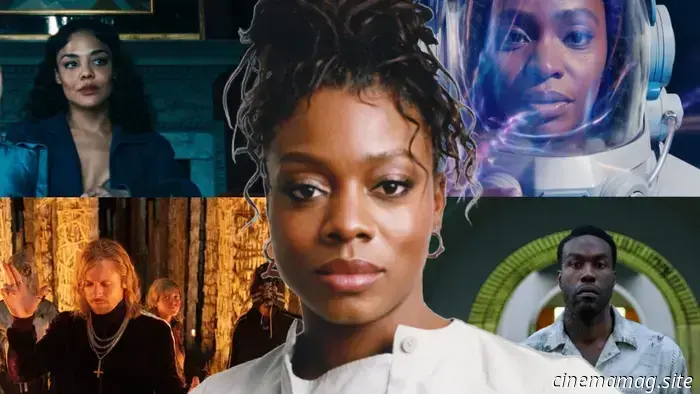
Hedda's Director Nia DaCosta Discusses Portraying Outsider Narratives — From Confined Heroines to Survivors of Anger
Nia DaCosta’s five feature films may appear quite distinct—from the 2018 Western crime drama Little Woods to the horror of 2021’s Candyman, the superheroes showcased in 2023’s The Marvels, her new adaptation of Henrik Ibsen’s Hedda, to the survivors in the forthcoming 28 Years Later: The Bone Temple.
However, they all share a common thread: her empathy for those on the margins of society.
“All of my films revolve around individuals who exist on the outskirts of society,” DaCosta explains. “Those on the fringes often feel they lack the authority to truly live their lives.”
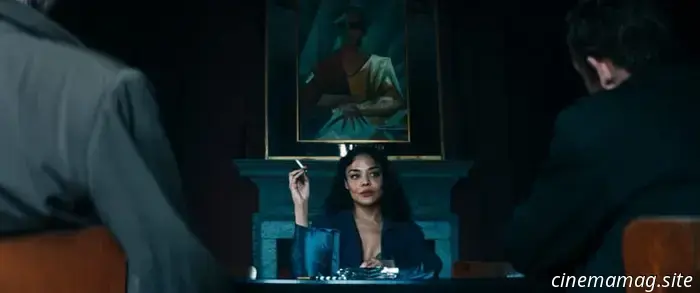
Hedda, adapted from Ibsen’s 1891 play Hedda Gabler, features Tessa Thompson—who also starred in Little Woods and appeared in The Marvels—playing a woman trapped in an unloving marriage.
Set over an intense night in an old estate, her longing for control leads her to manipulate those around her. The film explores the self-sabotage that can arise from internalized societal constraints.
Tessa Thompson in Hedda, directed by Nia DaCosta. Image courtesy of Prime.
“Being a minority makes this something we all contend with. Even culturally, there are certain parts of society we’re told we're not allowed to enter,” DaCosta states. “There are aspirations we often hear we shouldn't pursue. If we accept these limitations, we constrain ourselves.”
DaCosta effortlessly transitions between genres and visual styles, rejecting any constraints. For Hedda, she distanced herself from over a century of adaptations, even moving away from Ibsen’s original text after her first draft to ensure her film could exist independently.
“I wanted the changes I made to allow the film to thrive as intended,” she says. Only afterwards did she incorporate the original text back into her process, creating a dialogue between her interpretation and Ibsen's.
One of her most striking alterations was transforming the film's main rivalry by changing Hedda’s adversary, Ejlert Lövborg, into a woman named Eileen, played by Nina Hoss, known for her role in Tár.
“Transforming Lövborg into a woman illustrates yet another challenging path that Hedda could have taken. While she is capable of it, she chooses not to,” DaCosta elaborates. “With another woman opting for a difficult route, many avenues to freedom open up before her, but they are fraught with difficulty. Having Lövborg as a woman highlights that struggle.”
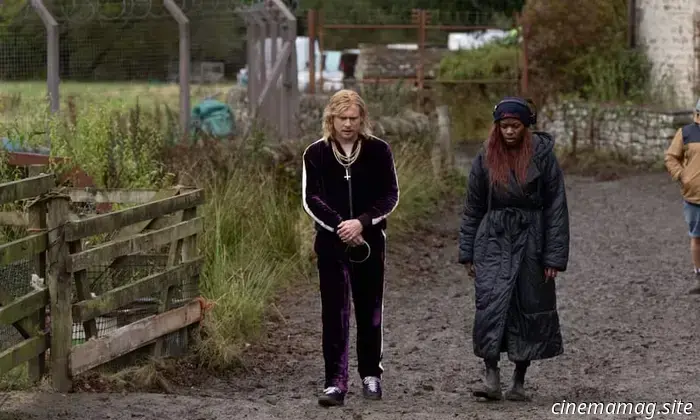
DaCosta’s approach of redefining stories to build them anew is a hallmark of her work. 28 Years Later: The Bone Temple, set to release in January, serves as a sequel to Danny Boyle’s 2002 apocalyptic film 28 Days Later, which follows the survivors of a rage virus, and follows 2007’s 28 Weeks Later by Juan Carlos Fresnadillo, who co-wrote the screenplay, as well as Boyle’s own follow-up, 28 Years Later, which premiered this past summer. The Bone Temple shares a screenplay by original 28 Days Later writer Alex Garland.
DaCosta approached Garland’s script with bold ideas regarding the film's aesthetics.
Actor Jack O’Connell and director Nia DaCosta on the set of 28 Years Later: The Bone Temple. Photo by Miya Mizuno. Image courtesy of Columbia Pictures.
Boyle’s original 28 Days Later was primarily filmed using a consumer-grade digital camcorder, while 28 Years Later utilized various cameras, including an iPhone 15 Max. DaCosta chose to film The Bone Temple using the Arri Alexa 35, a high-end digital cinema camera, departing from Boyle’s gritty, handheld style to craft a visually and philosophically distinct sequel.
“Danny Boyle is an extraordinary, creative individual, and attempting to recreate his style is unfeasible, but it also doesn’t interest me as a director,” she remarks. “I have no desire to shoot on cell phones.”
She adds, “The advantage of Alex Garland's Bone Temple script is that no filmmaker would interpret it the same way.”
Nia DaCosta on Her Hedda Contributors
DaCosta's passion for the arts was instilled in her early by her mother, Charmaine DaCosta, known for her work with the reggae group Worl-A-Girl. Charmaine DaCosta infused artistry with practicality, once telling her daughter: “You aspire to be an artist, and I support that. But be aware that you'll likely be poor and struggle financially. However, the money will eventually come.”
Accepting her mother's wisdom, DaCosta pursued degrees at NYU and London’s Royal Central School of Speech and Drama. She learned “to continuously create and not seek permission,” dedicating herself to her development while uplifting her peers.
“Your peers are immensely important to your growth and evolution,” she emphasizes. “You must support each other in rising together.”
One of those peers is Thompson,

Other articles
.jpg) The B-Side Episode 170 – David Cronenberg (featuring Veronica Fitzpatrick)
Welcome to The B-Side! In this space, we focus on film directors—not the films that catapulted them to fame or sustained their celebrity, but rather the lesser-known works they created during the interim. Today, we delve into the work of David Cronenberg, a remarkable Canadian talent and the filmmaker recognized for pioneering the genre of “body horror” (a label he is not particularly fond of).
The B-Side Episode 170 – David Cronenberg (featuring Veronica Fitzpatrick)
Welcome to The B-Side! In this space, we focus on film directors—not the films that catapulted them to fame or sustained their celebrity, but rather the lesser-known works they created during the interim. Today, we delve into the work of David Cronenberg, a remarkable Canadian talent and the filmmaker recognized for pioneering the genre of “body horror” (a label he is not particularly fond of).
 Adam Driver set to star in Netflix's psychological thriller series Rabbit, Rabbit.
Star Wars and Ferrari actor Adam Driver is poised to star in Rabbit, Rabbit, a psychological drama series for Netflix focused on a hostage situation. Rabbit, Rabbit is “set at a truck stop in…
Adam Driver set to star in Netflix's psychological thriller series Rabbit, Rabbit.
Star Wars and Ferrari actor Adam Driver is poised to star in Rabbit, Rabbit, a psychological drama series for Netflix focused on a hostage situation. Rabbit, Rabbit is “set at a truck stop in…
 12 Timeless Horror Films That Remain Frightening Today
Certain classic horror films may not seem frightening by contemporary standards. However, these movies definitely retain their scare factor.
12 Timeless Horror Films That Remain Frightening Today
Certain classic horror films may not seem frightening by contemporary standards. However, these movies definitely retain their scare factor.
 Beau Bridges Among the Honorees at Leonard Maltin's Coronado Island Film Festival
Beau Bridges and Delroy Lindo are set to be honored at the Leonard Maltin gala during the Coronado Island Film Festival.
Beau Bridges Among the Honorees at Leonard Maltin's Coronado Island Film Festival
Beau Bridges and Delroy Lindo are set to be honored at the Leonard Maltin gala during the Coronado Island Film Festival.
 Comic Book Sneak Peek – Doctor Who: The Prison Paradox #1
The Fifteenth Doctor and Belinda will be back next week as Titan Comics debuts its new series Doctor Who: The Prison Paradox. You can catch a glimpse of the first issue with the official preview…
Comic Book Sneak Peek – Doctor Who: The Prison Paradox #1
The Fifteenth Doctor and Belinda will be back next week as Titan Comics debuts its new series Doctor Who: The Prison Paradox. You can catch a glimpse of the first issue with the official preview…
 The Ten Best Episodes of Batman: The Animated Series
Simon Thompson shares his selection of the ten best episodes of Batman: The Animated Series. Referring to Batman as a pop culture phenomenon would indeed be an understatement. Since…
The Ten Best Episodes of Batman: The Animated Series
Simon Thompson shares his selection of the ten best episodes of Batman: The Animated Series. Referring to Batman as a pop culture phenomenon would indeed be an understatement. Since…
Hedda's Director Nia DaCosta Discusses Portraying Outsider Narratives — From Confined Heroines to Survivors of Anger
Director Nia DaCosta, known for Hedda, enjoys exploring various genres. However, all of her films revolve around stories of outsiders.