
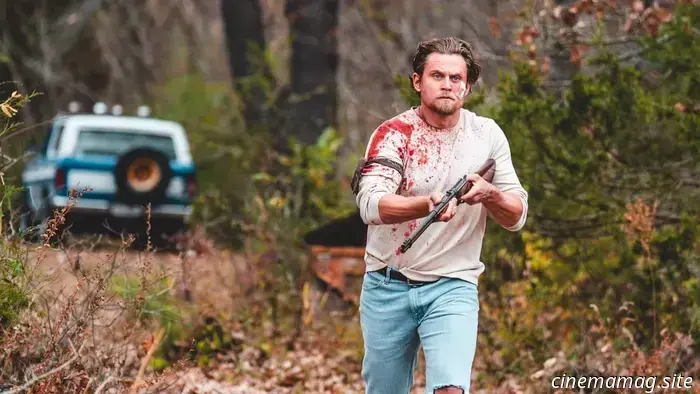
Violent Ends director John Michael-Powell discusses his first day of filming.
John-Michael Powell is the writer and director of Violent Ends, a revenge thriller that is currently available, featuring star-crossed lovers set in the picturesque Ozark Mountains. In the following passage, he recounts his first day on set.—M.M.
It’s 4 a.m. on the morning before principal photography kicks off for my feature film, Violent Ends. The cool Ozark Mountain breeze brushes my cheek from a window that has aged enough to not shut completely. As the rain fades, moonlight filters through the clouds—bright enough to cast peculiar shadows across the torn curtains draped from a piece of resin-coated pine fastened to the wall.
I haven't slept. I'm caught between a state of dreaming and anxiety. This is the moment—one I’ve been pursuing my entire life. In a few hours, I’ll take to the set as the writer-director of a legitimate movie, backed by a real budget and joined by a cast of actors who have collectively been working longer than I've been alive. Waves of fear surge up my spine, radiating heat. The imposter syndrome whispers to me. They will see through you, it hisses. They will detect your fear and fraudulent nature. You’ve tricked your way into this!
Through my bleary vision, the folds of the curtains begin to resemble Roy Scheider. He scowls at me through gold-rimmed glasses, a cigarette loose in his lips.
“You're gonna need a bigger boat, kid.”
“What do you mean?” I murmur.
Suddenly, my alarm blares. I slap the phone until it quiets down. When I look back, Roy has vanished.
Minutes later, I’m driving through the Ozarks, pondering Roy's warning—wondering if the people waiting for me on set are the ultimate predators ready to devour me. As dread sets in, Aerosmith plays on the radio. Joe Perry’s guitar roars. Steven Tyler sings, “Some sweathog mama with a face like a gent,” and somehow, I start to feel confident. I can handle this.
The Shark and the Boat of Violent Ends
I arrive at base camp—poof, confidence evaporated. There’s a sizable crew and an overwhelming number of trucks! My first film cost about the same as a used Honda Civic and had a crew the size of a basketball team. Here, there are a hundred people. I spot an eighteen-wheeler parked by a gas pump and don’t dare ask what it’s for. Remember the imposter feeling? Yep. I tell myself: if I can just make it to lunch, it will be a victory. I may not be Rocky Balboa, but perhaps I’m Jake LaMotta: “You never got me down, Violent Ends. You never got me down.”
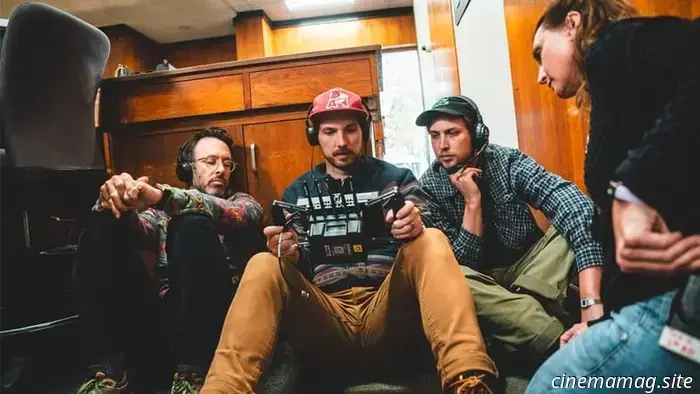
(L-R) Violent Ends producer Vincent Sieber, director John-Michael Powell, cinematographer Elijah Guess, and 1st AD Jennifer Gerber. Courtesy of the filmmaker.
Our first scene features Kate Burton, recognized for Grey’s Anatomy and Scandal, portraying a gritty small-town deputy—a part she has always desired. While at craft services, I inquire if Kate has arrived.
“She’s running late,” someone responds.
“No problem.”
Immediately, worry sets in.
My shot list is overwhelming—too many setups, insufficient daylight. Before I spiral, my production designer, Christian Snell, pulls me towards the Ford Bronco we bought and transformed into a sheriff’s cruiser. It turns out that when you buy vehicles on Facebook for an indie film, you get… character.
“The transmission’s a bit tricky,” Christian explains. “You need to ease into second to get her moving. Oh—and there’s a minor oil leak.”
“Is it safe?”
“Of course, but the cabin fills with smoke if you run it for too long.”
“How long is too long?”
He ponders. “Two takes, perhaps.”
It’s 40 degrees outside, and I’m sweating as if it were August.
It’s not even 8 a.m., and Jen Gerber, my 1st AD, already has that distant look in her eyes. When she says, “Kate’s having some wardrobe issues,” I know we need to address it.
I dash towards the hair and makeup trailers, lined up like a circus. As I stomp through, PAs glance my way and scatter like pigeons. Probably not the calm, confident vibe I intended to display. Maybe I should have sent Jen. Too late now.
Kate bursts out of her trailer, caffeinated and energized. Since we cast her over Zoom, this is our first in-person meeting. She’s gracious but I can sense her nerves beneath the surface. I understand—she just came aboard three days ago after the SAG strike disrupted our timetable. She’s still memorizing lines, and wardrobe is complicating matters.
My costume designer, Kristen Kopp, presents
Другие статьи
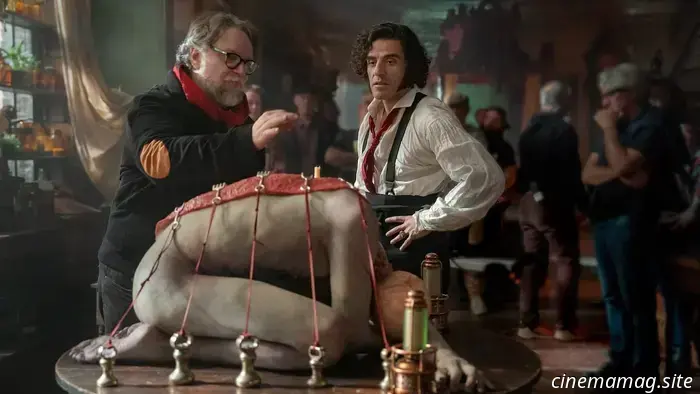 Guillermo del Toro Hears Frankenstein
Guillermo del Toro Hears Frankenstein
Guillermo del Toro Hears Frankenstein
.jpg) 4K Review – Edward Scissorhands (1990)
Edward Scissorhands, 1990, directed by Tim Burton, features a cast that includes Johnny Depp, Winona Ryder, Dianne Wiest, Anthony Michael Hall, Kathy Baker, Vincent Price, and Alan Arkin. SYNOPSIS: To celebrate the film's 3…
4K Review – Edward Scissorhands (1990)
Edward Scissorhands, 1990, directed by Tim Burton, features a cast that includes Johnny Depp, Winona Ryder, Dianne Wiest, Anthony Michael Hall, Kathy Baker, Vincent Price, and Alan Arkin. SYNOPSIS: To celebrate the film's 3…
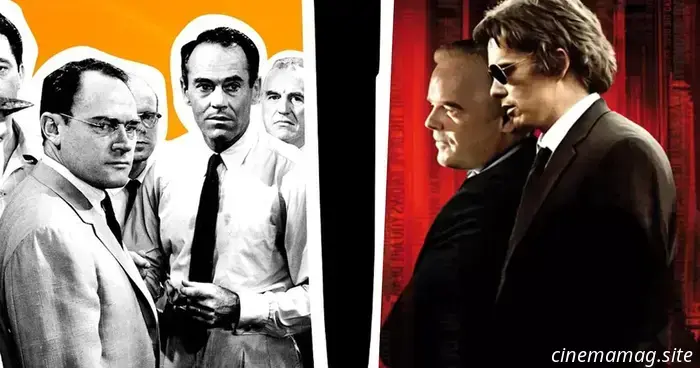 Bookended Excellence: Filmmakers Notable for Their Outstanding First and Last Films
Many directors have launched their careers with an impressive film or concluded with a remarkable one. However, which directors made their striking entrance and concluded with an extraordinary film? Here, we explore four candidates… Every director begins…
Bookended Excellence: Filmmakers Notable for Their Outstanding First and Last Films
Many directors have launched their careers with an impressive film or concluded with a remarkable one. However, which directors made their striking entrance and concluded with an extraordinary film? Here, we explore four candidates… Every director begins…
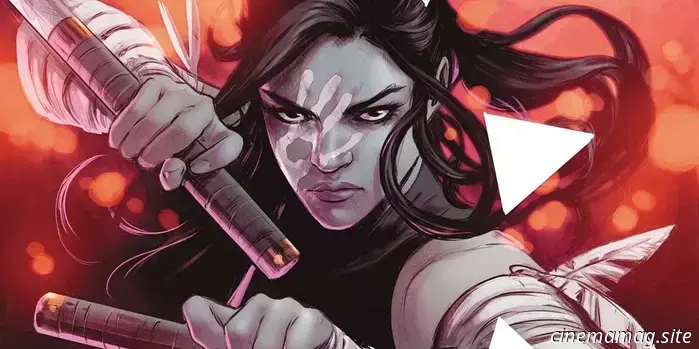 Preview of Comic Book – Echo: Seeker of Truth #1
Marvel Comics is set to release Echo: Seeker of Truth #1 on Wednesday, and you can check out the official preview below... After her cousin goes missing in Los Angeles, ECHO heads to the City of Angels...
Preview of Comic Book – Echo: Seeker of Truth #1
Marvel Comics is set to release Echo: Seeker of Truth #1 on Wednesday, and you can check out the official preview below... After her cousin goes missing in Los Angeles, ECHO heads to the City of Angels...
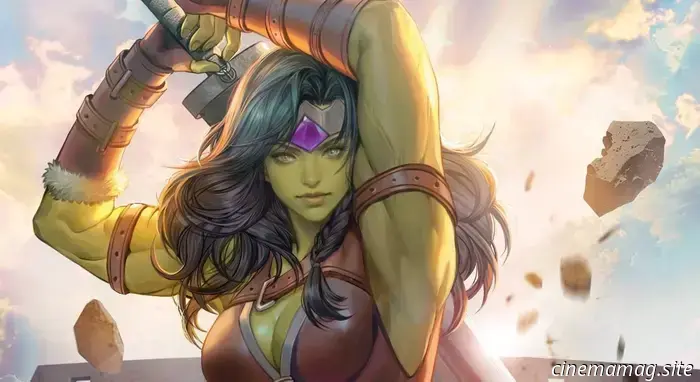 Comic Book Sneak Peek – Planet She-Hulk #1
Marvel Comics is set to launch Planet She-Hulk #1 this Wednesday, and you can check out an official preview below… SAKAAR, PARTY OF ONE! SHE-HULK returns, and she’s… stranded on Sakaar??…
Comic Book Sneak Peek – Planet She-Hulk #1
Marvel Comics is set to launch Planet She-Hulk #1 this Wednesday, and you can check out an official preview below… SAKAAR, PARTY OF ONE! SHE-HULK returns, and she’s… stranded on Sakaar??…
 The Leeds-based initiative Small Distractions Club, a monthly book club and event organizer that bridges the gap between music and literature, will launch its first literary salon in London tonight (3rd November) at The Social. In collaboration with music-focused publishers White Rabbit Books, the event will feature members from English Teacher, Opus Kink, Bug Teeth, Skydaddy, and Fat White Family, who will present previously unheard works—poetry, prose, and musings—that are not part of their musical catalogs. Before the event starts, we spoke with Small Distractions Club founder Rhiannon Kane to delve into the motivations behind this project, what attendees can expect from the salon, and the intriguing space where music and books converge.
What inspired the creation of Small Distractions Club? Could you elaborate on your reasons for starting it? My passion for books and music runs deep. Like many, I rediscovered these central interests during the lockdown, a period when I had felt somewhat detached from them over the years. The last five years have been a gradual rediscovery of this love. In 2022, I began sharing insights on the books I was reading. A bout of illness at university (thank you, viral meningitis) severely impacted my attention span, prompting me to select shorter books to ease back into reading, hence the name Small Distractions. Reading became a vital hobby during that isolating period.
I've always enjoyed music memoirs, as they offer a deep understanding of musicians through their interests and lives, sparking the idea to converse with musicians about their reading preferences. I started with my friend and collaborator, Lily Fontaine of English Teacher (who has a passion for sci-fi and Derren Brown), and from there, the project gained momentum. The interviews are available on Substack, though they're infrequent because I dislike transcribing and won't resort to using AI. I also work at Brudenell Social Club, the best venue in Leeds (and the world), where I often have engaging conversations with patrons about books; this inspired me to launch a book club there in May. The discussions and the attendance at the book club indicated a significant interest in the intersection of books and music.
In addition to the monthly book club in Leeds, Small Distractions has evolved to include live literary salons, with the inaugural London edition happening tonight! What criteria do you use when selecting texts for the book club or speakers for the salon? Are there specific themes or perspectives you're aiming to highlight? The idea for the salon emerged from countless conversations about bands and books. I reached out to the Leeds Literary Festival to propose an event celebrating both. Around the same time, I met author David Keenan and Lee Brackstone, head of White Rabbit Books, and I managed to persuade them to join the effort; that's when everything fell into place. We envisioned the event as a blend of a poetry night and a party. While I'm not particularly fond of poetry—I’ve always felt it didn't resonate with me—I’ve been gradually working to change that. I wanted the salons to be welcoming to those who usually shy away from poetry events.
The structure of the book club differs slightly. In the past, I've struggled to stay committed to book clubs; if I have a hectic month or dislike a book, I often fall behind and stop attending. To avoid that scenario, I curate a selection of optional readings each month: one novel, one non-fiction piece (literary criticism or cultural commentary), and a few poems. The goal is to allow attendees flexibility in their reading; if they're busy, they can opt to read just a poem or an essay and still participate without having finished the novel. Sometimes we select a theme for the month, while other times one standout piece guides my choices. Thus far, we’ve explored themes like pride, disability, and the concept of home, while broader themes of gender, sexuality, class, and power often arise.
Based on your experiences with the salons, how does the writing shared differ from the material produced within the context of the speakers' bands? The manner of presenting the written work is a significant difference—band frontpeople are more exposed, without the support of their band or a lengthy performance to navigate. This creates a very intimate atmosphere where the audience actively encourages them. Hosting the event in smaller venues fosters genuine interaction between the crowd and the speakers, making it a leveling experience.
Some speakers are established authors and poets, while others are musicians sharing their writing for the first time beyond song lyrics; this work occupies a different realm than their musical output. I aim for the salons to facilitate a platform for sharing writings they might have felt unsure what to do with. It's a vulnerable and significant experience to provoke reactions from an audience responding to unfinished and raw work. Attendees have presented a variety of pieces at the salons, including poetry, prose, and excerpts from screenplays. Many have hesitated, feeling unprepared or doubting the quality of their work—seeing them
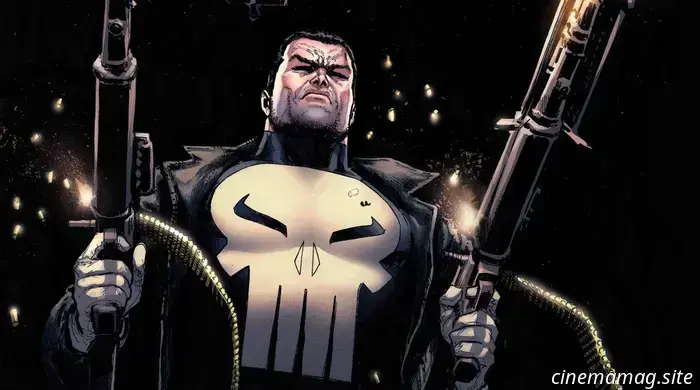
Following his comeback in September’s Punisher: Red Band #1, Frank Castle is poised to take the spotlight again in a brand-new ongoing Punisher series crafted by writer Benjamin Percy and artist...
The Leeds-based initiative Small Distractions Club, a monthly book club and event organizer that bridges the gap between music and literature, will launch its first literary salon in London tonight (3rd November) at The Social. In collaboration with music-focused publishers White Rabbit Books, the event will feature members from English Teacher, Opus Kink, Bug Teeth, Skydaddy, and Fat White Family, who will present previously unheard works—poetry, prose, and musings—that are not part of their musical catalogs. Before the event starts, we spoke with Small Distractions Club founder Rhiannon Kane to delve into the motivations behind this project, what attendees can expect from the salon, and the intriguing space where music and books converge.
What inspired the creation of Small Distractions Club? Could you elaborate on your reasons for starting it? My passion for books and music runs deep. Like many, I rediscovered these central interests during the lockdown, a period when I had felt somewhat detached from them over the years. The last five years have been a gradual rediscovery of this love. In 2022, I began sharing insights on the books I was reading. A bout of illness at university (thank you, viral meningitis) severely impacted my attention span, prompting me to select shorter books to ease back into reading, hence the name Small Distractions. Reading became a vital hobby during that isolating period.
I've always enjoyed music memoirs, as they offer a deep understanding of musicians through their interests and lives, sparking the idea to converse with musicians about their reading preferences. I started with my friend and collaborator, Lily Fontaine of English Teacher (who has a passion for sci-fi and Derren Brown), and from there, the project gained momentum. The interviews are available on Substack, though they're infrequent because I dislike transcribing and won't resort to using AI. I also work at Brudenell Social Club, the best venue in Leeds (and the world), where I often have engaging conversations with patrons about books; this inspired me to launch a book club there in May. The discussions and the attendance at the book club indicated a significant interest in the intersection of books and music.
In addition to the monthly book club in Leeds, Small Distractions has evolved to include live literary salons, with the inaugural London edition happening tonight! What criteria do you use when selecting texts for the book club or speakers for the salon? Are there specific themes or perspectives you're aiming to highlight? The idea for the salon emerged from countless conversations about bands and books. I reached out to the Leeds Literary Festival to propose an event celebrating both. Around the same time, I met author David Keenan and Lee Brackstone, head of White Rabbit Books, and I managed to persuade them to join the effort; that's when everything fell into place. We envisioned the event as a blend of a poetry night and a party. While I'm not particularly fond of poetry—I’ve always felt it didn't resonate with me—I’ve been gradually working to change that. I wanted the salons to be welcoming to those who usually shy away from poetry events.
The structure of the book club differs slightly. In the past, I've struggled to stay committed to book clubs; if I have a hectic month or dislike a book, I often fall behind and stop attending. To avoid that scenario, I curate a selection of optional readings each month: one novel, one non-fiction piece (literary criticism or cultural commentary), and a few poems. The goal is to allow attendees flexibility in their reading; if they're busy, they can opt to read just a poem or an essay and still participate without having finished the novel. Sometimes we select a theme for the month, while other times one standout piece guides my choices. Thus far, we’ve explored themes like pride, disability, and the concept of home, while broader themes of gender, sexuality, class, and power often arise.
Based on your experiences with the salons, how does the writing shared differ from the material produced within the context of the speakers' bands? The manner of presenting the written work is a significant difference—band frontpeople are more exposed, without the support of their band or a lengthy performance to navigate. This creates a very intimate atmosphere where the audience actively encourages them. Hosting the event in smaller venues fosters genuine interaction between the crowd and the speakers, making it a leveling experience.
Some speakers are established authors and poets, while others are musicians sharing their writing for the first time beyond song lyrics; this work occupies a different realm than their musical output. I aim for the salons to facilitate a platform for sharing writings they might have felt unsure what to do with. It's a vulnerable and significant experience to provoke reactions from an audience responding to unfinished and raw work. Attendees have presented a variety of pieces at the salons, including poetry, prose, and excerpts from screenplays. Many have hesitated, feeling unprepared or doubting the quality of their work—seeing them
Following his comeback in September’s Punisher: Red Band #1, Frank Castle is poised to take the spotlight again in a brand-new ongoing Punisher series crafted by writer Benjamin Percy and artist...
Violent Ends director John Michael-Powell discusses his first day of filming.
John Michael Powell, the director of Violent Ends, reminisces about the initial day of filming the crime thriller set in the Ozarks.