

Suburban Fury Review: The Unexpected Woman Who Attempted to Assassinate the President
Note: This review was initially published as part of our coverage for the 2024 NYFF. *Suburban Fury* is set to begin a one-week qualifying run in New York on December 5.
On September 22, 1975, Sara Jane Moore, a 45-year-old single mother, drove into downtown San Francisco, made her way to the front of a crowded barricade, took a pistol from her purse, and fired two shots at President Gerald R. Ford as he exited the St. Francis Hotel. The first bullet just missed him; the second was deflected by a Marine standing nearby. Had Moore been using a properly functioning firearm, Ford’s appointed Vice President, Nelson Rockefeller, would likely have assumed the presidency without ever being elected, a situation Moore believed would unveil the nation’s flawed and decaying democratic process.
This is the main reason Moore claims she chose to open fire that afternoon, yet skepticism is understandable. In the chaotic aftermath of her assassination attempt, most authorities, including Ford himself, concluded that Moore had lost her sanity. How else could a woman, who had been recruited by the FBI less than two years prior, attempt to kill a sitting president? However, Moore, who quickly became radicalized despite her role as a bureaucratic informant, asserted her mental clarity during her life sentencing—and continues to do so today. Like many aspects of her life, her truth is difficult to discern.
The same can be said after viewing Robinson Devor’s *Suburban Fury*, a formally bold and enigmatic portrayal of Moore that situates her extremist actions within one of the most transformative eras in American history. The documentary implies that Moore is not merely a unique, independent attempted murderer, but rather a product (or embodiment) of a decade marked by significant social change, political turmoil, and widespread distrust of government. Yet, at 93 years old (and granted parole in 2007), when Moore discusses her life, she firmly rejects the idea that she was simply an empty vessel awaiting influence.
Much of the ambiguity that fuels this narrative stems from its own premise: “At her request, Sara Jane Moore was the only person interviewed for this film,” states the opening text. This also means that the disembodied voice representing her FBI control agent Berth Worthington, which appears sporadically throughout, is derived not from actual transcripts but from her recollections of their meetings. In essence, Moore is given free rein to share her truth, express her viewpoint, and present her version of events. At times, it feels like a healthy confession, while at others, it resembles an agitated and confrontational interrogation (with Devor asking questions over a radio) as volatile as Moore herself.
This is, after all, a nonagenarian who appears to relish sharing various self-mythologizing stories while sidestepping what she perceives as unnecessary or trivial details and follow-up inquiries. She addresses questions from the back of a 1970s station wagon or within a glass house, looking directly into the camera, occasionally with a foreboding figure lurking outside. The nostalgic and unique settings echo her past experiences conversing secretly with government agents, even though the interviews often resemble a woman speaking to no one. She quickly becomes defensive when faced with unwanted questioning and is eager to clarify her narrative as one that doesn’t warrant any challenge.
Her claims are difficult to take at face value, yet the testimony is compelling. Moore was born in West Virginia in 1930, studied acting under Lee Strasburg in her 20s, went through five marriages, and had four children but left most of them behind, aspects she glosses over as she believes they are irrelevant to the documentary’s objectives. However, the crux of Moore’s story is even more puzzling and contradictory. She became involved in the Patty Hearst kidnapping case due to an unclear link with Randolph Hearst, volunteered to assist the FBI in collecting information on the Symbionese Liberation Army, and swiftly transformed into a radicalized informant, fulfilling her obligations to the bureau while simultaneously engaging with various counter-culture, left-wing movements and building connections with different key figures.
Many of these recollections are accompanied by archival footage, much of which counters the repeated news coverage of the decade. Instead of relying on the typical musical cues from that era, Devor builds tension using images and unconventional sounds that include Moore’s own narration. This strong choice obscures the familiarity of historical events (for example, footage of Ford swimming in a pool is overlapped with a recording of him pardoning Richard Nixon) and compels viewers to consider how the political and social landscapes intersected—or diverged—from Moore’s everyday choices. Similar to Ezra Edelman’s *OJ: Made in America*, Devor seeks to intertwine these narratives into the larger fabric of civil unrest in the country, hoping to reveal a pattern or a clear picture.
One must squint to catch a glimpse of it
Other articles
 2026년에 추천하는 최고의 온라인 카지노 사이트
2026년에 이용할 수 있는 최고의 온라인 카지노 사이트를 찾아보세요. 안전하고 사용하기 편리한 게임 환경을 제공하며, 다양한 보너스와 흥미로운 게임 선택지를 경험할 수 있습니다.
2026년에 추천하는 최고의 온라인 카지노 사이트
2026년에 이용할 수 있는 최고의 온라인 카지노 사이트를 찾아보세요. 안전하고 사용하기 편리한 게임 환경을 제공하며, 다양한 보너스와 흥미로운 게임 선택지를 경험할 수 있습니다.
 Comic Book Sneak Peek – Star Wars: Hyperspace Stories – Codebreaker #4
The concluding edition of Dark Horse Comics' Star Wars: Hyperspace Stories – Codebreaker will arrive in comic shops and digital stores next week, and you can take a look at a sneak preview below with the…
Comic Book Sneak Peek – Star Wars: Hyperspace Stories – Codebreaker #4
The concluding edition of Dark Horse Comics' Star Wars: Hyperspace Stories – Codebreaker will arrive in comic shops and digital stores next week, and you can take a look at a sneak preview below with the…
 100 Nights of Hero Review: A Lethargic, Patronizing Take on a Timeless Story
Arabian Nights, a vast anthology of Islamic folk tales, holds as much significance in modern literature and popular culture as the works of Shakespeare—an extensive work whose narrative techniques have shaped various genres beyond just fantasy. However, rather than exploring numerous stories from One Thousand and One Nights, let's focus on a singular tale told over a
100 Nights of Hero Review: A Lethargic, Patronizing Take on a Timeless Story
Arabian Nights, a vast anthology of Islamic folk tales, holds as much significance in modern literature and popular culture as the works of Shakespeare—an extensive work whose narrative techniques have shaped various genres beyond just fantasy. However, rather than exploring numerous stories from One Thousand and One Nights, let's focus on a singular tale told over a
 Scarlett Johansson is in negotiations for The Batman Part II.
Matt Reeves' eagerly awaited The Batman Part II is approaching the start of production, and Deadline has indicated the first possible new casting for the movie. As per their report,…
Scarlett Johansson is in negotiations for The Batman Part II.
Matt Reeves' eagerly awaited The Batman Part II is approaching the start of production, and Deadline has indicated the first possible new casting for the movie. As per their report,…
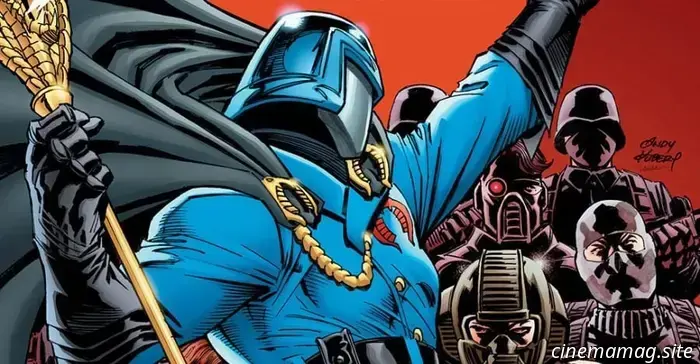 Comic Book Sneak Peek – G.I. Joe: A Real American Hero #323
Next week, Image Comics and Skybound Entertainment will release Larry Hama’s G.I. Joe: A Real American Hero #323, and you can check out the official preview of the issue below… COBRA RESURG…
Comic Book Sneak Peek – G.I. Joe: A Real American Hero #323
Next week, Image Comics and Skybound Entertainment will release Larry Hama’s G.I. Joe: A Real American Hero #323, and you can check out the official preview of the issue below… COBRA RESURG…
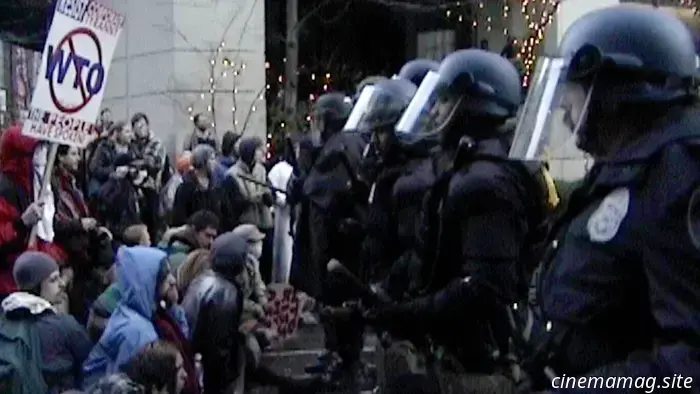 WTO/99 Review: A Harsh Reminder of Our U.S. Police State
A particularly intriguing aspect of the documentary WTO/99, directed by Ian Bell, is that although it visually appears to be a relic, the political insights come across as both prescient and reflective. The film presents a straightforward timeline of the events that occurred during the Seattle WTO protests held outside the WTO Ministerial Conference.
WTO/99 Review: A Harsh Reminder of Our U.S. Police State
A particularly intriguing aspect of the documentary WTO/99, directed by Ian Bell, is that although it visually appears to be a relic, the political insights come across as both prescient and reflective. The film presents a straightforward timeline of the events that occurred during the Seattle WTO protests held outside the WTO Ministerial Conference.
Suburban Fury Review: The Unexpected Woman Who Attempted to Assassinate the President
Note: This review was first published during our coverage of the 2024 NYFF. Suburban Fury will start a one-week qualifying run in New York on December 5. On September 22, 1975, Sara Jane Moore, a 45-year-old single mother, drove into downtown San Francisco, maneuvered through a bustling crowd at a barricade, and rummaged through her purse.