
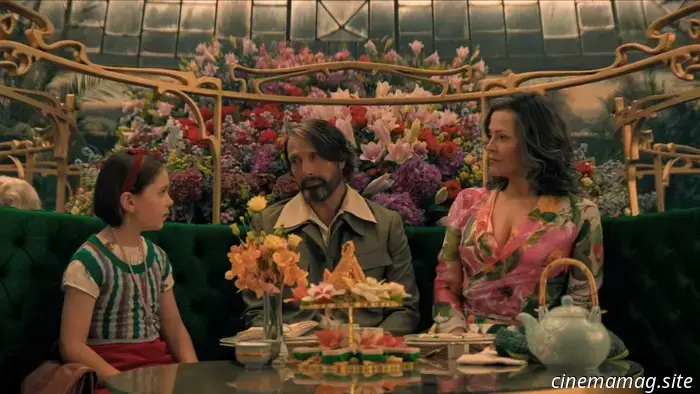
Hannibal showrunner Bryan Fuller discusses his transition to film with Dust Bunny.
Although Bryan Fuller created and oversaw the series Pushing Daisies and Hannibal, he never had the opportunity to direct any episodes. Therefore, for his directorial feature debut, Dust Bunny, he wanted to focus on something that held significant meaning for him.
This project may also resonate with the young audience it aims to reach.
“There’s that saying about accumulating 10,000 hours of experience,” Fuller shares, “and I certainly have that as a showrunner. I was essentially the director of directors. I played a key role in the design and aesthetic of a show. My passion for aesthetics and the emotions they evoke provided me the capacity to convey everything we aimed to achieve.”
Fuller’s premise for Dust Bunny is straightforward: “A little girl hires a hitman to eliminate the monster lurking beneath her bed.”
The family horror film is filled with vibrant colors and explosive action, merging genres in an exhilarating manner.
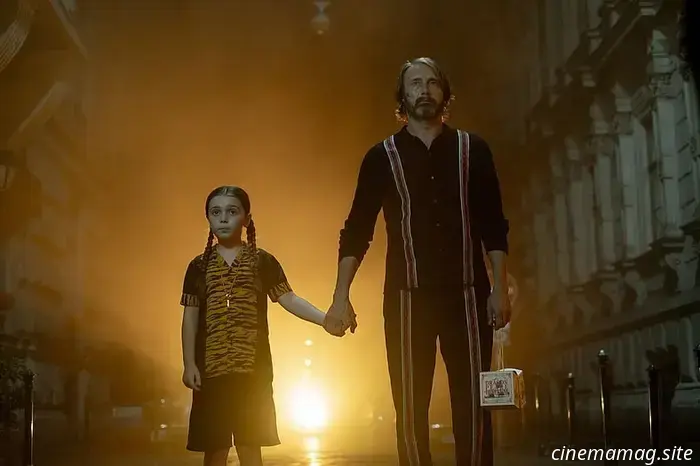
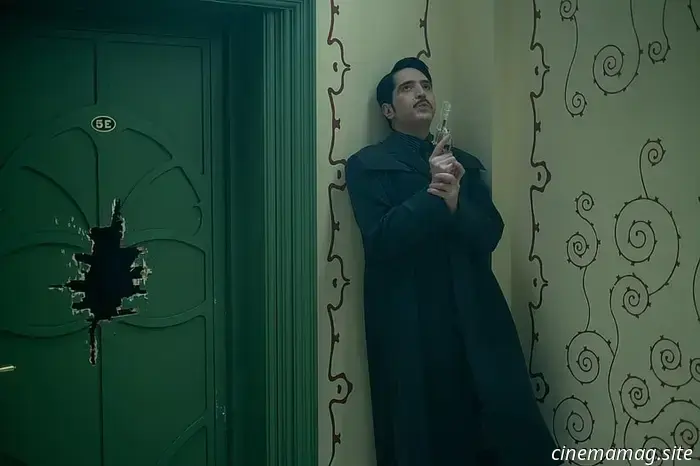
In the film, the titular bunny is a creature hiding under the bed of young Aurora (Sophie Sloan). After it consumes her foster parents, she seeks help from her neighbor, Resident 5B (Mads Mikkelsen). Together on their fairy-tale journey, they confront assassins, the Queen of Killers (played by Sigourney Weaver), and the Dust Bunny itself.
For Aurora, emotions can be just as terrifying as monsters and as exhilarating as action. She perseveres through all challenges — similar to Weaver’s iconic character Ripley from the Alien series.
“I discussed with Sigourney how characters like Ripley or Geneviève Bujold in Coma were women I admired for their righteousness and integrity when I was growing up,” Fuller reflects. “As a queer individual, they were my icons. Sigourney mentioned, ‘It’s interesting you found strength in Ripley; I see her as someone striving to find power.’
“I explained, ‘That’s what makes her so significant, not just for queer kids but for anyone who feels marginalized or powerless. Looking at Ellen Ripley, one can think, ‘If she can endure, I have a chance.’
“That’s a vital message in Aurora: Despite being a small girl, she continuously rescues herself until someone comes to her aid. I hope that those who need encouragement will find something in Aurora to which they can relate and draw inspiration.”
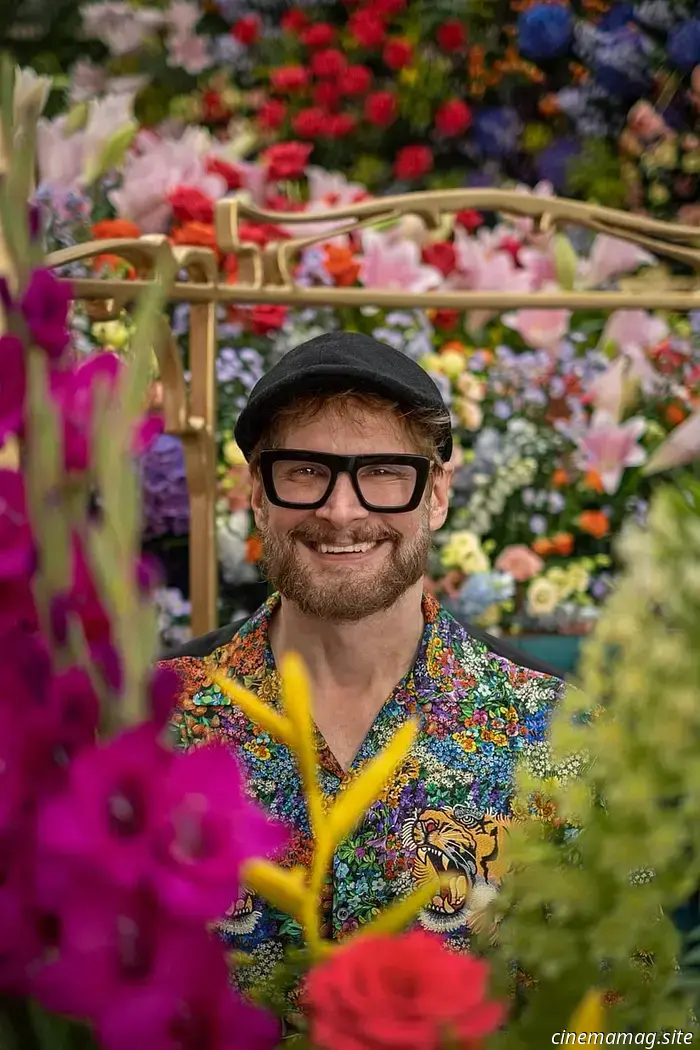
Dust Bunny’s director Bryan Fuller.
Bryan Fuller on Reuniting With Mads Mikkelsen for Dust Bunny
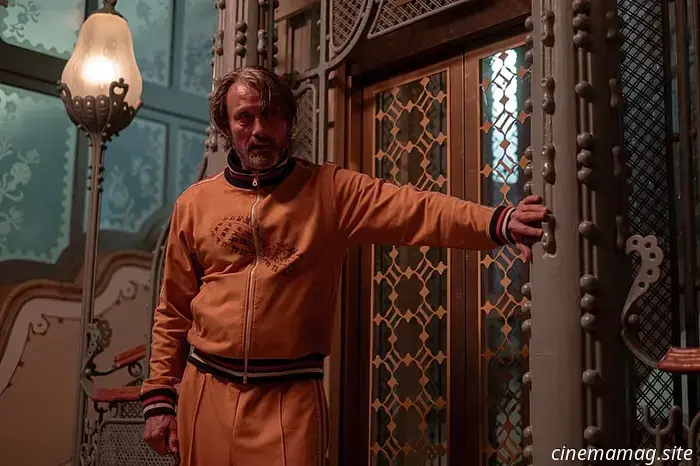
This project marks a reunion between Fuller and his Hannibal star Mads Mikkelsen, who portrays both an anti-hero and a father figure. The actor's stoic demeanor and vibrant jumpsuits stand out amidst the colorful action.
“Mads is a huge Bruce Lee admirer, and I envisioned him in a yellow tracksuit, wielding nunchucks,” Fuller explains. “It’s pure wish fulfillment for him. When Mads came for his costume fitting, he remarked, ‘I’ve been trying to decipher who this character is that would wear these outfits, and I finally decided to trust you.’”
Dust Bunny was initially intended as an episode for the 2020 reboot of Steven Spielberg’s Amazing Stories, but the series was ultimately canceled. The original show debuted in 1985 and was an early production from Amblin Entertainment, co-founded by Spielberg.
“There was something inherently appealing about the Amblin brand, known for its high-concept, emotional storytelling,” Fuller shares, “that offered an adventure featuring young characters in peril, which excited me as a child. Watching those films felt like a must-see experience, much like what we've lost in today’s cinema landscape.”
While writing Dust Bunny, Fuller was inspired by composers like Alexandre Desplat, Jerry Goldsmith, and Franz Waxman, who created the score for Bride of Frankenstein. He aimed to showcase the humanity within his big, furry lead character, akin to the classic Universal Monsters.
“I found Universal Monsters to be deeply insightful about the human experience and our darker sides,” Fuller observes. “We often remember the striking images from those films, focusing on the monstrous appearances, but they are rich, multi-dimensional characters filled with longing and suffering. I find them profoundly relatable.”
Fuller is no stranger to crafting stories about outsiders hiding their true selves, from Ned’s ability to communicate with the dead in Pushing Daisies to Mikkelsen’s depiction of Dr. Lecter in Hannibal.
Fuller and his cinematographer, Nicole Hirsch Whitaker, frequently discussed the “flavors” of color they wanted to incorporate into the film’s visual style. They aimed for an aesthetic that was both delightful and indulgent.
“Our film is like mango chicken, as opposed to something solely savory like Hannibal or purely sweet like Pushing Daisies,” Fuller states. “We drew inspiration from French cinema, as I am a huge fan of French maximalism.”
Dust Bunny reunites writer-director Bryan Fuller with Hannibal star Mads Mikkelsen
Other articles
 Comic Book Sneak Peek – Batman/Superman: World’s Finest #46
Batman/Superman: World’s Finest #46 will be available in comic stores and digital platforms on Wednesday. Below, you can find the official preview of the issue, provided by DC Comics... To de...
Comic Book Sneak Peek – Batman/Superman: World’s Finest #46
Batman/Superman: World’s Finest #46 will be available in comic stores and digital platforms on Wednesday. Below, you can find the official preview of the issue, provided by DC Comics... To de...
 The erotic thriller Bight has released a trailer in anticipation of its Valentine's Day premiere.
S&R Films has released a trailer for the forthcoming erotic thriller Bight, which is the feature directorial debut of actress Maiara Walsh (Desperate Housewives), who appears alongside Cameron Cowpert.
The erotic thriller Bight has released a trailer in anticipation of its Valentine's Day premiere.
S&R Films has released a trailer for the forthcoming erotic thriller Bight, which is the feature directorial debut of actress Maiara Walsh (Desperate Housewives), who appears alongside Cameron Cowpert.
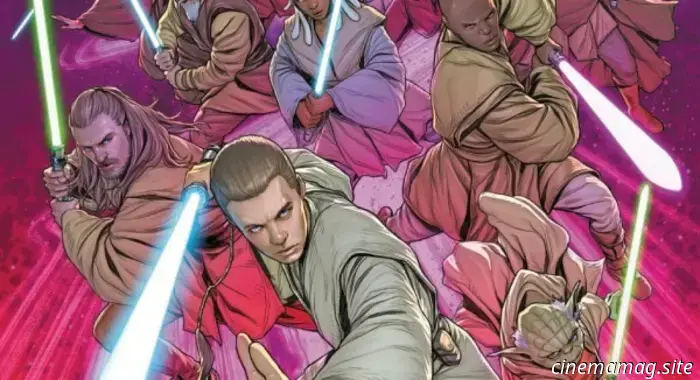 Comic Book Teaser – Star Wars: Jedi Knights #10
Star Wars: Jedi Knights #10 will be released on Wednesday, and you can view the official preview of the issue provided by Marvel Comics… THE SAGA OF CORLIS RATH COMES TO AN END! QUI-GON must ultimately confront…
Comic Book Teaser – Star Wars: Jedi Knights #10
Star Wars: Jedi Knights #10 will be released on Wednesday, and you can view the official preview of the issue provided by Marvel Comics… THE SAGA OF CORLIS RATH COMES TO AN END! QUI-GON must ultimately confront…
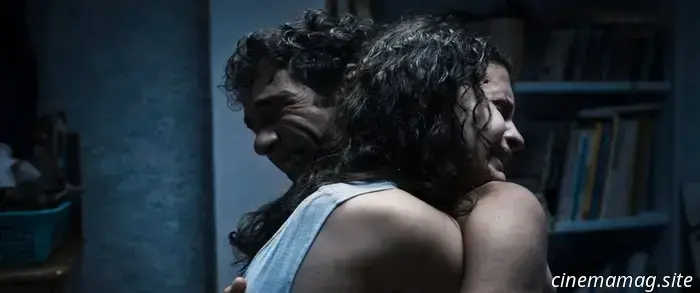 Neon has released a new US trailer for Julia Ducournau’s Alpha.
Neon has released a poster and trailer for the US debut of writer-director Julia Ducournau’s (Raw, Titane) psychological body horror film, Alpha. The film’s cast features Tahar Rahim and Golshifteh Far...
Neon has released a new US trailer for Julia Ducournau’s Alpha.
Neon has released a poster and trailer for the US debut of writer-director Julia Ducournau’s (Raw, Titane) psychological body horror film, Alpha. The film’s cast features Tahar Rahim and Golshifteh Far...
.jpg) 4K Ultra HD Review – Whispering Smith Comes to London (1952)
Whispering Smith Arrives in London, 1952. Directed by Francis Searle. Featuring Richard Carlson, Greta Gynt, Herbert Lom, Rona Anderson, Alan Wheatley, and Dora Bryan. SUMMARY: An American private detective is involved...
4K Ultra HD Review – Whispering Smith Comes to London (1952)
Whispering Smith Arrives in London, 1952. Directed by Francis Searle. Featuring Richard Carlson, Greta Gynt, Herbert Lom, Rona Anderson, Alan Wheatley, and Dora Bryan. SUMMARY: An American private detective is involved...
.jpg) Film Review – Dust Bunny (2025)
Dust Bunny, 2025. Written and helmed by Bryan Fuller. Featuring Sophie Sloan, Mads Mikkelsen, Sigourney Weaver, David Dastmalchian, Rebecca Henderson, Sheila Atim, and Nóra Trokán. SYNOPSIS: An eight-…
Film Review – Dust Bunny (2025)
Dust Bunny, 2025. Written and helmed by Bryan Fuller. Featuring Sophie Sloan, Mads Mikkelsen, Sigourney Weaver, David Dastmalchian, Rebecca Henderson, Sheila Atim, and Nóra Trokán. SYNOPSIS: An eight-…
Hannibal showrunner Bryan Fuller discusses his transition to film with Dust Bunny.
In Dust Bunny, Bryan Fuller steps into the role of director following his tenure as showrunner for Hannibal and Pushing Daisies.