
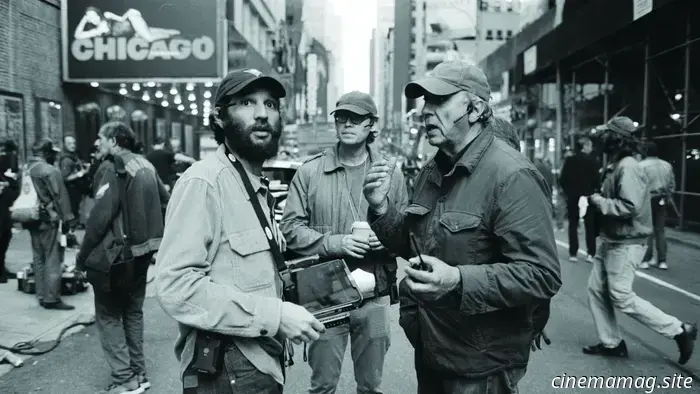
“The Narrative is Expressed through Faces”: Darius Khondji Discusses the Cinematography of Marty Supreme and His Productive Year
As mentioned in my overview of the finest cinematography of 2025, "If there were an award for the most diverse cinematography of the year, it would undoubtedly go to Darius Khondji, who has worked on three markedly different projects. From capturing the whimsical sci-fi elements of Bong Joon Ho’s Mickey 17, to tackling the western genre with striking immediacy in Ari Aster’s Eddington, and culminating in his standout work of the year by filming the chaotic narrative of Josh Safdie’s Marty Supreme with remarkable kinetic grace, the Iranian-French cinematographer demonstrates that he is among the foremost talents in the field today."
Ahead of Marty Supreme's release, starting this Friday in NY/LA and becoming widely available on Christmas Day, I had a conversation with the acclaimed cinematographer about collaborating once again with Josh Safdie following Uncut Gems, the challenge of capturing a large ensemble (including Abel Ferrara!), Timothée Chalamet’s commitment, filming the conclusion, his busy year, and why cinema remains vibrant.
The Film Stage: After collaborating with Josh Safdie on Uncut Gems, what aspects did you discuss that influenced this project, and what was approached differently?
Darius Khondji: We discussed the actors and their characters extensively. Of course, I read the script, which I fell in love with upon reading it in Paris. It was incredibly exciting. I’m not typically a fast reader, but I devoured this script in one sitting. The story really captivated me.
Following that, I reached out to Ronnie [Bronstein] and Josh, and our discussions often centered on the actors and their roles. This time, he spoke about how to adapt a period piece set in the 1950s, which poses significant challenges, particularly in New York.
Early in our talks, he mentioned the music, indicating that the film's soundscape would draw more from the '80s and contemporary styles, providing a distinct atmosphere. Knowing Dan [Lopatin] and his contributions to Uncut Gems, I had some insight into the direction they wanted to take.
We also explored visual representations of the '50s and how to achieve that. We aimed to return to what we cherish, employing a classic anamorphic style with vintage lenses. We predominantly used very long lenses—more than in Uncut Gems. At yesterday's screening, it was incredible to see how consistent we were in that approach. We captured the story through the actors' faces.
We conducted film tests that aligned with this vision, creating an exhilarating process for executing a period piece. I don't perceive "period" in terms of time; it feels timeless. Collaborating with Josh inherently brings a modern sensibility to the film through its characters, dialogue, music, and sound, which integrates seamlessly with the vintage imagery, old glass, and anamorphic techniques. This synthesis results in a powerful final product that I was thrilled with. I took part in the color correction, but I only recently experienced the film in a screening, and I was struck by its impact.
With more than 150 speaking roles and considerable overlapping dialogue, does that add excitement or challenge from a cinematographer's perspective when capturing everything happening simultaneously?
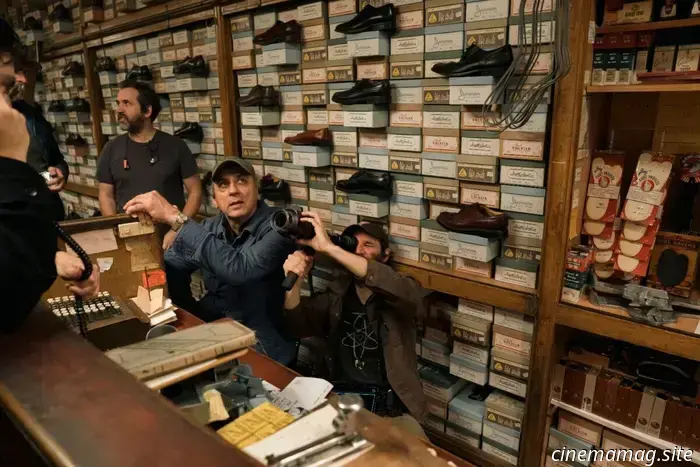
I absolutely love that aspect! The overlapping dialogue is exhilarating. We filmed most of the movie with two cameras simultaneously, which added to the excitement of the overlaps. The collaboration with Josh is truly unique—I can't recall anyone I've worked with who operates in such an urgent and obsessive manner. He pushes to fully realize scenes that he feels are incomplete.
Our cast was primarily made up of non-actors, apart from Timothée, Gwyneth [Paltrow], and a few others. You can see the variety of over 100 non-actors involved. While we sometimes required more time with them, Josh and Ronnie consistently achieved their vision, which was fantastic for me. Working with a determined director like this is the best experience.
What was your experience working with Abel Ferrara? I've just finished reading his memoir, which was fascinating. He's quite a character in the film.
I want to read his memoir! It's interesting you brought this up because when I was thinking about all these faces, Abel's face immediately came to mind. It was a remarkable experience. I must admit it was slightly intimidating as a cinephile; I had always envisioned him as this wild, destructive persona. When you meet him, however, he's incredibly kind, calm, and polite—quite the contrast to his filmic characters. While he maintains an intense focus, he’s also very gentle.
Timothée Chalamet delivers an outstanding performance. As a producer on the film as well, I'm curious to know if he spoke to you about the cinematography or if those discussions were mainly with Josh. What contributions did he make? He seems deeply committed to this project.
Yes, he was immensely dedicated and focused on the film. It was somewhat intimidating for me because he functions
Other articles
 KJ Apa portrays James Stewart in the trailer for the biopic Jimmy.
Burns & Co. Entertainment has released the initial trailer for "Jimmy," the forthcoming biopic about James Stewart, directed by Aaron Burns and featuring Riverdale's KJ Apa in the role of the Hollywood icon. The movie...
KJ Apa portrays James Stewart in the trailer for the biopic Jimmy.
Burns & Co. Entertainment has released the initial trailer for "Jimmy," the forthcoming biopic about James Stewart, directed by Aaron Burns and featuring Riverdale's KJ Apa in the role of the Hollywood icon. The movie...
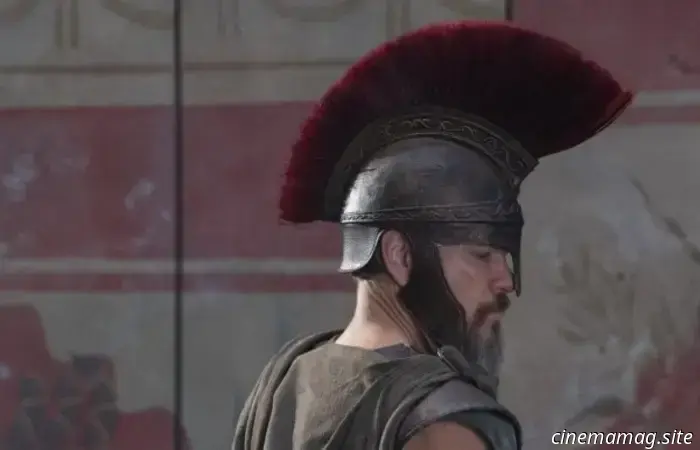 A new teaser poster for Christopher Nolan's The Odyssey has been revealed.
With a prologue now showing in IMAX theaters, Universal Pictures has released a new teaser poster for The Odyssey, the eagerly awaited adaptation of Homer’s work by filmmaker Christopher Nolan.
A new teaser poster for Christopher Nolan's The Odyssey has been revealed.
With a prologue now showing in IMAX theaters, Universal Pictures has released a new teaser poster for The Odyssey, the eagerly awaited adaptation of Homer’s work by filmmaker Christopher Nolan.
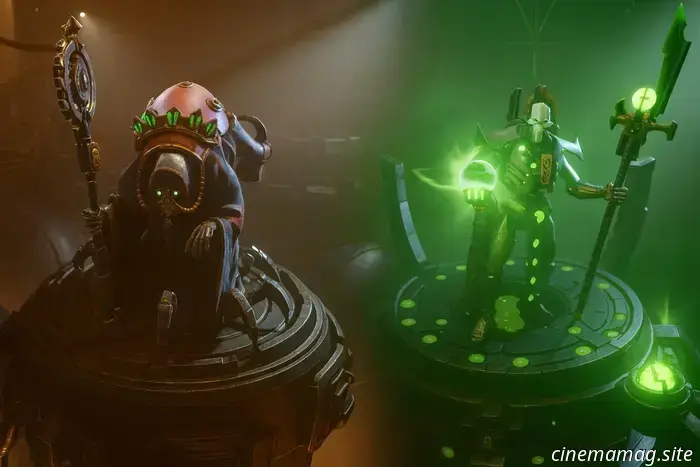 Warhammer 40000: Mechanicus II scheduled for a spring release.
Kasedo Games and Bulwark Studios have revealed that Warhammer 40,000: Mechanicus II is set to be released in Spring 2026 for PlayStation 5, Xbox Series X|S, and PC. This updated release timeframe will enable developers…
Warhammer 40000: Mechanicus II scheduled for a spring release.
Kasedo Games and Bulwark Studios have revealed that Warhammer 40,000: Mechanicus II is set to be released in Spring 2026 for PlayStation 5, Xbox Series X|S, and PC. This updated release timeframe will enable developers…
 Pedro Almodóvar Makes His Comeback to Spain in the First Trailer for Bitter Christmas.
After completing his first English-language feature, Pedro Almodóvar is preparing for his next project, the Spanish-language film Bitter Christmas (translated from Amarga Navidad), which is set to be released in Spain on March 20, with a likely extensive festival circuit to follow. Starring Bárbara Lennie, Leonardo Sbaraglia, Aitana Sánchez-Gijón, Victoria Luengo, Patrick Criado, Milena Smit, and Quim Gutiérrez, the initial trailer has now been released.
Pedro Almodóvar Makes His Comeback to Spain in the First Trailer for Bitter Christmas.
After completing his first English-language feature, Pedro Almodóvar is preparing for his next project, the Spanish-language film Bitter Christmas (translated from Amarga Navidad), which is set to be released in Spain on March 20, with a likely extensive festival circuit to follow. Starring Bárbara Lennie, Leonardo Sbaraglia, Aitana Sánchez-Gijón, Victoria Luengo, Patrick Criado, Milena Smit, and Quim Gutiérrez, the initial trailer has now been released.
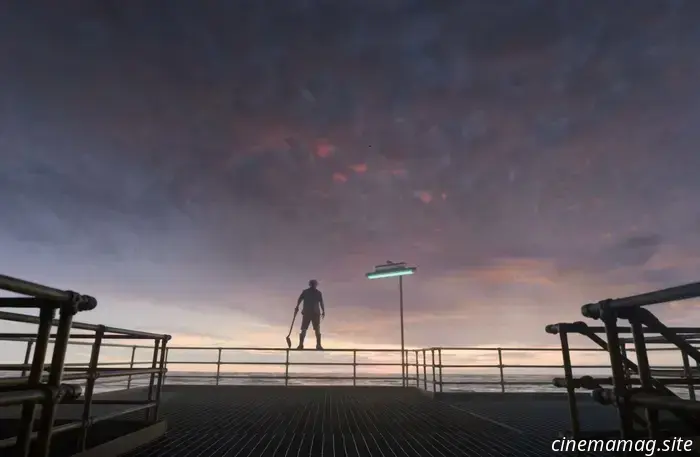 Tom Cruise Aims to Rescue Humanity in the Initial Teaser for Alejandro G. Iñárritu’s Digger
Following a lengthy period where he was predominantly known as the world's top action star, Tom Cruise is shifting back to more dramatic roles next fall. Headlining Alejandro G. Iñárritu's upcoming film—now titled Digger, complete with a teaser and poster—Cruise portrays the character Digger Rockwell, alongside a cast that features Jesse Plemons, Sandra Hüller, Riz Ahmed, Sophie Wilde, and Emma D'Arcy.
Tom Cruise Aims to Rescue Humanity in the Initial Teaser for Alejandro G. Iñárritu’s Digger
Following a lengthy period where he was predominantly known as the world's top action star, Tom Cruise is shifting back to more dramatic roles next fall. Headlining Alejandro G. Iñárritu's upcoming film—now titled Digger, complete with a teaser and poster—Cruise portrays the character Digger Rockwell, alongside a cast that features Jesse Plemons, Sandra Hüller, Riz Ahmed, Sophie Wilde, and Emma D'Arcy.
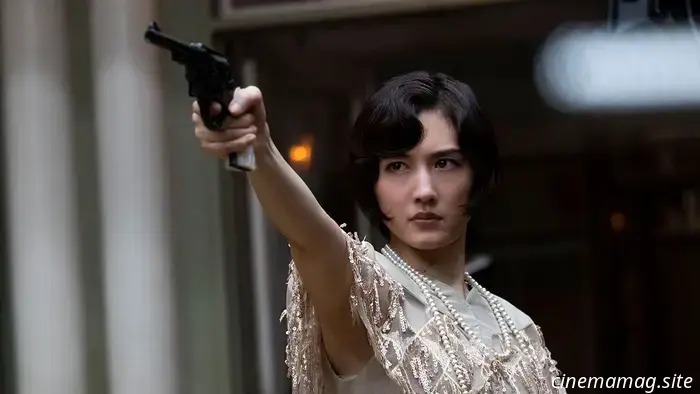 The Japanese action thriller Revolver Lily receives a trailer, poster, and images.
Well Go USA has unveiled a trailer for the Japanese action thriller Revolver Lily, directed by Yukisada Isao. The movie is adapted from Kyo Nagaura’s novel of the same title and follows a retired lethal assassin...
The Japanese action thriller Revolver Lily receives a trailer, poster, and images.
Well Go USA has unveiled a trailer for the Japanese action thriller Revolver Lily, directed by Yukisada Isao. The movie is adapted from Kyo Nagaura’s novel of the same title and follows a retired lethal assassin...
“The Narrative is Expressed through Faces”: Darius Khondji Discusses the Cinematography of Marty Supreme and His Productive Year
As I mentioned in our summary of the finest cinematography of 2025, "If there were an award for the most diverse cinematography of the year, it would undoubtedly be awarded to Darius Khondji, who has photographed three remarkably different projects. From portraying the whimsical sci-fi marvels of Bong Joon Ho’s Mickey 17 to exploring the