
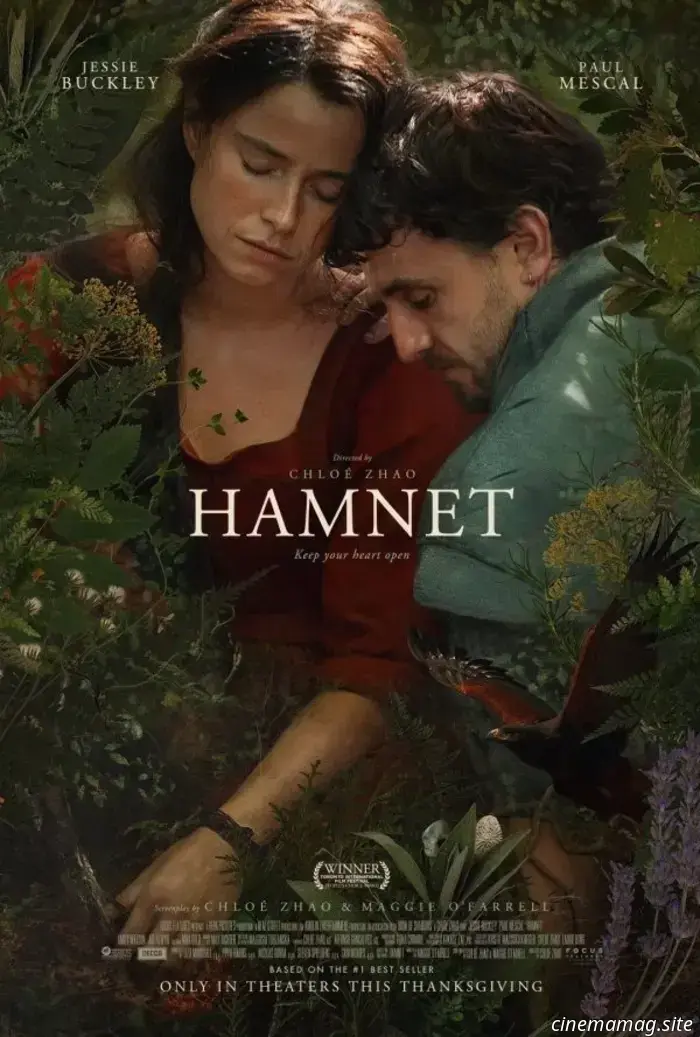
Exclusive Interview – Costume Designer Malgosia Turzanska for Hamnet
Exclusive interview with Hamnet costume designer Malgosia Turzanska…
As the awards season approaches and following the festival season, we had a conversation with Malgosia Turzanska, the costume designer for Hamnet, regarding the film's reception, the role of director Chloé Zhao, and the crafting of a distinctive interpretation of a Shakespearean story.
What was your starting point and how involved was Chloé Zhao?
When I initially began discussions with Chloé about the film, it was clear that our focus was on the relationship between Agnes and Will — their profound love story and their quest to find themselves and one another amidst tremendous tragedy. It was always about Will and Agnes, rather than William Shakespeare and Anne Hathaway. This was a vibrant exploration of grief and artistic identity rather than a historical reconstruction. I believe that's why the narrative resonates so deeply with audiences; Chloé brought it to life instead of seeking it in the past.
Hamnet is grittier than typical Shakespearean films. What was your approach to that?
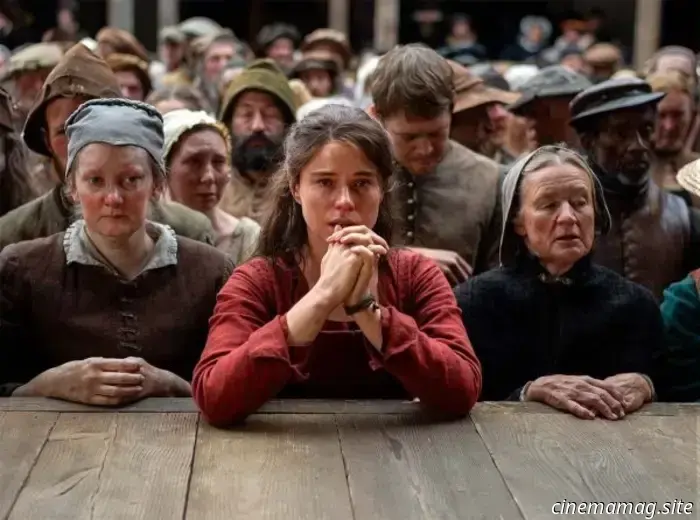
To present the historical characters in a more grounded way, it was essential for me that the costumes lacked any preciousness. I referenced numerous paintings of lower-class individuals to capture how period clothing was worn in a natural way. This inspired Will's open shirt and rolled-up sleeves. We aimed to ensure that everything felt authentic and lived in. His fingers are stained with ink, and he always carries a penner on his belt instead of a dagger (a container for a portable inkwell and quill).
Agnes, as a creature of the forest, is often depicted with mud or plant stains. Her clothing reflects sweat, dirt, and the environmental elements. I closely collaborated with our talented production designer, Fiona Crombie, to ensure that the characters appeared to belong in the world she created.
Were there specific inspirations for Agnes and William’s costumes? Can you describe the evolution of their costumes throughout the film as their relationship develops?
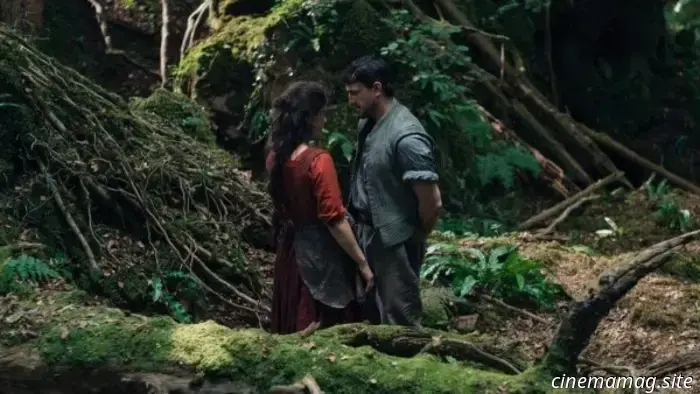
I began designing Agnes's character with the image of a large heart pumping vibrant, fresh blood, teeming with life. She embodies the forest's essence; in her first appearance, nestled among tree roots, she appears to have grown out of it. She is akin to a berry — one that can heal or poison if mishandled. It was crucial to highlight her bond with nature through the textures and feel of her clothing. The first bodice she wears is crafted from barkcloth, a fibrous fabric sourced from Uganda, which embodies a woodsy texture rather than being an Elizabethan textile.
Her other garments are predominantly made of linen, another plant fiber, with the bodices subtly embroidered to mimic bark or veins with flowing blood. As the story unfolds, her vibrant reds transition to rusty tones, akin to drying blood, and as she mourns Hamnet, the hues fade entirely into scab-like greys, browns, and prunes. Her bodice starts to resemble a brittle piece of bark that could disintegrate upon touch. When she travels to London at the end, her vitality and color gradually return.
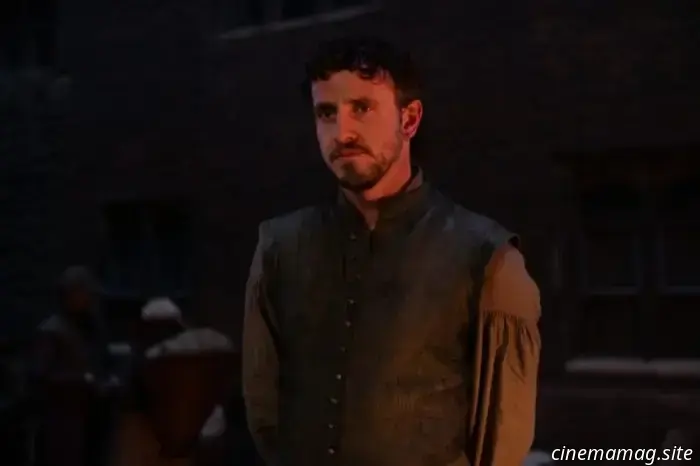
For Will, there were several threads to consider. One was the grayscale, derived from diluting the iron oak gall ink that Shakespeare used. I introduced some greens and blues in his initial outfits to highlight his connection to the river, where he processes his emotions through water. The greyscale also reflects his family home’s costume style. Given their abusive father, I pondered how his mother, brilliantly portrayed by Emily Watson, would protect her children from his outbursts. While she doesn’t confront him directly, I imagined she would equip them with a shield through their costumes, designed in muted tones to help them blend into their surroundings.
When we first meet Will, he is clad in an irregularly quilted doublet, layered with scratchy leather that resembles the underside of a mushroom. This embodies the metaphor of his father's constant emotional jabs. The father wears a violent-looking toothpick necklace, akin to a claw, used to torment his son and break his spirit. As the narrative progresses, Will’s frustration leads to a transition to a thicker doublet resembling cracked elephant skin, marked with slashes.
We employ a traditional Elizabethan technique known as pinking, not for fashion but to represent the character’s emotional evolution. After Hamnet's death, we see Will in London wearing a doublet where the minor slashes have transformed into large, silent gashes. Finally, as a ghost, he appears coated in cracked clay that breaks apart with his movements, until he washes it away and finally allows himself to cry.
You must be thrilled that both Train Dreams and Hamnet are receiving such a positive response from audiences and award organizations.
It has been remarkable to observe such emotional reactions from audiences for both films! I created these two films back-to-back, and while driving through the snowy landscapes of Spokane, I immersed myself in podcasts and books about Elizabethan London and Shakespeare
Other articles
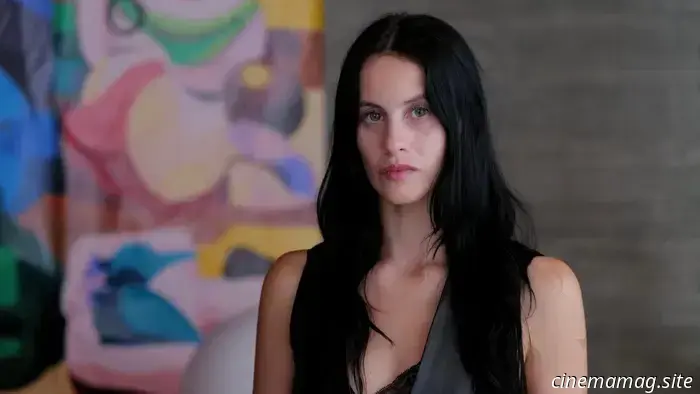 Pedro Almodóvar Makes His Comeback to Spain in the First Trailer for Bitter Christmas.
After completing his first English-language feature, Pedro Almodóvar is preparing for his next project, the Spanish-language film Bitter Christmas (translated from Amarga Navidad), which is set to be released in Spain on March 20, with a likely extensive festival circuit to follow. Starring Bárbara Lennie, Leonardo Sbaraglia, Aitana Sánchez-Gijón, Victoria Luengo, Patrick Criado, Milena Smit, and Quim Gutiérrez, the initial trailer has now been released.
Pedro Almodóvar Makes His Comeback to Spain in the First Trailer for Bitter Christmas.
After completing his first English-language feature, Pedro Almodóvar is preparing for his next project, the Spanish-language film Bitter Christmas (translated from Amarga Navidad), which is set to be released in Spain on March 20, with a likely extensive festival circuit to follow. Starring Bárbara Lennie, Leonardo Sbaraglia, Aitana Sánchez-Gijón, Victoria Luengo, Patrick Criado, Milena Smit, and Quim Gutiérrez, the initial trailer has now been released.
 KJ Apa portrays James Stewart in the trailer for the biopic Jimmy.
Burns & Co. Entertainment has released the initial trailer for "Jimmy," the forthcoming biopic about James Stewart, directed by Aaron Burns and featuring Riverdale's KJ Apa in the role of the Hollywood icon. The movie...
KJ Apa portrays James Stewart in the trailer for the biopic Jimmy.
Burns & Co. Entertainment has released the initial trailer for "Jimmy," the forthcoming biopic about James Stewart, directed by Aaron Burns and featuring Riverdale's KJ Apa in the role of the Hollywood icon. The movie...
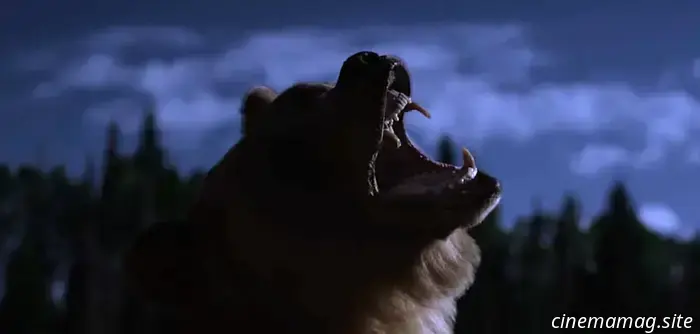 Watch out for the bear in the trailer for the survival thriller Grizzly Night.
Saban Films has released a poster and trailer for the survival thriller Grizzly Night, directed by Burke Doeren. Based on true events, the film follows a fearful park ranger as he guides a group of frightened…
Watch out for the bear in the trailer for the survival thriller Grizzly Night.
Saban Films has released a poster and trailer for the survival thriller Grizzly Night, directed by Burke Doeren. Based on true events, the film follows a fearful park ranger as he guides a group of frightened…
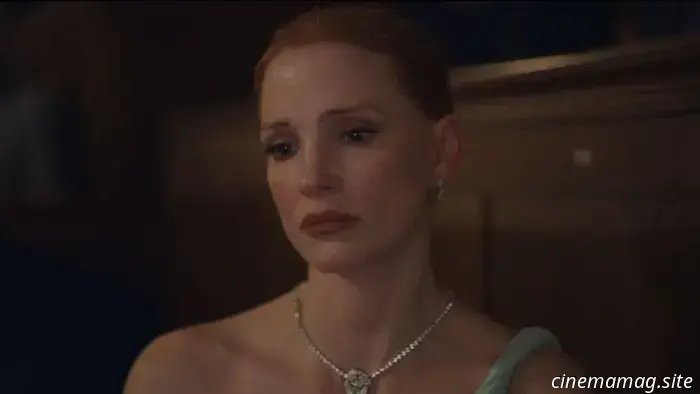 Jessica Chastain Embarks on a Risky Relationship in the Initial Trailer for Michel Franco's Dreams.
After collaborating on Memory, Michel Franco and Jessica Chastain came together again for Dreams, which made its debut at Berlinale earlier this year and is set to hit theaters on February 27, released by Greenwich Entertainment. In anticipation of the release, the first trailer for the film has been unveiled, featuring Isaác Hernández, Rupert Friend, Marshall Bell, Eligio Meléndez, and Mercedes Hernández.
Jessica Chastain Embarks on a Risky Relationship in the Initial Trailer for Michel Franco's Dreams.
After collaborating on Memory, Michel Franco and Jessica Chastain came together again for Dreams, which made its debut at Berlinale earlier this year and is set to hit theaters on February 27, released by Greenwich Entertainment. In anticipation of the release, the first trailer for the film has been unveiled, featuring Isaác Hernández, Rupert Friend, Marshall Bell, Eligio Meléndez, and Mercedes Hernández.
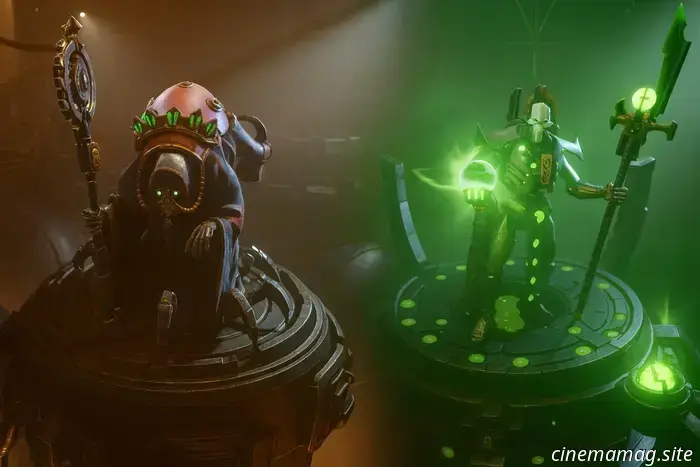 Warhammer 40000: Mechanicus II scheduled for a spring release.
Kasedo Games and Bulwark Studios have revealed that Warhammer 40,000: Mechanicus II is set to be released in Spring 2026 for PlayStation 5, Xbox Series X|S, and PC. This updated release timeframe will enable developers…
Warhammer 40000: Mechanicus II scheduled for a spring release.
Kasedo Games and Bulwark Studios have revealed that Warhammer 40,000: Mechanicus II is set to be released in Spring 2026 for PlayStation 5, Xbox Series X|S, and PC. This updated release timeframe will enable developers…
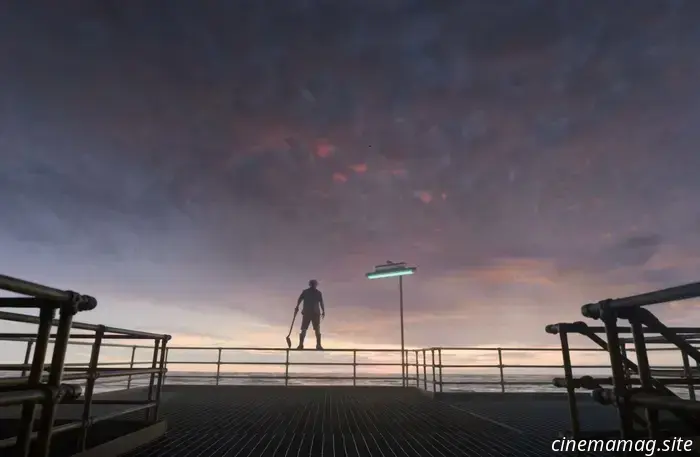 Tom Cruise Aims to Rescue Humanity in the Initial Teaser for Alejandro G. Iñárritu’s Digger
Following a lengthy period where he was predominantly known as the world's top action star, Tom Cruise is shifting back to more dramatic roles next fall. Headlining Alejandro G. Iñárritu's upcoming film—now titled Digger, complete with a teaser and poster—Cruise portrays the character Digger Rockwell, alongside a cast that features Jesse Plemons, Sandra Hüller, Riz Ahmed, Sophie Wilde, and Emma D'Arcy.
Tom Cruise Aims to Rescue Humanity in the Initial Teaser for Alejandro G. Iñárritu’s Digger
Following a lengthy period where he was predominantly known as the world's top action star, Tom Cruise is shifting back to more dramatic roles next fall. Headlining Alejandro G. Iñárritu's upcoming film—now titled Digger, complete with a teaser and poster—Cruise portrays the character Digger Rockwell, alongside a cast that features Jesse Plemons, Sandra Hüller, Riz Ahmed, Sophie Wilde, and Emma D'Arcy.
Exclusive Interview – Costume Designer Malgosia Turzanska for Hamnet
In an exclusive interview with Hamnet's costume designer, Malgosia Turzanska, we discussed her work just before the awards season and following the festival season.