
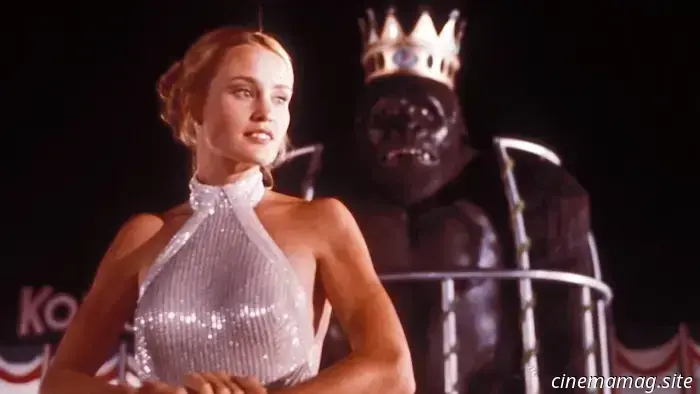
12 Exciting Films from 1976, a Year of Defiance
Here are the 12 most groundbreaking films of 1976, a year dominated by rebels and underdogs at the box office.
As America celebrated its bicentennial, revolutionary sentiments resurfaced, with film stars defying the existing norms.
It was a golden era for bold films that ignored conventions and took risks. Happy 50th anniversary to these 12 pivotal movies from 1976.
**Network**
Credit: United Artists
In a powerful repudiation of authority, seasoned news anchor Howard Beale (Peter Finch) has an explosive breakdown, urging Americans to open their windows and shout, "I’m mad as hell and I’m not gonna take it anymore."
What fueled their anger? Take your pick: government corruption, inflation, Vietnam, crime… Network primarily critiques complacency and the feeling of helplessness cultivated by a constant influx of bad news. Curious what that feels like?
Finch won the Best Actor award posthumously, Faye Dunaway (pictured above) received Best Actress, Beatrice Straight took home Best Supporting Actress, and Paddy Chayefsky earned the award for best original screenplay — a remarkable year for screenwriting.
**Carrie**
Credit: United Artists
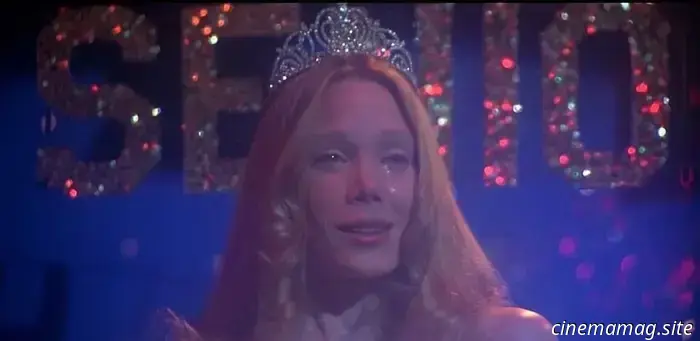
Carrie stands out as one of the most impactful horror films ever — especially for anyone who has experienced high school.
Sissy Spacek is both fragile and formidable as Carrie, an introverted outsider with a hidden, tremendous rage — and the power to unleash it.
This film marked the first significant success for director Brian De Palma, and perhaps more crucially, it was the first movie to tap into the box office potential of Stephen King adaptations.
**Taxi Driver**
Credit: Columbia Pictures
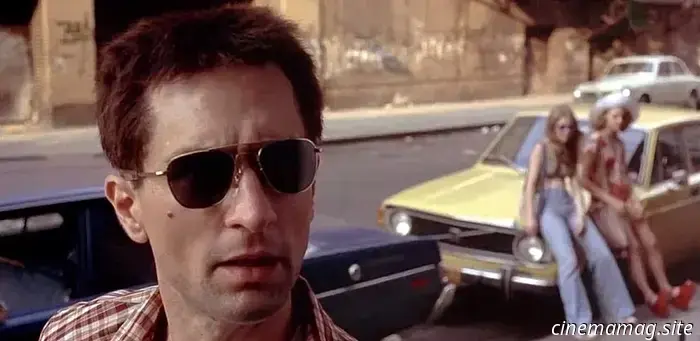
Taxi Driver feels more relevant than we might wish in today’s climate of angry young men and violence. Robert De Niro delivers a powerful performance as Travis Bickle, a disturbed loner fixated on a campaign worker (Cybill Shepherd) and bent on cleaning up New York City’s seedy underbelly.
While a simpler narrative might take Bickle’s side (like Death Wish), director Martin Scorsese and writer Paul Schrader choose a more complex path, refusing to create a comfortable ride for the viewer.
In the film's compelling conclusion, Bickle rescues the exploited young Iris (Jodie Foster) from her grim situation, prompting us to reconsider everything we assumed about the movie until that moment.
**Rocky**
Credit: United Artists
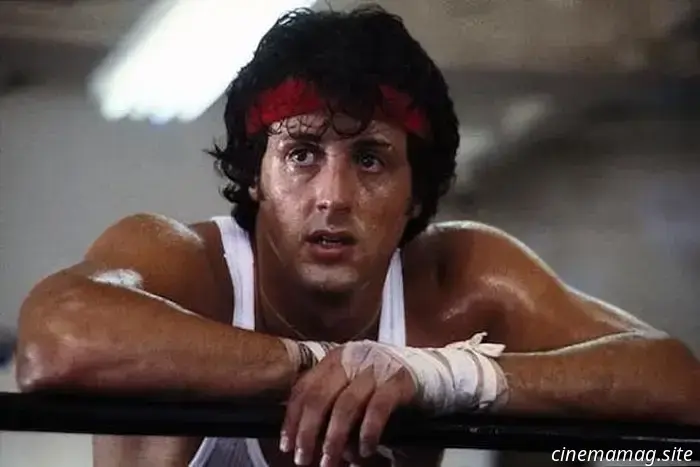
In the early 1970s, downbeat conclusions became the norm, but screenwriter and star Sylvester Stallone believed it was time for American film heroes to triumph again.
The Academy agreed: Rocky won Best Picture, and John G. Avildsen received the Best Director award. Stallone was nominated for Best Original Screenplay, but the honor went to Chayefsky for Network.
Although Rocky doesn't triumph over Apollo Creed, like Stallone, he achieves a monumental victory just by stepping into the ring. Rocky paved the way for Stallone to become one of the most prominent stars in the following decades.
It also grossed over 100 times its production budget.
**All the President’s Men**
Credit: Warner Bros.
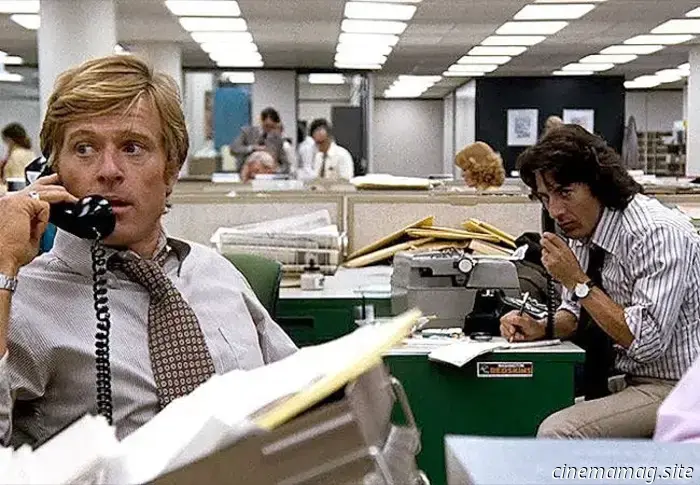
Robert Redford and Dustin Hoffman portray Bob Woodward and Carl Bernstein, two determined reporters from The Washington Post who uncover the true story behind the Watergate break-in — ultimately leading to President Richard Nixon's downfall.
This film remains remarkably vibrant even after 50 years, thanks to the immersive direction of Alan J. Pakula, a master of conspiracy thrillers, and a gripping script by William Goldman that introduced the phrase "follow the money."
It's a timeless axiom that still holds weight.
**Marathon Man**
Credit: Paramount Pictures
Interestingly, All the President’s Men was one of two films in 1976 that brought together screenwriter William Goldman and acting powerhouse Dustin Hoffman.
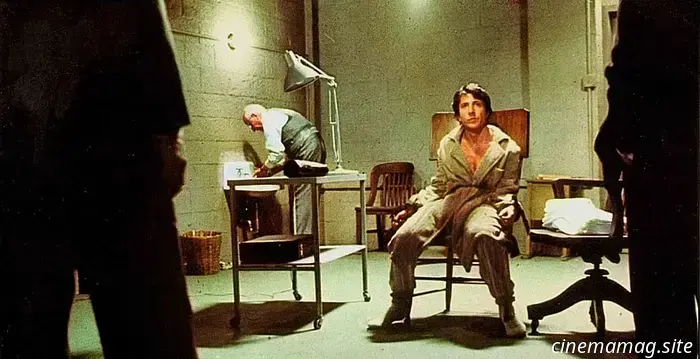
Marathon Man, Goldman’s adaptation of his own 1974 novel, is an intensely gripping thriller about "Babe" Levy (Hoffman), a long-distance runner who gets entangled in a plot involving a Nazi war criminal (Laurence Olivier) seeking to reclaim stolen diamonds.
It's particularly notable for its unforgettable, terrifying dentistry scene, which is the scariest in cinematic history, even more than that in Little Shop of Horrors, directed by John Schlesinger.
**Harlan County, USA**
Credit: Cinema 5
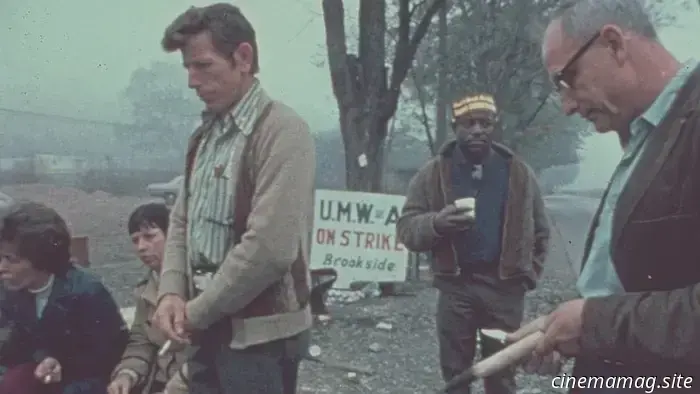
The '70s featured several noteworthy films about rural America, but none conveyed the truth as directly as Barbara Kopple’s Harlan County, USA. It serves as a rallying cry akin to Network, but it’s grounded in reality.
The documentary chronicles a harsh and lengthy 13-month coal miners’ strike against the Brookside Mine in Harlan County, Kentucky, revealing what happens when hard-working Americans confront a company focused solely on profits.
Kopple immersed herself with the miners throughout her twenties, documenting their struggle to unionize amid a backdrop of pickup trucks,

Other articles
 New trailer released for the horror film Whistle featuring Dafne Keen.
IFC has released a new trailer for director Corin Hardy’s upcoming horror film, Whistle, which is set to hit theaters this February. The movie focuses on a group of high school students...
New trailer released for the horror film Whistle featuring Dafne Keen.
IFC has released a new trailer for director Corin Hardy’s upcoming horror film, Whistle, which is set to hit theaters this February. The movie focuses on a group of high school students...
 Chilling Movies About Being Stranded in the Snow for Your Watchlist
Casey Chong offers a collection of movies featuring characters stuck in the snow, perfect for a chilling experience. These films showcase individuals stranded in a snowstorm for various reasons, such as a car breakdown or other circumstances.
Chilling Movies About Being Stranded in the Snow for Your Watchlist
Casey Chong offers a collection of movies featuring characters stuck in the snow, perfect for a chilling experience. These films showcase individuals stranded in a snowstorm for various reasons, such as a car breakdown or other circumstances.
 Luke Hicks’ Best 10 Movies of 2025
After The Film Stage released its collective ranking of the top 50 films of 2025 as part of our year-end recap, our contributors are presenting their individual top 10 lists. To illustrate my year with one bizarre yet amusing incident: I fractured my hand in a moped accident on the final day of my coverage at the Cannes Film Festival, alongside the lesser-known power grid hack that
Luke Hicks’ Best 10 Movies of 2025
After The Film Stage released its collective ranking of the top 50 films of 2025 as part of our year-end recap, our contributors are presenting their individual top 10 lists. To illustrate my year with one bizarre yet amusing incident: I fractured my hand in a moped accident on the final day of my coverage at the Cannes Film Festival, alongside the lesser-known power grid hack that
 Trailer and poster for Folk Horror: Lily's Ritual
Black Mandala has released a poster and trailer for Lily's Ritual, the Spanish folk horror film directed by Manu Herrera. The story revolves around Lily, who journeys to a secluded cabin to reunite with friends…
Trailer and poster for Folk Horror: Lily's Ritual
Black Mandala has released a poster and trailer for Lily's Ritual, the Spanish folk horror film directed by Manu Herrera. The story revolves around Lily, who journeys to a secluded cabin to reunite with friends…
 The Tomb Raider series completes its cast with the additions of Sigourney Weaver, Jason Isaacs, and others.
The cast for Amazon Prime's upcoming live-action series Tomb Raider has been finalized. Sophie Turner will be joined by a substantial ensemble that features Sigourney Weaver (Avatar: Fire and Ash) and Jas…
The Tomb Raider series completes its cast with the additions of Sigourney Weaver, Jason Isaacs, and others.
The cast for Amazon Prime's upcoming live-action series Tomb Raider has been finalized. Sophie Turner will be joined by a substantial ensemble that features Sigourney Weaver (Avatar: Fire and Ash) and Jas…
12 Exciting Films from 1976, a Year of Defiance
Here are the 12 most groundbreaking movies of 1976, a year when rebels and underdogs dominated the box office.