
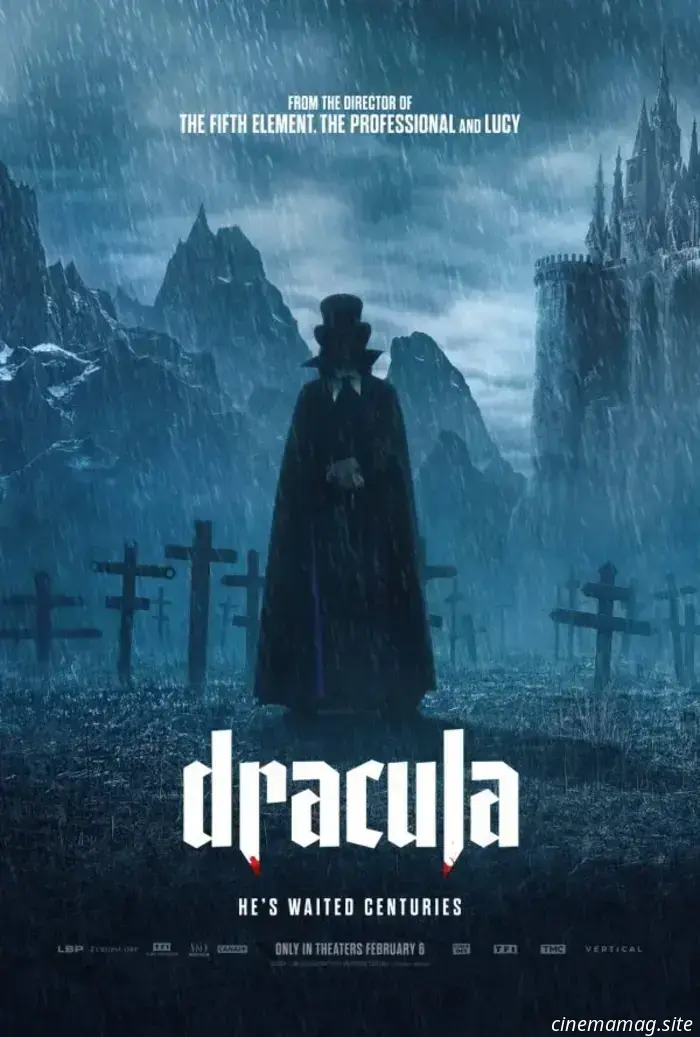
Film Review – Dracula (2025)
Dracula, 2025.
Written and Directed by Luc Besson.
Featuring Caleb Landry Jones, Zoë Bleu, Christoph Waltz, Matilda De Angelis, Ewens Abid, Guillaume de Tonquédec, David Shields, Bertrand-Xavier Corbi, Raphael Luce, Liviu Bora, Anne Kessler, Romain Levi, Jassem Mougari, Thalia Besson, Haymon Maria Buttinger, Ivan Franěk, Karim Rakrouki, Arben Bajraktaraj, Nicola Puleo, Aaron Guillemette, and Alex Andréa.
SYNOPSIS:
After a 15th-century prince renounces God following the tragic loss of his wife, he becomes cursed for eternity, transforming into Dracula. Destined to roam the ages, he challenges fate and death, fueled by a solitary hope to reunite with his lost love.
Somewhere amidst a loyal adaptation, absurd fashion choices, and unnecessary video game-inspired additions like gargoyle minions (which were more detailed in some PS1 games), Luc Besson's Dracula (despite his controversial past, which raises questions about his filmmaking) presents an occasionally engaging interpretation focused on a crisis of faith, religious betrayal, and a romantic longing that diverges from the usual portrayals.
At times, the film aligns with Guillermo del Toro’s open appreciation for monsters and the supernatural. It also briefly attempts to capture the aesthetic and spirit of Francis Ford Coppola’s Bram Stoker’s Dracula, yet fails to make an impact as Luc Besson lacks distinctive flair or the much-needed violence (in a movie featuring multiple sword fights, the bloodshed is limited, save for one absurd decapitation that feels out of place) and incorporates incongruous, cartoonish elements like the aforementioned gargoyles that contribute nothing.
The film mostly ignites when it embraces its romantic essence, showcasing competent performances (Caleb Landry Jones, seemingly the filmmaker’s muse – raising questions about his acting career – has a somewhat exaggerated accent that leans towards a Dracula stereotype, though he admits he captures the seductive, deceitful, and romantic qualities) combined with a religious theme elevated by the quirks of Christoph Waltz as a vampire-hunting priest.
Set in the 15th century, Vlad the Impaler (Caleb Landry Jones) is deeply in love with his wife, Elizabeta (Zoë Bleu). His only prayer to God is for her safety while he battles in his name. During a sizeable battle (considering budget limitations), Elizabeta finds herself in danger and meets her end just as Vlad arrives to save her. From then onward, he doesn’t just renounce his faith; he murders the priest who blessed her safety, causing a wooden figure of Jesus to weep.
Fast forward 400 years, and Vlad remains alive, seemingly cursed by God with eternal life for his sacrilege and forsaking his beliefs, forever barred from seeing Elizabeta in the afterlife. As is well-known, he is now a vampire, consuming blood to halt his aging. This section of the film delves into more conventional storytelling elements, including the arrival of John Harker (Ewens Abid) discussing property sales, whose wife Mina (also portrayed by Zoë Bleu) bears a resemblance to his long-lost beloved.
During their conversation, flashbacks reveal Vlad's centuries-long quest for the reincarnation of his deceased wife. At one point, he bites the necks of various women in a ludicrous scene where the onlookers seem oblivious to the situation or watch in horror, akin to malfunctioning video game AI. However, this part falters because, in the present timeline, the makeup, costumes, and prosthetics for Dracula are striking yet evoke the unintentional humor of an old woman’s appearance. While other aspects of costuming and production design are generally solid, the quality varies unpredictably from scene to scene.
Nevertheless, seeing Mina in John’s locket rekindles his pursuit of love: aggressive toward anyone in his path, yet maintaining a gentlemanly manner when he finally encounters her, he utilizes telepathic powers to reveal his past life and deep love for Elizabeta. This third act stands out as the most compelling aspect of Luc Besson’s Dracula, embracing tragic romanticism and expressions of centuries of longing. A well-executed and choreographed sword fight unfolds within Dracula’s castle in the Carpathian Alps, complemented by a genuinely poignant conclusion. It’s unfortunate the film lacks vitality until that point.
Flickering Myth Rating – Film: ★ ★ ★ / Movie: ★ ★
Robert Kojder
.jpg)
.jpg)
.jpg)
.jpg)
Other articles
 Elisabeth Moss, Kerry Washington y Kate Mara son Mujeres Imperfectas en el tráiler de la serie de thriller de Apple TV.
Apple TV+ has released the initial trailer for Imperfect Women, the psychological thriller adapted from Araminta Hall's novel of the same title. The series features Elisabeth Moss, Kerry Washington, and Kate Mara…
Elisabeth Moss, Kerry Washington y Kate Mara son Mujeres Imperfectas en el tráiler de la serie de thriller de Apple TV.
Apple TV+ has released the initial trailer for Imperfect Women, the psychological thriller adapted from Araminta Hall's novel of the same title. The series features Elisabeth Moss, Kerry Washington, and Kate Mara…
-to-Best.jpg) Ranking All 7 Batman Actors from Least Impressive (Clooney) to Most Impressive
Here is a ranking of all seven actors who have portrayed Batman, from least to most successful, featuring George Clooney, Ben Affleck, Christian Bale, and Robert Pattinson.
Ranking All 7 Batman Actors from Least Impressive (Clooney) to Most Impressive
Here is a ranking of all seven actors who have portrayed Batman, from least to most successful, featuring George Clooney, Ben Affleck, Christian Bale, and Robert Pattinson.
 Elle Fanning joins OnlyFans in the trailer for Margo’s Got Money Troubles.
At Apple TV’s 2026 Press Day event, the initial trailer for Margo’s Got Money Troubles was unveiled. This upcoming comedy-drama series is created by David E. Kelley and is inspired by the best-selling novel...
Elle Fanning joins OnlyFans in the trailer for Margo’s Got Money Troubles.
At Apple TV’s 2026 Press Day event, the initial trailer for Margo’s Got Money Troubles was unveiled. This upcoming comedy-drama series is created by David E. Kelley and is inspired by the best-selling novel...
.jpg) Film Review – Solo Mio (2026)
Solo Mio, 2026. Directed by Charles Kinnane and Daniel Kinnane. Featuring Kevin James, Alyson Hannigan, Kim Coates, Jonathan Roumie, Julie Ann Emery, Nicole Grimaudo, Julee Cerda, Alessandro Carbonara, and others.
Film Review – Solo Mio (2026)
Solo Mio, 2026. Directed by Charles Kinnane and Daniel Kinnane. Featuring Kevin James, Alyson Hannigan, Kim Coates, Jonathan Roumie, Julie Ann Emery, Nicole Grimaudo, Julee Cerda, Alessandro Carbonara, and others.
 Take a first look at the Cape Fear TV series featuring Amy Adams, Patrick Wilson, and Javier Bardem.
Apple TV has revealed a first glimpse of Cape Fear, the forthcoming TV series inspired by Martin Scorsese’s 1991 film adaptation of John D. MacDonald’s novel The Executioners and featuring…
Take a first look at the Cape Fear TV series featuring Amy Adams, Patrick Wilson, and Javier Bardem.
Apple TV has revealed a first glimpse of Cape Fear, the forthcoming TV series inspired by Martin Scorsese’s 1991 film adaptation of John D. MacDonald’s novel The Executioners and featuring…
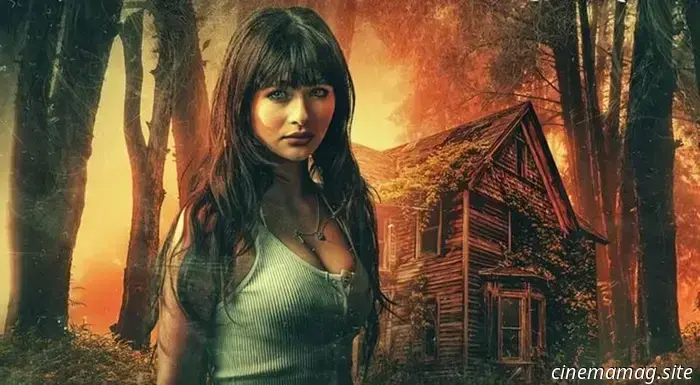 Lou Ferrigno plays a cannibal pig farmer in the trailer for the horror film The Hermit.
Uncork’d Entertainment has released a trailer, poster, and images for director Salvatore Sclafani’s cannibal horror film, The Hermit, which is set to be released this March. The story follows teenagers Lisa and...
Lou Ferrigno plays a cannibal pig farmer in the trailer for the horror film The Hermit.
Uncork’d Entertainment has released a trailer, poster, and images for director Salvatore Sclafani’s cannibal horror film, The Hermit, which is set to be released this March. The story follows teenagers Lisa and...
Film Review – Dracula (2025)
Dracula, 2025. Written and directed by Luc Besson. Featuring Caleb Landry Jones, Zoë Bleu, Christoph Waltz, Matilda De Angelis, Ewens Abid, Guillaume de Tonquédec, David Shields, Bertrand-Xavier Corbi, and others.