
Sundance Review: Take Me Home is a poignant critique of a failing social safety system.
Director Liz Sargent’s poignant drama, Take Me Home, features her sister Anna—a 38-year-old Korean adoptee with a developmental disability—and is both clever and moving. The film criticizes a system that compels a father to abandon his adopted daughter in order to access necessary care for both of them, while ultimately concluding on a hopeful note. For a substantial portion of the movie, Sargent’s work is rooted in social realism, only to end with a sudden shift that feels like a different film altogether, yet still centers around Anna.
Residing in central Florida’s suburbs, away from the theme parks, the family—including Anna’s primary caregiver mother, Joan (Marceline Hugot), and father, Bob (Victor Slezak)—appears to support one another. Bob's temper flares with Anna in one early scene as they rush to find her lost water bottle. The family dynamics are genuine and often poignant, especially as we contemplate the potential challenges looming in the first act, with each character needing their own type of support. Emily (Ali Ahn), their daughter, lives in Brooklyn and, while at work, misses Anna’s FaceTime call meant to inform her that Joan is ill and "burning up."
Following Joan’s death, Emily comes home to care for both Anna and Bob while trying to maintain her job. As she investigates care options for them, she struggles to navigate Florida’s complicated healthcare systems and its many insurance requirements. The film shines when it authentically depicts the family dynamic, portraying candidly the challenges of caring for those who need love, patience, and attention. In one heartrending moment, Emily asks Bob why they chose to adopt Anna; he simply states they had extra love to share. Although Emily strives to help as much as possible, it never feels entirely sufficient.
The film also highlights moments when Anna pushes back against Bob. In one scene, she runs away just a few doors down to befriend James (Shane Harper), who offers her companionship and listens when she needs it the most. Take Me Home is a story of good people trapped in difficult situations, and its ending, though seemingly unearned, brings a sense of deserved relief.
Take Me Home stands out in its authenticity and originality, making the sudden tonal shift feel somewhat jarring in relation to other moments in the final act. Adapted from Sargent’s short film from 2023, the feature captivates largely due to Anna Sargent’s strong presence on screen; I look forward to seeing her in future films addressing everyday struggles. The film excels in its moments of warmth, humor, and kindness, truly shining in those instances without having to raise the stakes or change its form.
Take Me Home debuted at the 2026 Sundance Film Festival.
Other articles
 All 11 Star Wars Films Ranked from Least to Most Favorable
Here is a ranking of all 11 Star Wars films from worst to best as we anticipate the release of the 12th film, The Mandalorian & Grogu, this summer.
All 11 Star Wars Films Ranked from Least to Most Favorable
Here is a ranking of all 11 Star Wars films from worst to best as we anticipate the release of the 12th film, The Mandalorian & Grogu, this summer.
 Posters for February 2026: Wuthering Heights, Pillion, My Father’s Shadow, and more.
The new year is underway, as the January lull gives way to a February filled with Oscar-qualifying films that are getting their limited and/or platform releases across the country. While there are also some wide releases, such as a new Scream sequel (February 27) and another prequel sequel to The Strangers (February 6), these serve primarily as counterprogramming.
Posters for February 2026: Wuthering Heights, Pillion, My Father’s Shadow, and more.
The new year is underway, as the January lull gives way to a February filled with Oscar-qualifying films that are getting their limited and/or platform releases across the country. While there are also some wide releases, such as a new Scream sequel (February 27) and another prequel sequel to The Strangers (February 6), these serve primarily as counterprogramming.
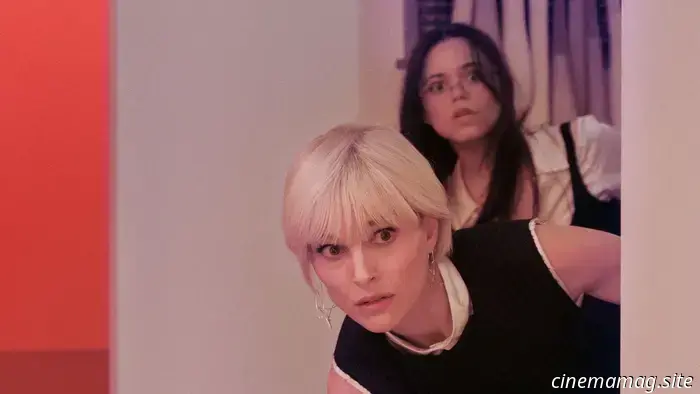 Sundance Review: The Gallerist Is Too Referenced to Effectively Satirize the Art Scene
Entering the art world is famously challenging—it’s already so absurd that the exaggeration required for effective satire falls flat. There’s no space left to explore. However, we require daring artists who tap into their inner Tobias Fünke and contemplate: “But it could succeed for us.” Therefore, Cathy Yan deserves significant recognition for
Sundance Review: The Gallerist Is Too Referenced to Effectively Satirize the Art Scene
Entering the art world is famously challenging—it’s already so absurd that the exaggeration required for effective satire falls flat. There’s no space left to explore. However, we require daring artists who tap into their inner Tobias Fünke and contemplate: “But it could succeed for us.” Therefore, Cathy Yan deserves significant recognition for
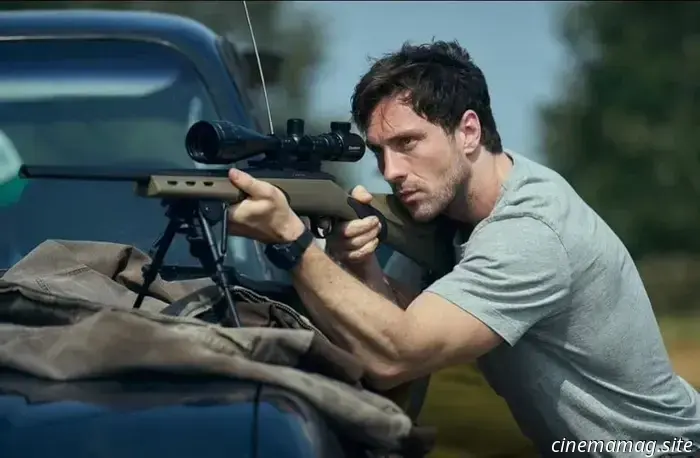 Trailer for the action thriller Fuze featuring Aaron Taylor-Johnson, Theo James, Gugu Mbatha-Raw, and Sam Worthington.
Sky Cinema has unveiled a trailer for Fuze, the upcoming UK-based action thriller directed by David Mackenzie (Hell or High Water), which centers on the finding of an unexploded bomb from World War II.
Trailer for the action thriller Fuze featuring Aaron Taylor-Johnson, Theo James, Gugu Mbatha-Raw, and Sam Worthington.
Sky Cinema has unveiled a trailer for Fuze, the upcoming UK-based action thriller directed by David Mackenzie (Hell or High Water), which centers on the finding of an unexploded bomb from World War II.
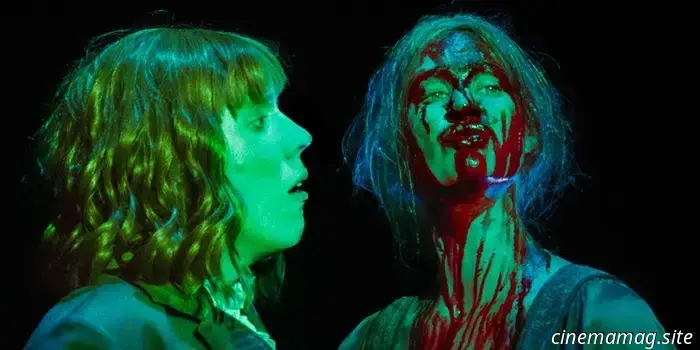 Love Triumphs Over Death in First Trailer for Grace Glowicki’s Dead Lover
A well-known figure in the indie film community with works such as Strawberry Mansion, Booger, The Heirloom, Measures for a Funeral, and Honey Bunch, Canadian actress and filmmaker Grace Glowicki's second directorial feature, Dead Lover, is set to be released this spring after a festival circuit featuring Sundance, TIFF, IFFR, SXSW, and others. In anticipation of a
Love Triumphs Over Death in First Trailer for Grace Glowicki’s Dead Lover
A well-known figure in the indie film community with works such as Strawberry Mansion, Booger, The Heirloom, Measures for a Funeral, and Honey Bunch, Canadian actress and filmmaker Grace Glowicki's second directorial feature, Dead Lover, is set to be released this spring after a festival circuit featuring Sundance, TIFF, IFFR, SXSW, and others. In anticipation of a
Sundance Review: Take Me Home is a poignant critique of a failing social safety system.
Collaborating with her sister Anna—a 38-year-old Korean adoptee who has a developmental disability—director Liz Sargent presents the poignant drama Take Me Home, which is at once humorous and deeply moving. The film critiques a system that would compel a father to forsake his adopted daughter in order to obtain the necessary care for both of them, ultimately concluding with an