
Sundance Review: The Gallerist Is Too Referenced to Effectively Satirize the Art Scene
Navigating the art world is notoriously challenging—it's already inherently absurd, making the exaggeration necessary for effective satire ineffective. There’s no path forward. However, we need daring artists, those who embrace their inner Tobias Fünke and think: “But it might work for us.” Thus, Cathy Yan deserves significant praise for her bold approach in The Gallerist.
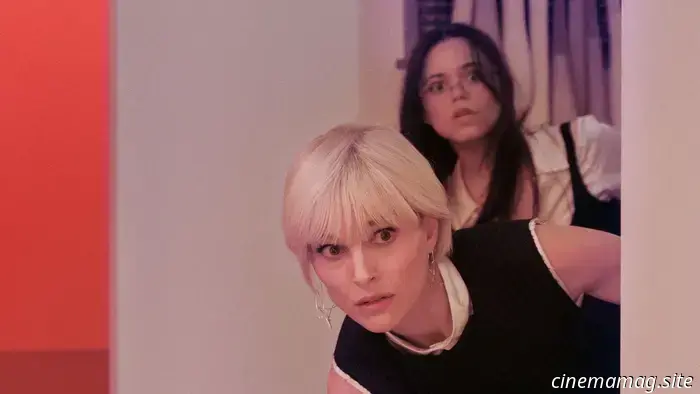
The Gallerist unfolds in an upscale Miami gallery on the morning of Art Basel. Amid the calm before the chaos, gallery owner Polina (Natalie Portman with a Warhol-inspired blonde wig) and her equally anxious assistant, Kiki (Jenna Ortega), feel apprehensive. Polina has faith in her new artist, Stella Burgess (Da'Vine Joy Randolph). But will the uncultured crowd—those attending Art Basel to party and flaunt extravagant art on Instagram—appreciate her? This remains uncertain, and with its Sundance debut, one can't help but notice the parallels between the Art Basel crowd that Polina and Kiki detest and those in Park City, who see few films and instead focus their energy on crashing agency parties.
Against their better instincts, Polina admits a loud influencer, Dalton Hardberry (Zach Galifianakis, cranking it to the max like everyone else in the film), early on, hoping he'll promote the show to his vast following. Before Dalton can do so, he accidentally impales himself on a piece of art. The Gallerist then transforms into a Weekend at Bernie’s scenario in the art world, racing through one challenge after another as Polina and Kiki scramble to manage the dead body, which is garnering attention as a bold artistic statement. The film's primary flaw isn't the construction of these challenges, but rather, it simply fails to be funny enough. From a mention of Matthew Marks early on to a reference to British artist Damien Hirst later, Yan's script is unrelenting in its name-dropping. It comes across as a sign of insecurity, a bid to assure the audience that she grasps the world she's depicting.
In another Sundance film, The Moment, Alexander Skarsgård shines as an egocentric director while the rest of the cast largely plays it straight. The impulse may be to fill the screen with a plethora of absurd characters—the allure of seeing them interact is hard to resist—but this often drains the energy from the scene; audiences typically can handle only one exaggerated persona at a time. From the icy art dealer (Catherine Zeta-Jones) to the tasteless collector (Daniel Brühl), The Gallerist pits its over-the-top art-world caricatures against each other in nearly every scene. With every performance dialed up, the end result is overwhelming. Some actors fare better with their exaggerated roles, and an auction scene that borrows its tension from an Uncut Gems moment effectively conveys its stakes, with Ortega excelling as the fast-talking auctioneer.
More akin to Velvet Buzzsaw than The Square, The Gallerist suffers from an overload of references and a refusal to give viewers a moment to relax. While it’s technically skilled, its frenetic Steadicam shots around the gallery keep the single location from feeling confining, and composer Andrew Orkin’s impressive score creates a heist-like atmosphere that propels the narrative.
In its final moments, The Gallerist suggests that while the absurdities of the art world (especially at Art Basel) are exaggerated, there are still individuals like Polina who navigate this turmoil because they recognize that genuine art retains the ability to resonate. This late pivot from cynicism hinges on a single painting and ultimately feels too convenient as a superficial conclusion.
The Gallerist had its premiere at the 2026 Sundance Film Festival.
Other articles
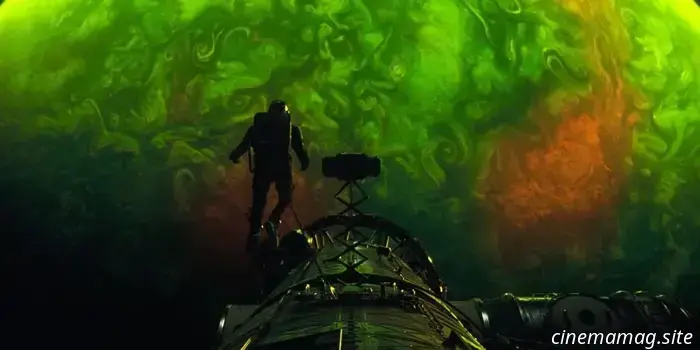 The teaser for Project Hail Mary gives a sneak peek at the Super Bowl spot airing on Sunday.
In anticipation of this Sunday’s Super Bowl advertisement and the upcoming release of the final trailer, Amazon MGM Studios has unveiled an impressive teaser for Phil Lord & Christopher Miller’s Project Hail…
Tooth Shop Fiasco Exclusive Trailer: Producer David Harari of Sasquatch Sunset Makes His Directorial Debut
David Harari, a producer for the Zellner Brothers' Sasquatch Sunset, has finalized his directorial debut with the indie comedy Tooth Shop Fiasco. This film is set to have its world premiere this Monday at the San Francisco Indie Festival. It features performances by Blaine Maye, Katie Folger, Ron Weisberg, and Rochelle Robinson, and is produced by George Rush, Michael Tully, and Chris Martin.
The teaser for Project Hail Mary gives a sneak peek at the Super Bowl spot airing on Sunday.
In anticipation of this Sunday’s Super Bowl advertisement and the upcoming release of the final trailer, Amazon MGM Studios has unveiled an impressive teaser for Phil Lord & Christopher Miller’s Project Hail…
Tooth Shop Fiasco Exclusive Trailer: Producer David Harari of Sasquatch Sunset Makes His Directorial Debut
David Harari, a producer for the Zellner Brothers' Sasquatch Sunset, has finalized his directorial debut with the indie comedy Tooth Shop Fiasco. This film is set to have its world premiere this Monday at the San Francisco Indie Festival. It features performances by Blaine Maye, Katie Folger, Ron Weisberg, and Rochelle Robinson, and is produced by George Rush, Michael Tully, and Chris Martin.
 All 11 Star Wars Films Ranked from Least to Most Favorable
Here is a ranking of all 11 Star Wars films from worst to best as we anticipate the release of the 12th film, The Mandalorian & Grogu, this summer.
All 11 Star Wars Films Ranked from Least to Most Favorable
Here is a ranking of all 11 Star Wars films from worst to best as we anticipate the release of the 12th film, The Mandalorian & Grogu, this summer.
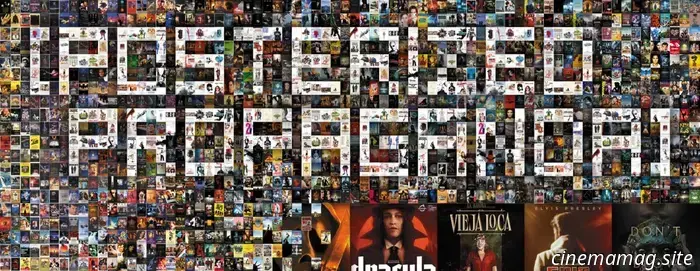 Posters for February 2026: Wuthering Heights, Pillion, My Father’s Shadow, and more.
The new year is underway, as the January lull gives way to a February filled with Oscar-qualifying films that are getting their limited and/or platform releases across the country. While there are also some wide releases, such as a new Scream sequel (February 27) and another prequel sequel to The Strangers (February 6), these serve primarily as counterprogramming.
Posters for February 2026: Wuthering Heights, Pillion, My Father’s Shadow, and more.
The new year is underway, as the January lull gives way to a February filled with Oscar-qualifying films that are getting their limited and/or platform releases across the country. While there are also some wide releases, such as a new Scream sequel (February 27) and another prequel sequel to The Strangers (February 6), these serve primarily as counterprogramming.
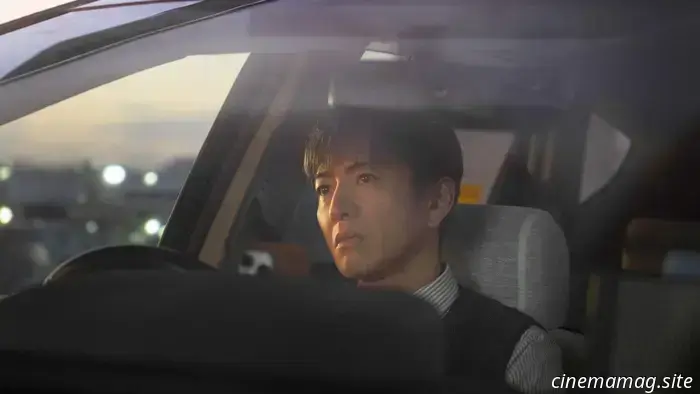 Rotterdam Review: In Tokyo Taxi, Yoji Yamada Navigates Familiar Routes.
Forget about misunderstood hacks and generational talents. Nothing compares to a reliable studio player (with a solid 3- or 4-star batting average) who operates beneath the global radar for much of their career. By the time Neil Armstrong set foot on the moon, Yoji Yamada was nearing middle age and had already completed his 16th feature film, but it
Rotterdam Review: In Tokyo Taxi, Yoji Yamada Navigates Familiar Routes.
Forget about misunderstood hacks and generational talents. Nothing compares to a reliable studio player (with a solid 3- or 4-star batting average) who operates beneath the global radar for much of their career. By the time Neil Armstrong set foot on the moon, Yoji Yamada was nearing middle age and had already completed his 16th feature film, but it
Sundance Review: The Gallerist Is Too Referenced to Effectively Satirize the Art Scene
Entering the art world is famously challenging—it’s already so absurd that the exaggeration required for effective satire falls flat. There’s no space left to explore. However, we require daring artists who tap into their inner Tobias Fünke and contemplate: “But it could succeed for us.” Therefore, Cathy Yan deserves significant recognition for