
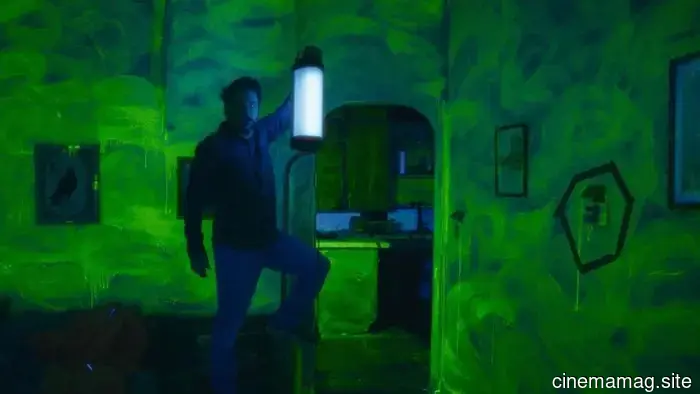
In Kill Me, Charlie Day portrays a man who is convinced that he did not attempt to take his own life.
Kill Me, a intricately layered dark comedy featuring Charlie Day, had a path to its release nearly as convoluted as the film itself, as writer-director Peter Warren shared during a Monday screening at SXSW.
In the film, Day portrays Jimmy, a man who wakes up in a bathtub filled with his own blood and with his wrists slashed. He contacts 911, telling the operator (Allison Williams) that he needs assistance — and insists it wasn’t a suicide attempt.
He is convinced that someone else harmed him.
Soon, Jimmy and the operator, Margot, delve into Jimmy’s past, exploring a list of individuals who might have had motives to harm him and make it appear as if he took his own life. The impressive cast features Giancarlo Esposito from Breaking Bad, Aya Cash from The Boys, Tony Cavalero from The Righteous Gemstones, and Jessica Harper, known for Suspiria.
The Development Journey of Kill Me
You might recall that It’s Always Sunny in Philadelphia meme from a memorable episode where Day’s character goes into conspiracy mode. Picture that, but with a different spin.
Warren approaches the suicide theme in Kill Me with care; despite the humor, the film handles Jimmy’s struggle with mental health thoughtfully and compassionately. Prior to this film, Warren worked on a suicide-prevention hotline.
When he initially pitched the concept to his agents, he envisioned it as a series, and they agreed. However, when no one picked it up, he decided to develop it as a feature script on spec.
At the same time, Day and Keith Goldberg, a producer and executive at Dark Horse Entertainment (known for Umbrella Academy), were in search of a writer for a potential Netflix series. Warren submitted his script for Kill Me, originally titled Murder Suicide, as a writing sample.
Goldberg was not only captivated by the story but also by how thoughtfully the script addressed Jimmy's depression.
“I read this script as a writing sample for the TV show, and I told Charlie, ‘Hey, I found our writer for our show. But honestly, this script is really strong; we should just make this into a movie,’” Goldberg recounted during the post-screening Q&A on Monday.
While the TV series did not materialize, the film did. Dark Horse partnered with XYZ, which approached Natalie Metzger, an executive at Vanishing Angle. The two companies had previously collaborated on the clever horror film The Wolf of Snow Hollow.
“As I read it, I thought, ‘Wow, this feels just like a script that I’ve encountered before.’ As I continued, I realized, ‘No, I've actually read this script previously,’” Metzger reflected on Monday.
She realized she had come across Murder Suicide during the pandemic, a unique time for film development. She proposed filming in the Salt Lake City region, where the movie was ultimately shot.
“She’s amazing at making things happen within budget,” Goldberg commented.
The film, which benefited from a title change during its development, leaves many aspects open to interpretation. At times, Jimmy is suspicious of certain individuals around him, and the audience isn’t always sure if his fears are justified, or if his mental illness is driving his paranoia.
"I don’t believe anyone in that entire group wishes anything but health and happiness for Jimmy, yet it’s still a mess, and they all carry very valid feelings of resentment, handling it with varying degrees of success,” Warren remarked.
The film is currently seeking distribution.
Kill Me had its debut at SXSW and is scheduled for another screening today. You can find more of our SXSW coverage here. Main image: Charlie Day as Jimmy uses a blacklight to search for clues in Kill Me. Vanishing Angle.
Other articles
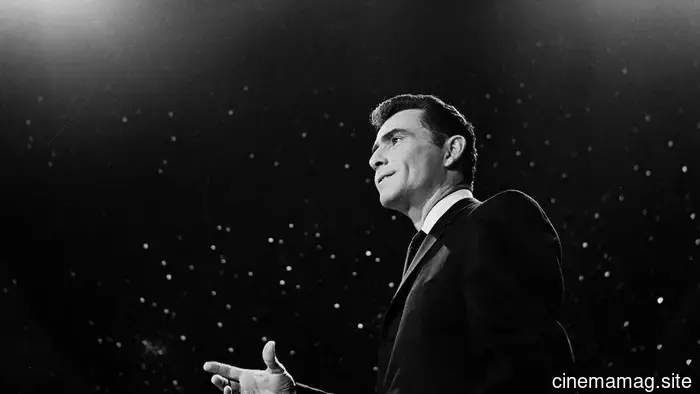 In New Doc, Rod Serling Illustrates From Beyond the Grave How We Came to Exist in The Twilight Zone.
Long before he developed The Twilight Zone, Rod Serling attempted to narrate a tale influenced by Emmet Till, the Black teenager who was lynched in Mississippi in 1955 for
In New Doc, Rod Serling Illustrates From Beyond the Grave How We Came to Exist in The Twilight Zone.
Long before he developed The Twilight Zone, Rod Serling attempted to narrate a tale influenced by Emmet Till, the Black teenager who was lynched in Mississippi in 1955 for
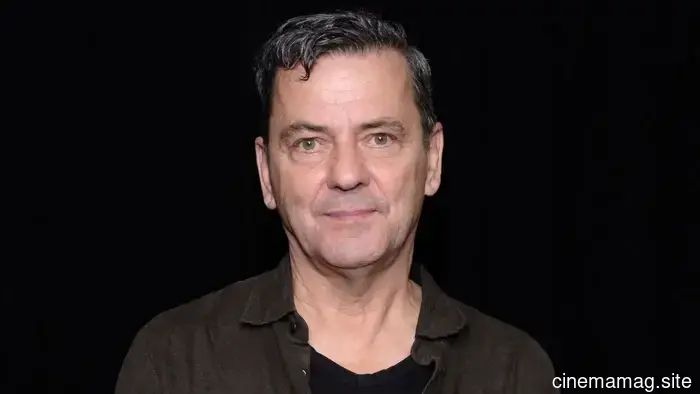 “The Film Is More Clever Than I Am”: Christian Petzold Discusses Miroirs No. 3
I have conducted interviews in a variety of locations: multiplexes, screening rooms, green rooms, distributor offices, post-production facilities, cafés, hotels—quite a few hotels—or any available space at the moment. (One discussion with a true architect of contemporary cinema even took place in a coat closet.) Christian Petzold is the first to have expressed regret about the room. I observed
“The Film Is More Clever Than I Am”: Christian Petzold Discusses Miroirs No. 3
I have conducted interviews in a variety of locations: multiplexes, screening rooms, green rooms, distributor offices, post-production facilities, cafés, hotels—quite a few hotels—or any available space at the moment. (One discussion with a true architect of contemporary cinema even took place in a coat closet.) Christian Petzold is the first to have expressed regret about the room. I observed
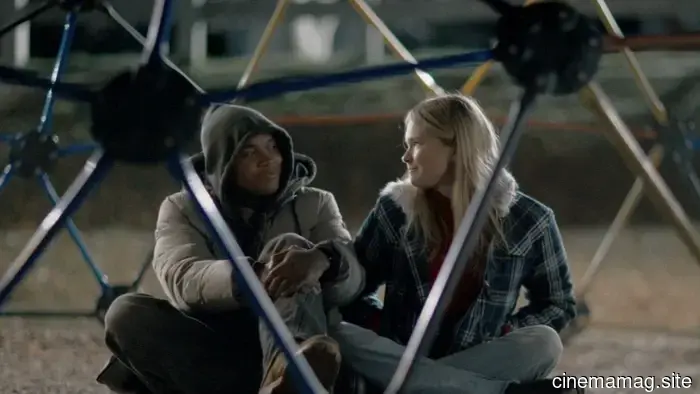 In Their Town, Ora Duplass, Mark Duplass, and Katie Aselton create a film aimed at uniting different generations.
"My parents certainly did their best to keep me out of the industry for as long as possible," says Ora Duplass, who delivers an impressive feature acting debut in Their.
In Their Town, Ora Duplass, Mark Duplass, and Katie Aselton create a film aimed at uniting different generations.
"My parents certainly did their best to keep me out of the industry for as long as possible," says Ora Duplass, who delivers an impressive feature acting debut in Their.
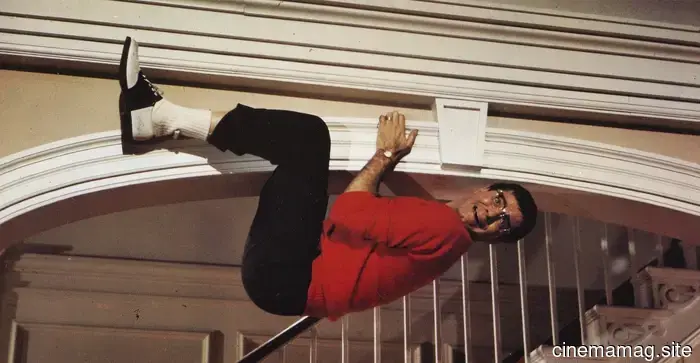 NYC Weekend Guide: Godard and Lewis, Hou Hsiao-hsien, The Man Who Shot Liberty Valance & More
NYC Weekend Watch is our weekly summary of repertory screenings. Anthology Film Archives presents Metaphysics of the Pratfall, showcasing films (mostly on 35mm) by Jean-Luc Godard and Jerry Lewis. The Museum of Modern Art features works by Kiarostami, Hou Hsiao-hsien, Milos Forman, and Bergman on 35mm as part of A View from the Vaults: The 1980s, along with films by Billy.
NYC Weekend Guide: Godard and Lewis, Hou Hsiao-hsien, The Man Who Shot Liberty Valance & More
NYC Weekend Watch is our weekly summary of repertory screenings. Anthology Film Archives presents Metaphysics of the Pratfall, showcasing films (mostly on 35mm) by Jean-Luc Godard and Jerry Lewis. The Museum of Modern Art features works by Kiarostami, Hou Hsiao-hsien, Milos Forman, and Bergman on 35mm as part of A View from the Vaults: The 1980s, along with films by Billy.
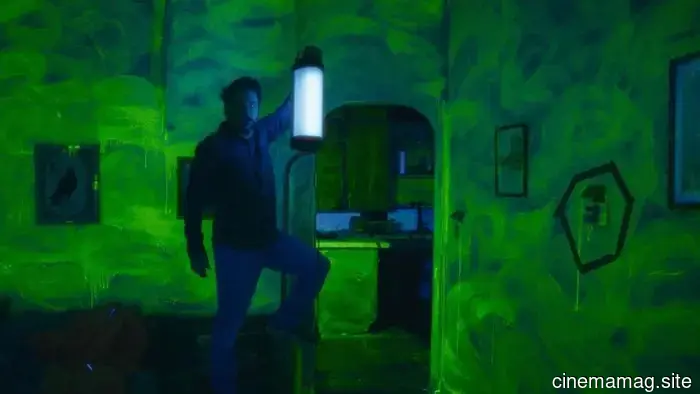 In Kill Me, Charlie Day portrays a man who is convinced that he did not attempt to take his own life.
Kill Me, a captivatingly intricate dark comedy featuring Charlie Day, had a path to the screen that was nearly as convoluted as the film itself, according to writer-director Peter Warren.
In Kill Me, Charlie Day portrays a man who is convinced that he did not attempt to take his own life.
Kill Me, a captivatingly intricate dark comedy featuring Charlie Day, had a path to the screen that was nearly as convoluted as the film itself, according to writer-director Peter Warren.
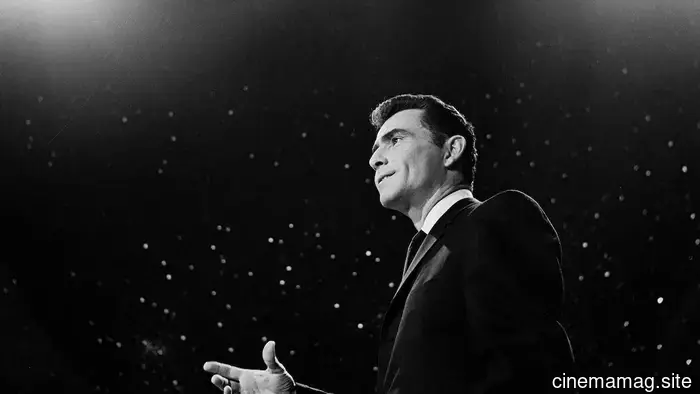 In New Doc, Rod Serling Clarifies From Beyond the Grave How We Found Ourselves Living in The Twilight Zone
Long before he developed The Twilight Zone, Rod Serling attempted to craft a narrative influenced by Emmet Till, the African American teenager who was lynched in Mississippi in 1955 for
In New Doc, Rod Serling Clarifies From Beyond the Grave How We Found Ourselves Living in The Twilight Zone
Long before he developed The Twilight Zone, Rod Serling attempted to craft a narrative influenced by Emmet Till, the African American teenager who was lynched in Mississippi in 1955 for
In Kill Me, Charlie Day portrays a man who is convinced that he did not attempt to take his own life.
Kill Me, an intricately woven dark comedy featuring Charlie Day, took a path to the screen that was nearly as convoluted as the movie itself, according to writer-director Peter Warren.