
.jpeg)
Film Review – Blue Heron (2025)
**Blue Heron, 2025.**
**Written and Directed by Sophy Romvari.**
**Starring Eylul Guven, Iringó Réti, Ádám Tompa, Edik Beddoes, Amy Zimmer, Liam Serg, Preston Drabble, Lucy Turnbull, and Jecca Beauchamp.**
**SYNOPSIS:**
A family of six moves into a new home on Vancouver Island, revealing internal dynamics through the viewpoint of the youngest child. In writer/director Sophy Romvari’s introspective and deeply personal film set in the 1990s, young Sasha (Eylul Guven) asks her mother (Iringó Réti) if her friends can come over to play outside during a warm summer filled with swimming and water balloons, only to be told it’s not a suitable idea. It's potentially "embarrassing," especially with her older brother Jeremy (the eldest child, portrayed by the enigmatic Edik Beddoes) whose behavioral disorder is becoming increasingly erratic and dangerous.
Beyond simply depicting this condition and the insufficient support from psychologists and social services, Blue Heron tells the story through the child’s perspective as she overhears her parents' discussions. Her father (played by Ádám Tompa) remains absorbed in his computer work, avoiding the family’s turmoil until he can no longer do so. Midway through, Romvari introduces a contemporary experimental layer that re-examines past experiences through the adult Sasha (now played by Amy Zimmer), who creates films in an effort to understand her brother and their tumultuous relationship.
The film explores a child’s first encounter with a disability or condition that disrupts socially acceptable behaviors, highlighting the frustrations of navigating such challenges at a young age, especially during an era when adults lacked clear answers. This is contrasted with fleeting happy memories, the stark reality, regret, and an adult outlook. The narrative beautifully intertwines childhood memories with adult reflections, crafting an emotionally resonant experience.
The film benefits from striking cinematography by Maya Bankovic, which goes beyond merely depicting family interactions through Sasha. It includes tracking shots from an outdoor vantage point that follow characters across the home, adding a deep personal context to the narrative. The visuals often incorporate reflections in various scenes, including moments where characters mirror each other or evoke eerie ghost-like duplications of faces. This filmmaking approach enhances the reflexive quality of the story, provoking thoughts on whether more could have been done to assist Jeremy.
Jeremy, who is nearly nonverbal and presents as emotionally detached, is portrayed with depth rather than as a mere stereotype. His character transforms throughout the film, moving between gentle moments with Sasha at the beach and alarming outbursts that escalate into threats of violence. Notably, the film wisely keeps these threats offscreen to avoid using them for cheap suspense; the focus is not on whether he will act on his impulses.
The performances throughout are layered and remarkable, but it is the inventive turn in the second half that truly makes Blue Heron an original work. It dives deep into the exploration of a condition and a child's formative experiences with it while revealing how these circumstances fracture family dynamics, ultimately reflecting on memory, sibling connections, and systemic shortcomings.
**Flickering Myth Rating – Film: ★ ★ ★ ★ / Movie: ★ ★ ★ ★**
Robert Kojder
.jpg)
.jpg)
.jpg)
.jpg)
Other articles
.jpeg) 4K Ultra HD Review – The Killer (1989)
The Killer, released in 1989 and directed by John Woo, features performances by Chow Yun-Fat, Danny Lee, Sally Yeh, Barry Wong, Kenneth Tsang, and Chu Kong. SYNOPSIS: An assassin takes on one final assignment to finance a procedure to regain his sight…
4K Ultra HD Review – The Killer (1989)
The Killer, released in 1989 and directed by John Woo, features performances by Chow Yun-Fat, Danny Lee, Sally Yeh, Barry Wong, Kenneth Tsang, and Chu Kong. SYNOPSIS: An assassin takes on one final assignment to finance a procedure to regain his sight…
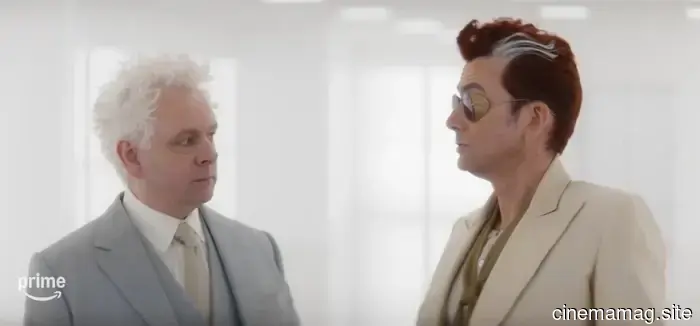 Aziraphale and Crowley make their comeback in the trailer for Good Omens Season 3.
Prime Video has released a trailer for the conclusion of its highly praised fantasy comedy series, Good Omens, in which Aziraphale (Michael Sheen) and Crowley (David Tennant) must address their relationship...
Aziraphale and Crowley make their comeback in the trailer for Good Omens Season 3.
Prime Video has released a trailer for the conclusion of its highly praised fantasy comedy series, Good Omens, in which Aziraphale (Michael Sheen) and Crowley (David Tennant) must address their relationship...
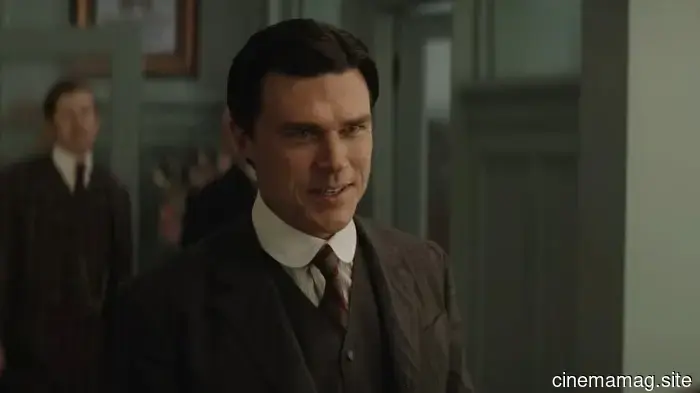 Finn Wittrock is renowned for his role as a chocolate magnate in the trailer for the Hershey biopic.
Angel Studios has put together the trailer for Hershey, which tells the true story of Milton S. Hershey, the real-life Willy Wonka and the founder of the well-known chocolate empire. Directed by Mark Waters (Mr. Popper’s…
Finn Wittrock is renowned for his role as a chocolate magnate in the trailer for the Hershey biopic.
Angel Studios has put together the trailer for Hershey, which tells the true story of Milton S. Hershey, the real-life Willy Wonka and the founder of the well-known chocolate empire. Directed by Mark Waters (Mr. Popper’s…
 Mondo introduces He-Man 2.0 as part of its sixth scale figure collection for Masters of the Universe.
Mondo has revealed its upcoming sixth scale figure for Masters of the Universe, introducing He-Man 2.0, a deluxe edition of the Champion of Eternia. This figure includes a variety of accessories, including interchangeable...
Mondo introduces He-Man 2.0 as part of its sixth scale figure collection for Masters of the Universe.
Mondo has revealed its upcoming sixth scale figure for Masters of the Universe, introducing He-Man 2.0, a deluxe edition of the Champion of Eternia. This figure includes a variety of accessories, including interchangeable...
.jpeg) 4K Ultra HD Review – The Killer (1989)
The Killer, 1989. Directed by John Woo. Featuring Chow Yun-Fat, Danny Lee, Sally Yeh, Barry Wong, Kenneth Tsang, and Chu Kong. SUMMARY: An assassin takes on one final assignment to afford a surgery to regain someone's vision…
4K Ultra HD Review – The Killer (1989)
The Killer, 1989. Directed by John Woo. Featuring Chow Yun-Fat, Danny Lee, Sally Yeh, Barry Wong, Kenneth Tsang, and Chu Kong. SUMMARY: An assassin takes on one final assignment to afford a surgery to regain someone's vision…
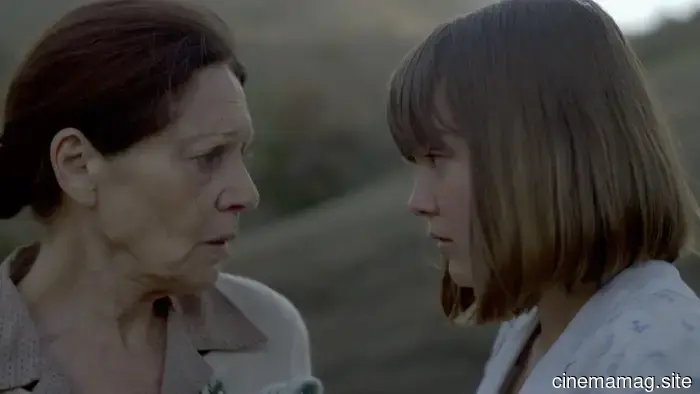 In the gripping 'Lineage,' Michelle West uncovers hidden family secrets.
Recently, Michelle West requested her Aunt Carol to share some family stories. The tales her aunt recounted inspired West's intriguing new short film.
In the gripping 'Lineage,' Michelle West uncovers hidden family secrets.
Recently, Michelle West requested her Aunt Carol to share some family stories. The tales her aunt recounted inspired West's intriguing new short film.
Film Review – Blue Heron (2025)
Blue Heron, 2025. Written and directed by Sophy Romvari. Featuring performances by Eylul Guven, Iringó Réti, Ádám Tompa, Edik Beddoes, Amy Zimmer, Liam Serg, Preston Drabble, Lucy Turnbull, and Jecca Beauchamp. SYNOPSIS...