
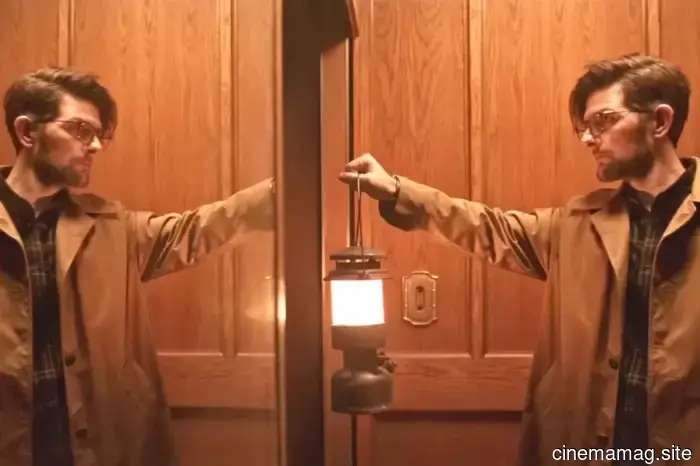
Hokum Review: Adam Scott Finds Himself Stuck in a Disappointing Horror Film
Anyone familiar with Irish filmmaker Damian McCarthy's work recognizes him as one of the most intriguing new figures in horror. His overlooked debut, Caveat, was a moody ghost story that highlighted his skill in crafting unsettling visuals and intensely suspenseful moments. However, it was his chilling second feature, Oddity, that truly gained him recognition within the genre community. Given that he produced one of the scariest films in recent years, it's not surprising that he caught the attention of a company like NEON, which jumped onboard for his latest feature, Hokum. This marks McCarthy’s largest production to date, especially with Adam Scott taking the lead role, which suggests that Hokum would provide ample opportunity for the director to create more memorable frights. Instead, the film feels like a remix of McCarthy's earlier works, retreading familiar territory with a heavier touch, leading to a somewhat disappointing experience.
What's particularly disheartening is that McCarthy’s strengths are still apparent throughout Hokum, albeit in fleeting moments. Much of what made Caveat and Oddity refreshing in modern horror was their grounding in folklore and mythology. Current trends tend to prioritize metaphor and allegory, which often result in horror that feels too tailored to its characters. Villains frequently appear as personalized challenges for protagonists to conquer, leading to self-contained narratives limited to broader themes such as grief and trauma. In contrast, McCarthy's films feature spirits, witches, and curses that exist independently of the characters who encounter them. While characters carry their own troubled histories and hidden secrets, the boundaries separating our world from the supernatural are clearly defined.
This approach to horror storytelling harks back to basics, reminding us of a spiritual realm beyond our comprehension that can condemn us to a dire fate if we engage with it. In Hokum, the not-so-innocent Ohm Bauman (Scott), a successful but unhappy author, decides to scatter his parents' ashes at a secluded Irish inn filled with fond memories. From the moment he arrives, he proves to be rude to the staff, and his skepticism leads him to mock the hotel owner who keeps the honeymoon suite locked to hold a witch captive. Unsurprisingly, Ohm’s curiosity inevitably leads him to being trapped in the honeymoon suite, where a witch is eager to claim his soul.
Hokum takes its time to introduce the various characters around Ohm while revealing snippets of his troubled childhood and local legends. McCarthy uses this exposition to set the mood for upcoming scares, but for each eerie tale or ominous hotel decor (courtesy of production designer Til Frohlich, whose work is a standout), the screenplay tends to excessively emphasize certain ideas with clunky foreshadowing. For instance, when Jerry (David Wilmot), a drifter living in the woods who consumes magic mushrooms, discusses how psilocybin connects our world with the afterlife, it feels overly obvious as a hint at Hokum's perspective on the supernatural.
To complicate matters, the screenplay attempts to provide Ohm with a redemptive arc through a somewhat forced glimpse into his mind as he imagines the possible endings of his new book. While Scott can effortlessly portray a jerk, Hokum's treatment of his character development feels underwritten and overly schematic. Such frustrating decisions persist throughout the film, resulting in various plot threads fizzling out rather than weaving together cohesively. These elements tend to hinder the film when it should be building momentum.
That said, McCarthy’s directorial talent is typically robust enough to navigate the more contrived elements of his writing. Caveat features a peculiar setup where a man is offered a babysitting job under the condition that he is chained to a wall to prevent him from wandering off, which leads to some truly suspenseful scenes. Similarly, Oddity presents a psychic twin, an unsolved murder, a corrupt asylum psychiatrist, and a wooden golem, all of which converge to create some of the most terrifying moments in recent film history. Hokum includes a few effective jump scares and its recurring image of a demonic entity named Jack is likely to haunt viewers' nightmares (and credit to McCarthy for exercising restraint in using Jack compared to the marketing), but many of its frights feel too repetitive. The sight of something moving out of focus or a pale face emerging from darkness might be effective initially, but McCarthy revisits these tropes so often that they lose impact. This is especially disappointing after witnessing how adeptly McCarthy utilized a single, expansive room in Oddity, where the uncertainty of what might be lurking in the shadows kept the tension high; Hokum’s reliance on the same techniques limits its ability to fully utilize its setting.
For those who are new to McCarthy’s earlier works, Hokum might serve as a decent introduction to his style. However, his third exploration of a character trapped in seclusion with a supernatural presence is starting to feel formulaic, especially since this particular take doesn’t offer much
Other articles
.jpg) Film Review – Hokum (2026)
Hokum, 2026. Penned and Directed by Damian McCarthy. Features Adam Scott, Peter Coonan, David Wilmot, Florence Ordesh, Will O’Connell, Michael Patric, Brendan Conroy, Austin Amelio, Ezra Carlis…
Film Review – Hokum (2026)
Hokum, 2026. Penned and Directed by Damian McCarthy. Features Adam Scott, Peter Coonan, David Wilmot, Florence Ordesh, Will O’Connell, Michael Patric, Brendan Conroy, Austin Amelio, Ezra Carlis…
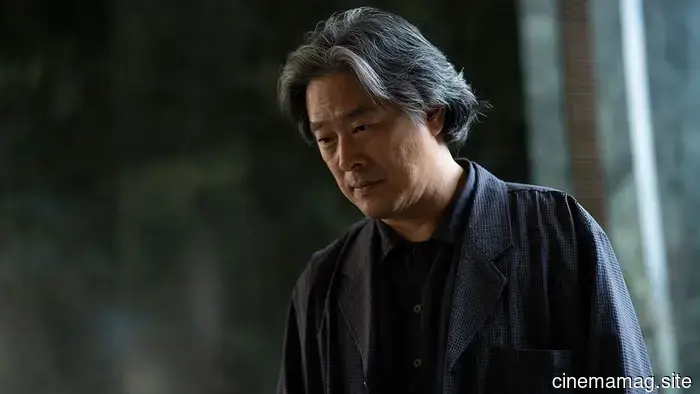 Park Chan-wook will direct Tang Wei, Matthew McConaughey, Austin Butler, and Pedro Pascal in The Brigands of Rattlecreek.
As the enthusiasm for superhero movies decreases, it appears that the western genre is experiencing a resurgence. With Steven Spielberg considering a new film in this category, Park Chan-wook has turned his attention to a project he has long been passionate about. The director of The Decision to Leave and No Other Choice will take the helm of The
Park Chan-wook will direct Tang Wei, Matthew McConaughey, Austin Butler, and Pedro Pascal in The Brigands of Rattlecreek.
As the enthusiasm for superhero movies decreases, it appears that the western genre is experiencing a resurgence. With Steven Spielberg considering a new film in this category, Park Chan-wook has turned his attention to a project he has long been passionate about. The director of The Decision to Leave and No Other Choice will take the helm of The
 The Best Casino Films of All Time: Our Top 10 Selections
From Casino Royale to Uncut Gems, we list the 10 best casino films ever created, along with what they illustrate about gambling, risk, and fortune.
The Best Casino Films of All Time: Our Top 10 Selections
From Casino Royale to Uncut Gems, we list the 10 best casino films ever created, along with what they illustrate about gambling, risk, and fortune.
.jpg) Film Review – Hokum (2026)
Hokum, 2026. Written and directed by Damian McCarthy. Featuring Adam Scott, Peter Coonan, David Wilmot, Florence Ordesh, Will O’Connell, Michael Patric, Brendan Conroy, Austin Amelio, and Ezra Carlis…
Film Review – Hokum (2026)
Hokum, 2026. Written and directed by Damian McCarthy. Featuring Adam Scott, Peter Coonan, David Wilmot, Florence Ordesh, Will O’Connell, Michael Patric, Brendan Conroy, Austin Amelio, and Ezra Carlis…
 Top Online Casinos in Australia for Real Money and Pokies - 5 Expert-Reviewed Australian Casinos - MovieMaker Magazine
Wild Tokyo offers an intriguing gambling experience for Australian players with its impressive range of pokies, generous bonuses, and quick cashouts. You can
Top Online Casinos in Australia for Real Money and Pokies - 5 Expert-Reviewed Australian Casinos - MovieMaker Magazine
Wild Tokyo offers an intriguing gambling experience for Australian players with its impressive range of pokies, generous bonuses, and quick cashouts. You can
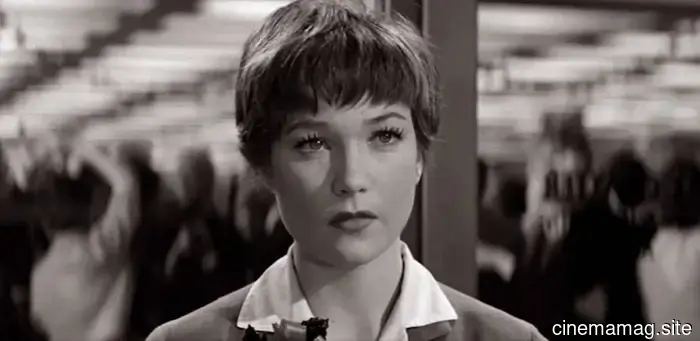 5 Stars from the 1950s Who Are Still Thriving
These stars from the 1950s are still thriving, including Shirley MacLaine, who recently celebrated her 92nd birthday.
5 Stars from the 1950s Who Are Still Thriving
These stars from the 1950s are still thriving, including Shirley MacLaine, who recently celebrated her 92nd birthday.
Hokum Review: Adam Scott Finds Himself Stuck in a Disappointing Horror Film
Those acquainted with the work of Irish filmmaker Damian McCarthy are likely aware that he is one of the most thrilling emerging talents in horror. His lesser-known first film, Caveat, was a atmospheric ghost tale that highlighted his skill in crafting disturbing visuals and intensely suspenseful moments. However, it was his chilling second feature, Oddity, that truly established his reputation.