
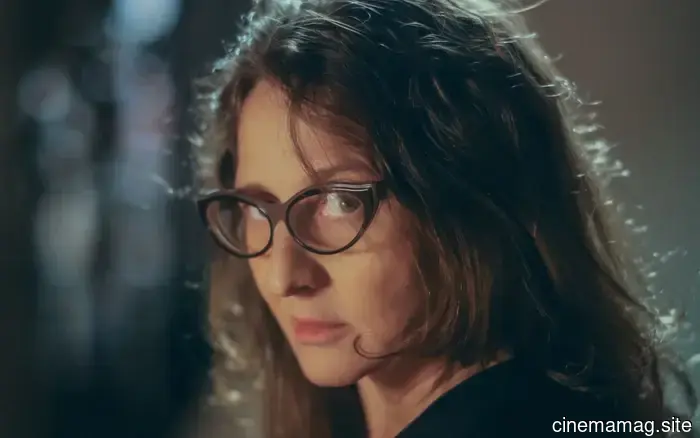
“Objectivity Cannot Be Achieved”: Lucrecia Martel Discusses the Creation of Her First Documentary
Lucrecia Martel is one of the foremost narrators of life on appropriated land. With wit and clarity, and without empty platitudes, her work exposes the falsehoods propagated by white settlers. She frequently notes that, although her films address the devastation of indigenous territory, they should not be categorized as indigenous films. This distinction is critical because, in her view, such films would need to be created and directed by community members. For over thirty years, through numerous short films and four narrative features, Martel critiques the privilege of the white bourgeoisie in Argentina, revealing the decay of their society. What is compelling about Martel is her refusal to engage in self-flagellation or performative allyship. By focusing the camera on her own people, including herself, she does not allow for the excuse that one can be absolved of responsibility. Regardless of one's pure intentions, the original sin of colonialism is an everlasting burden.
Shifting her focus to the real world, Martel steps into the realm of documentary filmmaking. Using archival footage, courtroom recordings, and breathtaking drone imagery of the Argentine landscape, *Our Land (Nuestra Tierra)* offers a penetrating exploration of the assassination of Javier Chocobar, a leader of the Chuschagasta people. A key advocate for his community's land rights, Chocobar recorded his own murder at the hands of three white settlers in 2009. Confronting them with a camera as they encroached on his land, he was tragically killed in an appalling act of settler violence. Now, nearly two decades later, Martel aims to unveil the overt corruption and disturbing double standards within the murder trial. While the Chuschagasta people are ensnared in bureaucratic complexities, questioning their very existence, the perpetrators remain unpunished. Martel enriches the documentary with her characteristic dark humor, highlighting the settlers’ inability to recognize the privilege and hypocrisy they embody. By simply allowing them to speak, she permits them to ensnare themselves in their own words. Furthermore, her ongoing interest in cinematic language as a means of exploring communication is evident, particularly in a striking moment when a bird collides with her drone, as if the land itself is urging, "Get out."
As *Our Land* prepares for its release this Friday, Lucrecia Martel and I sat down to discuss the film, her fresh beginnings with each project, the joy found in indigenous culture, the newly restored version of *The Headless Woman*, and much more.
Thanks to Cordelia Montes for the interpretation.
**The Film Stage**: While *Our Land* revolves around themes prevalent in your overall work, it marks your first foray into documentary. Does your approach shift when entering this genre?
**Lucrecia Martel**: I feel like every time I create a film, I begin anew. I’m not sure if it’s due to the significant gaps between my projects, but it consistently feels like my debut. Certainly, with a topic and material like this, it has compelled me to reconsider cinema and history as intertwined narratives. Thus, it’s unavoidable that I modify my approach.
At first glance, one might categorize this as an indigenous film, yet you resist that label. Can you elaborate on that perspective and how you intertwine their narrative with the folly of the white settlers?
I believe it was beneficial that I didn’t need to exert much effort to reveal the arbitrary nature and the lies plaguing land appropriation. I don’t view this as an indigenous film because, for it to qualify as such, the entire process would need to be guided by an indigenous community. It really delves into a profound issue in Argentine history, particularly our failure to recognize ourselves as an indigenous nation, which we genuinely are to a significant extent.
Were the Chuschagasta community hesitant about you coming forward to share their story?
Absolutely. It necessitated extensive discussions back and forth, often fraught with challenges. At one point, the community believed the film could expedite the trial process. Their references were primarily limited to news stories or brief documentary experiences, and they hadn’t considered someone would accurately tell their story. I think they were unaware of the deeper levels a documentary could achieve. We discussed this extensively, but I don’t believe it was fully grasped until we collectively viewed the final product.
You deliberately avoid rendering this solely a painful experience. We witness the Chuschagasta people thriving and finding joy in archival images and their current lives. You do not linger on their suffering.
I was quite anxious that this could be interpreted as merely historical. In Argentina, discussions about indigenous narratives often focus on the past. I wanted it to feel very contemporary and even a bit forward-looking. Typically, when we approach the indigenous narrative, it’s usually seen through a lens of grieving after an incident. We rarely delve into who these families are or their reasons for being there. There’s an automatic
Other articles
 The Scarecrow is now part of Mezco Toyz’s Batman: The Animated Series One:12 Collective line with a new figure release.
Mezco Toyz has unveiled promotional images for its One:12 Collective Scarecrow figure, drawing inspiration from the villain's look in the classic Batman: The Animated Series. The collectible is…
The Scarecrow is now part of Mezco Toyz’s Batman: The Animated Series One:12 Collective line with a new figure release.
Mezco Toyz has unveiled promotional images for its One:12 Collective Scarecrow figure, drawing inspiration from the villain's look in the classic Batman: The Animated Series. The collectible is…
 Paul Reubens Shines in The Crown, Exploring Shadows and the Quest for Identity
Paul Reubens and Jasbir (JB) Singh Ghuman formed a friendship when the Pee-wee Herman actor watched Ghuman's 2010 movie Spork and reached out to praise it. Ghuman
Paul Reubens Shines in The Crown, Exploring Shadows and the Quest for Identity
Paul Reubens and Jasbir (JB) Singh Ghuman formed a friendship when the Pee-wee Herman actor watched Ghuman's 2010 movie Spork and reached out to praise it. Ghuman
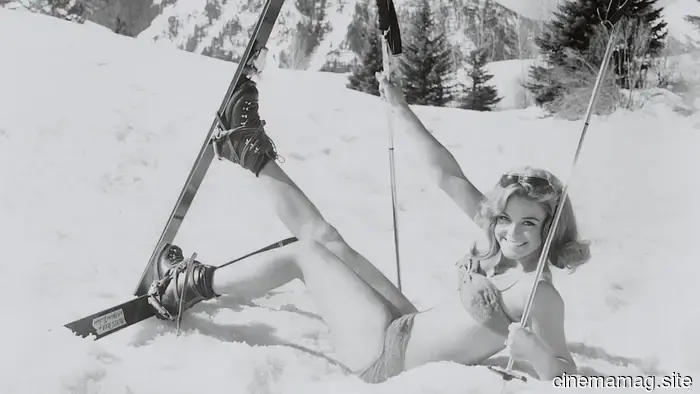 Our Top 12 Ski Resort Films
Here are our top 12 movies set in ski resorts.
Our Top 12 Ski Resort Films
Here are our top 12 movies set in ski resorts.
 Trailer for the romantic comedy One Night Only featuring Monica Barbaro and Callum Turner.
Universal Pictures has unveiled a trailer for One Night Only, a romantic comedy directed by Will Gluck (Easy A). The film features Monica Barbaro and Callum Turner in the roles of Allie and Owen, a couple yearning for love.
Trailer for the romantic comedy One Night Only featuring Monica Barbaro and Callum Turner.
Universal Pictures has unveiled a trailer for One Night Only, a romantic comedy directed by Will Gluck (Easy A). The film features Monica Barbaro and Callum Turner in the roles of Allie and Owen, a couple yearning for love.
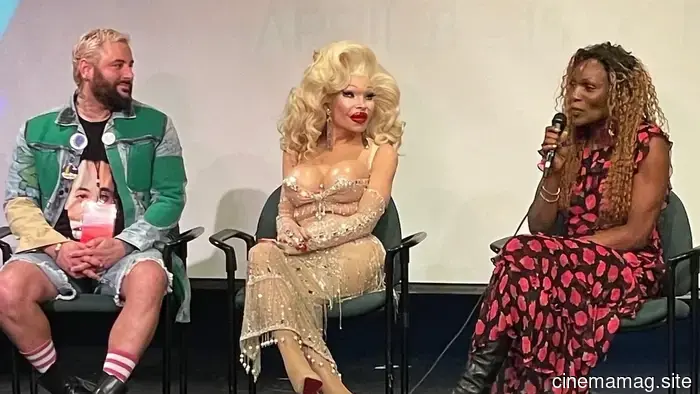 Paul Reubens Shines in The Crown, Exploring Shadows and the Quest for Identity
Paul Reubens and Jasbir (JB) Singh Ghuman developed a friendship after the Pee-wee Herman actor reached out to Ghuman to praise his 2010 movie Spork. Ghuman
Paul Reubens Shines in The Crown, Exploring Shadows and the Quest for Identity
Paul Reubens and Jasbir (JB) Singh Ghuman developed a friendship after the Pee-wee Herman actor reached out to Ghuman to praise his 2010 movie Spork. Ghuman
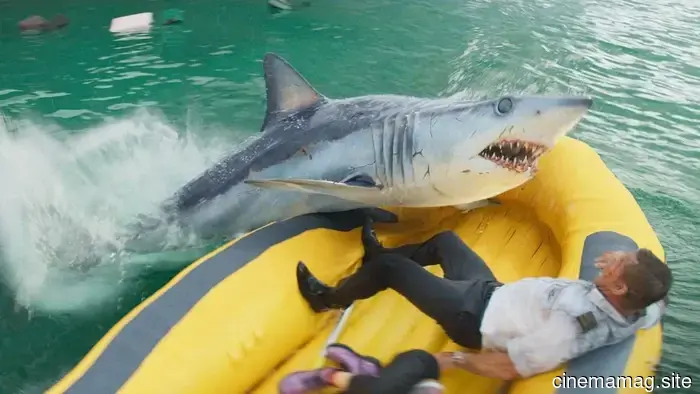 Deep Water Review: Renny Harlin Returns to Fundamentals in a Film Blending Airplane Catastrophe with Shark Thriller Elements
Reentering shark-infested waters a quarter of a century after Deep Blue Sea became a staple on cable and streaming, Renny Harlin's Deep Water seems to belong to a different time, for better or worse. Featuring a cast filled with clichéd yet sincerely portrayed archetypes and delivering excitement in a straightforward roller-coaster style, this blend of airplane disaster and shark thriller could easily fit into a
Deep Water Review: Renny Harlin Returns to Fundamentals in a Film Blending Airplane Catastrophe with Shark Thriller Elements
Reentering shark-infested waters a quarter of a century after Deep Blue Sea became a staple on cable and streaming, Renny Harlin's Deep Water seems to belong to a different time, for better or worse. Featuring a cast filled with clichéd yet sincerely portrayed archetypes and delivering excitement in a straightforward roller-coaster style, this blend of airplane disaster and shark thriller could easily fit into a
“Objectivity Cannot Be Achieved”: Lucrecia Martel Discusses the Creation of Her First Documentary
Lucrecia Martel stands out as one of our most insightful chroniclers of life on appropriated land. With her sharp wit and clear vision, and devoid of empty clichés, her work exposes the truths behind white settler narratives. She frequently mentions that although her films address the devastation of Indigenous territories, she does not classify them as Indigenous films. This distinction holds significance for her, as it reflects her viewpoint that these