
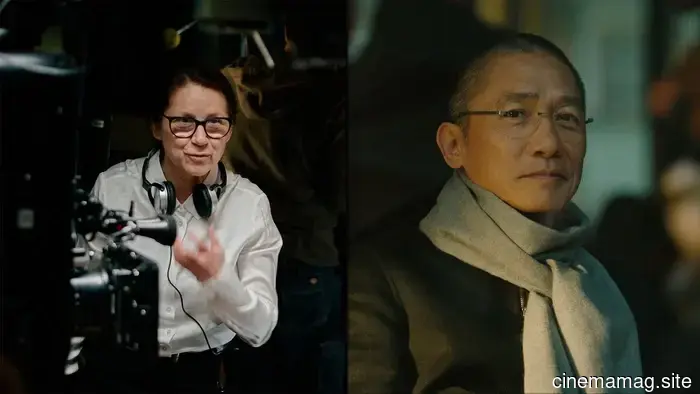
Silent Friend Director Ildikó Enyedi on Portraying a Tree’s Viewpoint and the Condition of the Soul
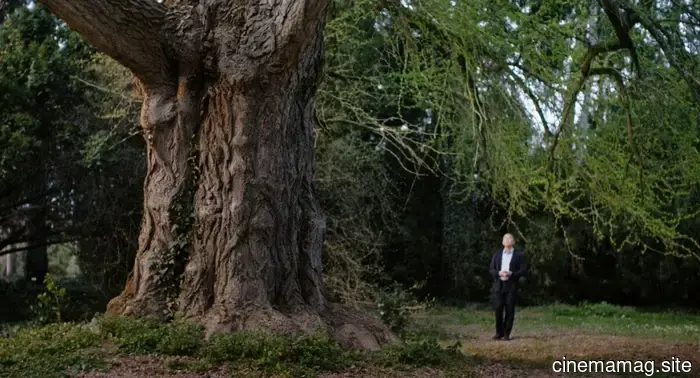
In **Silent Friend**, characters from three different time periods engage with the surrounding nature. In 1908, Grete (Luna Wedler) aspires to study medicine at a time when women were barred from attending university, and photography aids her in revealing patterns in the natural world. In the 1970s, a geranium captivates Hannes (Enzo Brumm) in transformative ways. In the modern era, a scientist (Tony Leung) looks for ways to communicate with a ginkgo tree.
Hungarian writer and director Ildikó Enyedi has previously played with genre conventions, blending drama and humor with narratives that mix elements of science fiction and documentary. **Silent Friend** presents an open-ended narrative that defies straightforward interpretations. Enyedi challenges contemporary storytelling by steering clear of conventional "if/then" plot structures. Her films possess a depth and intellectual richness that is increasingly rare in cinema today.
We discussed at the Busan International Film Festival topics such as exploring a tree’s perspective, creating outsider characters, the timeline spanning a century, an emotionally driven cinematographic approach, and more. Enjoy the conversation ahead of the limited U.S. release set for this Friday.
**The Film Stage**: Let's begin with the script. Did you always plan to incorporate different eras and storylines?
**Ildikó Enyedi**: Yes, that was my original vision. Human lifespans are drastically shorter compared to trees, and our life rhythms are fundamentally different. We have rapid heartbeats and breathe approximately 50 times per minute, while trees perform one inhale and one exhale each day. One primary goal of this film is to glimpse a tree's perspective, its own reality. The concept of lifespan and time perception is fundamental, and I wanted to illustrate this by capturing three moments in a tree's long life.
This isn't the first instance where non-human elements play a role in my work. In all my films, without a specific ideological aim, animals frequently hold significant positions. In several films, plants also play key parts. In the nineties, I created **Magic Hunter**, which focused on an oak tree over a span of 600 years.
A ginkgo tree is the central figure here.
Indeed, ginkgos cannot be very old in Europe, as they were introduced only in the mid-18th century. This species is nearly extinct, with some instances remaining in small regions of China and Japan. Their situation resembles that of redwoods; once, the entire planet was covered in various types of ginkgos. Today's ginkgos are living fossils, devoid of their natural predators for millions of years. They are incredibly resilient, thriving even in heavily polluted environments. Consequently, they've reemerged worldwide, mainly in urban areas.
In New York, I've seen Asian individuals collecting fruit from these trees.
I once tried it, but it was so unpalatable that I couldn't continue. Chewing a ginkgo leaf is more pleasant.
They're said to enhance memory.
Yes, the leaves contain compounds that aid blood circulation and more. However, it's a relatively lonely being, even in the botanical garden. In fact, the plants around it almost led to its extinction as they possess a far simpler and more effective mode of reproduction compared to the ginkgo's antiquated reproductive methods. Although I'm simplifying it a bit, the ginkgo owes its global presence to humans, who found it appealing and took it everywhere.
In the wild, the ginkgo is somewhat of an outcast or a solitary figure.
Very much so.
Much like the characters in your film.
Absolutely. Though for different reasons, all three human characters in the story are outsiders.
I found it intriguing that, in each narrative, the outsider needed a collaborator to assist them.
That's a fascinating observation. As a side note, I'm currently working on fairy tale therapy for my next film. In every fairy tale, the hero has a helper, which represents a part of oneself—the part that is lacking. Analyzing fairy tales reveals that the helper often provides as much, if not more, insight than the hero. So it's interesting to note that in **Silent Friend**, these "facilitators" hold significant meaning.
In each story, the protagonists confront an established system.
Absolutely. The world we perceive as objective and unchanging is actually shaped not just by our senses but also by social constructs. That’s why I selected these specific historical moments. Although slightly over a century apart, each illustrates a shift in perception, in how we interact with the world. Our everyday experiences and our understanding of existence were profoundly altered during these times. The heroes in the film actively navigate these changes.
That's what makes your film so compelling: these realizations unfold across various eras. You include some biological footage; did you film that yourself or was it sourced from an archive?
Yes, some of the microscopic footage was shot by us. Actually, the mother of our cinemat
Other articles
.jpeg) Film Review – Mortal Kombat II (2026)
Mortal Kombat II, set to release in 2026, is directed by Simon McQuoid. The cast includes Karl Urban, Adeline Rudolph, Jessica McNamee, Josh Lawson, Ludi Lin, Mehcad Brooks, Tati Gabrielle, Lewis Tan, Damon Herriman, Chin Han, and Tad…
Film Review – Mortal Kombat II (2026)
Mortal Kombat II, set to release in 2026, is directed by Simon McQuoid. The cast includes Karl Urban, Adeline Rudolph, Jessica McNamee, Josh Lawson, Ludi Lin, Mehcad Brooks, Tati Gabrielle, Lewis Tan, Damon Herriman, Chin Han, and Tad…
.jpg) Film Review – Tuner (2025)
Tuner, 2025. Directed by Daniel Roher. Featuring Leo Woodall, Dustin Hoffman, Havana Rose Liu, Tovah Feldshuh, Jean Reno, Lior Raz, Nissan Sakira, C.S. Lee, Gil Cohen, and Rek Lee. SYNOPSIS: A skilled...
Film Review – Tuner (2025)
Tuner, 2025. Directed by Daniel Roher. Featuring Leo Woodall, Dustin Hoffman, Havana Rose Liu, Tovah Feldshuh, Jean Reno, Lior Raz, Nissan Sakira, C.S. Lee, Gil Cohen, and Rek Lee. SYNOPSIS: A skilled...
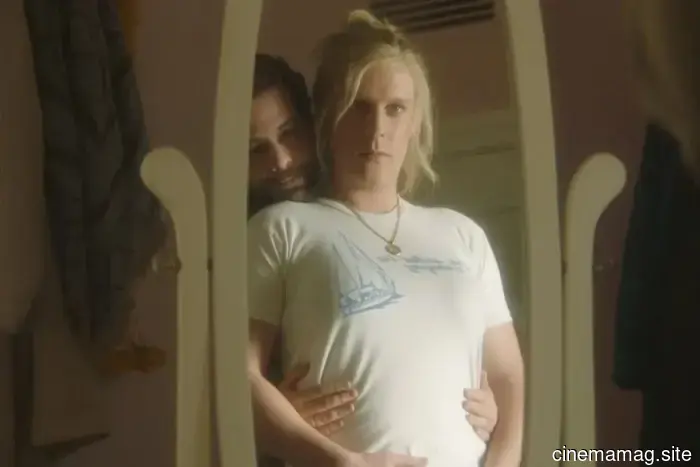 Maddie’s Secret Trailer: John Early Creates an Authentic Satire in His Directorial Debut
In one of the year's most remarkable tonal achievements, John Early's directorial debut Maddie's Secret––featuring the actor as a woman balancing her career aspirations, marriage, and a buried trauma––is impressively both comedic and touching. It blends satire with melodrama, revealing an emotional core that subtly resonates with the audience. The cast includes Kate Berlant, Eric Rahill,
Maddie’s Secret Trailer: John Early Creates an Authentic Satire in His Directorial Debut
In one of the year's most remarkable tonal achievements, John Early's directorial debut Maddie's Secret––featuring the actor as a woman balancing her career aspirations, marriage, and a buried trauma––is impressively both comedic and touching. It blends satire with melodrama, revealing an emotional core that subtly resonates with the audience. The cast includes Kate Berlant, Eric Rahill,
 Top Crypto Casinos of 2026: Ranking and Evaluating 5 Leading Bitcoin Casinos - MovieMaker Magazine
The popularity of crypto gambling has surged, yet many players continue to encounter common frustrations such as slow withdrawals, restricted payment options, and concerns about privacy.
Top Crypto Casinos of 2026: Ranking and Evaluating 5 Leading Bitcoin Casinos - MovieMaker Magazine
The popularity of crypto gambling has surged, yet many players continue to encounter common frustrations such as slow withdrawals, restricted payment options, and concerns about privacy.
.jpeg) Film Review – Mortal Kombat II (2026)
Mortal Kombat II, 2026. Directed by Simon McQuoid. Featuring Karl Urban, Adeline Rudolph, Jessica McNamee, Josh Lawson, Ludi Lin, Mehcad Brooks, Tati Gabrielle, Lewis Tan, Damon Herriman, Chin Han, Tad...
Film Review – Mortal Kombat II (2026)
Mortal Kombat II, 2026. Directed by Simon McQuoid. Featuring Karl Urban, Adeline Rudolph, Jessica McNamee, Josh Lawson, Ludi Lin, Mehcad Brooks, Tati Gabrielle, Lewis Tan, Damon Herriman, Chin Han, Tad...
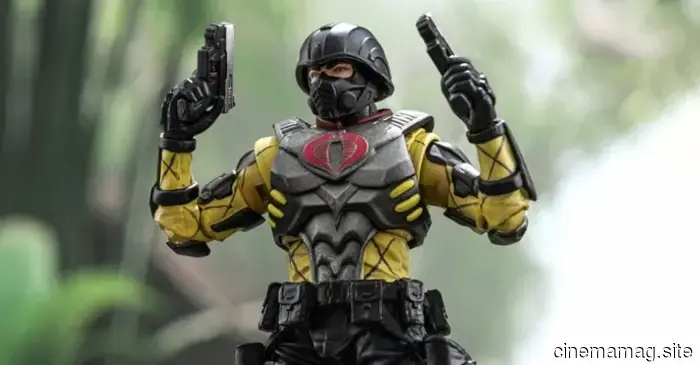 Python Patrol Trooper is added to Hiya Toys' G.I. Joe Exquisite Mini Series.
Prepare to grow your Cobra collection, as Hiya Toys has revealed that the Python Patrol Trooper will be joining its G.I. Joe Exquisite Mini Series with a brand new 1/18 scale figure that is now available for pre-order.
Python Patrol Trooper is added to Hiya Toys' G.I. Joe Exquisite Mini Series.
Prepare to grow your Cobra collection, as Hiya Toys has revealed that the Python Patrol Trooper will be joining its G.I. Joe Exquisite Mini Series with a brand new 1/18 scale figure that is now available for pre-order.
Silent Friend Director Ildikó Enyedi on Portraying a Tree’s Viewpoint and the Condition of the Soul
In Silent Friend, characters from three different time periods engage with the wildlife around them. In 1908, Grete (Luna Wedler) endeavors to pursue a medical education during an era when women were barred from attending college, using photography to reveal patterns in nature. In the 1970s, a geranium captivates Hannes (Enzo Brumm) in a way that alters the course of his life.