
Cannes Review: Jordan Firstman Emerges as a Director to Watch with Club Kid
It's never a good idea to make assumptions. Promotional materials circulating prior to Club Kid's lively Cannes premiere this week suggested it might be a New York downtown response to Mia Hansen-Løve’s Eden, but Jordan Firstman’s humorous, poignant, and deeply affecting directorial debut is equally a refreshing reinterpretation of the fatherhood subgenre that produced classics like Kramer vs. Kramer and Marriage Story, as well as Adam Sandler’s Big Daddy. This film promises and delivers ample scenes of drug use and raunchy humor, yet its emotional climax in the third act is as well-earned and impactful as the finest examples in cinema.
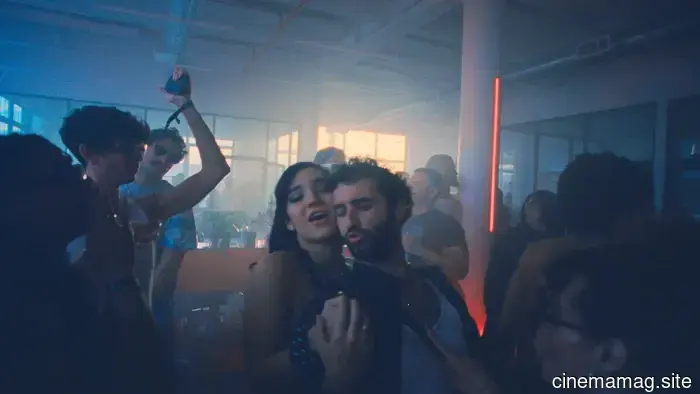
For those who have followed Firstman’s journey from Rotting in the Sun to I Love LA, this smooth transition to directing will be a pleasant revelation. It's noteworthy that the film premiered in Un Certain Regard, a section of the festival traditionally utilized as a proving ground for movie stars attempting to direct for the first time. The distinction of Firstman’s confident debut is that it feels more like the work of an innate talent than a novice. Just consider the opening sequence of Club Kid, which features a seamless and immersive "oner" shot by cinematographer Adam Newport-Berra (known for The Studio and The Last Black Man in San Francisco), taking us from the front seat of an Uber to the dancefloor of Club Labor, where Peter Green (played by Firstman) and his friends are welcomed like Henry Hill at the Copacabana. Set in 2016, the celebration is just beginning. However, the film quickly shifts to the present day, several mornings after the wild night—a bold choice marking the first hint of Club Kid’s broader themes.
The plot evolves a few scenes later with the sudden entry of Arlo (Reggie Absolom), a ten-year-old from London born during a drug-induced encounter between Peter and a British tourist that night. Here, Club Kid embarks on its unexpected excursion into the territory of those Hoffman and Sandler masterpieces, transforming into a narrative less focused on a fading party boy than on an inadequately prepared man confronting the realities of fatherhood for the first time. Familiar territory? Perhaps. Yet, to my knowledge, no other film in this genre has featured a scene where father and son duet on Ethel Cain at the piano, or the insight that fisting can be “lowkey spiritual,” or the advice that combining G and alcohol is seldom (if ever) a wise decision.
These moments, along with sharp, witty dialogue, contribute to what makes Club Kid a captivating and enjoyable experience—a film with a strong sense of place, authentic experiences, and filled with excellent music (featuring Arthur Russell and Elliott Smith) and vibrant characters. This includes Peter’s lively environment, which is populated with enough girls, gays, and theys to fill a film twice its size. The movie delightfully embraces this world of exuberant debauchery in its first half, making it all the more satisfying that, despite Arlo's arrival and Peter's inevitable decision to turn his life around, the film never scolds the lifestyle and people he is leaving behind. When a bleary-eyed Peter confesses to his coked-up business partner Sophie (Cara Delevingne) that he has resorted to dealing drugs at the club partly to keep the community safe, there’s more than a grain of truth to that—even if we know, according to the rules of screenwriting, that such choices will ultimately have consequences. As with any familiar genre film, you can anticipate the story's beats from a distance, but I embraced their arrival wholeheartedly.
This is complemented by a refreshing array of authentic, bustling streets and carefully chosen locations (a lunch scene at Balthazar, a stroll by the East River, and a beloved night shot of the city's skyline from a car window), positioning it among the best (at least from this observer's viewpoint) New York films of its kind since at least Past Lives. In a deceptively challenging lead role, Firstman uncovers an emotional range that aligns seamlessly with his innate comedic talents, supported by a cast that includes Babylon’s attractive Diego Calva as a love interest, seasoned actress Colleen Camp as an eccentric neighbor, and, of course, a who’s who of the downtown scene (watch for Nick Pinkerton). While Delevingne occasionally goes overboard with her performance and I could have done without Arlo’s DJ subplot (which, as Peter remarks, is indeed “lowkey corny”), Club Kid undeniably showcases the work of a mature, talented filmmaker who has much to express and the courage to lay it all bare.
Club Kid premiered at the 2026 Cannes Film Festival.

Other articles
 The Most Favored New Pokies Among Australians Right Now - MovieMaker Magazine
Modern pokies resemble miniature genre films with added bonus rounds.
The Most Favored New Pokies Among Australians Right Now - MovieMaker Magazine
Modern pokies resemble miniature genre films with added bonus rounds.
 The Most Popular New Pokies That Australians Are Playing Right Now - MovieMaker Magazine
New pokies seem like miniature genre films, complete with bonus rounds.
The Most Popular New Pokies That Australians Are Playing Right Now - MovieMaker Magazine
New pokies seem like miniature genre films, complete with bonus rounds.
 Exclusive Trailer and Poster for Lisandro Alonso’s Double Freedom Highlights a Significant Reunion
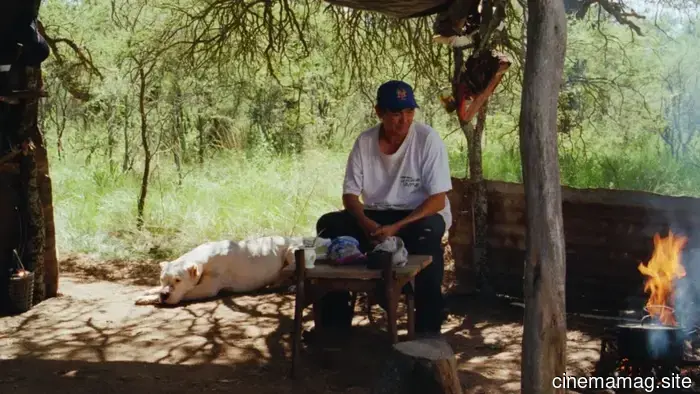
One of the most eagerly awaited premieres this year is a unique event for the Cannes Film Festival: a sequel. Completing a circle, Lisandro Alonso’s latest film is a continuation of his highly regarded debut, La libertad. Double Freedom (also known as La libertad doble) revisits woodcutter Misael (Misael Saavedra) after twenty-five years and is reported to convey a meta narrative about the
Exclusive Trailer and Poster for Lisandro Alonso’s Double Freedom Highlights a Significant Reunion
One of the most eagerly awaited premieres this year is a unique event for the Cannes Film Festival: a sequel. Completing a circle, Lisandro Alonso’s latest film is a continuation of his highly regarded debut, La libertad. Double Freedom (also known as La libertad doble) revisits woodcutter Misael (Misael Saavedra) after twenty-five years and is reported to convey a meta narrative about the
Cannes Review: Jordan Firstman Emerges as a Director to Watch with Club Kid
It’s always unwise to make assumptions. Promotional content circulating prior to Club Kid's lively Cannes premiere this week hinted at a New York downtown response to Mia Hansen-Løve’s Eden. However, Jordan Firstman’s humorous, poignant, and deeply affecting directorial debut serves not only as a new take on the underdeveloped father subgenre that has provided us with so much.