
Cannes Review: Ben’Imana Is a Striking Drama Exploring Enduring Sorrow
In Ben’imana, those responsible for genocide are being publicly tried, yet it often feels as though the families of the victims are required to advocate for their cause. Set in 2012, a generation after the 1994 horrors during which over half a million members of the Tutsi ethnic group were systematically and brutally slaughtered by forces of the Hutu-led government, this film is the first Rwandan entry in Cannes’ official selection. In the years that followed, leaders have commendably focused on fostering reconciliation among communities while ensuring that those who committed murder are held accountable. For the children born in the aftermath of the genocide, new friendships and relationships have emerged, with one young character proudly declaring, “our generation will not tolerate prejudice.” However, for those who experienced the atrocities or who still cling to propaganda, repairing relationships is an immense challenge, as survivors from different communities have vastly different interpretations of what transpired. Survivors are frequently urged to “forgive,” but how is that possible when those being forgiven are still hesitant to accept that a genocide occurred?
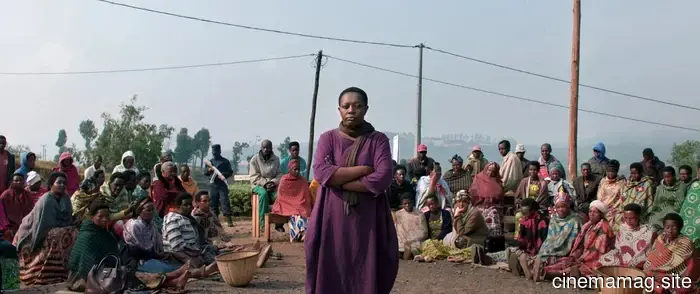
Clémentine U. Nyirinkindi portrays Veneranda, a survivor leading reconciliation efforts in her community, though her groups consist solely of women; as one participant notes, the men in their families are either dead or imprisoned. They come together for what essentially function as group therapy sessions to voice the scars from that dark era, but these discussions quickly encounter obstacles––mass walkouts occur after one victim's poignant account of assault is dismissed due to the use of the term genocide. Despite leading the charge for justice and healing, Veneranda struggles to hide her personal biases when her teenage daughter is expelled from school due to pregnancy––her boyfriend’s family comes from a different background, and as someone who suffered violent trauma during the genocide, she finds it difficult to accept a relationship that might revive those painful memories.
Director Marie Clémentine Dusabejambo’s film is challenging not solely due to the graphic depictions of violence inflicted on victims but because her screenplay (co-written with Delphine Agut) offers no straightforward resolution to the ongoing tensions between communities, even decades after the crimes. The repeated calls for victims to “forgive” become increasingly patronizing and counterproductive as the narrative unfolds, and the in-depth court testimonies detailing assaults and prolonged murders (of both adults and children) would test even the most forgiving individual’s spirit. While forgiveness may be necessary for the elders in a community to progress alongside their children, the structure of the courts—where references to specific ethnicities have been banned to focus on the crimes themselves—creates barriers to genuinely confronting these horrors. The genocide remains an ever-present elephant in the room, and Dusabejambo effectively portrays a polite society that has avoided addressing it head-on; only during the trial scenes do the lingering pain and suffering come to the forefront, featuring some of the most impactful courtroom moments seen since the resurgence of that film genre.
Ben’imana does not feature highly stylized sequences, but the common theme of genocide perpetrators and their families either deluding themselves or willingly downplaying—even outright denying—their crimes evokes Joshua Oppenheimer’s documentary The Look of Silence. There are no reflections of the infamous final scene from its companion documentary, The Act of Killing, where a war criminal regurgitated upon realizing his actions; even while awaiting sentencing after decades in prison, the defendant in the central trial still cannot accept any version of events that depicts him as a rapist or murderer. Dusabejambo instead takes a stark approach to the genocide by illuminating the distorted perspectives of those accountable, much like how Oppenheimer showcased a subject whose older brother was killed during the Indonesian mass killings, with only a younger daughter born years later expressing horror at the accounts. The seeds for a future that no longer denies past atrocities are present within Ben’imana, although both filmmakers tackle the same question: does generational accountability carry any weight if those who came before have yet to atone?
Journalist Omar El Akkad once remarked during the early days of the Gaza genocide that “one day, when it’s safe, when there’s no personal downside to calling a thing what it is, when it’s too late to hold anyone accountable, everyone will have always been against this.” This statement resonated due to the widespread hypocrisy among Western governments in recognizing clear crimes against humanity that were evident on social media, yet it could just as easily refer to past atrocities––the Rwandan genocide continued for as long as it did due to a lack of international intervention, even when media outlets were less reticent to label it a genocide. The crucial part of Akkad’s quote suggests that a reckoning will only occur “when it’s too late to hold anyone accountable,” a theme echoed here. Court sentences prove ineffective if the time served hasn’t led any of the war criminals to comprehend their actions and victims feel renewed pressure to forgive without any cultural reparations. While reconciliation efforts

Cannes Review: Ben’Imana Is a Striking Drama Exploring Enduring Sorrow
In Ben’Imana, those responsible for a genocide are facing public trial, yet it frequently seems like the victims’ families are the ones compelled to advocate for their cause. The first Rwandan film featured in Cannes' official selection takes place in 2012, a generation after the horrific events of 1994 when