
Cannes Review: Double Freedom Represents an Alluring Return for Lisandro Alonso
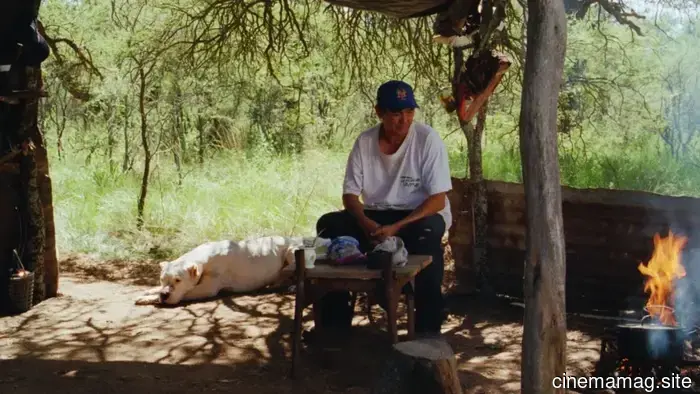
One of the more harmful tendencies in our discussion of cinema is the tendency to simplify films into measurable objects—evaluated based on how much or how little they contain. This perspective reveals more about our frustratingly narrow inclination to equate a film's value with the density of its plot than it does about the films themselves. It's an inadequate way to consider those works that defy the prevailing content-focused ideologies dominating much of today's screen offerings, demonstrating that a film can be far more than just a collection of events. Enter La Libertad (Freedom). In 2001, Lisandro Alonso made his debut on the international arthouse scene with a feature that possessed an almost disarming and enchanting simplicity; it was self-financed with family funds and filmed with friends, depicting a day in the life of a woodcutter in Argentina’s rural Pampas. Misael Saavedra portrayed himself, and Alonso recorded his daily life: chopping caldén trees, enjoying armadillo meat, and resting in a corrugated metal shack nestled in the forest. At that time, Argentina was experiencing a profound socioeconomic crisis, grappling with mass unemployment and civil unrest, and twenty-something Misael embodied a generation of youth who seemed to have lost faith in the future. However, interpreting the film politically would be imposing a reading that the straightforward nature of its presentation does not necessarily support: it simply shows a man going about his business, with Alonso inviting viewers to observe his existence.
A quarter-century later, the director revisits the theme with Double Freedom, following Misael, now in his fifties, as he continues his routine. Little has altered in an environment that appears stuck in time: the man’s hut remains standing, his Dogo Argentino still watching over the area, and he continues to spend days shaping trees into poles for neighbors building fences nearby. However, Double Freedom broadens the scope of its predecessor significantly. A late-night opening shot of Misael enjoying grilled armadillo, mirroring the long sequence that opened Freedom, might lead you to believe Alonso will revisit his initial film verbatim. But a twist comes early: Misael learns his sister Micaela has been spotted wandering the nearby village at night. After spending 15 years in a mental institution, he discovers that budget cuts are forcing the facility to close—he must care for her himself.
If you've seen Freedom, you might recall Misael mentioning Micaela during a phone conversation with a friend midway through, but Alonso casting Chilean actress Catalina Saavedra indicates that Double Freedom functions in a distinctly different manner. While Freedom's observational style leaned towards a documentary feel, this film occupies a more hybrid space. It begins as another unembellished portrayal of Misael's life, nearly Bazinian in its realism, but gradually transforms into a narrative that straddles the line between fact and fiction. Misael takes in his sister, who needs medication daily for her condition, and learns to navigate life alongside her. Still, Double Freedom manages to incorporate thoughtful moments into her fictional storyline, and this blending of elements becomes its most captivating feature.
Misael, having taken on roles in Alonso's projects since their first collaboration, remains an untrained actor, and his subdued, observant performance creates an interesting contrast with Saavedra’s, whose vibrant engagement with her new surroundings feels like that of someone experiencing a new world for the first time. This film embodies an amalgamation of styles. Unlike many contemporary directors, Alonso finds a balance between those who adhere to strict controls and those who let intuition guide them. One of Double Freedom’s most appealing qualities is its dual feeling of being meticulously planned and spontaneously improvised, simultaneously staged and receptive to the unpredictability of life. Like its predecessor, it navigates the secular and spiritual, aligning with the practical activities of the man at its core—working, eating, sleeping—while also embracing the mysteries of his surroundings. Lensed by Cobi Migliora, the first film subtly approached Malick’s style, while this sequel features moments of poetic subjectivity reminiscent of The Tree of Life’s own Way of Grace. A scene depicting Micaela’s hands caressing the bark of a caldén tree during magic hour elevates the experience into a mystical dimension; a world of wonders awaits those who know how to see.
Your response to the unique beauty of Double Freedom does not hinge on your familiarity with its predecessor or Alonso’s body of work. Instead, it depends on your openness to a different filmmaking approach, one that is overtly subversive in its preference for direct emotional connection over narrative, unafraid to request your time in exchange for its insights. The term “slow cinema” has often been applied to Alonso’s work from the beginning. While that may technically apply—though the pacing here is quicker than that of Freedom, and the shots are generally shorter—I find it to be a frustratingly

Other articles
 Cannes Review: Adèle Exarchopoulos Demonstrates Her Unstoppable Talent in the Familiar Another Day
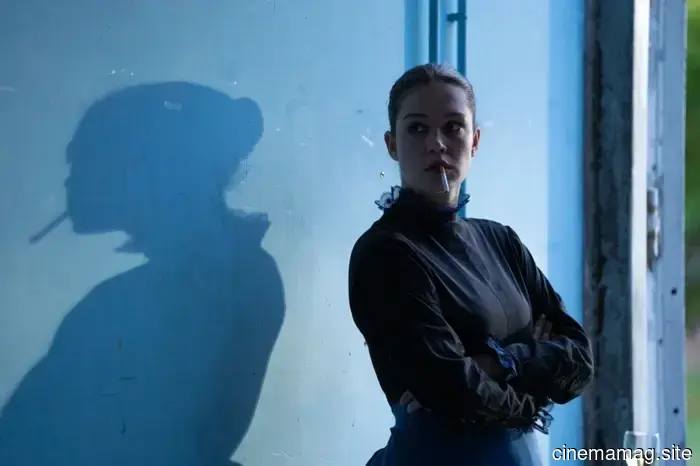
Her name is Garance (Adèle Exarchopoulos), and she takes pride in it: in being a feminist, a liberated woman, surrounded by supportive friends, a loving family, and the most affectionate partner imaginable. However, she is not content with her past. Garance is an alcoholic who is now practicing the subtle art of abstaining. It required her
Cannes Review: Adèle Exarchopoulos Demonstrates Her Unstoppable Talent in the Familiar Another Day
Her name is Garance (Adèle Exarchopoulos), and she takes pride in it: in being a feminist, a liberated woman, surrounded by supportive friends, a loving family, and the most affectionate partner imaginable. However, she is not content with her past. Garance is an alcoholic who is now practicing the subtle art of abstaining. It required her
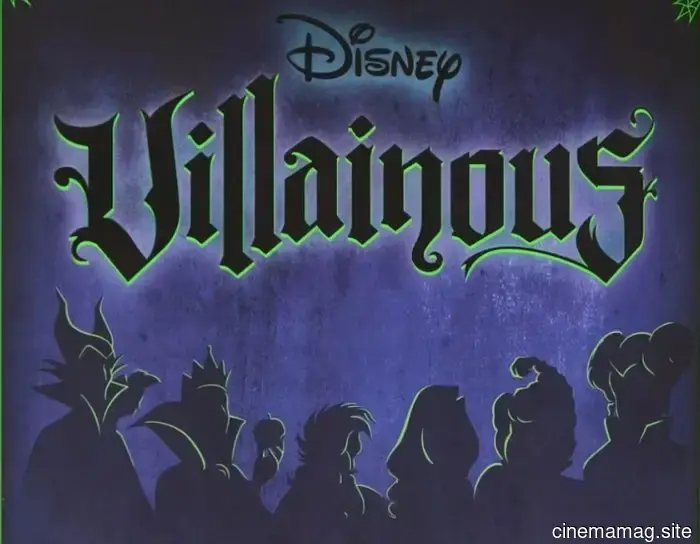 The forthcoming Disney Villainous: Darkness Brewing set introduces the Sanderson Sisters.
Ravensburger has announced information about the upcoming set for their popular Disney Villainous game series, set to be released later this year. Darkness Brewing shifts from the series' usual two-Villain format...
The forthcoming Disney Villainous: Darkness Brewing set introduces the Sanderson Sisters.
Ravensburger has announced information about the upcoming set for their popular Disney Villainous game series, set to be released later this year. Darkness Brewing shifts from the series' usual two-Villain format...
 Exclusive Trailer for Bouchra Unveils a Celebrated, Intimate Hybrid Animation
If Hollywood's animated films have felt somewhat uninspired recently, consider exploring the realm of independent cinema for one of the year's most creative animations. Meriem Bennani and Orian Barki's animation/live-action blend, Bouchra, marks their debut feature. It weaves together sensitive storytelling, documentary styles, and a cast of anthropomorphized animated characters to depict a multifaceted relationship between a
Exclusive Trailer for Bouchra Unveils a Celebrated, Intimate Hybrid Animation
If Hollywood's animated films have felt somewhat uninspired recently, consider exploring the realm of independent cinema for one of the year's most creative animations. Meriem Bennani and Orian Barki's animation/live-action blend, Bouchra, marks their debut feature. It weaves together sensitive storytelling, documentary styles, and a cast of anthropomorphized animated characters to depict a multifaceted relationship between a
Cannes Review: Double Freedom Represents an Alluring Return for Lisandro Alonso
One of the most damaging inclinations in our discussions about cinema is to treat films as quantifiable entities—objects that can be evaluated based on the degree of activity within them. This perspective reveals far more about our disappointingly narrow willingness to engage with