

Cannes Review: I See Buildings Fall Like Lightning Is a Compelling, Multidimensional Tribute to Friendship
Clio Barnard makes her return to Directors’ Fortnight after her films The Selfish Giant and Ali & Ava with an adaptation of Keiran Goddard’s novel I See Buildings Fall Like Lightning. The director, whose upbringing in Yorkshire plays a significant role in her sense of belonging, sets this film in Northern England—specifically in Bradford—while honoring Goddard's novel by placing the story in post-industrial Birmingham.
I See Buildings Fall Like Lightning accomplishes a feat that few films in its genre manage: it introduces and maintains a collective protagonist while also giving adequate attention to the individuals within that group. As in the novel, the narrative centers around friends who grew up together but are held together by something that prevents them from drifting apart, still reuniting in familiar places more than a decade after the demolition of their former council estate. Among the group, Rian (Joe Cole) has achieved social mobility, landing a job as a banker and a posh London apartment, while Oli (Jay Lycurgo), Conor (Daryl McCormack), and the couple Patrick (Anthony Boyle) and Shiv (Lola Petticrew) remain in their hometown. To adapt Goddard’s book, Barnard collaborates with Enda Walsh, known for his evocative screen adaptations like Small Things Like These and Die My Love, making him ideally suited to transform the monologue-centric I See Buildings into a chorus of voices and identities.
The film begins in medias res at a birthday gathering, which doubles as a reunion for the friends, where each character is portrayed both individually and as part of a larger whole. Conor is about to become a father; Shiv’s daughter is painting Rian’s nails and inquiring about the cost of his jacket. Techno music serves as a comfort for Oli until he steps away from the dance floor for a moment of solitude in the bathroom. For a brief time, they are genuinely together. The past that connects them is brought into focus in this scene, where the celebratory moments of the party are juxtaposed with images of destruction—the council estate of their youth, Lee Bank (Green Tower) in Birmingham. The theme of togetherness transcends time and space, forming the central premise of I See Buildings, which is reflected in its structure—alternating screentime among the five protagonists, presented as simultaneous narratives, akin to a carousel of character vignettes (each depicting their routines, duties, and emotions) against suburban backdrops.
Throughout the film, Simon Tindall’s camera remains closely engaged with each character, capturing them in tight close-ups and following their movements with the handheld energy of an invested participant. This closeness amplifies the tension and the emotional nuances of characters who struggle to articulate their feelings. Silence and suppressed emotions are integral to British identity and express themselves differently within working-class settings; therefore, the cinematographer’s role becomes one of bridging the emotional gap, creating a visually rewarding experience. This approach allows viewers to not just encounter but truly observe the characters’ expressions, cultivating a sense of shared understanding during the rare moments one meets the camera's gaze. Describing I See Buildings' aesthetic as “subtle” feels inadequate; the film’s visual language engages with and reveals what remains unspoken in an attentive, if quietly radical, manner.
Critics have commended Goddard’s novel for its dynamic narrative style, which prioritizes character tableaux and introspective monologues over straightforward plots. In Barnard’s film, dialogue propels the story forward; even scenes of solitude and silence are interspersed with those of connection and dialogue. Beyond merely preserving the richness of multiple voices, Barnard and her team adeptly navigate the transition from written text to visual storytelling. It's important to highlight that various perspectives do not always equate to multiple subjective viewpoints—rather, they create a balance in the film that ensures viewers feel included instead of merely observing the characters like specimens under a microscope.
This harmonious blend of cast, writing, and visual style renders I See Buildings deeply engaging—not just as a narrative about enduring friendships, but also as a commentary on urban development and housing as a universal right. “Home is a privilege,” Patrick states in a pivotal monologue directed at a drunken Rian, expressing his mounting frustration. He articulates the struggles of a generation misled by the unfulfilled promises of capitalism and the communist ideals of a previous time in an eloquent, non-didactic manner. This point resonates deeply with both the novel and British political discourse, but, crucially, this dense speech serves more as a catharsis for the character than as exposition for the audience; it’s a personal moment of self-reflection. Films that are both self-contained and open are rare, and this unique quality is precisely what Clio Barnard achieves.
I See Buildings Fall Like Lightning premiered at the 2026 Cannes Film Festival.

Other articles
 How Excellent Films Uncover Character without Elaborating - MovieMaker Magazine
We have all experienced movies where a character abruptly delivers an extensive monologue detailing their heartbreaking history or profound fears. It often comes across as
How Excellent Films Uncover Character without Elaborating - MovieMaker Magazine
We have all experienced movies where a character abruptly delivers an extensive monologue detailing their heartbreaking history or profound fears. It often comes across as
 Quick Payout Casinos for Australians – 5 Reliable Instant Withdrawal Casinos for Aussie Gamblers - MovieMaker
Australian players currently anticipate quicker withdrawals, safe banking options, and seamless mobile gaming experiences when selecting an online casino. By 2026, the growth of cryptocurrency
Quick Payout Casinos for Australians – 5 Reliable Instant Withdrawal Casinos for Aussie Gamblers - MovieMaker
Australian players currently anticipate quicker withdrawals, safe banking options, and seamless mobile gaming experiences when selecting an online casino. By 2026, the growth of cryptocurrency
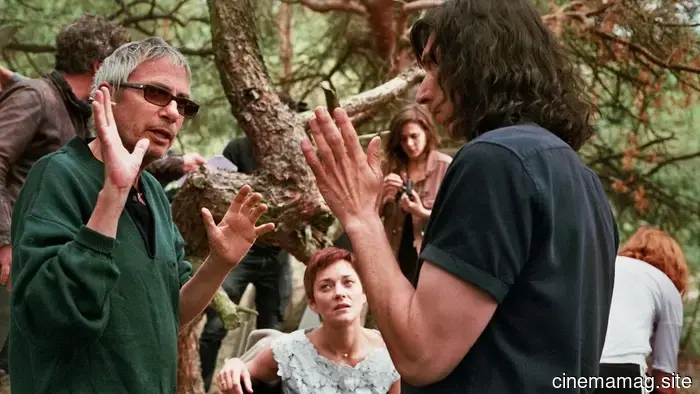 Lily May B, the follow-up to Leos Carax's Annette, is set to begin filming next year with Jenna Ortega.
Do not change your displays or worry that you have lost awareness. Highlighting one of the more fascinating collaborations between a director and an actor in quite some time, Leos Carax has, according to Variety, enlisted Jenna Ortega to star in his upcoming film (his first since 2021's Annette) titled Lily May B, which is anticipated to begin filming in spring 2027 under
Lily May B, the follow-up to Leos Carax's Annette, is set to begin filming next year with Jenna Ortega.
Do not change your displays or worry that you have lost awareness. Highlighting one of the more fascinating collaborations between a director and an actor in quite some time, Leos Carax has, according to Variety, enlisted Jenna Ortega to star in his upcoming film (his first since 2021's Annette) titled Lily May B, which is anticipated to begin filming in spring 2027 under
 Quick Payout Casinos for Australians – 5 Reliable Instant Withdrawal Casinos for Aussie Gamblers - MovieMaker
Australian players now anticipate quicker withdrawals, secure banking options, and seamless mobile gaming when selecting an online casino. In 2026, the growth of cryptocurrency
Quick Payout Casinos for Australians – 5 Reliable Instant Withdrawal Casinos for Aussie Gamblers - MovieMaker
Australian players now anticipate quicker withdrawals, secure banking options, and seamless mobile gaming when selecting an online casino. In 2026, the growth of cryptocurrency
 How Exceptional Films Uncover Character Without Description - MovieMaker Magazine
We've all experienced films where a character abruptly delivers a lengthy monologue detailing their heartbreaking history or profound anxieties. It often comes across as
How Exceptional Films Uncover Character Without Description - MovieMaker Magazine
We've all experienced films where a character abruptly delivers a lengthy monologue detailing their heartbreaking history or profound anxieties. It often comes across as
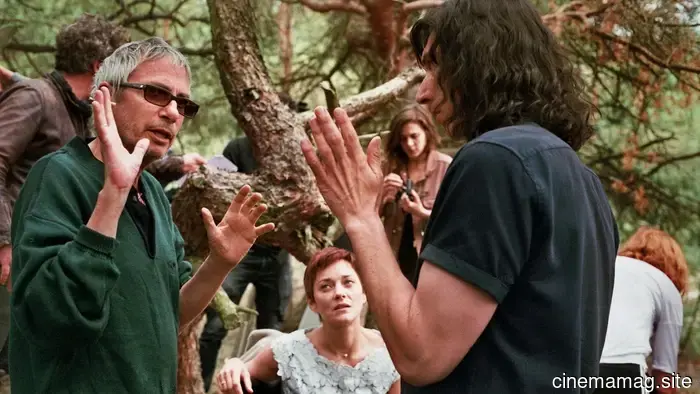 Lily May B, the follow-up to Leos Carax's Annette, is set to begin filming next year with Jenna Ortega.
Please do not change your devices or worry that you have blacked out. In what is considered one of the more fascinating collaborations between a director and actor in a long time, Leos Carax has reportedly cast Jenna Ortega to star in his upcoming film (and his first since 2021's Annette), titled Lily May B. Filming is anticipated to begin in the spring of 2027.
Lily May B, the follow-up to Leos Carax's Annette, is set to begin filming next year with Jenna Ortega.
Please do not change your devices or worry that you have blacked out. In what is considered one of the more fascinating collaborations between a director and actor in a long time, Leos Carax has reportedly cast Jenna Ortega to star in his upcoming film (and his first since 2021's Annette), titled Lily May B. Filming is anticipated to begin in the spring of 2027.
Cannes Review: I See Buildings Fall Like Lightning Is a Compelling, Multidimensional Tribute to Friendship
Clio Barnard makes her return to Directors’ Fortnight, following her previous works The Selfish Giant and Ali & Ava, with an adaptation of Keiran Goddard's novel I See Buildings Fall Like Lightning. The director, whose roots in Yorkshire provide a sense of identity, has chosen to set her film in Northern England—specifically in Bradford—but, in tribute to Goddard’s novel, has transposed the story to post-industrial Birmingham.