
Cannes Review: I See Buildings Fall Like Lightning is an enthralling, multifaceted tribute to friendship.
Clio Barnard makes her return to Directors’ Fortnight following her works The Selfish Giant and Ali & Ava with an adaptation of Keiran Goddard’s novel, I See Buildings Fall Like Lightning. The director, whose roots in Yorkshire shape her sense of belonging, sets her film in Northern England—specifically Bradford—while, honoring Goddard’s narrative, it takes place in post-industrial Birmingham.
I See Buildings Fall Like Lightning accomplishes what many films struggle to do: it presents and maintains a group of protagonists while also highlighting the individual experiences within that group. Similar to the novel, the story revolves around friends who grew up together but are held together by invisible ties, still gathering in their familiar spots more than a decade after their shared council estate has been demolished. Among the five friends, Rian (Joe Cole) has achieved social mobility and now holds a banking job and lives in a stylish London apartment, while the others—Oli (Jay Lycurgo), Conor (Daryl McCormack), and the couple Patrick (Anthony Boyle) and Shiv (Lola Petticrew)—remain in their hometown. To adapt Goddard’s book, Barnard collaborates with Enda Walsh, who has experience with poignant screen adaptations such as Small Things Like These and Die My Love, making him an ideal partner in transforming the monologue-based narrative of I See Buildings into a rich tapestry of voices and presences.
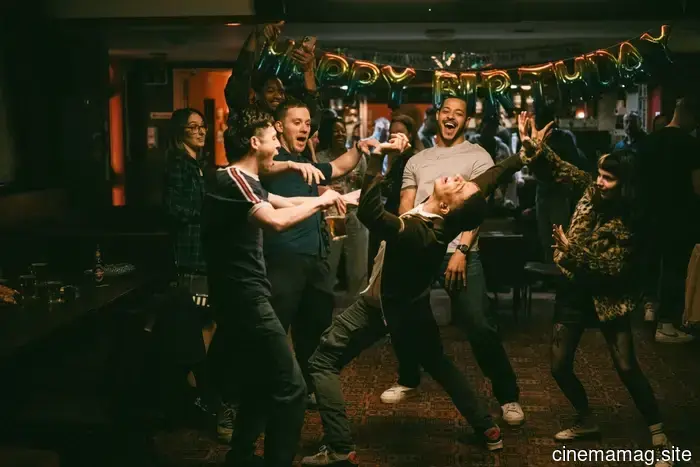
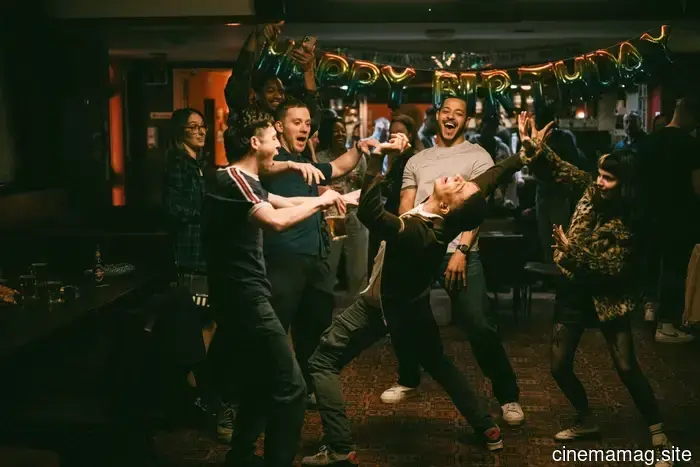
The film opens in the midst of a birthday party, which serves as a reunion for the friend group, where each character is presented as both unique and part of a collective. Conor is about to become a father; Shiv’s daughter is painting Rian’s nails while curious about the cost of his jacket. Techno music provides solace to Oli until he steps away from the dancefloor for a bathroom break to get high. For a brief period, they are truly together. The shared past that connects them is evoked in this scene, alternating between the party and images of their demolished childhood home, Lee Bank (Green Tower) in Birmingham. The theme of togetherness serves as the core of I See Buildings, and the film's structure mirrors this narrative by intertwining the screentime of all five protagonists into simultaneous events—a carousel of character portraits set against suburban landscapes.
Throughout the film, Simon Tindall’s camera stays close to each character, capturing tight close-ups and moving with an energetic handheld style that feels intimate and participatory. This closeness emphasizes the tension and emotional depth of characters who struggle to express their feelings. Silence and repressed emotions form a significant aspect of British identity, manifesting uniquely in working-class settings; thus, the cinematographer’s role becomes that of a bridge, creating an intimate and rewarding viewing experience. This allows audiences to genuinely engage with and observe the characters’ expressions, making the rare moments when characters look directly at the camera feel like instances of mutual recognition. To label the aesthetics of I See Buildings as merely "subtle" would be reductive; the film’s form engages with and reveals what remains unexpressed in a way that is respectful yet quietly transformative.
Critics have lauded Goddard’s novel for its lively narrative style that prioritizes character vignettes over straightforward plotting and inner monologues. In Barnard’s adaptation, dialogue propels the story; even the quieter moments of solitude intersperse those of connection and communication. More than merely preserving the diversity of voices, Barnard and her team seamlessly transition between the written narrative and the audiovisual medium. However, it’s important to highlight that having multiple perspectives does not equate to presenting multiple subjective viewpoints—this approach levels the film, ensuring the audience feels included rather than merely observing distant specimens.
The collaboration among the cast, script, and visual style renders I See Buildings deeply engrossing—not just as a narrative about enduring friendships, but also as a commentary on urban development and housing as a fundamental right. “Home is a privilege,” exclaims Patrick during a pivotal monologue aimed at a drunken Rian, fueled by mounting frustration. He articulates the disillusionment of a generation misled by the empty promises of capitalism and past communist ideals in a thoughtful, non-didactic manner. This theme resonates deeply within the novel and British political discourse, yet in this instance, Patrick’s dense speech serves more as an internal reflection rather than exposition; it is a moment for the character to express it back to himself. Few films manage to create worlds that are both self-contained and accessible, and Clio Barnard once again achieves this.
I See Buildings Fall Like Lightning premiered at the 2026 Cannes Film Festival.

Other articles
 Couture Trailer: The Fashion Drama Starring Angelina Jolie, Directed by Alice Winocour, Premieres This June.
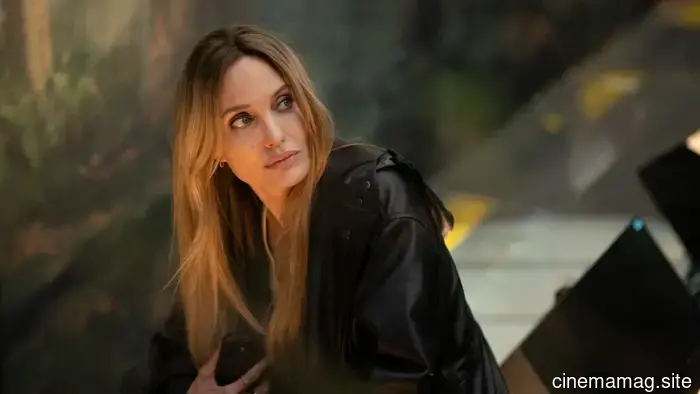
After Olivier Assayas' The Wizard of the Kremlin debuted last week, Vertical appears to have taken the lead in acquiring star-studded, auteur-driven French films, now adding Alice Winocour's Couture, featuring Angelina Jolie, which premiered at TIFF last year. The cast also includes Louis Garrel, Ella Rumpf, Garance Marillier, Anyier Anei, and Vincent Lindon, and the film centers on an
Couture Trailer: The Fashion Drama Starring Angelina Jolie, Directed by Alice Winocour, Premieres This June.
After Olivier Assayas' The Wizard of the Kremlin debuted last week, Vertical appears to have taken the lead in acquiring star-studded, auteur-driven French films, now adding Alice Winocour's Couture, featuring Angelina Jolie, which premiered at TIFF last year. The cast also includes Louis Garrel, Ella Rumpf, Garance Marillier, Anyier Anei, and Vincent Lindon, and the film centers on an
 Lily May B, the follow-up to Leos Carax's Annette, is set to begin filming next year with Jenna Ortega.
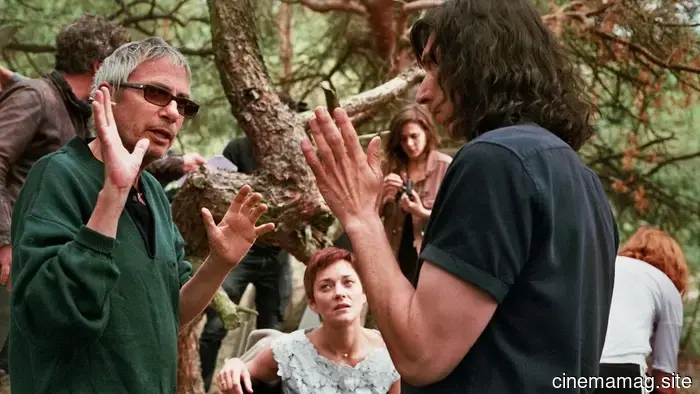
Do not change your displays or worry that you have lost awareness. Highlighting one of the more fascinating collaborations between a director and an actor in quite some time, Leos Carax has, according to Variety, enlisted Jenna Ortega to star in his upcoming film (his first since 2021's Annette) titled Lily May B, which is anticipated to begin filming in spring 2027 under
Lily May B, the follow-up to Leos Carax's Annette, is set to begin filming next year with Jenna Ortega.
Do not change your displays or worry that you have lost awareness. Highlighting one of the more fascinating collaborations between a director and an actor in quite some time, Leos Carax has, according to Variety, enlisted Jenna Ortega to star in his upcoming film (his first since 2021's Annette) titled Lily May B, which is anticipated to begin filming in spring 2027 under
 Quick Payout Casinos for Australians – 5 Reliable Instant Withdrawal Casinos for Aussie Gamblers - MovieMaker
Australian players currently anticipate quicker withdrawals, safe banking options, and seamless mobile gaming experiences when selecting an online casino. By 2026, the growth of cryptocurrency
Quick Payout Casinos for Australians – 5 Reliable Instant Withdrawal Casinos for Aussie Gamblers - MovieMaker
Australian players currently anticipate quicker withdrawals, safe banking options, and seamless mobile gaming experiences when selecting an online casino. By 2026, the growth of cryptocurrency
-5-Top-Pokies-Casinos-Ranked-Real-Pokies-List-.png) Top Online Pokies in Australia (May 2026 Update) - Ranking of the 5 Best Pokies Casinos - Authentic Pokies Compilation -
The online pokies market in Australia is expected to experience significant growth in 2026, as a larger number of players are increasingly moving to digital platforms that provide real money options.
Top Online Pokies in Australia (May 2026 Update) - Ranking of the 5 Best Pokies Casinos - Authentic Pokies Compilation -
The online pokies market in Australia is expected to experience significant growth in 2026, as a larger number of players are increasingly moving to digital platforms that provide real money options.
 Cannes Review: I See Buildings Fall Like Lightning Is a Compelling, Multidimensional Tribute to Friendship
Clio Barnard makes her return to Directors’ Fortnight, following her previous works The Selfish Giant and Ali & Ava, with an adaptation of Keiran Goddard's novel I See Buildings Fall Like Lightning. The director, whose roots in Yorkshire provide a sense of identity, has chosen to set her film in Northern England—specifically in Bradford—but, in tribute to Goddard’s novel, has transposed the story to post-industrial Birmingham.
Cannes Review: I See Buildings Fall Like Lightning Is a Compelling, Multidimensional Tribute to Friendship
Clio Barnard makes her return to Directors’ Fortnight, following her previous works The Selfish Giant and Ali & Ava, with an adaptation of Keiran Goddard's novel I See Buildings Fall Like Lightning. The director, whose roots in Yorkshire provide a sense of identity, has chosen to set her film in Northern England—specifically in Bradford—but, in tribute to Goddard’s novel, has transposed the story to post-industrial Birmingham.
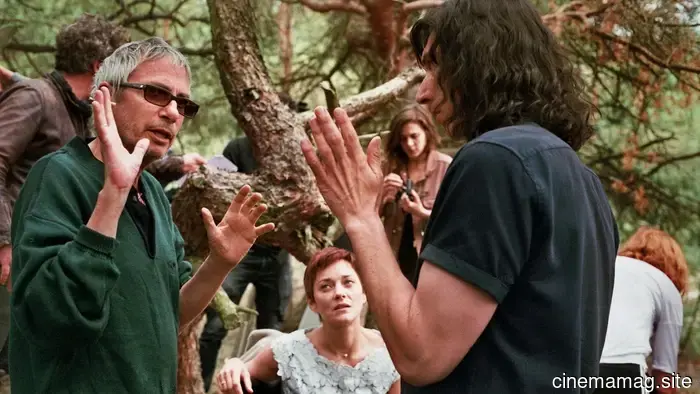 Lily May B, the follow-up to Leos Carax's Annette, is set to begin filming next year with Jenna Ortega.
Please do not change your devices or worry that you have blacked out. In what is considered one of the more fascinating collaborations between a director and actor in a long time, Leos Carax has reportedly cast Jenna Ortega to star in his upcoming film (and his first since 2021's Annette), titled Lily May B. Filming is anticipated to begin in the spring of 2027.
Lily May B, the follow-up to Leos Carax's Annette, is set to begin filming next year with Jenna Ortega.
Please do not change your devices or worry that you have blacked out. In what is considered one of the more fascinating collaborations between a director and actor in a long time, Leos Carax has reportedly cast Jenna Ortega to star in his upcoming film (and his first since 2021's Annette), titled Lily May B. Filming is anticipated to begin in the spring of 2027.
Cannes Review: I See Buildings Fall Like Lightning is an enthralling, multifaceted tribute to friendship.
Clio Barnard makes her return to Directors’ Fortnight following her films The Selfish Giant and Ali & Ava with an adaptation of Keiran Goddard’s book I See Buildings Fall Like Lightning. The director, who has a strong connection to her Yorkshire roots, has set her story in Northern England, particularly in Bradford; however, in homage to Goddard’s novel, she has situated the film in post-industrial Birmingham. I See