
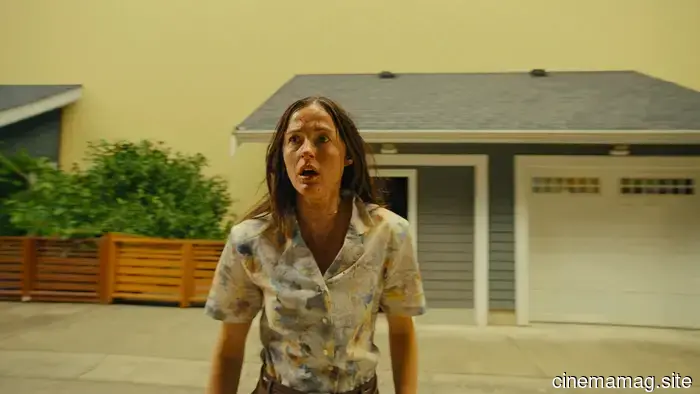
Backrooms Review: Kane Parsons' Debut Delivers Frights and Exhibits Potential
Kane Parsons has an incredible origin story: a YouTuber from a very young age who self-taught himself visual effects using Blender during the COVID lockdown, he emerged with a fully developed horror series that went viral. At the time it gained popularity, he was far from graduating high school, and he is now one of the few who have directed a widely released studio film before reaching the legal drinking age. Recently, there has been much criticism of YouTubers transitioning into filmmaking, including a baseless conspiracy theory circulating on social media that accuses Parsons of taking credit for a ghost director's work (presumably producer Oz Perkins), questioning why any studio would hire someone so young and relatively inexperienced. Some critics are quick to judge him based solely on his age, but I find the idea of a young person who understands the darker aspects of creepypasta forums and analog horror shorts—rather than traditional genre texts—entering a classic medium more intriguing. Horror certainly doesn’t need more Sundance-friendly newcomers crafting inflated allegories for grief after years of watching prestigious horror.
The first five minutes serve as an excellent introduction for those unfamiliar with Parsons’ Backrooms web series, attempting to convince skeptics that a 20-year-old YouTuber has some potential: it starts with a found-footage video of a researcher who is lost in an endless liminal space and being pursued by an unseen evil force. Even in the low resolution typical of early 1990s camcorders, the uncanny production design (crafted by Perkins’ frequent collaborator Danny Vermette) is immediately unsettling, featuring mirror-image signs, furniture pieces melting into the floor, and the only living beings present are seagulls. It’s an uneasy environment as the echoes of footsteps start to quicken behind the cameraman, culminating in offscreen devastation when the tape ends, before we fast-forward about ten days to introduce Clark (Chiwetel Ejiofor), a failed architect who owns the fabulously named furniture store Cap’n Clark’s Ottoman Empire.
Clark is recently divorced and sleeping in the showroom, and a series of electrical mishaps leads him to uncover the endless network of dull rooms hidden behind his store's walls. Although it doesn’t qualify as slow cinema, Parsons demonstrates admirable patience as he allows his lead character to explore this geographically improbable space without relying on scares at every corner. The film is in awe of the vast bizarre universe born from the mundane, and that alone is infectious; it’s possibly the most obvious comparison, but it unmistakably echoes the warped domestic nostalgia of Skinamarink, just on a larger scale.
However, this is a more conventional film. Clark quickly becomes fixated on this realm, enthusing to his perplexed therapist Mary (Renate Reinsve) about the elaborate splendor of this unfathomable area, which he can’t articulate—comparing the task to "describing a dog to someone who has never seen one." Flashbacks to Mary’s own troubled childhood punctuate the story, but initially feel like red herrings in a richly detailed world that otherwise resists straightforward emotional interpretation. Perhaps the most telling critique of Backrooms, which also indicates its YouTube origins, is that it invites video essayists to provide their own definitive interpretations.
After a more extensive and even more frightening found-footage exploration with Clark and his young employees, Backrooms shifts perspective to Mary and abandons its analog-horror aesthetics. It’s here that Parsons shows equal skill in crafting something akin to a traditional haunted-house tale, with Will Soodik’s screenplay drawing inspiration from The Shining—King’s version, not Kubrick’s more frantic interpretation—as we observe Clark’s fixation from a horrified external view, revealing how much his alcoholism and unchecked rage have fueled this, as opposed to any supernatural influence. Ejiofor delivers a captivating performance, although its conventionality suggests a sense of relief after spending so much time navigating corridors filled with increasingly unsettling features.
I am less convinced by the third act, which features an exaggerated chase sequence that feels reminiscent of Monsters Inc. combined with M.C. Escher, and increasingly incorporates lore from Parsons’ web series. The ending evokes memories of M. Night Shyamalan’s Old, which felt clumsy in its effort to connect a narratively rational scientific conspiracy to an overly complicated premise. While Parsons does leave us with more questions than answers, suggesting that everything may be explained, the abundance of closing easter eggs pointing to his YouTube series implies a tendency to overthink the lore of this universe.
That said, I would prefer a filmmaker to stumble through too many ideas than too few, and there’s enough in this work to convince me that Parsons will learn to refine his ideas rather than condense every good notion into a cohesive narrative. He is not the first debut filmmaker to experience this instinct, and the evident ambition—along with the remarkable production design, strong lead performances, and successfully sustained tension—indicates he is more than just a
Other articles
 Best Online Pokies in Australia 2026: Top 5 Trusted Aussie Casinos for High-Paying Pokies and Real Money
If you're excited to dive into the action but find yourself feeling daunted by the countless options out there, consider Blast the Bass by Belatra Games.
Best Online Pokies in Australia 2026: Top 5 Trusted Aussie Casinos for High-Paying Pokies and Real Money
If you're excited to dive into the action but find yourself feeling daunted by the countless options out there, consider Blast the Bass by Belatra Games.
 Top Online Pokies in Australia 2026: The 5 Best Verified Aussie Casinos for High-Paying Pokies and Real Money
If you're excited to dive into the action but are daunted by the myriad of options available, consider Blast the Bass by Belatra Games.
Top Online Pokies in Australia 2026: The 5 Best Verified Aussie Casinos for High-Paying Pokies and Real Money
If you're excited to dive into the action but are daunted by the myriad of options available, consider Blast the Bass by Belatra Games.
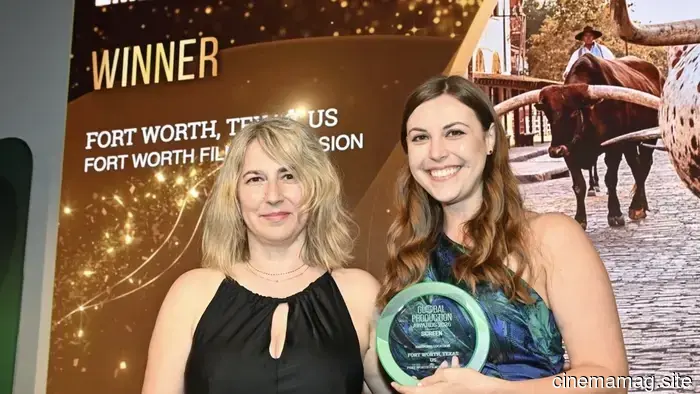 Toronto and Fort Worth recognized as leading winners at the Global Production Awards.
Toronto and Fort Worth stood out as some of the top winners at the Global Production Awards, which took place during the Cannes Film Festival to honor achievements in the entertainment industry.
Toronto and Fort Worth recognized as leading winners at the Global Production Awards.
Toronto and Fort Worth stood out as some of the top winners at the Global Production Awards, which took place during the Cannes Film Festival to honor achievements in the entertainment industry.
Backrooms Review: Kane Parsons' Debut Delivers Frights and Exhibits Potential
Kane Parsons has a remarkable origin story: a YouTuber from a young age who self-taught himself visual effects using Blender during the COVID lockdown, he emerged with a fully developed horror series that went viral. He was far from finishing high school at the time.